Solar Panels in Ireland: Costs, Grants, Payback & Export Payments
A complete 2026 guide to solar panels in Ireland: SEAI grants, the new €600 battery grant, 0% VAT, realistic generation, CEG export payments, batteries, grid connection, planning and payback.
 Wealth / The Compound journal
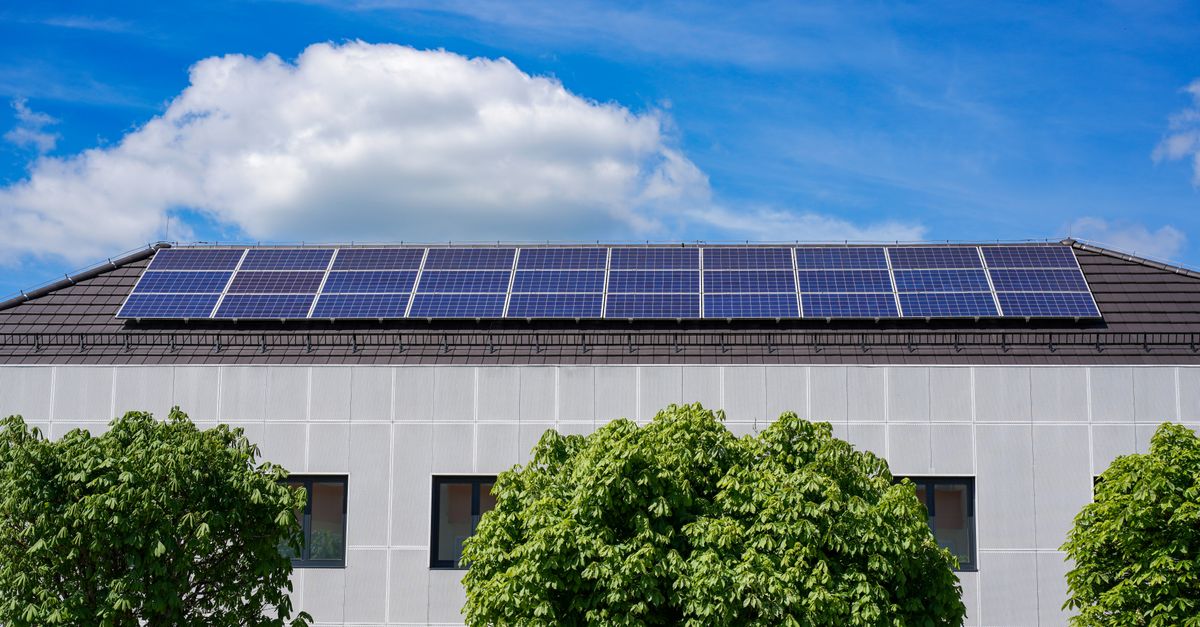
Photo: Vladimir Srajber on Pexels · Illustrative image.
New: Explore the Compound Solar Hub to compare installation quotes, check grant eligibility and find registered installers. For a focused buying decision, read 4kWp vs 6kWp vs 8kWp: how many panels do you need?, which models output, daytime use and the payback on extra panels. For the detailed calculations, use the linked solar tools below. For a closer look at two decisions, use the battery economics calculator and export-rate comparator.
Solar panels are one of the few home upgrades in Ireland that can create value in two ways at once:
If your home also uses a heat pump, read Heat Pumps in Ireland 2026 for the heating-side economics. Solar can offset some electrical demand, but winter heating demand and summer PV output do not perfectly align.
Your electricity tariff is part of that calculation. Our Electricity Tariffs in Ireland guide explains flat, smart, EV and dynamic tariffs — useful when comparing the value of self-consumption, battery charging and grid imports.
If the house still has obvious heat-loss problems, solar may not be the first euro to spend. Our Insulation Grants Ireland 2026 guide shows the current grant and cost position for attic and wall upgrades.
- every unit of solar electricity you use yourself can reduce the amount you buy from the grid;
- surplus electricity can potentially earn a payment when it is exported.
The difficult part is not understanding what a solar panel does.
It is working out what size system to buy, whether a battery is worth adding, what grant you can claim, how much electricity the panels will actually produce in Ireland and how long the investment may take to pay back.
Quick answer
For an eligible Irish home in 2026, the SEAI Solar PV Grant is worth up to €1,800. Supply and installation of solar panels on or adjacent to a private dwelling can qualify for 0% VAT, and eligible exported electricity can earn a Clean Export Guarantee payment from your supplier.
A separate SEAI battery grant now provides €600 for qualifying battery systems of 5kWh or larger.
The best system is not automatically the biggest one. Solar economics depend on your roof, annual generation, electricity use, timing of demand, import tariff, export tariff and installed cost.
This guide reflects the rules and support schemes checked on 3 October 2026.
Solar panels in Ireland at a glance
| Question | 2026 position |
|---|---|
| Maximum domestic Solar PV Grant | €1,800 |
| Battery grant | €600 for qualifying batteries of 5kWh or larger |
| VAT on qualifying supply + installation at a private dwelling | 0% |
| Can households get paid for exports? | Yes — through the Clean Export Guarantee where eligible |
| One national export rate? | No — suppliers set their own CEG tariffs |
| Typical solar production pattern | Strongest around the middle of the day; SEAI says around 75% of annual production occurs May–September |
| Planning permission for rooftop solar on houses | Generally exempt, subject to the relevant conditions and restrictions |
| Micro-generation connection limit | Up to about 6kVA single phase or 11kVA three phase under the standard micro-generation route |
Run the numbers first
Solar PV Payback Calculator Ireland
Enter your system size, installed cost, grant, expected generation, self-consumption, electricity price and export rate. The calculator separates the value of electricity used at home from electricity sold back to the grid.
How solar PV works
Solar photovoltaic — usually shortened to solar PV — converts daylight into electricity.
A typical Irish home system contains:
- solar PV panels;
- mounting hardware;
- a DC/AC inverter;
- electrical protection and metering equipment;
- monitoring software or an app;
- and, optionally, a battery.
The panels generate direct-current electricity.
The inverter converts it into alternating-current electricity that can be used in the home.
At any moment, the solar electricity can take one of three paths:
use it → store it → export it.
That order matters financially.
A unit used directly in the home can avoid buying a unit from the grid.
A unit stored in a battery can potentially avoid a later import, but some energy is lost through charging and discharging.
A unit exported can earn a Clean Export Guarantee payment.
Does solar work well in Ireland?
Yes — but Irish solar production is highly seasonal.
SEAI says solar PV produces electricity during daylight hours and is generally strongest around the middle of the day.
It also states that around 75% of annual Irish solar PV production occurs from May to September.
That means a system which exports heavily on a bright June afternoon may produce much less during a dark December evening.
This has an important implication:
A battery can move solar electricity by hours. It cannot move summer electricity into winter.
For a month-by-month 4, 6 and 8 kWp output chart and electricity-bill scenarios, see Solar Panels in Winter in Ireland. It compares a specific PVGIS-derived Dublin model with SEAI’s broader seasonal guidance rather than treating those figures as the same estimate.
SEAI gives an example of a well-located 3kW domestic solar PV system producing around 2,600 kWh a year.
That is useful as a benchmark, but it should not be treated as a guaranteed output.
Real generation depends on:
- location;
- roof orientation;
- roof pitch;
- shading;
- panel specification;
- inverter sizing;
- system losses;
- weather;
- and the amount of installed PV.
Your installer should provide an annual-generation estimate for the proposed system.
How much electricity does your home actually use?
Before choosing a solar system, establish your own consumption.
The often-used Irish household benchmark of 4,200 kWh per year is only a starting point.
A small apartment may use much less.
A house with an EV, heat pump, electric hot water or substantial home working can use much more.
Our guide to average electricity use in an Irish home explains the benchmark and how to audit your own usage.
If you have a smart meter, your half-hourly data is particularly valuable.
It shows not only how much electricity you consume, but when you consume it.
That timing is critical for solar.
A household that uses a lot of electricity during daylight hours can directly consume more solar.
A household that is empty all day may export more and buy more electricity again in the evening.
The 2026 SEAI Solar PV Grant
The current domestic Solar PV Grant is:
| Solar PV capacity | Grant calculation | Maximum cumulative grant |
|---|---|---|
| First 2kWp | €700 per kWp | €1,400 at 2kWp |
| Additional capacity from 2kWp to 4kWp | €200 per additional kWp | €1,800 at 4kWp |
| Above 4kWp | No additional domestic solar grant above the cap | €1,800 maximum |
SEAI says the maximum domestic solar grant remains €1,800 in 2026.
A 2.5kWp system, for example, is grant-funded on a pro-rata basis.
Who can apply?
SEAI currently lists eligible applicant types including:
- homeowners;
- private landlords;
- owner-management companies;
- approved housing bodies.
For the domestic scheme, the home must have an MPRN, must have been built and occupied before 2025, and must not previously have received solar PV funding at that MPRN.
You must receive the relevant SEAI grant offer before starting the works.
See the current SEAI Solar Electricity Grant rules before signing off on a grant-dependent project.
The new €600 battery grant
This has changed since some older Irish solar guides were written.
SEAI now provides a separate Battery Energy Storage System Grant.
The current grant is:
€600 for an eligible battery system of 5kWh or larger.
SEAI says batteries smaller than 5kWh are not eligible.
If solar PV and a battery are being installed together, the two grant measures can be applied for through a single application.
The battery scheme has its own eligibility conditions. SEAI currently says the property must have an MPRN and have been built and occupied before 2025, and the works must not begin before the grant offer.
A grant makes the battery cheaper.
It does not automatically make the battery the highest-return part of a solar installation.
We model that question in detail in Do you actually need a battery with solar panels in Ireland?.
Solar + battery + EV
Solar + EV + Battery Optimiser
Compare exporting solar, storing it in a battery and using it to charge an EV. The tool accounts for import tariffs, export payments and battery losses rather than assuming that maximum self-consumption is always best.
Solar panels and 0% VAT
For private dwellings, the supply and installation of qualifying solar panels on or adjacent to the dwelling can be subject to the zero rate of VAT.
Revenue’s guidance distinguishes between:
- simply buying solar panels; and
- buying them as part of a qualifying supply-and-install contract.
The zero rate applies to qualifying supply and installation on or adjacent to private dwellings.
That includes rooftop installations and can include appropriately installed ground-mounted panels adjacent to the home.
This is separate from the SEAI grant.
So, for an eligible domestic project, the economics can be helped by both:
0% VAT treatment + the SEAI Solar PV Grant.
What do solar panels cost in Ireland?
There is no single reliable national price.
A quote can vary materially depending on:
- number and wattage of panels;
- inverter specification;
- roof access;
- scaffolding;
- optimisers;
- electrical upgrades;
- battery capacity;
- backup capability;
- diverters;
- monitoring;
- installation complexity;
- and warranty package.
For that reason, the most useful number is not:
“What does a solar system usually cost?”
It is:
“What is my all-in installed cost after grant, and what annual value should this particular system produce?”
Get multiple itemised quotes.
Then compare them on the same basis:
| Compare | Why it matters |
|---|---|
| Installed kWp | Tells you the nominal panel capacity |
| Inverter size | Affects peak AC output and connection category |
| Estimated annual kWh | More useful than panel count alone |
| Battery usable kWh | Nominal battery size can overstate usable storage |
| Warranty | Panels, inverter and battery can have different warranties |
| Grant treatment | Confirm whether quote is before or after grant |
| VAT treatment | Confirm how the 0% domestic supply-and-install treatment is reflected |
| Export setup | Confirm NC6/connection and metering paperwork |
| Total installed cost | Use this in your payback model |
Panel count is less useful than system capacity
Panel wattages continue to change.
A roof with ten modern panels may have a very different capacity from an older ten-panel system.
Compare systems in kilowatt peak — kWp.
For example:
- 8 × 450W panels = 3.6kWp;
- 10 × 450W panels = 4.5kWp;
- 12 × 450W panels = 5.4kWp;
- 16 × 450W panels = 7.2kWp.
The actual AC export can still be limited by the inverter and grid-connection arrangement.
So:
panel kWp ≠ guaranteed peak export.
What size solar system should you install?
There is no universal answer.
A useful sizing process is:
1. Find your annual electricity consumption
Use bills or smart-meter data.
2. Identify daytime demand
How much electricity is used while the panels are producing?
3. Account for future electrification
Are you likely to add:
- an EV;
- heat pump;
- electric hot water;
- air conditioning;
- home office;
- or other significant electrical loads?
A system designed only around today’s demand can look small after those changes.
4. Check the roof
Usable roof area, orientation and shading may set the practical ceiling.
5. Compare the value of self-consumption with export
If imported electricity costs substantially more than your export rate, directly using solar can be more valuable than exporting it.
6. Model more than one system size
Do not ask only for one quote.
Compare, for example:
4kWp vs 5kWp vs 6kWp
using the same tariff and cost assumptions.
The largest system can produce the most electricity without necessarily producing the shortest payback.
South-facing vs east-west solar
South-facing roofs are attractive because they can produce a strong midday generation peak.
But an east-west layout can spread output across more of the day.
That can sometimes align better with household demand:
- east-facing panels contribute earlier;
- west-facing panels contribute later;
- the generation curve can be flatter than a purely south-facing array.
The financially best orientation therefore depends partly on when you use electricity, not just total annual generation.
For a worked SEAI-based comparison and the proper PVGIS azimuth settings, see East- and West-Facing Solar Panels in Ireland. It explains irradiation versus PV generation and what to ask installers to model.
A good installer should model the actual roof rather than relying on a generic rule.
Do you need a battery?
Not necessarily.
A battery can:
- store midday solar for later;
- reduce evening imports;
- increase solar self-consumption;
- potentially charge cheaply at night and discharge during expensive periods;
- and, if specifically designed for it, provide some backup functionality.
But every stored solar kWh has an opportunity cost.
Without the battery, that electricity may have been exported for payment.
Suppose:
- imported electricity costs 30c/kWh;
- your export tariff pays 18c/kWh;
- battery round-trip efficiency is 90%.
Exporting 1kWh earns:
18c.
Putting 1kWh into the battery and recovering 0.9kWh later avoids:
0.9 × 30c = 27c
of grid imports.
The extra gross value created by storing instead of exporting is therefore roughly:
27c - 18c = 9c per input kWh
before allowing for battery degradation or the capital cost of the battery.
That is why a battery can be technically useful without automatically offering the best financial return.
See our full solar panels vs battery analysis for worked examples.
How solar export payments work
Eligible Irish microgenerators can receive payment for electricity exported to the grid under the Clean Export Guarantee — CEG.
There is not one national CEG price.
Electricity suppliers set their own export tariffs.
The basic flow is:
- your panels generate electricity;
- the home uses some of it;
- surplus is exported;
- ESB Networks records or calculates the export quantity under the applicable arrangements;
- your electricity supplier pays you its CEG tariff.
The CRU sets the regulatory framework.
ESB Networks deals with the network, connection and metering side.
Your electricity supplier pays you.
Our solar export payments guide explains the process, smart meters and deemed export in more detail.
Do you need a smart meter?
For measured export payments, a smart meter records the electricity flowing back to the grid.
ESB Networks states that customers who are eligible for a smart meter need one to be paid on measured export.
Some customers who are not yet eligible for a smart meter can fall under deemed-export arrangements.
The important practical point is:
Make sure your generation connection is registered correctly.
A solar installation that has not completed the required network process can create problems when you try to receive export payments.
NC6 and the micro-generation connection limit
ESB Networks defines micro-generation as generation up to approximately:
- 6kVA on a single-phase connection;
- 11kVA on a three-phase connection.
The standard micro-generation route uses the NC6 process.
ESB Networks currently says there is no connection charge for micro-generation connected through the standard inform-and-fit process.
It also clarifies an important point:
the micro-generation threshold is based on inverter/export rating, not simply the total DC wattage of the panels.
That means it can be possible to install more panel capacity behind an inverter whose export remains within the permitted micro-generation limit.
If you go beyond the micro-generation inverter limits, different connection processes apply.
ESB Networks currently describes:
- Mini-generation: above micro limits up to around 17kVA single phase or 50kVA three phase;
- Small Scale Generation: above mini-generation and up to 200kVA for the relevant connection route;
- larger generation: separate generation-connection processes.
This becomes increasingly important for farms, commercial roofs and land-based projects.
Do you need planning permission for solar panels?
For ordinary rooftop solar on a house, the planning position is much easier than it used to be.
Government guidance says houses can install unlimited rooftop solar panels without planning permission, subject to the relevant conditions and the general restrictions on exempted development.
Important exceptions and conditions can still arise around:
- protected structures;
- proposed protected structures;
- Architectural Conservation Areas;
- roof-edge/setback conditions;
- and other specific planning restrictions.
Ground-mounted and non-domestic solar have their own exemption limits and conditions.
If a proposed installation is unusual, large, ground-mounted or associated with a protected property, check the planning position before relying on an exemption.
Solar payback: the equation that actually matters
A simple solar payback model has three main components.
1. Electricity used directly
If you generate and use 1kWh at the same time, the value is approximately the electricity import you avoid.
2. Electricity exported
If the surplus is exported, its value is the CEG rate you receive.
3. Upfront net investment
This is the installed cost after the applicable grant.
A simplified annual-value equation is:
Annual solar value = self-consumed kWh × avoided import rate + exported kWh × export rate
Then:
Simple payback = net upfront cost ÷ annual solar value
That is deliberately simple.
A more complete investment model would also consider:
- panel degradation;
- inverter replacement;
- battery degradation/replacement;
- tariff changes;
- maintenance;
- finance cost;
- opportunity cost of capital;
- and the time value of money.
Worked example: 5kWp system
Consider this illustrative scenario, not a market quote.
| Assumption | Example |
|---|---|
| Solar capacity | 5kWp |
| Generation assumption | 850kWh/kWp/year |
| Annual generation | 4,250kWh |
| Self-consumption | 40% |
| Export share | 60% |
| Import electricity price | 30c/kWh |
| CEG export rate | 18c/kWh |
| Installed price before grant | €9,000 |
| SEAI solar grant | €1,800 |
| Net investment | €7,200 |
Directly used solar:
4,250 × 40% = 1,700kWh
Value of direct use:
1,700 × €0.30 = €510
Exported solar:
4,250 × 60% = 2,550kWh
Export value:
2,550 × €0.18 = €459
Total annual energy value:
€510 + €459 = €969
Illustrative simple payback:
€7,200 ÷ €969 ≈ 7.4 years
Change the assumptions and the result changes quickly.
For example:
- a lower export rate lengthens payback if much of the generation is exported;
- higher self-consumption increases the value of solar where the import rate is above the export rate;
- a more expensive installation lengthens payback;
- a future EV or heat pump can increase electricity demand that could potentially be served by solar.
This is exactly why the Solar PV Payback Calculator is more useful than relying on a national average.
Solar panels and an EV
An EV can materially change household electricity use.
But it does not automatically mean all daytime solar should be diverted into the car.
Suppose your:
- solar export rate is 18c/kWh;
- overnight EV tariff is 8c/kWh.
If you divert 1kWh of solar from export into the EV, you give up 18c of export revenue to avoid buying an 8c night-rate kWh.
Ignoring losses and other tariff details, that can actually be a worse immediate trade.
The reverse can also be true on a less favourable EV tariff.
The correct comparison is:
value of exporting now vs cost of charging later.
Use our EV Charging Cost Calculator for charging economics and the Solar + EV + Battery Optimiser when the systems interact.
Solar panels for farms and businesses
Commercial solar is a separate investment case.
SEAI’s Non-Domestic Microgen Grant — NDMG currently supports eligible solar PV systems up to 1,000kWp, with a maximum grant of €162,600.
Eligible applicants include businesses, the agricultural sector, public-sector bodies, schools, community centres and non-profit societies.
Commercial projects can be especially attractive where a site has strong daytime electricity demand because more solar can be consumed directly behind the meter.
That is different from building a solar project primarily to export electricity.
If you are considering a farm, SME or land-based installation, read CEG vs SRESS in Ireland before assuming that the largest available export tariff is automatically the right route.
The key decision is often:
Do I want solar primarily to reduce my own electricity bill, or am I building an electricity-generation business?
CEG vs SRESS for larger solar projects
The two should not be confused.
CEG fits naturally with renewable self-consumers that use electricity on site and export surplus.
SRESS is a separate support route for eligible export-only projects above 50kW.
The current SRESS framework provides 15-year support for successful eligible projects, subject to scheme terms.
An SRESS export-tariff project does not simply use electricity on site and receive SRESS for whatever remains.
Our dedicated CEG vs SRESS guide covers the project-size rules, current published tariffs and grid considerations.
Common solar mistakes in Ireland
Buying on panel count
Compare kWp, inverter capacity and expected annual kWh instead.
Assuming every generated kWh saves the retail electricity price
Exported electricity is worth the export tariff, not the import tariff.
Assuming a battery is essential
Solar can be financially attractive without one.
Treating the grant as the entire business case
A poor system does not become a good investment just because it receives a grant.
Ignoring the export tariff
Two suppliers can value the same surplus generation differently.
Ignoring your actual load profile
Annual electricity use does not tell you how much solar you will self-consume.
Optimising only for self-consumption
Sometimes exporting solar and buying cheap electricity later is financially better.
Assuming nearby three-phase wires guarantee a commercial connection
For larger systems, network capacity and connection cost must be assessed.
Using one optimistic generation estimate
Stress-test a lower-output case before committing.
What to ask a solar installer
Before accepting a quote, ask for:
- total DC panel capacity in kWp;
- panel make, model and wattage;
- inverter make, model and AC rating;
- estimated annual generation in kWh;
- assumptions for orientation, pitch and shading;
- expected self-consumption if they provide a payback estimate;
- battery nominal and usable capacity;
- panel, inverter, battery and workmanship warranties;
- whether the quote is before or after the SEAI grant;
- confirmation of the VAT treatment;
- who completes the ESB Networks connection paperwork;
- monitoring access after installation;
- whether backup power is included or merely battery storage;
- what happens if an inverter or battery fails during the warranty period.
If an installer gives a payback period, ask for the assumptions behind it.
A payback figure without the assumed:
- electricity import rate;
- export rate;
- annual generation;
- self-consumption;
- and installed cost
is not a meaningful comparison.
Frequently asked questions
What is the maximum solar grant in Ireland in 2026?
The maximum domestic SEAI Solar PV Grant is €1,800.
Is there now a battery grant in Ireland?
Yes. SEAI currently offers a €600 grant for qualifying battery systems of 5kWh or larger, subject to the scheme conditions.
Are solar panels VAT free in Ireland?
The qualifying supply and installation of solar panels on or adjacent to a private dwelling can be zero-rated for VAT. Buying panels without a qualifying installation contract is not the same VAT treatment.
Do solar panels work in winter in Ireland?
Yes, but production is much lower than during brighter months. SEAI says around 75% of annual solar PV production occurs between May and September.
Do I get paid for excess solar electricity?
Eligible generators can receive export payments under the Clean Export Guarantee. The rate is set by the electricity supplier rather than one national tariff.
Do I need a battery with solar panels?
No. A battery can increase self-consumption and tariff flexibility, but it also adds substantial capital cost. Compare the additional annual value with the net battery price after the €600 grant.
How many solar panels do I need?
Panel count alone is not a useful target because panel wattages differ. Size the system in kWp using your roof, electricity usage, future loads and expected annual generation.
Can I install more than 6kWp of panels on a single-phase house?
The standard ESB Networks micro-generation limit is based around a 6kVA single-phase inverter/export rating. ESB Networks notes that additional PV capacity can be installed behind an inverter within the micro-generation limit. The exact system must still comply with the applicable connection and technical requirements.
Do I need planning permission for rooftop solar panels?
Ordinary houses can generally install rooftop solar without planning permission under the current exemptions, subject to the stated conditions and restrictions, including rules affecting protected structures and Architectural Conservation Areas.
How long do solar panels take to pay back?
There is no single Irish payback period. It depends on installed cost, grant, generation, self-consumption, import tariff and export tariff. Use the Solar PV Payback Calculator with your own quote rather than a generic estimate.
The bottom line
Solar PV in Ireland has become financially easier to model because the main pieces are now clear:
- up to €1,800 domestic Solar PV Grant;
- €600 battery grant for qualifying 5kWh+ systems;
- 0% VAT on qualifying domestic supply and installation;
- CEG payments for eligible exports;
- established micro-generation connection routes;
- and broad planning exemptions for rooftop solar on houses.
But those supports do not remove the need to size the system properly.
The best solar investment is usually not the one with the most panels or the biggest battery.
It is the one where the combination of:
installed cost + annual generation + self-consumption + export income
produces a return you are comfortable with under realistic assumptions.
Start with your own electricity data, compare several system sizes and quotes, then run them through the Solar PV Payback Calculator before committing.