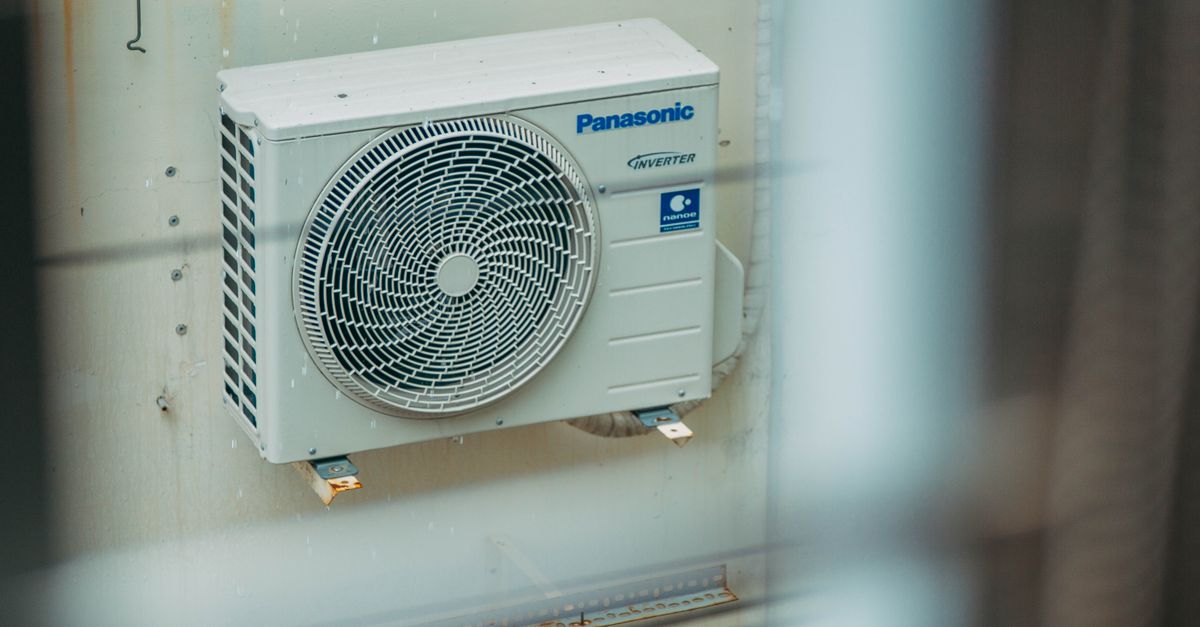
Heat Pumps in Ireland: Costs, Grants, Running Costs & Suitability
A practical 2026 guide to heat pumps in Ireland: revised SEAI grants up to €14,500, installation costs, running-cost maths, SCOP, radiators, heat loss and home suitability.
 Wealth / The Compound journal
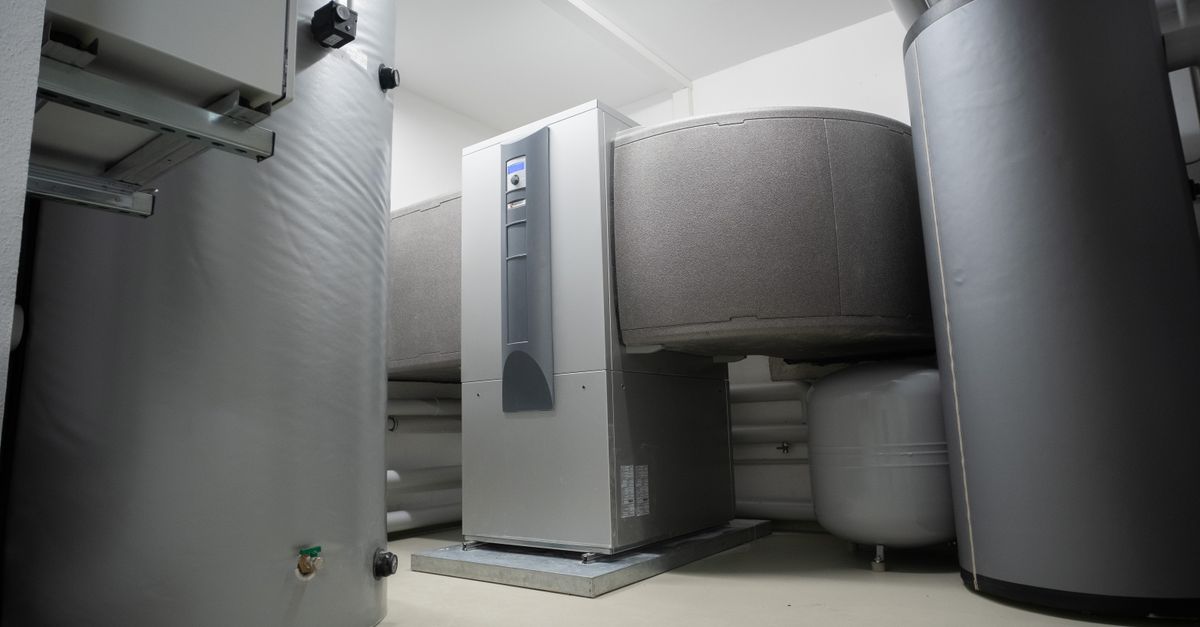
Photo: alpha innotec on Pexels · Illustrative image.
Heat pumps can be one of the most efficient ways to heat an Irish home.
If you plan to add PV as well, the Compound Solar Hub connects solar installation costs, grant rules and electricity modelling. Heat-pump consumption and solar generation should be assessed separately before combining savings.
They can also disappoint when the house, radiators, controls or system design are wrong.
That is why the useful question is not simply:
“Are heat pumps good?”
It is:
“Will a heat pump operate efficiently in this particular house, at the temperatures this heating system needs, on the electricity tariff this household actually pays?”
Quick answer
SEAI's updated October 2026 Heat Pump System grant can provide up to €14,500 for qualifying houses: up to €10,500 for the heat pump, up to €2,000 for qualifying central-heating upgrades and €2,000 for eligible scrappage of an existing fossil-fuel or electric-storage heating system.
For apartments, the maximum published bundle is lower. Heat-pump grants also have property, technical and application requirements.
A heat pump works best in a home with low heat loss and a heating system that can keep the house comfortable at relatively low water temperatures.
This guide reflects SEAI’s updated October 2026 grants, checked on 12 October 2026. See also our new €14,500 grant and oil-versus-heat-pump cost comparison with two illustrated charts.
Before pricing the heat pump itself, it is worth checking the fabric. Our Insulation Grants Ireland 2026 guide compares current attic, cavity, internal and external wall grants with SEAI’s latest median costs.
Heat pumps in Ireland at a glance
| Question | 2026 position |
|---|---|
| Maximum grant for qualifying houses | Up to €14,500 |
| Heat-pump unit grant | Up to €10,500 for qualifying house systems |
| Central-heating upgrade grant | Up to €2,000 where required for qualifying house projects |
| Boiler scrappage grant | €2,000 for qualifying removal of fossil-fuel or electric-storage heating; SEAI also describes eligible homes without central heating |
| Technical assessment support | €200 where applicable |
| Home age for individual heat-pump grant | Home must generally have been built and occupied before 2021 |
| Pre-2007 home | Technical assessment may be required unless valid BER data confirms sufficiently low heat loss |
| Most common domestic type | Air-to-water |
| Main performance metric | Seasonal efficiency / SCOP, not just the brochure COP |
Plan the whole retrofit
Whole-House Retrofit Planner
A heat pump should not be treated as an isolated purchase. Compare insulation, heating, ventilation, windows, solar and grant assumptions in one project budget.
What is a heat pump?
A heat pump does not create heat in the same way as an oil boiler, gas boiler or resistance electric heater.
It moves heat.
An air-source heat pump extracts low-grade heat from outside air.
A ground-source system extracts heat from the ground.
A water-source system extracts heat from a suitable water source.
The heat pump then uses a refrigeration cycle and electricity to raise that heat to a useful temperature for:
- space heating;
- hot water;
- or, depending on the system, both.
SEAI describes the concept as broadly similar to a refrigerator operating in reverse.
The important point is that the electricity powers the process rather than being converted directly into heat at a one-to-one ratio.
COP and SCOP explained
Heat-pump efficiency is often expressed using COP — Coefficient of Performance.
If a heat pump produces:
3kWh of heat from 1kWh of electricity
its COP at that operating point is:
3.0
A COP of 4 means:
1kWh electricity → 4kWh heat
under those conditions.
SEAI’s technical guidance says heat pumps can commonly achieve efficiencies equivalent to roughly 250% to 400%, depending on system type and operating conditions.
But one snapshot COP is not the number that should decide your annual bill.
SCOP is more useful
SCOP — Seasonal Coefficient of Performance — describes efficiency across a heating season.
That matters because efficiency changes with:
- outdoor temperature;
- hot-water production;
- flow temperature;
- defrost cycles;
- control strategy;
- part-load operation;
- and system design.
For household running-cost estimates, SCOP is usually more useful than a best-case brochure COP.
Why low flow temperature matters
This is one of the most important principles in the entire heat-pump decision.
A traditional boiler system may have been designed around relatively hot radiator water.
Heat pumps generally work more efficiently when the required flow temperature is lower.
SEAI’s implementation guidance notes that lower flow temperatures improve seasonal performance and gives typical low-temperature heat-pump design examples around 45°C flow / 40°C return.
That does not mean every house or heat pump must operate at exactly those temperatures.
It means the system should be designed to provide enough heat without needing unnecessarily high water temperatures.
The higher the required temperature lift, the harder the heat pump has to work.
That can reduce efficiency.
Do you need underfloor heating?
No.
This is one of the most persistent heat-pump myths.
A heat pump can work with:
- underfloor heating;
- radiators;
- fan-assisted emitters;
- or combinations of them.
Underfloor heating is well suited to low water temperatures because it has a very large heat-emitting surface area.
But existing radiators can also work if they are large enough for the heat demand at the selected flow temperature.
Some homes therefore need:
- no radiator changes;
- a few larger radiators;
- many radiator upgrades;
- or a new distribution design.
This is exactly why the central-heating element of the current SEAI grant can matter.
The 2026 SEAI heat-pump grant
SEAI expanded its Heat Pump System grant bundle again in October 2026, including a new €2,000 scrappage component. The previous €12,500 headline amount and €4,000 Renewable Heat Bonus breakdown are superseded for the current grant scheme.
For qualifying houses, the maximum current bundle can reach:
€14,500
made up of:
| Grant component | Maximum support for qualifying house |
|---|---|
| Heat Pump Unit Grant | €10,500 |
| Central Heating Grant | €2,000 |
| Boiler Scrappage Grant | €2,000 |
| Potential combined support | €14,500 |
The €2,000 boiler-scrappage element applies where an eligible heat-pump project replaces existing heating such as:
- oil;
- gas;
- solid fuel;
- or electric storage heating.
The central-heating grant applies where qualifying upgrades such as new radiators or underfloor heating are required as part of the design. SEAI also provides for eligible homes without existing central heating installing a heat pump under the scrappage rules.
Special case: Replacement of an existing heat pump that was not previously SEAI grant-aided has a separate maximum unit grant of €6,500 for a house or €4,500 for an apartment; the scrappage and central-heating grants do not apply to that cohort.
SEAI also states that a grant cannot exceed the actual cost of the qualifying works. See our oil-to-heat-pump financial comparison before deciding whether an installation is worthwhile.
Apartments have different grant limits
SEAI currently publishes lower maximums for apartments.
For several water-based heat-pump types, the maximum combined support for an apartment is €11,500, compared with €14,500 for qualifying houses.
Air-to-air systems have a separate published maximum of €9,500 for each dwelling type. They do not supply domestic hot water.
The lesson is simple:
Do not assume that the €14,500 maximum applies identically to every property and every system type.
Use the current SEAI grant table for your exact dwelling and system before building the project budget.
Who can apply?
SEAI’s individual Heat Pump System grant is currently open to several applicant categories, including:
- owner occupiers;
- landlords;
- companies and owner-management companies;
- approved housing bodies;
- registered charities;
- holiday-home owners.
The property needs an MPRN.
For the individual domestic grant, the home must generally have been built and occupied before 2021.
Grant approval must be in place before the relevant works begin.
Homes built before 2007: heat loss matters
SEAI treats older homes differently because the building fabric may not automatically be suitable for low-temperature heating.
Under the Better Energy Homes individual-grant route, a pre-2007 home may need a Technical Assessment unless a valid BER already confirms sufficiently low heat loss.
The key metric is the:
Heat Loss Indicator — HLI
For Better Energy Homes, SEAI’s published threshold remains:
HLI ≤ 2.3 W/(K·m²)
for heat-pump grant eligibility.
The HLI combines fabric and ventilation heat loss and expresses it relative to the floor area of the home.
If a house loses heat too quickly, the technical advisor can identify improvements needed before the heat pump is installed.
That might include:
- attic or roof insulation;
- wall insulation;
- improved airtightness;
- better windows or doors;
- ventilation improvements.
One Stop Shop projects use a different approach
This is an important nuance.
SEAI has introduced more flexibility for heat-pump eligibility in some deep-retrofit programmes.
For the One Stop Shop route, the old fixed HLI ≤2.3 threshold is no longer the sole eligibility test.
Instead, SEAI allows a designer/installer-led approach within the programme, with the full house retrofit design, heating emitters and post-upgrade performance considered together.
That does not mean heat loss no longer matters.
It means the scheme can assess the heat pump as part of a properly designed whole-home retrofit rather than relying only on the single HLI threshold.
The Better Energy Homes individual-grant route still retains the HLI requirement.
Technical assessment grant
SEAI currently provides a €200 Technical Assessment grant where applicable.
For pre-2007 properties, this assessment can be an important early step.
A technical advisor can assess:
- heat loss;
- likely fabric improvements;
- heat-pump suitability;
- distribution-system requirements.
If you use the One Stop Shop route, SEAI also provides a separate Home Energy Assessment grant of €350.
That assessment includes a BER, technical report and heat-pump assessment as part of the broader retrofit process.
What does a heat pump cost in Ireland?
There is no reliable single national installed price.
The heat pump itself is only part of the project.
A quote can include:
- outdoor unit;
- indoor hydraulic module;
- hot-water cylinder;
- buffer vessel where required;
- controls;
- pipework;
- electrical work;
- radiator upgrades;
- underfloor heating work;
- removal of the old boiler or tank;
- commissioning;
- builders’ work;
- external base/drainage;
- grant paperwork.
Indicative Irish market guides published in 2026 commonly place a typical air-to-water installation broadly around €10,000–€18,000 before grants, although definitions of what is included vary materially.
Treat that as a market orientation only, not a quote.
A home that already has suitable emitters and cylinder can be much simpler than one requiring:
- new radiators;
- a cylinder;
- major electrical work;
- fabric upgrades;
- plumbing reconfiguration.
Always compare itemised quotes.
The grant can make headline “net costs” misleading
Suppose two installers quote:
Installer A: €14,000
Installer B: €17,000
At first glance, A looks clearly cheaper.
But if A excludes radiator changes, cylinder work and electrical upgrades while B includes them, they are not comparable quotes.
Similarly, saying:
“A heat pump costs €X after grant”
can be misleading because the homeowner may not qualify for every component of the maximum grant bundle.
The correct sequence is:
- determine the technical scope;
- establish which grant components apply;
- compare gross quotes on the same scope;
- calculate the real net household cost.
How much does a heat pump cost to run?
The basic arithmetic is straightforward.
If the house requires:
12,000kWh of useful heat per year
and the heat pump achieves an annual SCOP of:
3.5
then estimated heat-pump electricity is:
12,000 ÷ 3.5 = 3,429kWh
If electricity costs an illustrative:
25c/kWh
then annual electricity for that heat output would be:
3,429 × €0.25 = about €857
before allowing for other system electricity, tariff variation and hot-water differences.
This is why SCOP matters so much.
Same house, different SCOP
For the same 12,000kWh annual heat requirement:
| SCOP | Electricity required |
|---|---|
| 2.5 | 4,800kWh |
| 3.0 | 4,000kWh |
| 3.5 | 3,429kWh |
| 4.0 | 3,000kWh |
At 25c/kWh, those electricity costs would be approximately:
| SCOP | Illustrative annual electricity cost |
|---|---|
| 2.5 | €1,200 |
| 3.0 | €1,000 |
| 3.5 | €857 |
| 4.0 | €750 |
That is a very large difference from the same nominal technology.
System efficiency is therefore not an academic detail.
It determines the running cost.
A worked oil-versus-heat-pump example
Consider a simplified example.
Assume the house needs:
15,000kWh of useful heat per year.
Existing oil boiler
Suppose the existing boiler operates at an illustrative seasonal efficiency of:
80%
Fuel input required:
15,000 ÷ 0.80 = 18,750kWh of fuel energy
Heat pump
At SCOP 3.5:
15,000 ÷ 3.5 = 4,286kWh electricity
To compare the running cost, multiply each fuel input by the household’s actual delivered fuel price.
Do not use a generic national price.
The decision depends on:
- your oil cost;
- your electricity tariff;
- actual boiler efficiency;
- actual heat-pump SCOP;
- hot-water requirements.
This is why a household replacing an inefficient oil system can have a very different result from a household replacing a modern gas boiler.
The break-even formula
A useful comparison is:
Heat-pump cost per useful kWh = electricity price ÷ SCOP
At:
- electricity = 30c/kWh;
- SCOP = 3.5;
useful heat costs approximately:
30c ÷ 3.5 = 8.6c/kWh of useful heat
At SCOP 2.5:
30c ÷ 2.5 = 12c/kWh
The same electricity tariff produces a much more expensive unit of useful heat when the system runs inefficiently.
This is why:
house + system design + tariff
must be assessed together.
Electricity tariffs matter
A heat pump can become one of the largest electrical loads in a home.
That means the electricity tariff matters much more after installation.
Our Electricity Tariffs in Ireland guide explains:
- flat 24-hour tariffs;
- day/night;
- smart tariffs;
- EV-style night windows;
- dynamic half-hourly pricing.
From June 2026, CRU’s dynamic tariff framework allows electricity prices to change every half-hour.
A heat pump can potentially benefit from cheaper periods where:
- thermal mass allows some pre-heating;
- domestic hot water can be scheduled;
- controls can respond automatically.
But heating demand is not infinitely flexible.
A house still needs to remain comfortable.
The best tariff is therefore the one that suits the actual control strategy, not the one with the cheapest single half-hour.
Should you turn a heat pump off at night?
Usually, heat pumps are designed to maintain temperature steadily rather than behave like a traditional boiler that is repeatedly blasted on and off.
SEAI notes that heat pumps can remain enabled continuously while the controls call for heat only when needed.
That does not mean the compressor literally runs all day.
It means the system is available to maintain comfort efficiently.
Large temperature setbacks can sometimes force the system to work harder later.
The correct control strategy depends on:
- building heat loss;
- heat emitters;
- heat pump;
- weather compensation;
- tariff.
Follow the commissioning settings and installer guidance for the specific system.
Weather compensation matters
A well-set-up heat pump should not use the same flow temperature on a mild October day as it needs during a cold January spell.
Weather compensation allows the system to adjust water temperature based on outdoor conditions.
When the weather is milder, the heat pump can run at a lower flow temperature.
That can improve efficiency.
Poor commissioning can therefore damage the economics even when the equipment itself is good.
Older houses can use heat pumps
Yes.
Age alone does not disqualify a house.
SEAI explicitly notes that heat pumps can work in both new and older homes.
But an older home may need more preparation.
The relevant questions are:
- What is the heat loss?
- What flow temperature is required?
- Are the radiators large enough?
- Is the ventilation strategy appropriate?
- Does the home need fabric upgrades first?
An old house with well-improved fabric and properly sized emitters can be a stronger heat-pump candidate than a newer house with a poor design.
Do you have to insulate first?
Not every house needs a full deep retrofit before getting a heat pump.
But reducing heat loss can improve:
- comfort;
- heat-pump sizing;
- flow-temperature requirements;
- annual electricity use;
- resilience during cold weather.
For a house with obvious fabric weaknesses, insulation can therefore be part of the heat-pump project rather than a separate decision.
This is why we recommend using the Whole-House Retrofit Planner before treating the heat pump as an isolated upgrade.
Our next dedicated evergreen in this cluster will cover home insulation grants in Ireland in detail.
Radiators: the important calculation
A radiator does not have one fixed heat output.
Its output changes with the temperature difference between the radiator and the room.
A radiator that delivered enough heat with very hot boiler water may produce much less heat at lower heat-pump temperatures.
Therefore the relevant question is not:
“Do I already have radiators?”
It is:
“Can these radiators deliver the room’s design heat loss at the planned heat-pump flow temperature?”
A proper heat-loss and emitter calculation answers that.
Some rooms may need:
- larger radiators;
- double/triple-panel radiators;
- fan-assisted emitters;
- underfloor heating.
Hot water is different from space heating
Space heating can often operate efficiently at relatively low temperatures.
Domestic hot water normally needs higher temperatures.
That can reduce heat-pump efficiency during hot-water production.
The system therefore needs:
- correctly sized cylinder;
- suitable controls;
- hot-water schedule;
- appropriate hygiene cycle/design.
When comparing running costs, do not assume the heat pump will achieve the same efficiency for hot water as it does for low-temperature space heating.
Air-to-water heat pumps
Air-to-water is the most common whole-home heat-pump type in Ireland.
It uses an outdoor unit to extract heat from the air and transfers that heat into a water-based heating system.
It can supply:
- radiators;
- underfloor heating;
- domestic hot water.
Advantages include:
- no ground-loop excavation;
- relatively straightforward retrofit compared with ground source;
- widespread installer familiarity.
Potential drawbacks include:
- outdoor unit location;
- noise considerations;
- lower efficiency when source temperature falls;
- defrost operation in cold/damp weather.
Ground-source heat pumps
Ground-source systems extract heat from the ground through:
- horizontal loops;
- or boreholes.
The ground temperature is more stable than outside air.
That can support strong seasonal efficiency.
However, installation is usually more expensive and disruptive because of:
- excavation;
- boreholes;
- ground-loop design;
- site space.
They are therefore more likely to suit properties where the site and project economics justify the additional capital cost.
Air-to-air heat pumps
Air-to-air heat pumps distribute warm air rather than hot water.
They can be attractive where:
- air heating suits the property;
- cooling is also desired;
- there is no need to connect to a radiator system.
But they normally do not provide domestic hot water.
SEAI’s grant schedule therefore treats them differently from the main water-based systems.
Heat pump plus solar panels
Solar panels and a heat pump are often marketed together.
There is a real logic:
a heat pump increases electricity demand, and solar can supply some of that electricity.
But the seasonal profiles do not match perfectly.
Irish solar output is highest in spring and summer.
Space-heating demand is highest in autumn and winter.
So solar cannot simply “power the heat pump for free” across the heating season.
It can still offset:
- shoulder-season heating;
- hot-water production;
- daytime electrical demand.
See our Solar Panels in Ireland guide for solar fundamentals. If you have a specific quote, test it in the Solar Payback Calculator; then use the Solar Hub to compare installation quotes and prepare an installer brief. These tools assess solar PV, not whether a heat pump itself is a good investment.
Heat pump plus battery
A battery may help shift electricity from:
- cheap tariff periods;
- or solar-generation periods
into more expensive periods.
But adding a battery introduces:
- capital cost;
- efficiency losses;
- degradation.
The financial case should therefore be tested separately.
A heat pump does not automatically make a battery worthwhile.
BER and heat-pump suitability
A BER is useful, but the letter alone is not the full heat-pump decision.
A BER measures the dwelling under standardised assumptions.
Heat-pump design requires more detailed information about:
- room-by-room heat loss;
- flow temperatures;
- emitters;
- controls;
- ventilation.
Use the BER Energy Cost Calculator for energy-intensity context, but do not treat it as a substitute for a heat-pump technical assessment.
New build vs retrofit
A heat pump in a new build is a different proposition from retrofitting one into an older boiler-heated house.
New build
The heating system can be designed around:
- low heat loss;
- low flow temperatures;
- underfloor heating or correctly sized radiators;
- appropriate cylinder;
- airtightness and ventilation;
- electrical demand.
Retrofit
The project may need to work around:
- existing pipework;
- old radiators;
- limited cylinder space;
- higher heat loss;
- previous extensions;
- mixed construction types;
- existing fuel systems.
That is why retrofit cost can vary so widely.
What to ask a heat-pump installer
Before accepting a quote, ask for:
- the room-by-room design heat loss;
- the proposed heat-pump model and output;
- the design outdoor temperature;
- the design flow temperature;
- expected seasonal performance / SCOP assumption;
- radiator or emitter output at that flow temperature;
- which radiators must be changed;
- cylinder size and hot-water design;
- electrical upgrade requirements;
- outdoor-unit noise data and proposed location;
- weather-compensation setup;
- commissioning process;
- monitoring available after installation;
- warranty;
- annual service requirements;
- exactly which grant components have been assumed.
If an installer gives a running-cost saving, ask for the assumptions.
A claim like:
“This will save 60%”
means little unless it states:
- annual heat demand;
- previous heating efficiency;
- electricity tariff;
- assumed SCOP;
- hot-water demand.
Common heat-pump mistakes
Choosing by kW size alone
A bigger unit is not automatically better.
Oversizing can create poor cycling and control behaviour.
Ignoring heat loss
The heat pump must be matched to the building.
Keeping radiators without checking them
Existing radiators may or may not be adequate at lower temperatures.
Comparing COP brochure numbers
Annual performance depends on the whole system.
Running unnecessarily high flow temperatures
Higher temperatures can reduce efficiency.
Assuming the full €14,500 grant applies automatically
Different grant components have different conditions.
Comparing only installation price
A cheaper installation with poor design can cost more over its life.
Expecting solar to cover winter heating
Seasonal demand and solar production do not line up perfectly.
Using the wrong electricity tariff
A heat pump can substantially change the household’s load profile.
Frequently asked questions
What is the heat-pump grant in Ireland in 2026?
For qualifying houses, SEAI’s October 2026 Heat Pump System grant bundle can reach €14,500, comprising up to €10,500 for the heat-pump system, up to €2,000 for qualifying central-heating upgrades and €2,000 for eligible boiler scrappage. The total depends on property, system, design and qualifying costs.
Do all homeowners get €14,500?
No. Eligibility depends on the property, system, works and which grant components apply.
How much does an air-to-water heat pump cost in Ireland?
There is no fixed national price. Current 2026 Irish market guides commonly quote roughly €10,000–€18,000 before grant for typical air-to-water installations, but scope varies substantially. Get itemised quotes for your home.
Are heat pumps expensive to run?
They can be economical when the home has low heat loss, the system operates at suitable flow temperatures and the heat pump achieves a strong SCOP. Running cost is approximately electricity price divided by SCOP per useful kWh of heat.
Do heat pumps work in Irish winters?
Yes. Modern heat pumps can operate below typical Irish winter temperatures. Efficiency generally falls as the temperature lift increases, so proper design remains important.
Do I need underfloor heating?
No. Properly sized radiators can work with heat pumps.
Can I use my existing radiators?
Possibly. They need to be checked against the room heat loss at the proposed heat-pump flow temperature.
Can an old house have a heat pump?
Yes, but older homes may need fabric improvements and a technical assessment first.
Do I need a technical assessment?
Under the individual Better Energy Homes route, pre-2007 homes may need one unless valid BER information already confirms the required HLI. Different rules apply under One Stop Shop projects.
What is a good SCOP?
Higher is better, but the meaningful number is the seasonal performance expected from the complete system in your home, not a universal target. Compare quotes on the same design assumptions.
Does a heat pump need servicing?
Follow the manufacturer’s service schedule and ask the installer about after-sales support. Filters, controls, system pressure and other components may need periodic attention depending on the system.
Will my electricity bill rise?
Usually yes, because electricity is replacing oil, gas or another heating fuel. The correct comparison is the total household energy bill before and after, not electricity alone.
The bottom line
A heat pump is not simply a boiler with a different fuel.
It is a whole-system heating design.
The strongest heat-pump projects combine:
low enough heat loss + correctly sized emitters + low flow temperatures + good controls + realistic electricity tariffs.
The October 2026 grant expansion makes the upfront economics more attractive for qualifying households. Our oil-versus-heat-pump grant comparison shows how outcomes change with actual seasonal efficiency.
But grant size should not be the reason to install one.
First prove that the house and heating system can support efficient operation.
Then compare the net capital cost and realistic running cost.
That is how you decide whether a heat pump is genuinely suitable for your home.