How much electricity does an Irish home use? A practical 2026 guide
The 4,200 kWh Irish household benchmark is useful, but it can be badly wrong for an all-electric home, an EV household or a small apartment. This guide shows realistic starting points, what drives electricity use and how to read your smart-meter data.
 Wealth / The Compound journal
Photo: Theodore Nguyen on Pexels · Illustrative image.
How much electricity should an Irish home use?
A figure of 4,200 kWh a year appears frequently in Irish electricity comparisons.
It is useful.
It is also easy to misuse.
The Commission for Regulation of Utilities uses 4,200 kWh as the estimated average annual household electricity consumption when calculating Estimated Annual Bills for tariff comparisons.
That does not mean every Irish household should use 4,200 kWh.
Considering solar? Start with your actual electricity consumption, then compare 4kWp vs 6kWp vs 8kWp solar systems and use the Compound Solar Hub to assess grants, costs and installation quotes.
A one-bedroom apartment, a four-bedroom detached house, a home with an electric shower, an all-electric home, a heat-pump house and an EV household can have completely different electricity profiles.
If you are considering electrifying more of the home, our Heat Pumps in Ireland guide explains how heating can change annual demand, while the Solar Panels in Ireland guide explains how on-site generation changes the import/export picture.
The most useful comparison is therefore:
How much electricity does my home actually use, what is causing it, and when during the day am I using it?
Once you know that timing, our Electricity Tariffs in Ireland guide shows how to compare 24-hour, day/night, smart, EV and dynamic plans using the same usage pattern.
That is what this guide works through.
The headline Irish benchmark
The CRU’s standard tariff-comparison assumption is:
4,200 kWh of electricity per year
That works out at approximately:
- 350 kWh per month;
- 80.8 kWh per week;
- 11.5 kWh per day.
Those figures are simply 4,200 kWh spread evenly across the year.
Real household use is not evenly distributed.
Winter can look very different from summer, particularly where electricity is used for:
- heating;
- hot water;
- clothes drying;
- dehumidification;
- lighting;
- or EV charging.
Irish household electricity benchmarks by property type
Electric Ireland currently publishes the following consumption benchmarks:
| Property type | Indicative annual electricity use |
|---|---|
| 1–2 bed apartment | 2,100 kWh |
| 1–2 bed apartment — all electric | 5,000 kWh |
| 2-bed semi-detached | 3,000 kWh |
| 3–4 bed semi-detached | 4,200 kWh |
| 3–4 bed detached | 6,000 kWh |
| 4–6 bed detached | 8,000 kWh |
Source: Electric Ireland energy-efficiency advice.
These are useful starting points, not targets.
The most revealing comparison in that table may be the apartment figures.
A smaller all-electric apartment is benchmarked at 5,000 kWh, while a 2-bed semi is benchmarked at 3,000 kWh.
Floor area alone does not determine electricity use.
The fuel used for heating and hot water can matter more.
What those annual figures mean per day
Annual numbers are hard to picture.
Converted to average daily use:
| Annual use | Average per month | Average per day |
|---|---|---|
| 2,100 kWh | 175 kWh | 5.8 kWh |
| 3,000 kWh | 250 kWh | 8.2 kWh |
| 4,200 kWh | 350 kWh | 11.5 kWh |
| 5,000 kWh | 417 kWh | 13.7 kWh |
| 6,000 kWh | 500 kWh | 16.4 kWh |
| 8,000 kWh | 667 kWh | 21.9 kWh |
Again, these are annual averages.
A 6,000 kWh household will not necessarily use 16.4 kWh every day.
It might use substantially less in June and much more in January.
What does 4,200 kWh cost?
Electricity prices vary by supplier, tariff, contract date and time of use.
So rather than pretending there is one national unit price, use an illustrative 30c/kWh rate.
At that unit rate:
4,200 kWh × €0.30 = €1,260
in annual unit charges.
That is not a complete electricity bill.
A real bill can also include:
- standing charges;
- PSO levy where applicable;
- VAT;
- tariff-specific charges or discounts;
- different day, night and peak rates;
- export credits if you have solar.
The Electricity Cost Calculator lets you model an appliance using your actual unit rate.
The fastest way to understand your home: ignore bedrooms and check your meter
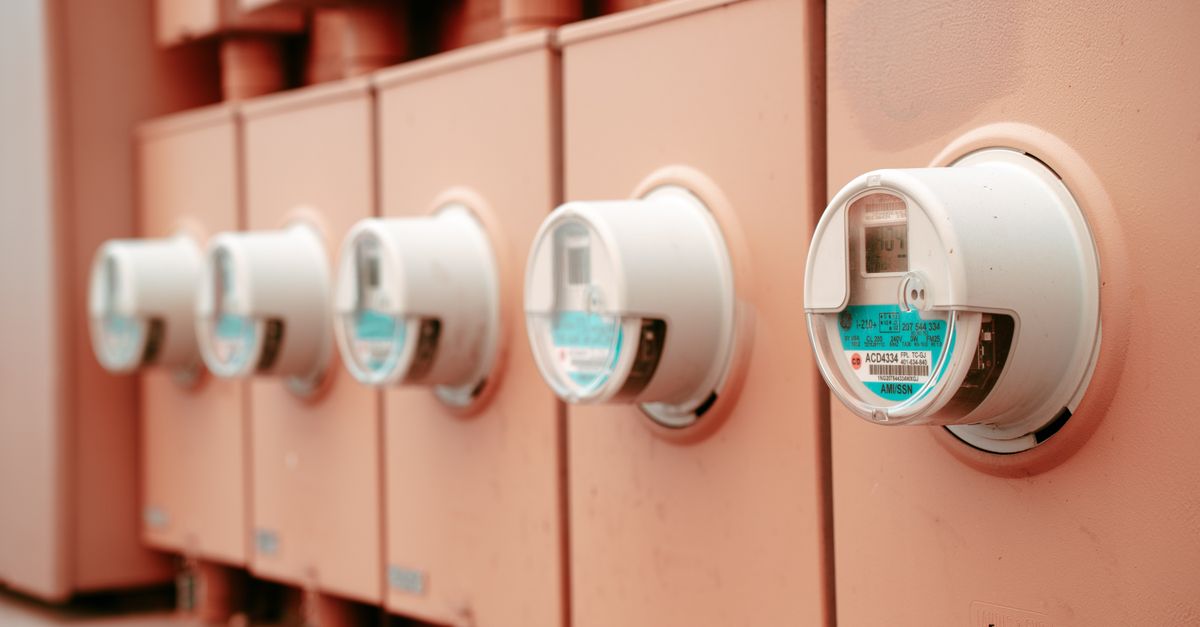
If you have a smart meter, your own usage data is more valuable than a national average.
ESB Networks smart meters record electricity consumption in 30-minute intervals.
They also record export data where electricity is being sent back to the grid.
Through an ESB Networks online account, customers can view electricity use across:
- daily;
- weekly;
- monthly;
- and yearly views.
You can also see how consumption is split across time periods.
ESB Networks: smart meters and data.
This allows you to answer much more useful questions than:
Am I above 4,200 kWh?
For example:
- Does usage remain high overnight?
- Is there a large 5pm–7pm peak?
- Is the tumble dryer dominating winter evenings?
- Is the EV actually charging on the night rate?
- Does the electric immersion come on for too long?
- Is solar export high while household imports remain high later that evening?
The time you use electricity can matter as much as the amount
SEAI says standard smart tariffs use the following periods:
| Period | Time |
|---|---|
| Day | 08:00–17:00 |
| Peak | 17:00–19:00 |
| Day | 19:00–23:00 |
| Night | 23:00–08:00 |
Suppliers can offer other tariff structures too.
SEAI notes that time-of-use tariffs are designed to encourage customers away from the 5pm–7pm peak period.
SEAI: Smart meters and tariffs.
This means two households can both use 4,200 kWh a year and still have very different bills.
One may consume heavily at the most expensive time of day.
The other may shift:
- dishwasher cycles;
- washing;
- EV charging;
- battery charging;
- hot-water heating
into cheaper periods.
Annual kWh alone does not capture that.
What actually uses the electricity?
SEAI gives a useful rule of thumb:
If an appliance makes something hot, it is likely to be a relatively heavy electricity user.
That includes:
- electric showers;
- tumble dryers;
- ovens;
- kettles;
- hair dryers;
- washing machines;
- dishwashers.
The reason is simple.
Heating water or air requires substantial energy.
A small electronic device can run for many hours and still use less electricity than a powerful heating element running for a short time.
Electric shower: short use, very high power
Take an illustrative 9 kW electric shower.
Run for 10 minutes:
9 kW × 10/60 hours = 1.5 kWh
At 30c/kWh:
1.5 × €0.30 = €0.45
for one 10-minute shower.
Two such showers every day would use approximately:
1,095 kWh a year
before allowing for variation in actual shower power and duration.
That would equal more than one-quarter of the CRU’s 4,200 kWh benchmark.
This is why small behaviour changes around high-power appliances can matter more than obsessing over very low-power devices.
Tumble dryer: winter usage adds up quickly
Suppose a dryer averages an illustrative 2.5 kW while actively heating and is used for one hour.
That is roughly:
2.5 kWh
At 30c/kWh:
€0.75 per cycle
If that happened four times a week for 30 wetter weeks of the year:
2.5 × 4 × 30 = 300 kWh
or around:
€90
at the illustrative unit rate.
Actual dryers cycle their heaters, differ by technology and may use much less or more per load.
The point is the scale.
SEAI specifically identifies tumble dryers as high electricity users and recommends air drying where practical.
Kettles are powerful but usually run briefly
A kettle may draw around 3 kW, but only for a few minutes.
Three minutes at 3 kW is:
3 × 3/60 = 0.15 kWh
At 30c/kWh:
4.5 cent
The individual boil is not enormous.
But repeatedly boiling much more water than needed wastes energy.
SEAI therefore recommends boiling only the amount required.
Refrigerators are the opposite problem
A fridge-freezer has much lower instantaneous power than an electric shower.
But it operates throughout the year.
That is why annual energy labels are particularly useful for appliances like:
- fridges;
- freezers;
- dishwashers;
- washing machines;
- tumble dryers.
SEAI notes that energy labels show expected consumption in kWh, often per year or per 100 cycles depending on the appliance category.
That lets you compare expected operating cost before purchasing.
Use kWh, not watts, when comparing your bill
Watts describe power.
Kilowatt-hours describe energy consumed over time.
A 2,000 W appliance is:
2 kW
If it runs at full power for 30 minutes:
2 kW × 0.5 hours = 1 kWh
At 30c/kWh:
30 cent
The Electricity Cost Calculator does this conversion for you.
For appliances that cycle on and off — including fridges, heat pumps and many heating appliances — measured consumption from a smart plug or energy monitor is better than assuming the appliance draws its rated wattage continuously.
An EV can transform household electricity use
For an EV household, the national benchmark can become much less useful.
Suppose an EV travels:
15,000 km per year
and consumes:
18 kWh/100 km
Energy delivered to the battery is:
15,000 × 18 ÷ 100 = 2,700 kWh
Now assume approximately 10% charging losses.
Electricity drawn from the charger is roughly:
3,000 kWh
If 80% of charging happens at home:
about 2,400 kWh/year
could be added to household electricity demand.
A home that otherwise used 4,200 kWh could therefore move toward:
6,600 kWh/year
without any change to cooking, laundry, lighting or household size.
That does not automatically mean the electricity bill rises proportionally.
If the EV is charged at a very cheap night rate, its cost per kWh may be much lower than the household day rate.
SEAI says home EV charging cost depends on:
- electricity tariff;
- vehicle efficiency;
- charging efficiency.
It also recommends considering time-of-use tariffs and overnight charging where appropriate.
Use the EV Charging Cost Calculator for your own mileage and tariff.
A heat pump can raise electricity use while reducing total home energy use
This sounds contradictory, but it is important.
A house previously heated by oil or gas may use electricity mainly for:
- lighting;
- appliances;
- cooking;
- electronics.
Install a heat pump and some of the home’s heating and hot-water demand moves onto the electricity meter.
Electricity consumption can therefore rise substantially.
But that does not automatically mean the home has become less efficient.
A heat pump moves heat rather than producing all of it through electrical resistance, so it can deliver multiple units of heat for each unit of electricity under suitable conditions.
The useful comparison is therefore not simply:
Electricity before versus electricity after.
It is:
Total household energy cost and delivered heating before versus after.
SEAI emphasises correct heat-pump sizing, building fabric, airtightness and appropriate controls.
SEAI: smart energy technologies.
All-electric homes need a different benchmark
The Electric Ireland benchmark makes this visible.
A 1–2 bed apartment is listed at:
2,100 kWh/year
while an all-electric 1–2 bed apartment is listed at:
5,000 kWh/year.
That is a difference of:
2,900 kWh/year.
The precise figure for any real home depends on:
- insulation;
- heating technology;
- hot-water system;
- occupancy;
- thermostat settings;
- ventilation;
- floor area;
- weather;
- appliance efficiency.
So comparing an all-electric home with the 4,200 kWh general benchmark can create the false impression that something is necessarily wrong.
Working from home can shift the profile
Home working may add:
- monitors;
- laptops;
- cooking;
- kettle use;
- daytime lighting;
- heating demand.
The direct electricity use of a laptop may be modest.
The bigger impact can be keeping the home heated or occupied throughout hours when it would otherwise be empty.
That effect varies significantly depending on whether heating is electric, oil, gas or another fuel.
Again, household context matters more than a single benchmark.
Why the 5pm–7pm period gets so much attention
SEAI’s 2025 research on household activities looked specifically at the evening peak.
Its survey found a substantial share of some household activities taking place between 4pm and 7pm, including a particularly large share of cooking activity.
That matters because the evening period coincides with high system demand.
SEAI: Household activities underlying residential electricity demand.
For households on a time-of-use tariff, shifting flexible loads away from an expensive peak can reduce cost without reducing the total number of kWh used.
Examples of flexible loads include:
- dishwasher;
- washing machine;
- EV charging;
- some hot-water heating;
- home-battery charging.
Cooking at 6pm is often less flexible.
Charging a car at 6pm usually is.
Base load: the electricity your home uses when “nothing is on”
Open your smart-meter data during the middle of the night.
If the house is using electricity continuously, that is your approximate base load.
Common contributors include:
- fridge and freezer;
- broadband router;
- security systems;
- ventilation;
- pumps;
- standby electronics;
- servers or network equipment;
- chargers;
- aquarium equipment;
- dehumidifiers;
- immersion or heating controls;
- heat pumps.
Suppose a home has a constant average base load of:
250 watts
That is:
0.25 kW × 24 × 365 = 2,190 kWh/year
before showers, cooking, laundry or EV charging.
A persistent base load deserves attention because it runs for many hours.
Do not confuse standing charges with electricity use
Reducing kWh will reduce the variable part of your bill.
It will not remove fixed standing charges.
This matters when estimating savings.
If your annual bill is €1,800, reducing consumption by 20% does not necessarily reduce the full bill by 20%.
The standing charge remains.
For a quick energy-saving calculation:
kWh saved × marginal unit rate
is a better starting point.
If you save 500 kWh and your relevant unit rate is 30c:
500 × €0.30 = €150
of approximate unit-charge saving.
Smart tariffs change the meaning of “average electricity price”
Suppose you use:
- 1,000 kWh at 12c;
- 2,000 kWh at 28c;
- 1,200 kWh at 40c.
Your annual use is still:
4,200 kWh
but your weighted unit cost is:
€1,160 ÷ 4,200 ≈ 27.6c/kWh
before fixed charges.
Another 4,200 kWh household could have a very different weighted rate.
That is why the most useful electricity analysis needs both:
- how much electricity you use;
- when you use it.
Solar can reduce imports without reducing household consumption
If a home uses 5,000 kWh a year and generates 3,500 kWh of solar, the household has not suddenly become a 1,500 kWh household.
Some solar may be:
- consumed directly;
- stored in a battery;
- diverted to an EV;
- exported.
Your meter import can fall sharply even though the appliances inside the house still consume the same amount of electricity.
When assessing solar, distinguish between:
- total household demand;
- solar generation;
- solar used on site;
- grid import;
- grid export.
The Solar Payback Calculator keeps those flows separate.
For a deeper comparison of storage and EV charging, see Do you actually need a battery with solar panels in Ireland? and the Solar + EV + Battery Optimiser.
How to find where your electricity is going
A practical audit can be done in stages.
1. Get your annual kWh
Use the last 12 months of bills or your smart-meter account.
Do not estimate from euro spend if you can avoid it.
Tariff changes can make cost move even when consumption does not.
2. Check monthly seasonality
Compare:
- January;
- April;
- July;
- October.
If winter consumption is dramatically higher, investigate heating, hot water, drying and dehumidification. If you are considering rooftop PV, compare those bills with actual modelled monthly solar output in Ireland before assuming summer generation will offset winter demand.
3. Check the overnight base load
Look at several quiet half-hour periods.
A consistently high load can reveal equipment running continuously.
4. Check the evening peak
What happens from 5pm to 7pm?
Cooking may be unavoidable, but EV charging, laundry and hot-water heating may be movable.
5. Isolate major appliances
Use smart plugs or energy monitors where safe and suitable.
SEAI specifically recommends energy monitors as a way to understand appliance consumption.
6. Match the tariff to the load
A cheap night rate is only valuable if you can actually move meaningful consumption into it.
7. Re-check after changing behaviour
Smart-meter data makes energy saving measurable.
You can see whether a change genuinely reduced kWh rather than relying on a lower euro bill caused by a new tariff.
What is “high” electricity use?
There is no universal threshold.
But the following is a useful first pass:
Around 2,000–3,000 kWh/year
Could be entirely plausible for a smaller home with non-electric space heating and modest occupancy.
Around 4,200 kWh/year
Close to the CRU comparison benchmark and Electric Ireland’s 3–4 bed semi benchmark.
Around 6,000–8,000 kWh/year
Could reflect a larger home, greater occupancy or more electrical loads.
Above 8,000 kWh/year
Worth understanding — but not automatically excessive.
An EV, heat pump, all-electric heating, large household, home office, hot tub or other substantial loads can explain it.
The right question is not:
Is 9,000 kWh bad?
It is:
What loads account for the 9,000 kWh, and are they providing value efficiently?
A worked household example
Consider a home with the following annual demand:
| Use | Approximate annual electricity |
|---|---|
| General household / appliances | 3,800 kWh |
| Electric showers | 900 kWh |
| Home EV charging | 2,400 kWh |
| Additional tumble drying / dehumidification | 400 kWh |
| Total | 7,500 kWh |
Compared with the 4,200 kWh benchmark, this looks high.
But the difference is explainable.
Now suppose the household:
- shifts most EV charging to a cheap night tariff;
- reduces dryer use;
- shortens showers;
- installs solar that supplies some daytime consumption.
The annual grid cost could fall materially even if total household electricity demand remains relatively high.
That is why kWh, tariff and timing should be analysed together.
What should you actually try to reduce?
Focus first on large flexible loads.
SEAI’s guidance broadly supports this approach.
Good candidates can include:
- unnecessary immersion use;
- long electric showers;
- tumble-dryer cycles;
- inefficient electric heating;
- poorly scheduled EV charging;
- appliances running unnecessarily;
- excessive continuous base load.
Do not spend an hour unplugging tiny phone chargers while ignoring a 9 kW shower running for an extra ten minutes every day.
Prioritise by:
power × time × frequency
Use actual consumption before buying energy technology
This matters particularly for:
- solar PV;
- batteries;
- EV tariffs;
- heat pumps;
- retrofit decisions.
A solar installer estimating a system around generic household consumption is working with less information than one using your real half-hourly data.
Likewise, a battery is more valuable when it can regularly shift expensive consumption.
Before spending thousands of euro on energy hardware, understand the load that the hardware is supposed to solve.
The practical benchmark to use
If you know nothing about your home yet:
4,200 kWh/year
is a reasonable Irish starting point.
Then replace it as quickly as possible with your own data.
Use:
- your last 12 months of kWh;
- your smart-meter half-hourly profile;
- your real tariff;
- your major electrical loads;
- expected future changes such as an EV or heat pump.
Then use the tools for the question you are actually trying to answer:
- Electricity Cost Calculator — what does an appliance cost to run?
- EV Charging Cost Calculator — what will the car add?
- Solar Payback Calculator — how much grid electricity could solar offset?
- Solar + EV + Battery Optimiser — how should the major loads interact?
The national average is useful for orientation.
Your meter is what tells you what is actually happening in your house.