Electricity Tariffs in Ireland: Smart, Day/Night, EV & Dynamic Rates
A practical guide to electricity tariffs in Ireland: 24-hour plans, legacy day/night tariffs, smart time-of-use rates, EV night boosts and the new half-hourly dynamic tariffs available from 2026.
 Wealth / The Compound journal
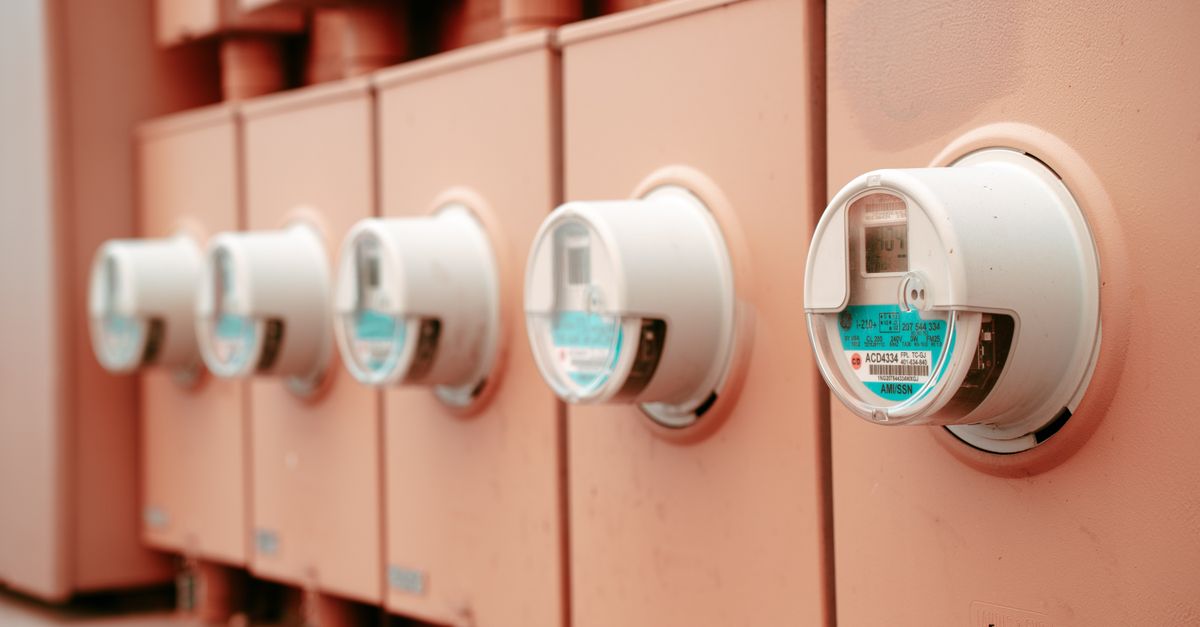
Photo: Connor Scott McManus on Pexels · Illustrative image.
Looking at your winter 2026–27 bill after Budget 2027? Read our no-electricity-credit Budget update and winter bill scenarios, then use the guidance here to compare tariff types. The worked prices in that news article are illustrations, not live supplier offers.
Choosing an electricity tariff in Ireland used to be relatively simple.
You looked at the unit rate, checked the standing charge and compared suppliers.
That is no longer enough.
A household can now choose between:
- flat 24-hour pricing;
- traditional day/night pricing;
- smart time-of-use tariffs;
- EV-focused night or “boost” rates;
- weekend or free-hour plans;
- and, since 2026, dynamic tariffs where the electricity price can change every half-hour.
The result is that two households using the same number of kilowatt-hours can pay materially different amounts depending on when they use them.
For solar homes, the Compound Solar Hub and its export-rate comparator help compare the whole import-and-export bill, rather than the export payment alone.
Quick answer
The best electricity tariff is the one that matches your actual load profile, not the one with the lowest advertised unit rate.
A flat 24-hour tariff is simple. A smart time-of-use tariff can reward households that move meaningful consumption into cheaper periods. EV tariffs can be particularly valuable where a car is charged overnight. Dynamic tariffs can go further by changing every half-hour, but they require more flexibility and attention.
Before switching, compare the full annual cost: unit charges + standing charge + levies + VAT − discounts.
This guide reflects Irish tariff rules and market structures checked on 3 October 2026. Supplier prices change frequently, so the article deliberately focuses on how tariffs work rather than publishing a rate table that may be stale within weeks.
Electricity tariffs in Ireland at a glance
| Tariff type | How pricing works | Who it can suit |
|---|---|---|
| 24-hour tariff | Same unit price throughout the day | Households that want simplicity or cannot shift much demand |
| Legacy day/night tariff | Two unit rates: day and night | Homes with substantial overnight use, storage heating or scheduled loads |
| Standard Smart Tariff | Day, peak and night rates | Homes that can avoid the 5pm–7pm peak and move usage overnight |
| EV / night-boost tariff | Very cheap rate during a narrower overnight window, usually with other rates elsewhere | EV owners with scheduled home charging |
| Weekend / free-time tariff | Reduced or free electricity during selected weekend hours | Homes able to concentrate flexible usage in the promotional window |
| Dynamic tariff | Unit price changes every 30 minutes with wholesale-market conditions | Flexible homes with smart meters, EVs, batteries, heat pumps or automation |
The critical point is that tariff type is separate from supplier.
Two suppliers can both offer smart tariffs with very different prices, standing charges and discount structures.
Start with your own electricity data
Before comparing tariffs, find out:
- how many kWh you use per year;
- how much you use overnight;
- how much you use between 5pm and 7pm;
- whether you have large flexible loads such as an EV, immersion, heat pump, dishwasher or battery;
- whether you have solar and export electricity.
A national average is useful only as a rough benchmark.
Our guide to average electricity use in an Irish home explains how to interpret your annual usage and smart-meter data.
If you have a smart meter, ESB Networks records electricity consumption in 30-minute intervals.
That is much more useful for tariff selection than one annual kWh number.
Two homes could both use 4,200kWh a year.
One may use most of it during expensive evening periods.
The other may charge an EV overnight and have very little 5pm–7pm demand.
A tariff that works well for one can be poor for the other.
1. Flat 24-hour electricity tariffs
A 24-hour tariff charges the same electricity unit rate regardless of the time of day.
If the unit rate is 25c/kWh, then:
- 1kWh at 2pm costs 25c;
- 1kWh at 6pm costs 25c;
- 1kWh at 2am costs 25c.
That makes the plan easy to understand.
It also means there is no unit-price reward for moving consumption away from the evening peak.
A 24-hour tariff can still exist on a smart meter.
SEAI explicitly lists a 24-hour smart tariff as a tariff where the unit rate remains fixed across the day.
So:
Having a smart meter does not mean you must be on a time-of-use tariff.
This distinction matters because many people confuse the meter with the tariff.
2. Traditional day/night tariffs
Ireland also has traditional day/night metering.
These plans use two price periods:
- a day rate;
- a cheaper night rate.
ESB Networks says the day/night period on these meters is:
Winter - night: 11pm–8am
Summer - night: midnight–9am
The one-hour seasonal shift happens because the older day/night arrangement follows the underlying meter clock.
This is different from the Standard Smart Tariff, which uses the same clock-time bands year-round.
Traditional day/night tariffs can work well where a large share of electricity demand is genuinely overnight.
Examples include:
- storage heating;
- overnight water heating;
- EV charging;
- batteries;
- appliances that can be scheduled.
But the night rate should never be assessed in isolation.
A very cheap night price can be offset by:
- a high daytime rate;
- a higher standing charge;
- or relatively little household usage actually occurring overnight.
3. Standard Smart Tariffs
All suppliers are required to offer a Standard Smart Tariff.
The standard time bands are:
| Period | Time | Typical relative price |
|---|---|---|
| Day | 08:00–17:00 | Medium |
| Peak | 17:00–19:00 | Highest |
| Day | 19:00–23:00 | Medium |
| Night | 23:00–08:00 | Lowest |
SEAI says the purpose of time-of-use tariffs is to encourage households to reduce demand during the 5pm–7pm peak.
This creates a simple rule:
A smart tariff becomes more attractive when you can move meaningful kWh away from the expensive peak and into cheaper periods.
That can be easier for some loads than others.
You may not want to cook dinner at 2am.
But an EV, dishwasher, washing machine, immersion or battery can often be scheduled automatically.
4. EV and night-boost tariffs
Some suppliers offer smart tariffs with a particularly cheap overnight window aimed at EV charging.
These are often described as:
- EV tariffs;
- night boosts;
- super-night rates;
- or similar supplier-specific names.
The important feature is not the marketing name.
It is the combination of:
cheap-window rate × cheap-window hours × your usable overnight demand.
An EV can add thousands of kWh of annual household electricity consumption.
That makes tariff selection much more important.
For example, an EV using 3,000kWh from the grid each year creates a potential annual difference of:
3,000 × 10c = €300
for every 10c/kWh difference in the effective charging rate.
That does not mean the tariff saves €300 overall.
The rest of the household may face different day or peak prices.
Use our EV Charging Cost Calculator to estimate the vehicle’s annual electricity requirement before comparing tariffs.
5. Weekend and free-hour tariffs
Some suppliers offer plans with free or heavily discounted electricity during a selected Saturday or Sunday period.
These can look extremely attractive.
But the word free can distract from the rest of the tariff.
A household should ask:
- How many hours are actually free?
- Can I realistically move meaningful demand into them?
- What is the unit price outside that period?
- What is the standing charge?
- Is the plan still competitive after the promotional benefit is included?
If you normally use 20kWh during a free window but pay more for 4,000kWh during the rest of the year, the headline feature may not compensate for the broader tariff.
Compare the entire year.
6. Dynamic electricity tariffs
This is the major new development in 2026.
The CRU says dynamic electricity tariffs became available from June 2026.
Unlike a normal smart tariff with fixed day, peak and night prices, a dynamic tariff can change price every 30 minutes.
That means there can be:
48 different electricity prices in a day.
The prices reflect wholesale electricity-market conditions.
CRU says suppliers publish the next day’s half-hour prices in advance through apps or online accounts.
The standard dynamic product includes:
- a standing charge;
- half-hourly unit prices;
- a price cap designed to protect customers from very high prices.
Prices are often lower when demand is low or renewable generation is high.
They are often higher during busy periods such as the early evening.
But unlike a fixed time-of-use plan, the cheapest period can move from one day to another.
Who can benefit from a dynamic tariff?
Dynamic tariffs are most interesting when a household has flexible electrical demand.
Examples include:
- an EV;
- battery storage;
- heat pump;
- immersion heater;
- dishwasher;
- washing machine;
- tumble dryer;
- home energy management system.
Imagine tomorrow’s cheapest half-hour periods occur between 3am and 5am.
An EV or battery can be scheduled to respond automatically.
That is much harder to exploit if most household demand is unavoidable evening cooking, lighting and entertainment.
The CRU therefore advises customers to review their usage and check whether a supplier’s dynamic tariff suits them before switching.
Dynamic tariff vs normal smart tariff
The difference is important.
Normal smart time-of-use tariff
The time windows are known in advance.
For example:
- night = 23:00–08:00;
- peak = 17:00–19:00.
The unit prices remain as defined by the tariff until the supplier changes the plan.
Dynamic tariff
The price itself changes every half-hour.
Tomorrow’s 2am price may be very different from tonight’s 2am price.
So a dynamic tariff rewards active flexibility rather than simply “using more electricity at night”.
Automation makes this much easier.
How to compare a 24-hour tariff with a smart tariff
Do not compare one unit rate against another.
Calculate a weighted annual energy cost.
For a smart tariff:
Annual usage cost = day kWh × day rate + peak kWh × peak rate + night kWh × night rate
Then add:
- standing charge;
- PSO levy;
- VAT;
- other applicable charges;
and subtract any discounts or credits that genuinely apply.
For a flat tariff:
Annual usage cost = total kWh × flat rate
Then add the same fixed-cost elements.
Model an appliance
Electricity Cost Calculator
See what a heater, immersion, dryer, dehumidifier or other load costs at your actual unit rate, then test what happens when some of its usage moves to a cheaper off-peak tariff.
Worked example: why usage timing matters
Consider an illustrative household using 4,200kWh per year.
These are invented rates purely to show the calculation:
Flat plan
- unit rate: 25c/kWh
Annual usage charge:
4,200 × €0.25 = €1,050
before standing charge and other bill items.
Smart plan
Assume:
- day rate: 27c/kWh;
- peak rate: 36c/kWh;
- night rate: 15c/kWh.
If the household uses:
- 50% during day periods;
- 15% during peak;
- 35% at night;
then:
Day:
2,100 × €0.27 = €567
Peak:
630 × €0.36 = €226.80
Night:
1,470 × €0.15 = €220.50
Total usage charge:
€1,014.30
The smart plan is around €35.70 cheaper on usage charges in this illustration.
But now move more usage away from the peak.
Suppose the split becomes:
- 50% day;
- 10% peak;
- 40% night.
The annual usage charge falls to about:
€970.20
Now the smart tariff is roughly €79.80 cheaper than the flat example before fixed charges.
The tariff did not change.
The household behaviour did.
That is the core idea behind time-of-use pricing.
Standing charges matter more than people think
A standing charge is paid regardless of how many kWh you use.
This means a low-usage household should pay particular attention to it.
Suppose Tariff A is 2c/kWh cheaper than Tariff B.
At 2,500kWh annual use, that difference is worth:
2,500 × €0.02 = €50
If Tariff A has a standing charge €80 higher, it can still be more expensive overall.
This is why comparing only unit rates can be misleading.
CRU lists standing charges, usage charges, PSO levy and VAT as separate components that can appear on an electricity bill.
The PSO levy changed on 1 October 2026
The PSO levy is another bill component.
For the 2026/27 tariff year, which began on 1 October 2026, CRU set the domestic PSO charge at:
€0.51 per month.
That was a 66% reduction from the previous period.
CRU also approved higher network revenue allowances for 2026/27 and estimated the network-charge impact on a typical domestic electricity customer at approximately:
€41.25 over the period, or €3.44 per month.
Network costs are embedded in the wider electricity-market cost structure rather than being a simple retail unit-rate comparison.
These regulated charges can change annually, so they should be rechecked when doing a detailed tariff comparison.
Discounts and sign-up credits can distort the headline rate
Electricity plans can include:
- percentage discounts;
- welcome credit;
- direct-debit discount;
- online billing conditions;
- fixed-term promotions;
- loyalty offers.
A €200 sign-up credit can make a plan look excellent in year one.
But it may disappear in year two.
Likewise, a large percentage discount means little unless you know what price it is discounting.
A useful comparison asks:
What is my expected total cost over the next 12 months?
Then separately ask:
What happens when the introductory discount ends?
Smart meter does not automatically mean smart tariff
This causes a lot of confusion.
A smart meter can be installed while you remain on a standard tariff.
SEAI says households with smart meters are not obliged to sign up to a smart time-of-use tariff.
CRU also notes that once smart services have been activated, the activation itself cannot be reversed.
However, that does not mean you are permanently trapped on a day/night/peak tariff.
Suppliers can offer 24-hour tariffs that work with an activated smart meter and charge the same unit price throughout the day.
So distinguish between:
smart meter activation
and
the tariff you choose.
How to use your smart-meter data before switching
The best tariff-selection process is:
Step 1: Download your data
Use your ESB Networks online account.
Step 2: Look at at least several weeks
A single day can be misleading.
Winter and summer can also look very different.
Step 3: Find the big flexible loads
Typical candidates include:
- EV charging;
- immersion;
- dishwasher;
- washing machine;
- tumble dryer;
- battery charging.
Step 4: Measure the 5pm–7pm share
This is particularly important for standard smart tariffs because that is the peak period.
Step 5: Model each candidate tariff against your real pattern
Use the actual tariff bands rather than assuming the cheapest rate applies to all your electricity.
Solar changes the tariff decision
A household with solar should think differently from one without it.
Solar can reduce daytime grid imports.
That may mean the household’s remaining imports become concentrated in:
- mornings;
- evenings;
- overnight EV charging;
- winter periods.
At the same time, exported solar can earn a Clean Export Guarantee payment.
The export tariff and import tariff are separate values.
A supplier with the best import tariff for your usage pattern may not necessarily have the highest export tariff.
The economically relevant calculation is the whole position:
import cost − export income.
See our Solar Panels in Ireland 2026 guide for the complete solar, CEG, grant and payback framework.
Batteries can turn tariff differences into an asset
A battery adds another layer.
It can potentially:
- charge from solar;
- charge from the grid during cheap periods;
- discharge during expensive periods;
- reduce peak imports.
But the tariff spread must be large enough to overcome:
- round-trip energy losses;
- battery degradation;
- the battery’s capital cost.
Suppose:
- cheap rate = 10c/kWh;
- expensive rate = 30c/kWh;
- round-trip efficiency = 90%.
One kWh bought cheaply and stored delivers roughly 0.9kWh later.
The avoided expensive import is worth:
0.9 × 30c = 27c
Against a 10c charging cost, the gross tariff spread creates:
17c per input kWh
before battery degradation and capital cost.
Use the Solar + EV + Battery Optimiser to model these trade-offs rather than assuming cheap-rate charging is automatically profitable.
EV owners should compare the whole household tariff
A very cheap EV night rate is attractive.
But do not compare only:
EV rate vs normal rate.
You also need:
- the daytime rate;
- peak rate;
- standing charge;
- duration of the cheap window;
- how many EV kWh fit inside that window;
- the rest of the household’s usage.
An EV tariff can be excellent for a household charging 3,000kWh a year overnight and poor for another household that drives very little but uses a lot of electricity during the expensive peak.
Heat pumps make tariff choice more important
Heat pumps can be substantial electrical loads.
If you are considering installing one, our Heat Pumps in Ireland 2026 guide shows how SCOP converts electricity prices into useful-heat cost and why tariff choice matters after switching from oil or gas.
Unlike an EV, some heating demand cannot simply be moved to 3am.
But a well-controlled heating system can sometimes preheat a home or hot-water cylinder during cheaper periods and reduce demand during expensive peaks.
The useful metric is therefore not simply annual heat-pump kWh.
It is:
how flexible is that heat demand without reducing comfort?
This is also where dynamic tariffs and automated controls may become more valuable over time.
Common tariff mistakes
Choosing the lowest advertised unit rate
It may apply only during a narrow overnight window.
Ignoring the standing charge
Fixed charges can reverse a small unit-rate advantage.
Using the 4,200kWh national benchmark instead of your own data
The tariff that wins at an average consumption pattern may not win for your household.
Assuming smart means cheaper
A smart tariff can be more expensive if you use heavily during the peak period.
Buying an EV tariff without enough EV usage
A spectacular 2am rate has limited value if very little electricity is used then.
Ignoring what happens after year one
Sign-up credits and introductory discounts can disappear.
Assuming a dynamic tariff is always cheaper
Half-hourly pricing creates opportunities, but it also exposes the household to changing prices.
Ignoring solar export income
For solar owners, the import tariff is only one side of the equation.
A practical tariff-selection checklist
Before switching, collect:
- annual kWh;
- day/night/peak split if available;
- annual standing charge;
- each applicable unit rate;
- exact time windows;
- sign-up credit;
- discount expiry date;
- contract length;
- exit fee;
- EV charging kWh;
- solar export kWh;
- current CEG export tariff;
- expected battery charging pattern.
Then calculate the annual euro result.
Do not choose from marketing labels.
Use an approved comparison website
The CRU accredits electricity price-comparison websites and recommends using an approved service when comparing suppliers.
At the time this guide was checked, CRU listed:
- Bonkers.ie;
- Switcher.ie;
- PowerToSwitch.ie;
- EnergySwitch.ie.
Comparison sites are most useful when you enter your actual consumption rather than relying on a generic national average.
For smart tariffs, your time-of-use pattern matters as well as total annual kWh.
Frequently asked questions
What are the standard smart tariff hours in Ireland?
The Standard Smart Tariff uses:
- day: 08:00–17:00;
- peak: 17:00–19:00;
- day: 19:00–23:00;
- night: 23:00–08:00.
What is the most expensive smart tariff period?
On the Standard Smart Tariff structure, the 17:00–19:00 period is the peak band.
Actual prices are set by individual suppliers.
What are day/night electricity hours in Ireland?
For traditional day/night metering, ESB Networks states that the night period is 23:00–08:00 in winter and 00:00–09:00 in summer.
This is different from the fixed clock-time Standard Smart Tariff bands.
Do I need a smart tariff if I have a smart meter?
No. A smart meter does not force you onto a time-of-use tariff.
Can I go back after activating smart services?
CRU says smart-meter activation cannot itself be reversed. However, suppliers can still offer 24-hour tariffs for activated smart meters.
What is a dynamic electricity tariff?
A dynamic tariff changes the unit price every 30 minutes based on wholesale-market conditions. Suppliers publish the next day’s 48 half-hour prices in advance.
Are dynamic tariffs available in Ireland?
Yes. CRU says dynamic tariffs became available from June 2026. Availability depends on the supplier, so customers should check current offers.
Are EV electricity tariffs always cheaper?
No. They can be very attractive for overnight charging, but the whole-house tariff still matters.
Does solar make a smart tariff better?
It can. Solar may reduce expensive daytime imports, but the answer depends on when you import, when you export and the supplier’s CEG rate.
What matters more: unit rate or standing charge?
Neither should be looked at alone. Compare the total expected annual bill.
The bottom line
Electricity tariffs in Ireland are increasingly becoming a data problem.
The old question was:
“Who has the cheapest unit rate?”
The better question is now:
“What will this tariff cost for the exact hours in which my household uses electricity?”
For a low-flexibility household, a competitive 24-hour tariff may remain perfectly sensible.
For an EV household, a cheap overnight window can be extremely valuable.
For a solar-and-battery household, the interaction between import prices, export payments and storage can matter more than the headline rate.
And for highly flexible homes, dynamic half-hourly tariffs create a new option that did not previously exist.
Start with your own smart-meter data.
Then compare the full annual cost — not the advertisement.