€600 SEAI Home Battery Grant Ireland: Who Qualifies and Is It Worth It?
Ireland’s SEAI €600 home battery grant is now open for qualifying systems of at least 5 kWh. Check property eligibility, application steps, how it combines with solar PV funding and whether a battery will pay back.
 News / Wealth
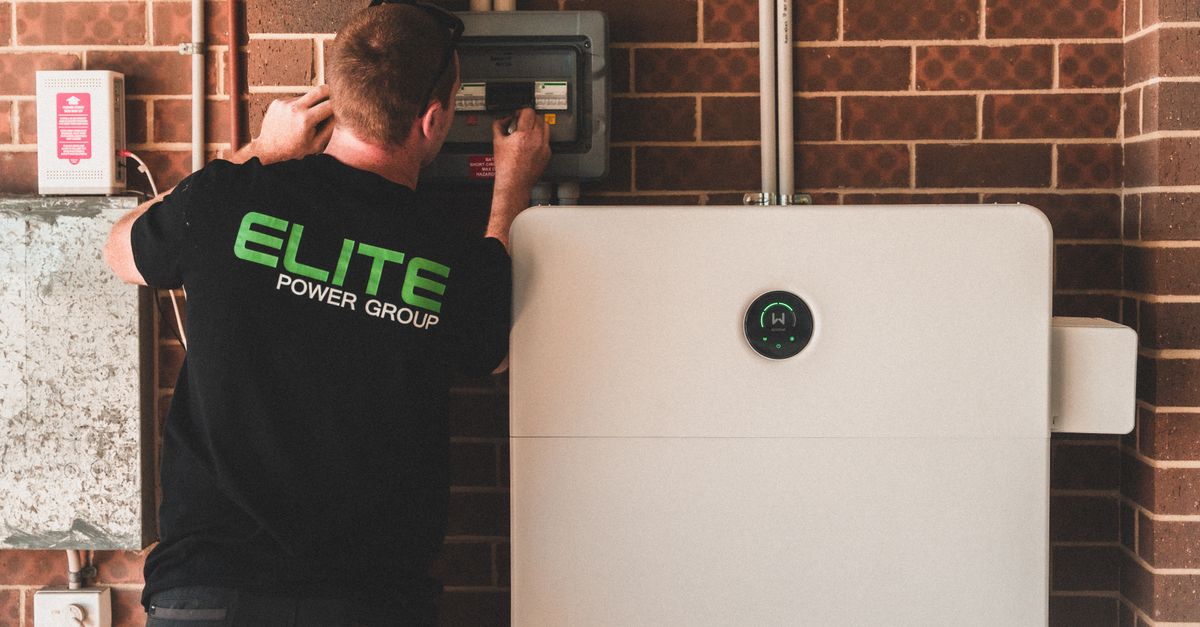
Photo: Elite Power Group on Pexels · Illustrative image.
Verified · 13 October 2026
The SEAI €600 home battery grant is now open for qualifying battery storage systems of 5 kWh or larger. You must receive the SEAI grant offer before installation starts. This article was originally published on 28 September ahead of the announcement; the guidance below reflects the confirmed scheme as of 13 October.
For the current rules in context, see our complete Solar Panels in Ireland guide.
A €600 grant for home battery storage is now available in Ireland, under the SEAI Battery Energy Storage System Grant. The grant supports qualifying batteries of at least 5 kWh in eligible homes built and occupied before 2025.
That will immediately make batteries look more attractive to households considering solar.
But the important question is not simply:
Can I get €600 off a battery?
It is:
Does the battery save enough money each year to justify the remaining cost?
That distinction matters because a battery can improve how much solar electricity you use at home without necessarily producing the best financial return.
For many Irish households, solar panels can make financial sense without a battery.
The new grant could narrow that gap.
It will not automatically eliminate it.
Compound’s Solar + EV Battery Optimiser lets you model the trade-off using your own electricity price, export rate, battery cost, solar generation and EV charging pattern.
Test your own battery economics →
The dedicated Solar Battery Payback Calculator isolates storage costs, round-trip losses and export income forgone. The Solar Hub links grant checks and installation comparisons.
What is the current €600 battery grant?
The Government announced the battery support on 29 September 2026; the scheme subsequently opened for applications. The SEAI Battery Energy Storage System Grant now provides a flat €600 towards an eligible battery 5 kWh or larger. It can be applied for alongside a new solar PV installation or separately for an existing solar home, provided all current conditions are met.
Eligibility and application essentials:
- The property must have an MPRN and have been built and occupied before 2025.
- A battery grant cannot be claimed again at the same MPRN if that property already received battery funding.
- Installation must be by an SEAI-registered solar PV contractor and meet SEAI technical rules.
- Apply and receive the SEAI grant offer before installation work begins. Retrospective applications for work already started are not accepted.
- Check the applicable post-works BER and documentation requirements directly with SEAI.
The battery grant is separate from the standard solar PV grant. For eligible systems, the maximum standard PV grant remains €1,800, so combined funding can reach €2,400:
| Eligible measure | Maximum standard grant |
|---|---|
| Solar PV, up to 4 kWp grant cap | €1,800 |
| Battery of at least 5 kWh | €600 |
| Combined solar PV and battery | €2,400 |
A grant does not guarantee a profitable installation. Use the Solar Grant Checker for a preliminary eligibility screen, the Solar Battery Calculator for the incremental economics and Solar Hub to prepare comparable installation quotes. Verify everything against SEAI before committing.
Why Government wants more batteries in homes
Solar generation and household electricity demand do not always line up.
Panels often produce strongly around the middle of the day.
Many homes use more electricity:
- early in the morning;
- after work;
- during the evening;
- and after sunset.
Without a battery, surplus solar electricity can be exported to the grid.
With a battery, some of that energy can be stored and used later.
That can increase the percentage of your own solar generation that you consume inside the home.
It can also potentially allow households to charge a battery cheaply at night and discharge it during expensive daytime or peak-rate periods.
Whether that arbitrage is worthwhile depends on the real tariff spread and battery losses. Our Electricity Tariffs in Ireland guide explains the current smart, EV and dynamic tariff structures behind that calculation.
That flexibility is one reason batteries are increasingly being paired with solar systems.
The Irish Times reported that around half of current solar installations now include battery storage.
Batteries are still expensive
The same report noted that home battery systems typically cost more than €4,000.
So even with a €600 grant, the household is still making a substantial additional investment.
Consider a simple example:
| Battery cost | Grant | Net battery cost |
|---|---|---|
| €4,000 | €600 | €3,400 |
| €4,500 | €600 | €3,900 |
| €5,000 | €600 | €4,400 |
| €6,000 | €600 | €5,400 |
The grant therefore improves the economics.
But it does not transform a €5,000 battery into a cheap upgrade.
The more useful calculation is how much additional annual value the battery creates.
What annual saving would justify a battery?
Take a battery costing €4,500 before grant.
After a €600 grant:
Net cost = €3,900
To recover that cost through additional savings alone:
| Target simple payback | Additional annual saving required |
|---|---|
| 5 years | €780/year |
| 7 years | €557/year |
| 10 years | €390/year |
| 12 years | €325/year |
That is the key figure.
If the battery only improves your annual electricity position by €200, a €3,900 net investment has a simple payback of nearly 19.5 years.
If it improves your position by €500 a year, the simple payback falls to about 7.8 years.
The grant helps in both cases.
But your electricity usage still determines whether the battery is attractive.
Why export payments matter so much
A common mistake is to treat surplus solar electricity as worthless.
It is not.
Irish households with eligible microgeneration can receive payment for electricity exported to the grid.
That means every kWh put into a battery has an opportunity cost:
you are giving up the export payment you could otherwise have received.
Suppose:
- export rate = 18c/kWh;
- electricity import price = 30c/kWh;
- battery round-trip efficiency = 90%.
If you export 1 kWh, you receive:
18c
If you store 1 kWh in the battery, only about 0.9 kWh may come back after losses.
Using that later to avoid buying electricity at 30c/kWh is worth:
0.9 × 30c = 27c
So the incremental value of storing rather than exporting that 1 kWh is roughly:
27c - 18c = 9c
That is much smaller than the full 30c retail electricity price.
This is why batteries can increase self-consumption without necessarily paying back quickly.
The €600 grant changes the calculation — but not the underlying equation
In our existing analysis, Do you actually need a battery with solar panels in Ireland?, we modelled a €5,000 battery.
Under one illustrative household scenario, the battery increased annual energy value by around €149 per year from solar shifting alone.
A €600 grant would reduce that battery’s effective upfront cost from:
€5,000 → €4,400
That improves the economics.
But if the battery is only creating €149 of extra annual value, the grant does not suddenly make the investment financially compelling.
The simple payback on the battery portion would still be close to:
€4,400 ÷ €149 ≈ 29.5 years
That is a deliberately simplified example, and many households can do better.
The point is that a grant reduces capital cost; it does not change how much each stored kWh is worth.
When a battery becomes much more attractive
Battery economics improve when the difference between cheap and expensive electricity becomes larger.
There are several situations where this can happen.
1. You export a lot of solar but buy expensive electricity later
A household that exports heavily during the day and imports heavily during expensive evening periods has more opportunity to shift electricity through a battery.
The larger the gap between export value and avoided import cost, the more valuable storage becomes.
2. You have a strong night-rate tariff
Some smart tariffs offer much cheaper electricity overnight.
That can create a second use for the battery:
charge it cheaply from the grid at night and use that electricity later when rates are higher.
This means the battery is no longer relying solely on excess solar for its return.
A battery that cycles during both winter and summer can produce more annual value than one that is mainly used to store summer solar.
3. Your household uses a lot of electricity in the evening
Homes with high evening demand may be able to use more stored energy.
That can include households with:
- electric cooking;
- home offices;
- gaming or entertainment loads;
- electric showers;
- heat pumps;
- or larger families.
4. Your export rate is relatively low
If your electricity supplier pays a low export rate, giving up that export becomes less costly.
That improves the economics of storing the electricity instead.
5. Your import rate is high
The more expensive each imported kWh is, the more valuable it becomes to avoid buying one.
The relationship is simple:
battery value rises when avoided import cost rises relative to export value.
EV owners need to be particularly careful
An EV sounds like an obvious reason to buy a large battery.
Sometimes it is.
Sometimes it is the opposite.
If your EV can charge overnight on a very cheap tariff, it may make little financial sense to:
- store daytime solar in an expensive home battery;
- then use that stored energy to charge the EV;
- when the car could simply charge directly from the grid overnight at a much lower rate.
For example, if you receive 18c/kWh for exported solar but can charge your EV overnight at 8c/kWh, exporting the solar and buying cheap night electricity can actually leave you financially better off.
That is why Compound built the Solar + EV Battery Optimiser.
It compares solar self-use, export, battery storage and EV charging rather than assuming that maximum self-consumption is always the optimal financial choice.
You can also compare EV energy costs directly with petrol or diesel using the EV Charging Cost Calculator.
A battery does something solar panels cannot
There is still a practical benefit that simple payback does not fully capture.
Solar panels generate electricity.
A battery gives you control over when electricity is used.
That flexibility can become valuable as smart tariffs become more sophisticated.
A battery may allow a household to:
- avoid expensive peak-rate periods;
- charge during very cheap night-rate windows;
- increase solar self-consumption;
- reduce exposure to future tariff changes;
- coordinate with an EV;
- and potentially provide limited backup capability, depending on the system.
Those benefits can matter even when the simple financial return is not the absolute best available investment.
But households should separate those lifestyle and resilience benefits from pure payback.
What about the Government’s €900 savings figure?
The Department of Energy has calculated that a household with a battery installed alongside a 4 kWp solar PV system could generate savings of up to around €900 per year, according to The Irish Times.
That is useful as an indication of potential system-level savings.
But it should not be read as meaning:
the battery itself saves €900 per year.
A large portion of the savings from a solar-plus-battery system may come from the solar panels themselves.
The correct battery decision is therefore based on:
solar + battery savings minus solar-only savings
rather than comparing the whole system with a home that has no solar at all.
That incremental calculation is the one that tells you whether the battery earns its additional cost.
What would the grant do to payback?
Consider this simplified battery-only comparison:
| Battery price | Annual additional value | Payback before grant | Payback after €600 grant |
|---|---|---|---|
| €4,000 | €300 | 13.3 years | 11.3 years |
| €4,500 | €400 | 11.3 years | 9.8 years |
| €5,000 | €500 | 10.0 years | 8.8 years |
| €5,000 | €300 | 16.7 years | 14.7 years |
The €600 grant can remove roughly one to two years from simple payback in many mid-range examples.
That is meaningful.
But it is not enough to rescue a poorly matched battery system.
Can you apply now — and what should you do first?
Yes, SEAI has opened the scheme, but you cannot claim €600 for an installation that does not meet its conditions. Before ordering a battery:
- Check your MPRN, property age and previous battery grant history.
- Ask an SEAI-registered solar PV contractor for an itemised quote showing usable battery capacity, storage/inverter compatibility and total installed cost.
- Apply for the battery grant and wait for the SEAI grant offer before work starts.
- Keep the completion documents needed for the grant claim, including any BER requirement applicable to your project.
Already have panels? SEAI allows an eligible battery-only application; a simultaneous new solar PV installation is not a requirement. Check SEAI’s live eligibility page and use the Solar Hub grant checker before proceeding.
What about the existing €1,800 solar grant?
SEAI currently offers a maximum domestic solar PV grant of €1,800.
The home must generally:
- have an MPRN;
- have been built and occupied before 2025;
- not previously have received solar PV funding at that MPRN;
- and have grant approval before works begin.
SEAI also states that grant approval should be in place before the installation proceeds.
The separate €600 battery grant can sit alongside this existing solar PV support for qualifying installations.
For a full solar-system estimate, use Compound’s Solar Payback Calculator.
The best way to decide
Do not start with the grant.
Start with your electricity data.
Look at:
- annual household consumption;
- daytime versus evening usage;
- current import tariff;
- night-rate tariff;
- export payment;
- estimated annual solar generation;
- battery usable capacity;
- battery round-trip efficiency;
- installed battery cost after grant;
- and expected number of useful cycles per year.
Then compare:
solar only
with:
solar + battery
The battery should be judged on the incremental value it adds.
That is the number that matters.
So is the €600 battery grant a good deal?
It makes qualifying batteries more attractive.
For households already close to the point where storage makes sense, €600 could be enough to move the decision in favour of a battery.
It may be particularly useful for homes with:
- high evening electricity use;
- large daytime solar exports;
- expensive peak tariffs;
- access to cheap off-peak charging;
- or a battery that can be used productively throughout the year.
For households with low electricity use, strong export payments and limited evening demand, solar panels without a battery may still produce a better financial return.
The grant should therefore be viewed as a reduction in the hurdle, not proof that everyone should install storage.
The scheme is now open; before applying, verify the latest SEAI requirements. The next step is simple:
put the actual grant-adjusted battery price into the calculator and see what the numbers look like for your home.
Use the Solar + EV Battery Optimiser →
For the wider Budget package, see Compound’s Budget 2027 guide.