Do you actually need a battery with solar panels in Ireland?
A battery can increase how much of your solar you use at home, but that does not automatically mean a faster payback. The answer depends on export rates, night tariffs, when you use electricity and whether you have an EV.
 Wealth / The Compound journal
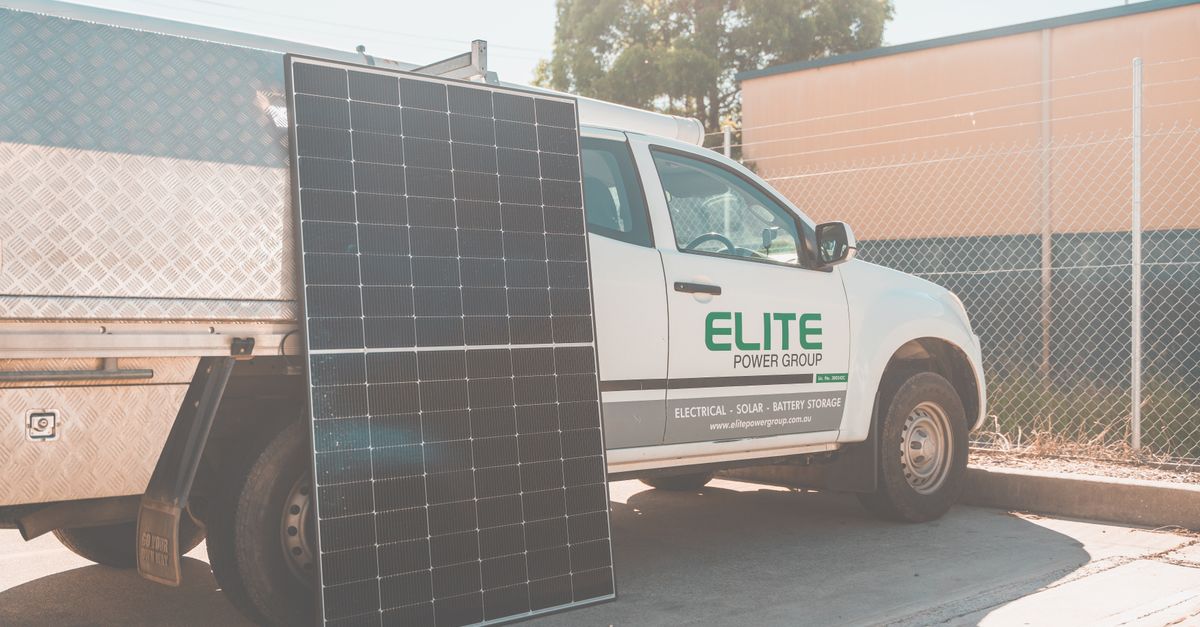
Photo: Elite Power Group on Pexels · Illustrative image.
Use the new Compound Solar Hub to compare quotes, grants and installers before deciding whether storage is worthwhile. The battery payback calculator isolates the extra value of storage, while the export-rate tool compares import and export offers.
A home battery solves a real solar problem.
If you are starting from scratch, first read our complete guide to solar panels in Ireland for the 2026 grant, 0% VAT, system sizing, planning, grid connection and Clean Export Guarantee. This article then tackles the narrower question: whether adding a battery improves the economics.
Your panels often generate most strongly around the middle of the day. Your home may need the most electricity in the morning and evening.
A battery can move some of that electricity from one part of the day to another.
What it cannot do is make the economics automatically better.
If the battery is expensive, your export payment is generous, or you already have a very cheap night tariff, a battery can increase self-consumption while lengthening the simple payback period.
The useful question is therefore not:
Should a solar home have a battery?
It is:
What is each stored kilowatt-hour worth in my home compared with exporting it or buying electricity later?
The short answer
For many Irish homes:
Solar PV can make financial sense without a battery.
A battery becomes more attractive when:
- a large amount of solar would otherwise be exported;
- evening or peak-rate electricity is expensive;
- the battery can be charged cheaply off-peak and discharged at expensive times;
- your household uses substantial electricity after sunset;
- you cannot shift much of your demand into sunny hours;
- or you value the additional flexibility enough to accept a longer financial payback.
An EV does not automatically make a battery necessary.
In fact, a very cheap EV night rate can sometimes make it financially better to export daytime solar and charge the car at night.
That comparison depends on the full household tariff, not the cheap window alone. See Electricity Tariffs in Ireland for the current 24-hour, smart, EV and dynamic tariff structures.
That sounds counter-intuitive, but the arithmetic is straightforward.
First: what support is available in 2026?
SEAI’s domestic Solar PV Grant remains capped at €1,800 in 2026.
The current grant structure is:
- €700 per kWp for the first 2 kWp;
- €200 per additional kWp from 2 to 4 kWp;
- maximum grant: €1,800.
A 4 kWp or larger eligible installation therefore receives the maximum €1,800 solar grant.
The home must have an MPRN, must have been built and occupied before 2025, must not previously have received solar PV funding at that MPRN, and the SEAI grant application must be approved before works begin.
SEAI: Solar electricity grant.
SEAI now also provides a separate €600 Battery Energy Storage System Grant for qualifying battery systems of 5kWh or larger.
SEAI says batteries below 5kWh are not eligible. The property must meet the battery scheme’s own conditions, including having an MPRN and being built and occupied before 2025, and works must not begin before the grant offer.
SEAI: Battery Energy Storage System Grant.
The grant improves the battery economics, but the battery should still be tested as a separate investment rather than assuming the grant makes it pay automatically.
Ireland gets useful solar generation—but not evenly through the year
Solar panels do not need Mediterranean sunshine to work.
SEAI says a well-located 3 kW home solar PV system can generate around 2,600 kWh a year.
Its solar guidance also notes that around 75% of annual solar PV production in Ireland occurs from May to September.
That seasonal imbalance matters.
A battery moves energy by hours, not by seasons.
It can move midday electricity into the evening. It cannot save a large surplus from July and give it back to you in December.
Start with your real household electricity use
Before sizing solar or a battery, establish how much electricity the home actually uses.
The CRU’s 4,200 kWh household figure is a useful Irish benchmark, but an EV, heat pump, electric shower or all-electric heating can move a home far above it. Your own annual bills and smart-meter data are much better inputs.
See How much electricity does an Irish home use? for the benchmarks, daily-use equivalents and a practical smart-meter audit.
A worked 5 kWp household
To make the trade-off visible, consider an illustrative household.
These are assumptions, not current market quotes:
| Assumption | Example |
|---|---|
| Solar system size | 5 kWp |
| Annual solar yield assumption | 850 kWh per kWp |
| Annual solar generation | 4,250 kWh |
| Household electricity use | 4,200 kWh/year |
| Installed solar quote before grant | €10,000 |
| SEAI solar grant | €1,800 |
| Net solar investment | €8,200 |
| Day/import electricity value | 30c/kWh |
| Export payment | 18c/kWh |
| Direct solar self-use without battery | 35% |
| Battery installed cost | €5,000 |
| SEAI battery grant | €600 |
| Net battery investment | €4,400 |
| Battery round-trip efficiency | 90% |
| Share of surplus solar captured by battery | 60% |
The 850 kWh/kWp yield is deliberately an illustrative midpoint. SEAI gives examples around this range, but the real output depends on location, orientation, pitch, shading, inverter losses and weather.
Your installer’s design estimate should replace it.
Scenario 1: solar only
At 35% direct self-use:
4,250 kWh × 35% = 1,487.5 kWh
is used directly in the home.
The remaining:
2,762.5 kWh
is exported in this simplified example.
Value of the electricity
Directly used solar:
1,487.5 × €0.30 = €446.25
Exported solar:
2,762.5 × €0.18 = €497.25
Total annual energy value:
€943.50
On an €8,200 net investment:
€8,200 ÷ €943.50 ≈ 8.7 years
That is the simple payback under these assumptions.
It ignores financing cost, degradation, future tariff changes, maintenance and the time value of money.
Use the Solar Payback Calculator for your own figures.
Scenario 2: add a battery
Now assume the battery captures 60% of the solar that would otherwise have been exported.
Battery input:
2,762.5 × 60% = 1,657.5 kWh
At 90% round-trip efficiency, approximately:
1,491.8 kWh
comes back out for later use.
The rest is lost through charging/discharging and conversion losses.
What is that stored solar actually worth?
Without a battery, 1 kWh of surplus solar could be exported for 18c.
Put that same 1 kWh into a 90%-efficient battery and only about 0.9 kWh comes back.
If that later avoids electricity costing 30c/kWh:
0.9 × 30c = 27c
So the gross financial gain from storing rather than exporting that 1 kWh is:
27c - 18c = 9c
before considering battery degradation or the capital cost of the battery.
That is the key battery equation.
The battery increases annual value—but can worsen payback
Under the worked assumptions, solar + battery produces annual energy value of roughly:
€1,093
versus:
€944
for solar alone.
The battery has increased annual value by only about:
€149 a year
from solar shifting alone.
But the upfront investment has risen from:
€8,200
to:
€12,600
because the illustrative €5,000 battery is reduced to €4,400 after the current €600 battery grant.
Simple payback
Solar only:
about 8.7 years
Solar + battery:
about 11.5 years
So in this particular example, the battery improves self-consumption and annual savings but slows the overall payback.
That distinction matters.
A technology can save additional electricity without producing the best return on the additional capital.
The export rate changes everything
Suppose your export rate is 18c/kWh and the battery is 90% efficient.
For each 1 kWh sent into the battery, its later value is:
0.9 × avoided import price
To beat exporting at 18c:
0.9 × import price > 18c
Therefore:
import price > 20c/kWh
At exactly 20c:
0.9 × 20c = 18c
The battery has created no gross energy-arbitrage advantage over exporting.
Above 20c, storing begins to win on this narrow comparison.
Below 20c, exporting can be more valuable.
That threshold does not include battery wear or battery purchase cost, so the true economic hurdle is higher.
The CRU requires suppliers to compensate eligible microgenerators for metered electricity exported to the grid under the Clean Export Guarantee arrangements. The actual rate is set by the supplier and appears on the bill.
For larger farm and business systems, CEG should not be confused with the separate export-only SRESS route. Our CEG vs SRESS Ireland guide explains where self-consumption, the Non-Domestic Microgen Grant and the 15-year SRESS tariff fit.
This is why using your own tariff matters
A household on:
- 35c evening electricity;
- 12c night electricity;
- 15c export;
has very different battery economics from a household on:
- 24c flat-rate electricity;
- 20c export.
The physical battery is the same.
The financial value of shifting a kilowatt-hour is not.
That is why Compound’s Solar + EV + Battery Optimiser asks separately for import, export and night rates.
Can a battery make money by charging at night?
A battery does not have to charge only from solar.
SEAI explicitly notes that home batteries can charge from the grid when renewable generation is plentiful and electricity prices are low, then discharge later when electricity is more expensive.
Consider an illustrative tariff:
- night electricity: 10c/kWh;
- later avoided day/peak electricity: 30c/kWh;
- battery round-trip efficiency: 90%.
Put 5 kWh into the battery overnight.
Cost:
5 × 10c = €0.50
Useful electricity returned:
5 × 90% = 4.5 kWh
Value if it avoids 30c electricity:
4.5 × 30c = €1.35
Gross spread:
€1.35 - €0.50 = €0.85
for that cycle before battery wear, degradation, tariff restrictions and any other losses.
If that exact opportunity existed every day, the arithmetic would be approximately €310 a year.
That should not be treated as a forecast.
Real battery availability changes with solar charging, household demand, capacity limits, seasonal conditions and tariff structures.
But it demonstrates why a battery can have value beyond simply storing solar.
An EV changes the problem again
SEAI recommends shifting EV charging toward periods of strong solar production where practical and using off-peak charging where daytime solar charging is not convenient.
SEAI: smart energy technologies.
But the cheapest option depends on your actual tariffs.
Assume an EV:
- travels 15,000 km a year;
- uses 18 kWh/100 km at the battery;
- has 10% charging losses;
- does 80% of charging at home.
Approximate home charging demand:
about 2,400 kWh/year
Now suppose you can move 720 kWh of that charging into sunny hours.
If the alternative was 30c daytime charging
Using 720 kWh of solar directly avoids:
720 × 30c = €216
But if that solar could otherwise have been exported at 18c:
720 × 18c = €129.60
Net financial improvement:
€86.40 a year
If the alternative was a 10c EV night rate
Solar charging saves:
720 × 10c = €72
But gives up:
€129.60
of export income.
Net difference:
minus €57.60
In that tariff example, exporting the solar and charging the EV at night is financially better.
That does not mean night charging is always best.
It means:
Do not value solar EV charging against the wrong electricity rate.
If your EV would otherwise charge on a cheap night boost tariff, use that rate in the comparison.
Does an EV make a home battery less necessary?
Sometimes.
An EV is itself a very large flexible electrical load.
If the car is home during sunny hours, it can absorb surplus solar directly without first putting that electricity through a stationary battery.
That avoids one conversion step and the capital cost of using the home battery for that particular purpose.
If the car is away all day and only returns in the evening, the interaction changes.
A home battery may then help move solar production into the evening—but a cheap night EV rate may still be a better way to charge the vehicle itself.
The right arrangement might therefore be:
solar → household by day
surplus solar → export or home battery
battery → expensive evening household demand
EV → cheap night-rate electricity
rather than trying to run every electrical load from the battery.
Four configurations worth comparing
The Solar + EV + Battery Optimiser compares four broad setups:
Solar only
Lowest capital cost of the four.
Makes most sense where:
- you can use a good share of solar directly;
- export payment is reasonable;
- and you do not need additional storage flexibility.
Solar + smart EV charging
Useful where the car is at home during solar hours or where you can schedule charging intelligently.
The important comparison is against the rate the EV would otherwise use.
Solar + battery
Can increase self-consumption and reduce expensive imports later in the day.
Its incremental return depends heavily on:
- battery price;
- efficiency;
- export rate;
- avoided import rate;
- and how often enough surplus exists to charge it.
Solar + EV + battery
Potentially the most flexible setup.
It is also the highest-capital-cost setup.
More technology does not guarantee the shortest payback.
The optimiser therefore compares the configurations rather than assuming the most complex one is best.
When does a battery look stronger financially?
A battery case becomes stronger when:
Your evening electricity is expensive
If stored solar replaces high peak-rate electricity, each delivered kWh is worth more.
Your export tariff is relatively low
The opportunity cost of not exporting falls.
You have substantial midday surplus
A battery cannot store solar you do not generate.
You have evening household demand
A battery is more useful when there is a real load available later to consume the stored electricity.
You can exploit a large night-to-day tariff spread
Grid charging can add another source of value where tariff rules and battery capability allow it.
The battery price is competitive
This sounds obvious, but battery economics are extremely sensitive to installed cost.
A €3,500 battery and a €7,000 battery storing the same number of useful kWh have very different paybacks.
When can a battery look weak financially?
The case is weaker when:
- your solar export rate is high;
- your night import rate is extremely low;
- your evening demand is modest;
- you can already shift washing, hot water or EV charging into sunny hours;
- the battery is oversized for your actual surplus;
- or the battery quote is high relative to the extra annual value.
A battery can still be chosen for reasons other than simple payback.
The point is to separate those reasons from a claim that it will necessarily produce the best financial return.
Battery size matters as much as battery ownership
A battery that is too small may regularly fill and still export substantial surplus.
A battery that is too large may spend much of the year partly empty because there is not enough surplus or later demand to cycle it.
Ask for:
- usable capacity, not only nominal capacity;
- round-trip efficiency;
- maximum charge/discharge power;
- warranty duration;
- cycle or throughput warranty conditions;
- inverter compatibility;
- whether grid charging is supported;
- and how the energy-management software decides when to charge and discharge.
The correct battery is a system-design question, not simply “5 kWh versus 10 kWh”.
Solar sizing matters too
SEAI advises sizing solar with the home’s electricity demand in mind and maximising the share used on site where practical.
A very large array may generate more annual electricity but also export a much larger proportion.
That can still be economically sensible if the installed cost per kWp is attractive and export compensation is good.
Again, self-consumption percentage is not the only measure that matters.
A system with a lower self-consumption percentage can still produce more total financial value.
Why smart-meter data is more valuable than an annual bill
Annual consumption tells you how much electricity you use.
Battery economics also require knowing when you use it.
SEAI notes that smart meters record usage in half-hour intervals, and ESB Networks data can help households understand demand and export patterns.
SEAI: smart meters and tariffs.
Before buying a battery, useful questions include:
- How much electricity do you use from 5pm to bedtime?
- How much solar do you export on a typical spring or summer day?
- How often would the battery actually reach full charge?
- How often would it fully discharge?
- What rate are you paying during the hours the battery would replace?
- What rate are you being paid for exports?
Those answers are far more valuable than a generic claim that a battery “raises self-consumption to X%”.
A 4,200 kWh benchmark is only a starting point
The CRU’s typical domestic electricity-consumption benchmark used in supplier annual-cost comparisons is 4,200 kWh a year.
That is useful for examples.
It is not a prediction for your house.
A home with:
- a heat pump;
- an EV;
- electric showers;
- a tumble dryer;
- home working;
- or electric space heating
can differ materially.
The Solar Payback Calculator therefore lets you replace the benchmark with your own annual consumption.
Three quotes to ask an installer for
Rather than asking only for “solar with battery”, request:
- solar only;
- the same solar array + smaller battery;
- the same solar array + larger battery.
For each quote, ask the installer to show:
- annual generation estimate;
- assumed household self-consumption;
- annual export;
- battery throughput;
- battery losses;
- estimated bill saving;
- export income;
- installed price before and after grant;
- and the tariff assumptions used.
If the payback model does not state the import and export rates, it is difficult to assess.
The most important number may be the battery’s incremental payback
People often calculate:
total solar + battery cost ÷ total annual savings
That tells you the combined-system payback.
It does not tell you whether the battery itself improved the economics.
A useful second calculation is:
additional battery cost ÷ additional annual value created by the battery
In our worked example:
- battery installed cost: €5,000;
- current battery grant: €600;
- net battery cost: €4,400;
- additional annual value from solar shifting: about €149.
That gives an incremental simple payback of roughly 29.5 years for the battery from solar shifting alone.
That is why the separate night-tariff use case can matter so much.
If the battery creates value from both solar shifting and grid arbitrage, its economics change.
But those benefits should be calculated separately rather than bundled into a vague “battery saves more” claim.
The practical conclusion
For many Irish households, the sensible order is:
First: make solar itself work
Check:
- roof suitability;
- installed price;
- likely annual generation;
- grant eligibility;
- daytime electricity demand;
- and export payment.
Second: understand your load shape
Use smart-meter data where available.
Third: compare the battery as an incremental investment
Ask what the battery adds in:
- avoided imports;
- lost exports;
- night-rate arbitrage;
- and flexibility.
Fourth: account for the EV separately
Do not assume solar charging beats a cheap EV night tariff.
Finally: run the scenarios
Use the Solar Payback Calculator for a detailed solar + battery payback.
Then use the Solar + EV + Battery Optimiser to compare the four system configurations.
If your decision is mainly about charging the car, the EV Charging Cost Calculator isolates that part of the household energy bill.
The key is not to maximise the number of technologies on the house.
It is to make each extra euro of capital solve an energy problem that your household actually has.