CEG vs SRESS in Ireland: which solar export route fits your project?
CEG pays for surplus renewable electricity you do not use. SRESS is a 15-year support route for eligible export-only projects above 50kW. Here is how the two routes differ, where the NDMG grant fits, and what Irish solar owners should check before investing.
 Wealth / The Compound journal
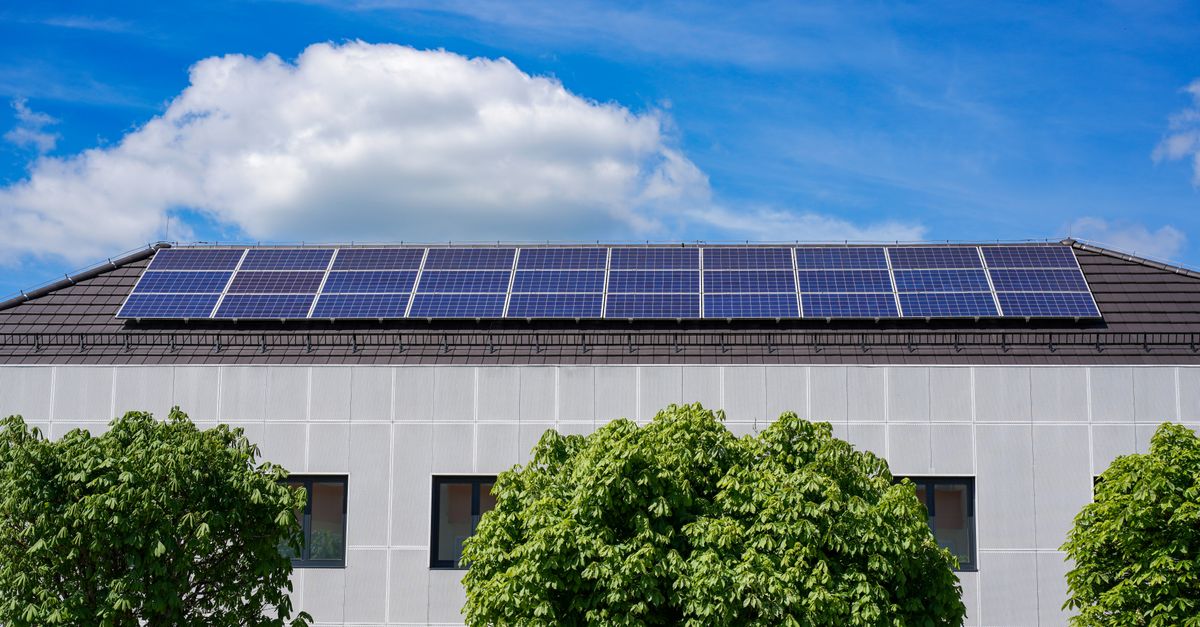
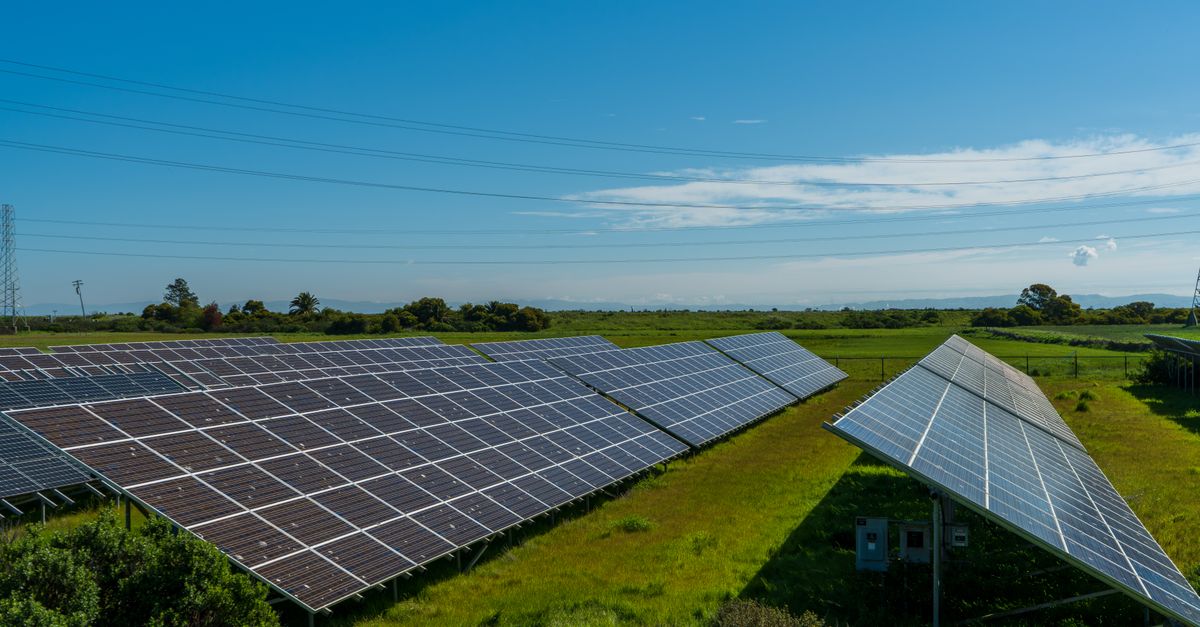
Photo: ERod Photos on Pexels · Illustrative image.
If you are looking at solar in Ireland, CEG and SRESS can sound like competing export tariffs.
For a household or ordinary self-consumption installation, start with our Solar Hub, its solar payback calculator and our complete Solar Panels in Ireland guide. Compare export assumptions before you assess installation quotes. This page goes deeper on the point where farm, SME and export-led projects begin to diverge.
They are not.
The Clean Export Guarantee (CEG) is primarily a payment for surplus renewable electricity that you generate but do not use yourself.
The Small-Scale Renewable Electricity Support Scheme (SRESS) export tariff is a separate, 15-year support route for eligible export-only projects above 50kW.
That distinction changes how a project should be designed, financed and valued.
Quick answer
If your main objective is to use solar electricity on site and export only the surplus, CEG is the relevant export mechanism.
If the project is above 50kW and is being built to export all of its generation, SRESS may be the relevant support route.
A project taking the SRESS export tariff cannot also use that electricity on site or receive CEG for the same generation.
This guide reflects the published rules checked on 3 October 2026. SRESS tariff rates are currently under review, so anyone making an investment decision should recheck the Department’s latest terms before committing capital.
CEG vs SRESS at a glance
| Question | CEG | SRESS export tariff |
|---|---|---|
| What is it? | Supplier payment for surplus renewable electricity exported to the grid | 15-year support route for eligible export-only renewable projects |
| Can you use generation on site? | Yes. Self-consumption comes first; surplus can be exported | No. The supported project is export-only |
| Who sets the payment? | Each electricity supplier sets its CEG tariff | Government scheme tariff under the SRESS terms |
| Is there one national rate? | No | Published tariff categories apply, subject to scheme terms |
| Project size | Micro- and small-scale renewable self-consumers that meet the eligibility rules | Greater than 50kW; up to 1MW for any eligible export-only applicant, and up to 6MW for qualifying community, SME and farming projects |
| Can the same project receive both? | No. SRESS export projects are not eligible for CEG | |
The most useful way to think about it is:
CEG = sell what you do not use.
SRESS = build an eligible project to sell what it generates.
What is the Clean Export Guarantee?
CEG gives eligible micro- and small-scale renewable generators a route to be paid for electricity exported to the grid.
For a normal solar self-consumer, the electricity flows roughly like this:
- your panels generate electricity;
- the home, farm or business uses what it needs;
- any remaining surplus is exported;
- the export is metered or otherwise accounted for under the applicable rules;
- your electricity supplier pays you its CEG tariff.
The CRU’s current microgeneration guidance says suppliers pay for exported units and that the export rate should be shown on the customer’s bill or export statement.
There is no single national CEG price.
Suppliers set their own tariffs, so a CEG rate can change and different suppliers can pay different amounts for exactly the same exported kilowatt-hour.
That is why export price is an important input when modelling household solar.
Model your own system
Solar PV Payback Calculator Ireland
Enter your quote, system size, expected generation, self-consumption, import rate and current export tariff to see how the assumptions change simple payback.
Use the Solar PV Payback Calculator →
This calculator is designed for self-consumption and household-style solar economics. It is not a SRESS project-finance model.
CEG is not limited to a tiny domestic array
One common misunderstanding is that moving above the ordinary domestic microgeneration range automatically means moving to SRESS.
It does not.
The Department’s current SRESS guidance explicitly says renewable self-consumers above 50kW and up to 1MW can use electricity on site and may sell surplus electricity under CEG, provided the relevant conditions are met.
For businesses, farms, schools, community centres and other eligible organisations, the SEAI Non-Domestic Microgen Grant currently supports solar PV installations up to 1,000kWp, with a maximum published grant of €162,600 under the standard schedule.
This creates an important route:
Generate mainly for your own use + potentially receive an NDMG grant + export surplus under CEG.
That is fundamentally different from an export-only SRESS project.
What is SRESS?
SRESS stands for the Small-Scale Renewable Electricity Support Scheme.
The export tariff is intended to give smaller renewable projects a simpler route to market than the competitive utility-scale RESS auction process.
The scheme opened for export-tariff applications in January 2025.
For successful applicants, the current framework provides support for 15 years.
The Department describes the tariff as a premium on market revenues, with a two-way mechanism intended to prevent over-compensation when electricity prices are high.
In other words, the published SRESS rate should not be confused with a simple supplier CEG payment landing on a normal electricity bill.
The project still needs the commercial, metering, grid and route-to-market arrangements required by the scheme.
Current SRESS tariff rates
The Department’s published rates checked on 3 October 2026 are:
| Applicant / technology | Project size | Published tariff | Equivalent |
|---|---|---|---|
| Renewable Energy Community — Solar PV | >50kW to 1MW | €150/MWh | 15c/kWh |
| Renewable Energy Community — Solar PV | >1MW to 6MW | €140/MWh | 14c/kWh |
| SME / farmer — Solar PV | >50kW to 1MW | €130/MWh | 13c/kWh |
| SME / farmer — Solar PV | >1MW to 6MW | €120/MWh | 12c/kWh |
| Renewable Energy Community — Wind | >50kW to 6MW | €90/MWh | 9c/kWh |
| SME / farmer — Wind | >50kW to 6MW | €80/MWh | 8c/kWh |
For export-only projects above 50kW and up to 1MW, SRESS is also open to applicants outside the community/SME/farming categories under the current rules, with the SME tariff applying up to 1MW.
Above 1MW, the published route up to 6MW is specifically aimed at eligible community, SME and farming projects.
The SRESS tariff review matters
The current tariff table should not be treated as permanent for new future applications.
The Department began a review of SRESS tariffs in February 2026.
Its published guidance says the review could result in tariffs being retained, modified or removed, subject to approval. It also says the existing published rates continue to apply while the review is underway.
That means there are two different kinds of rate risk to understand:
- CEG: the supplier export rate is commercial and can change.
- SRESS: the scheme offers a long support period to successful projects, but the tariff available to new projects can be changed through the policy framework.
Always check the current SRESS terms before using today’s tariff in a 15- or 20-year investment model.
SRESS is export-only — this is the key rule
This is where many proposed solar projects go wrong at the whiteboard stage.
A farmer may think:
“I’ll use the solar for the farm when I need it, then sell the rest at the SRESS rate.”
That is not how the SRESS export tariff works.
The Department states that an SRESS export-tariff project must export its generation rather than using it for the applicant’s own consumption.
It is therefore useful to think of two separate projects:
Self-consumer project
Solar is designed around the farm or business electricity demand.
Value comes from:
- avoided electricity purchases;
- possible NDMG grant support;
- CEG payments for surplus exports;
- potentially batteries or load shifting.
Export-only project
Solar or wind is designed as a generation business.
Value comes from:
- electricity sold to the market;
- the SRESS support mechanism where eligible;
- the project’s route-to-market/PPA arrangements.
Value is then reduced by development cost, grid connection, finance, operations, insurance, land opportunity cost, taxes and other project expenses.
Those are very different investment cases.
A simple example: a 6kW home
Suppose a household produces surplus solar and exports 2,000 kWh during a year.
At an illustrative supplier CEG rate of 18c/kWh:
2,000 × €0.18 = €360
of gross export payments.
The 18c rate is only an example. The actual CEG rate should be taken from the customer’s supplier.
The household can still use its solar directly, which may be worth more per kWh than exporting if the retail import price is higher than the CEG payment.
This is why the correct household calculation separates:
self-consumed solar + exported solar.
Our guide to solar panels versus a home battery shows how the export rate affects the value of storing a unit instead of selling it.
A simple example: a 100kW farm system built for self-consumption
Now imagine a farm installs 100kW of solar mainly to reduce daytime electricity imports.
That project does not automatically become an SRESS export project because it is above 50kW.
If structured as an eligible renewable self-consumer installation, it can potentially:
- use generation on the farm;
- qualify for the relevant NDMG grant subject to SEAI rules;
- export surplus electricity under CEG.
The economics should therefore start with the farm’s load profile.
A kWh of solar used on site avoids purchasing a kWh from the grid at the relevant marginal import rate.
Only the surplus is exposed to the CEG export rate.
For a high-daytime-demand farm or business, that can make self-consumption more valuable than maximising export.
A simple example: a 250kW export-only solar project
Now consider a 250kW solar project developed as a standalone export business.
It sits above the SRESS 50kW minimum and below 1MW.
If the applicant and project meet the scheme conditions, the current SME/farmer solar tariff category is €130/MWh, equivalent to 13c/kWh as the published support rate.
But do not calculate the business case as:
panels × sunshine × 13c = guaranteed profit.
A real SRESS project also depends on:
- actual annual generation;
- grid losses and curtailment;
- grid connection cost and timing;
- the SRESS payment mechanism;
- PPA or route-to-market terms;
- operating and maintenance costs;
- insurance;
- finance;
- tax;
- planning;
- land cost or opportunity cost.
The tariff is an input to a project model, not the project’s net return.
Ireland now has an operating SRESS solar project
The scheme is no longer purely theoretical.
In September 2026, RTÉ reported that the 650kW Meadhill Solar Farm in Co Cork had commenced operation under SRESS.
Flogas said the farmer-led project uses more than 1,000 panels across about 1.5 acres and is supported by a 15-year power purchase agreement.
That is useful evidence of what an export-led SRESS project looks like in practice: it is closer to a small generation business than an oversized domestic solar installation.
Grid connection can decide the project before the tariff does
A high export tariff is irrelevant if the local network cannot accept the proposed export at an economic connection cost.
ESB Networks currently separates generator connections broadly into:
- Micro-generation: up to about 6kVA single-phase or 11kVA three-phase;
- Mini-generation: up to 17kVA single-phase or 50kVA three-phase;
- Small Scale Generation: above mini-generation limits and up to 200kVA for the relevant connection process;
- larger generation: separate generation connection processes.
The support scheme and the grid-connection category are not the same thing.
A project can fit the SRESS size rules but still face a difficult or expensive network connection.
Likewise, seeing three-phase lines beside a site does not prove that 100kW, 500kW or 1MW of export capacity is available.
For any serious farm or land-based project, grid feasibility should be investigated early.
CEG or SRESS: a practical decision tree
Use this sequence before comparing headline rates.
1. Is the electricity mainly for your own home, farm or business?
If yes, start with self-consumption economics.
CEG may pay you for the surplus.
For eligible non-domestic solar, check the NDMG grant.
2. Is the project being built primarily to sell electricity?
If yes, and it is greater than 50kW, investigate SRESS alongside other route-to-market options.
3. Do you want to use some of the electricity yourself?
If yes, do not model the project as an SRESS export-tariff project.
The current SRESS export route is export-only.
4. Have you confirmed grid capacity?
If no, do not treat the project size as settled.
Grid connection cost, available MEC and timing can dominate the economics.
5. Are you using today’s rate as though it lasts forever?
Stress-test it.
CEG supplier rates can change. SRESS tariffs for new applicants are under review. Generation forecasts and market arrangements can also differ from the initial model.
What about tax on CEG income?
For qualifying individuals, Revenue currently provides an exemption for up to €400 of profits per year from qualifying microgeneration for the tax years 2024 to 2028.
Revenue states that the exemption applies to Income Tax, USC and PRSI.
The exemption is specifically for qualifying individuals and does not apply to companies or corporate entities.
Where qualifying microgeneration profits exceed the exempt amount, the excess can be taxable.
Commercial farm, company or SRESS projects can have very different tax treatment, so the domestic €400 rule should not be carried across into a commercial project model.
Our existing guide to Irish solar export payments explains the household CEG process in more detail.
CEG vs SRESS: which one pays more?
There is no useful universal answer.
A CEG rate can be numerically higher than a current SRESS tariff and still produce a weaker project — or vice versa — because the underlying projects are different.
A self-consumer may get substantial value from avoiding retail electricity purchases before exporting the surplus.
An export-only SRESS project gives up that self-consumption value and instead depends on generation revenue and the support structure.
So do not compare:
CEG cents/kWh versus SRESS cents/kWh
in isolation.
Compare:
total project cash flows after all costs.
For a home, our Solar PV Payback Calculator is designed to expose the self-consumption/export trade-off.
For a home with an EV or battery, use the Solar + EV + Battery Optimiser to see how diverting solar changes what reaches the grid.
Frequently asked questions
Can I get CEG and SRESS on the same solar project?
No. The Department states that SRESS export-tariff projects are not eligible for CEG.
Can an SRESS project use electricity on site?
Not under the export-tariff route. It is an export-only project.
Is SRESS only for farmers?
No. Farmers are one of the target groups, alongside SMEs and Renewable Energy Communities. Export-only projects above 50kW and up to 1MW can also be eligible more broadly under the current rules.
What is the minimum SRESS project size?
The current minimum for the export tariff is greater than 50kW.
How long does SRESS support last?
The current export tariff provides support for 15 years for successful projects, subject to the scheme terms.
Is the SRESS solar rate 13c/kWh?
For the current SME/farmer solar category above 50kW and up to 1MW, the published tariff is €130/MWh, equivalent to 13c/kWh. Different rates apply to RECs, wind and solar above 1MW.
Is CEG a fixed government tariff?
No. Electricity suppliers set their own CEG export tariffs within the regulatory framework.
Can a 100kW business solar installation use CEG?
Potentially, yes. The Department’s guidance allows renewable self-consumers above 50kW and up to 1MW to sell surplus renewable electricity, with CEG forming part of that self-consumption route subject to the applicable eligibility and connection rules.
Does having three-phase power mean I can build a SRESS solar farm?
No. Three-phase infrastructure nearby does not establish the export capacity available to your project. ESB Networks must assess the relevant connection.
The bottom line
CEG and SRESS solve two different problems.
CEG is for surplus.
It works naturally with homes, farms and businesses that generate renewable electricity primarily for their own use and export what remains.
SRESS is for eligible export-only projects above 50kW.
It turns the project into a much more explicit electricity-generation business, with a 15-year support framework but also grid, financing, market and development requirements.
For many farms and SMEs, the first decision should therefore not be:
“Which tariff is higher?”
It should be:
“Do I want to reduce my own electricity bill, or do I want to build an export business?”
Once that is clear, CEG versus SRESS becomes much easier to understand.