Insulation Grants in Ireland: Costs, Grants & What to Upgrade First
A practical 2026 guide to insulation grants in Ireland: current SEAI attic and wall grants, real median costs, higher supports for first-time buyers and qualifying welfare recipients, One Stop Shop options and which upgrade usually makes sense first.
 Wealth / The Compound journal
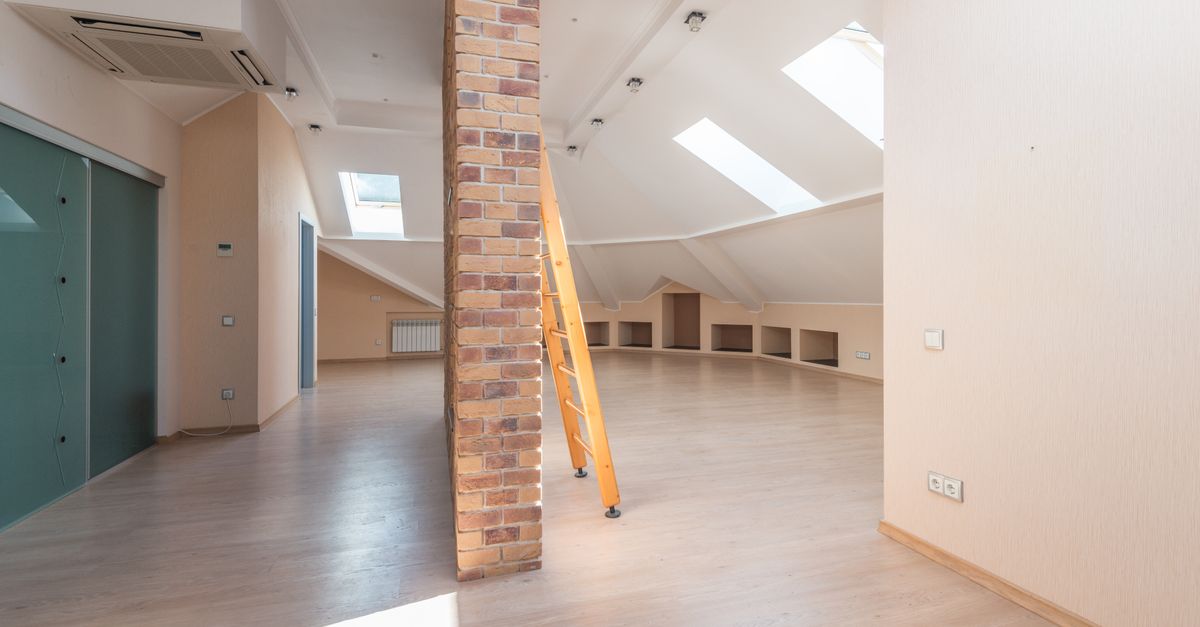
Photo: Max Vakhtbovych on Pexels · Illustrative image.
Insulation is usually one of the first places to look when an Irish home is expensive to heat.
Combining insulation and solar? Use the Compound Solar Hub for PV-specific grants and quotes, and the Whole-House Retrofit Planner for the wider upgrade budget.
It is also one of the easiest retrofit areas to misunderstand.
There is not one single “insulation grant”. The amount depends on:
- the part of the house being insulated;
- the dwelling type;
- which SEAI route you use;
- whether you qualify for a higher grant;
- and, for some measures, whether the work forms part of a larger whole-home retrofit.
Quick answer
In 2026, standard SEAI individual grants run as high as €2,000 for attic insulation, €1,800 for cavity wall insulation, €4,500 for internal wall insulation and €8,000 for external wall insulation on a detached house.
Higher attic grants are available to qualifying first-time buyers and homeowners on certain welfare payments. Qualifying welfare recipients can also receive higher cavity-wall grants.
SEAI's latest median-cost data shows why attic and cavity insulation are often the first upgrades worth pricing: after the standard grant, the median gap was only hundreds of euro in many cases, while external wall insulation still left a much larger homeowner contribution.
This guide reflects published SEAI rules and costs checked on 4 October 2026.
Insulation grants in Ireland at a glance
For the standard individual-grant route, the current fixed grants are:
| Upgrade | Detached | Semi-D / end terrace | Mid-terrace | Apartment |
|---|---|---|---|---|
| Attic insulation | €2,000 | €1,500 | €1,400 | €1,100 |
| Cavity wall insulation | €1,800 | €1,300 | €850 | €700 |
| Internal wall insulation | €4,500 | €3,500 | €2,000 | €1,500 |
| External wall insulation | €8,000 | €6,000 | €3,500 | €3,000 |
These are fixed grants, not percentages of your quote.
If a contractor charges less than another contractor, the grant does not automatically shrink in the same proportion. If the job is expensive, the grant does not automatically rise to cover the difference.
That is why the useful number is not only the grant.
It is:
installed cost − grant = the amount you still have to fund.
Plan the whole project
Whole-House Retrofit Planner
Compare insulation, heating, windows, ventilation and solar in one retrofit budget rather than treating each quote in isolation.
What insulation actually costs in Ireland in 2026
SEAI now publishes useful median-cost data from completed grant-supported work.
The latest individual-upgrade dataset covers 23,412 upgrades completed from January to June 2026. These are median costs reported through the grant process, not advertising estimates.
Attic insulation: median cost versus grant
| Home type | Median cost | Standard grant | Median gap after grant |
|---|---|---|---|
| Detached | €2,700 | €2,000 | €700 |
| Semi-D / end terrace | €2,101 | €1,500 | €601 |
| Mid-terrace | €2,200 | €1,400 | €800 |
| Apartment | €1,515 | €1,100 | €415 |
That does not mean your attic will cost exactly the median.
Access, area, existing insulation, boarding, tanks, pipework, ventilation and remedial work can all change the quote.
But it shows why attic insulation is so often the first retrofit measure to investigate.
SEAI says a house can lose around 20–30% of its heat through the roof, and describes attic insulation as one of the most cost-effective upgrades.
Cavity wall insulation: often the other low-cost win
Where a house has a suitable unfilled cavity, injected cavity-wall insulation can be dramatically cheaper than dry lining or wrapping the exterior.
SEAI’s 2026 medians were:
| Home type | Median cost | Standard grant | Median gap after grant |
|---|---|---|---|
| Detached | €2,350 | €1,800 | €550 |
| Semi-D / end terrace | €1,585 | €1,300 | €285 |
| Mid-terrace | €1,250 | €850 | €400 |
| Apartment | €1,036 | €700 | €336 |
Those figures make cavity insulation look almost automatic.
It is not.
The cavity needs to be suitable. Wall condition, exposure, cavity width, existing fill, moisture problems and construction details matter.
A grant should never be the reason to inject a cavity that an appropriately qualified contractor considers unsuitable.
Internal wall insulation: more intrusive and more expensive
Internal wall insulation — often called dry lining — adds insulation to the inside face of the external walls.
It can be useful where a cavity solution is not available and external insulation is not suitable or affordable.
But it changes the inside of the house.
Depending on the project, it can affect:
- room dimensions;
- skirting and sockets;
- radiators;
- window reveals;
- fitted furniture;
- decorative finishes;
- junctions at floors and ceilings;
- and moisture behaviour.
SEAI’s latest median costs were:
| Home type | Median cost | Grant | Median gap after grant |
|---|---|---|---|
| Detached | €8,600 | €4,500 | €4,100 |
| Semi-D / end terrace | €9,843 | €3,500 | €6,343 |
| Mid-terrace | €9,804 | €2,000 | €7,804 |
| Apartment | €5,736 | €1,500 | €4,236 |
The apparent oddity in the medians — for example, a semi-detached median above the detached figure — is one reason not to treat a national median as a quote for your house.
Completed projects differ in size and complexity.
External wall insulation: the biggest grant, but usually the biggest bill
External wall insulation — the wrap — fixes insulation to the outside of the home and finishes it with a new external system.
The grant is much larger because the work is much more expensive.
SEAI’s January–June 2026 medians were:
| Home type | Median cost | Grant | Median gap after grant |
|---|---|---|---|
| Detached | €26,500 | €8,000 | €18,500 |
| Semi-D / end terrace | €23,219 | €6,000 | €17,219 |
| Mid-terrace | €14,000 | €3,500 | €10,500 |
| Apartment | €11,300 | €3,000 | €8,300 |
This is the clearest example of why “How big is the grant?” can be the wrong question.
An €8,000 grant sounds enormous.
Against SEAI’s €26,500 detached-house median, it still leaves an implied €18,500 gap before any additional non-grant-supported work.
External insulation can still make sense because it can improve comfort, reduce heat loss and avoid sacrificing internal floor area.
But the financial decision should be made from the net project cost, not the headline grant.
Higher attic grants for first-time buyers
A major 2026 feature is the higher attic-insulation grant available to qualifying first-time buyers.
To qualify under SEAI’s current rules, you must generally:
- be a first-time buyer of an existing home;
- have bought the property on or after 1 January 2025;
- and the home must have been built and occupied on or before 31 December 2010.
The higher attic grants are:
| Home type | Standard attic grant | Qualifying first-time buyer |
|---|---|---|
| Detached | €2,000 | €2,500 |
| Semi-D / end terrace | €1,500 | €1,900 |
| Mid-terrace | €1,400 | €1,800 |
| Apartment | €1,100 | €1,400 |
This enhancement applies to the attic measure rather than automatically increasing every retrofit grant.
For a qualifying detached home, compare the higher €2,500 attic grant with SEAI’s €2,700 median completed cost.
That does not guarantee a €200 job.
It does show how strongly the current scheme can support a straightforward attic upgrade.
Higher grants for homeowners on qualifying welfare payments
Homeowners receiving certain Department of Social Protection payments can have two different options:
- claim higher fixed grants for some measures and organise the work through the grant route; or
- apply to the Warmer Homes Scheme for fully funded upgrades where all eligibility conditions are met.
For the higher fixed-grant route, SEAI currently lists increased support for attic and cavity insulation.
Higher attic grants
The higher attic values are currently the same headline amounts shown for qualifying first-time buyers:
- detached: €2,500
- semi-detached / end terrace: €1,900
- mid-terrace: €1,800
- apartment: €1,400
Higher cavity-wall grants
For qualifying welfare recipients:
- detached: €2,300
- semi-detached / end terrace: €1,700
- mid-terrace: €1,100
- apartment: €900
That means the higher grant can be close to — or, in some individual cases, potentially above — the median cost in SEAI’s national dataset.
Your actual grant claim and contractor cost still depend on the scheme rules and the real job.
What is the Warmer Homes Scheme?
The Warmer Homes Scheme is separate from simply claiming a higher fixed grant.
SEAI describes it as a fully funded upgrade route for eligible homeowners.
The current core criteria include:
- you own and live in the home;
- the home was built before 2006;
- you receive an eligible welfare payment;
- and the property is suitable for upgrades following an SEAI survey.
An SEAI surveyor decides which measures are appropriate.
That means qualifying for the scheme does not mean you can simply choose any upgrade from a menu.
For someone who qualifies, however, it should be investigated before paying privately for major retrofit work.
Who can get the standard insulation grants?
For the individual insulation grants, the property generally needs:
- an MPRN;
- to meet the relevant age rule;
- and to use an SEAI-registered contractor for the grant-supported work.
For attic insulation, SEAI says the home must have been built and occupied before 2011.
For wall insulation, the current page states the home must have been built and occupied before 31 December 2010.
The standard route is not limited to one narrow type of owner. Depending on the measure, eligible applicant types can include owner-occupiers, certain landlords, companies, charities, Approved Housing Bodies and others.
The exact applicant list differs by measure, so check the live SEAI page rather than assuming eligibility from a neighbour’s application.
Can you insulate only one external wall and claim the wall grant?
Generally, no.
SEAI’s wall-insulation grant uses a whole-surface solution rule.
For the grant, all external walls must be fully insulated using the relevant solution.
Insulating only one or two problem walls does not normally qualify as the complete wall-insulation measure.
That matters particularly when people compare a small private dry-lining job with the published SEAI grant.
The scope may not be the same.
Can you get a grant if the house already had insulation funding?
For attic insulation, SEAI says the grant is not available where that MPRN has already received funding for an attic-insulation grant.
Wall insulation became more flexible in 2026.
Under the current rules, a home that previously received some wall-insulation funding may be able to claim a second wall measure to reach a higher level of performance.
SEAI currently allows, subject to the scheme terms:
- previous cavity-wall grant → potentially internal or external wall grant;
- previous internal-wall grant → potentially external wall grant;
- previous external-wall grant → no second wall-insulation measure.
This is especially relevant to homes that received cavity insulation years ago but are now being prepared for a deeper retrofit or heat pump.
What about rafter insulation and floor insulation?
These are important because people often search for an “insulation grant” and assume every measure sits under the same individual-grant page.
Under the current One Stop Shop grant schedule, support also includes:
Rafter insulation
- detached: €3,000
- semi-detached / end terrace: €3,000
- mid-terrace: €2,000
- apartment: €1,500
Floor insulation
SEAI’s current One Stop Shop schedule lists a €3,500 floor-insulation grant for the dwelling categories shown in the scheme.
The key distinction is the route.
The One Stop Shop programme is designed for a substantial whole-home energy upgrade, not simply as a way to claim one isolated floor-insulation grant.
If the house needs multiple measures anyway, that can make the wider grant schedule valuable.
If you only want to top up an attic, the individual route is usually the more natural place to start.
Individual grants or One Stop Shop?
There is no universal winner.
Individual grant route
This tends to make sense when you want to:
- do one or two measures;
- phase the retrofit over time;
- choose and manage contractors yourself;
- avoid committing to a full-home project;
- or target an obvious weak point such as the attic or cavity.
With the individual route, you generally pay for the work and the grant is paid after the process is completed.
One Stop Shop route
This is designed for a much deeper retrofit.
A registered One Stop Shop:
- assesses the home;
- develops the upgrade package;
- manages the grant application;
- coordinates contractors;
- completes the required follow-up BER;
- and deducts the grant from the cost rather than making you fund the full grant portion upfront.
It also opens access to measures such as floor insulation, airtightness, ventilation, windows, project-management support and other whole-home grants under the current schedule.
The trade-off is that it is a much bigger project.
SEAI’s current One Stop Shop route requires the completed home to meet the scheme’s post-works BER and energy-uplift conditions.
Which insulation should you do first?
For many ordinary homes, a sensible order is:
1. Fix water and moisture problems first
Insulation is not a repair for:
- a leaking roof;
- penetrating damp;
- defective gutters;
- chronic condensation;
- or a damaged external wall.
Do not bury a building defect behind an energy upgrade.
2. Check the attic
If the attic is accessible and poorly insulated, it is often the easiest high-impact place to start.
The current grant-to-cost relationship is also strong.
3. Check whether the cavity is suitable
If the walls have a suitable cavity, injection can be much cheaper than either internal or external insulation.
This is why cavity suitability should usually be established before jumping straight to a five-figure wall-wrap quote.
4. Decide between internal and external wall insulation where needed
If cavity insulation is not an option, the decision becomes more property-specific.
Internal insulation can have a lower headline project cost but is disruptive inside the house and reduces internal space.
External insulation is usually more expensive but treats the outer envelope and avoids losing internal floor area.
Planning, boundaries, roof details, services, finishes and the construction of the existing wall can all affect the choice.
5. Treat floor insulation as part of the wider retrofit plan
Floor work can be disruptive and may make most sense when floors are already being opened or when the house is going through a comprehensive upgrade.
Estimate the energy side
BER Energy Cost Calculator
Compare the indicative annual energy-cost effect of different BER levels before deciding how far to push a retrofit.
Should you insulate before installing a heat pump?
Usually, you should at least understand the home’s heat loss before designing the heat pump.
A heat pump works best when the building can stay comfortable with relatively low heating-system temperatures.
Reducing heat loss can:
- reduce the heat required from the system;
- make lower flow temperatures more practical;
- reduce required emitter output;
- and potentially reduce the size of the heat pump needed.
That does not mean every home needs a maximum-specification retrofit before a heat pump.
It means the fabric and heating system should be designed together.
Our Heat Pumps in Ireland 2026 guide explains the current grants, heat-loss checks, radiator considerations and running-cost maths.
Insulation versus solar panels: where should the next euro go?
These upgrades solve different problems.
Insulation reduces the amount of heat the house needs.
Solar PV produces electricity.
For a home with obvious heat-loss problems, insulation can improve comfort every cold day regardless of the electricity tariff or weather.
For a relatively efficient home, solar may offer a clearer financial return because it reduces electricity purchases and can earn export payments.
The right order therefore depends on the starting point.
If you are comparing both projects, use the Solar Panels in Ireland 2026 guide alongside the retrofit planner rather than assuming one technology always beats the other.
How much will insulation save on heating bills?
This is where a lot of marketing becomes too confident.
There is no honest universal answer such as:
“Attic insulation saves €X every year.”
Savings depend on:
- the original insulation level;
- floor area and geometry;
- indoor temperature;
- airtightness and ventilation;
- heating fuel;
- heating-system efficiency;
- weather;
- occupancy;
- and how the occupants respond after the house becomes warmer.
A household may take some of the benefit as a warmer home rather than as a lower bill.
That is still a real benefit, but it makes simplistic payback claims unreliable.
The safest way to assess a project is:
- establish the installed cost;
- subtract the grant;
- estimate the reduction in useful heat demand;
- translate that into avoided fuel or electricity at a realistic marginal price;
- test more than one energy-price assumption.
If the purpose is comfort, condensation risk reduction or enabling a heat pump, simple financial payback may not capture the full value.
Worked example: detached home with attic and cavity upgrades
Suppose a detached home needs both attic and cavity insulation.
Using SEAI’s 2026 medians:
- attic median cost: €2,700
- cavity median cost: €2,350
- combined median cost: €5,050
Standard grants:
- attic: €2,000
- cavity: €1,800
- combined grants: €3,800
Illustrative median gap:
€5,050 − €3,800 = €1,250
That is a very different proposition from starting with external wall insulation at a median €26,500 before its €8,000 grant.
This example is not a quote and does not prove that the cavity is suitable.
It does show why the upgrade sequence matters.
Worked example: semi-detached home comparing wall options
SEAI’s 2026 medians for a semi-detached or end-terrace home were:
- cavity wall: €1,585
- internal wall: €9,843
- external wall: €23,219
After the standard grants, the implied median gaps were:
- cavity: €285
- internal: €6,343
- external: €17,219
Those three measures should not be treated as interchangeable products.
But if the cavity option is technically suitable, the cost difference is large enough that it should be investigated early.
How to apply for an individual insulation grant
The broad SEAI process is:
1. Choose a registered contractor and get quotes
The contractor must be registered for the relevant measure.
Get more than one quote where practical and compare the scope, not only the total.
2. Apply for the grant before work begins
This is critical.
SEAI says grant approval must be in place before starting the grant-supported works.
For the online route, you need information including:
- the property’s MPRN;
- the registered contractor’s details;
- dwelling type;
- requested measures;
- and year the home was built and occupied.
3. Accept the offer
SEAI currently says the offer needs to be accepted within 30 days.
4. Complete the work within the grant period
For the individual insulation route, SEAI currently gives eight months from the grant offer to draw down the grant.
5. Complete the post-works BER
A post-works BER is required for the grant claim.
SEAI currently provides a €50 BER grant towards this assessment.
6. Submit the paperwork
The required declarations and payment request are then submitted.
SEAI states that grant payments are generally processed to the nominated bank account after the required documentation is received, with a stated processing period of roughly 4–6 weeks.
Do not book work on the assumption that you can apply retrospectively.
What should be included in an insulation quote?
A cheap quote with a vague scope is not necessarily better value.
For attic work, establish whether the quote includes items such as:
- insulation depth and material;
- treatment around eaves;
- ventilation provision;
- tank and pipe insulation;
- safe treatment around electrical fittings;
- attic hatch insulation;
- boarding or walkways where required;
- and removal or management of existing material.
For wall work, ask about:
- the exact system specification;
- surface preparation;
- window and door reveals;
- vents;
- meter boxes and services;
- external pipes;
- eaves and roof junctions;
- damp or defects discovered during preparation;
- finishes;
- warranties;
- and what is specifically excluded.
Comparing only the final number can make two completely different scopes look equivalent.
Ventilation matters when you make a home tighter
Reducing uncontrolled heat loss is the goal.
Creating a home with poor planned ventilation is not.
When insulation and airtightness are improved, ventilation needs to be considered as part of the same building system.
That is particularly important in deeper retrofits.
A One Stop Shop package can include ventilation and airtightness measures under the current grant schedule, which is one reason a coordinated whole-home approach can be more appropriate than a sequence of disconnected upgrades for some properties.
What about very old or traditional homes?
Older solid-wall and traditional buildings need more care than a generic grant table can show.
The correct solution depends on how the existing wall manages moisture, the materials used, exposure and the condition of the building.
Do not assume that the insulation system used on a modern cavity-wall house can simply be copied onto a pre-1940 solid-wall property.
SEAI has a One Stop Shop route for traditional homes, and specialist assessment can be worth paying for before a large wall-insulation project.
Is the grant enough to make insulation worth it?
Sometimes the answer is clearly yes.
Attic or suitable cavity insulation can have a relatively small net cost after current grants.
For internal or external wall insulation, the answer is more nuanced.
The project may still make sense because it:
- improves comfort;
- reduces heating demand;
- improves the BER;
- helps prepare the home for a heat pump;
- deals with cold internal surfaces;
- or forms part of a wider renovation.
But a large grant is not the same thing as a fast payback.
Use the net cost and the actual condition of the home.
Insulation grant checklist before you spend money
Before signing a contract, check:
- Is the home and applicant eligible for this exact grant?
- Has the grant been approved before the work starts?
- Is the contractor registered for the relevant measure?
- Have existing moisture or building defects been dealt with?
- Is a cavity actually suitable for filling?
- Are you comparing like-for-like scopes across quotes?
- Have you checked whether a higher first-time-buyer or welfare grant applies?
- Would a One Stop Shop make more sense because you need several measures?
- If you are considering a heat pump, has the insulation decision been coordinated with the heating design?
- Are you using the net cost after grants rather than the grant amount as your decision number?
Frequently asked questions
How much is the attic insulation grant in Ireland in 2026?
The standard grant is currently €2,000 for a detached house, €1,500 for a semi-detached or end-terrace home, €1,400 for a mid-terrace and €1,100 for an eligible apartment.
Qualifying first-time buyers and homeowners on certain welfare payments can receive higher attic grants of up to €2,500.
How much is the external wall insulation grant?
The standard individual grant is currently €8,000 for a detached house, €6,000 for a semi-detached or end-terrace, €3,500 for a mid-terrace and €3,000 for an apartment.
Is there a cavity wall insulation grant?
Yes.
The standard grant currently ranges from €700 for an apartment to €1,800 for a detached house.
Higher cavity grants are available for qualifying homeowners on certain welfare payments.
Can first-time buyers get bigger insulation grants?
Qualifying first-time buyers can currently receive a higher attic-insulation grant if the purchase and property meet SEAI’s conditions.
Do not assume that first-time-buyer status automatically increases every insulation measure.
Can I get a grant for floor insulation?
Floor-insulation support is available through SEAI’s current One Stop Shop grant schedule.
That route is designed for substantial multi-measure home upgrades rather than a standalone floor-only project.
Can I get the grant after the work is done?
Do not rely on that.
SEAI requires grant approval before the grant-supported work starts.
Do insulation grants cover the full cost?
Usually not under the ordinary fixed-grant route.
SEAI’s 2026 median-cost data shows attic and cavity grants can cover a large share of typical completed costs, while internal and external wall projects usually leave a much larger gap.
The Warmer Homes Scheme is different because eligible upgrades are fully funded for qualifying households.
The bottom line
For many Irish homes, the first insulation question should not be:
“What is the biggest grant I can get?”
It should be:
“Where is this particular house losing heat, and what is the cheapest technically appropriate way to fix it?”
In 2026, the numbers make the hierarchy clearer.
Attic insulation and suitable cavity-wall insulation can be unusually well supported relative to current median costs.
Internal and external wall insulation can still be valuable, but they are much larger projects and the homeowner contribution can remain substantial even after the grant.
Start with the building, not the grant.
Then use the grant to improve the economics of the right measure.