Solar export payments are not being scrapped: what ESB's clarification means
ESB has rejected speculation that payments for surplus solar electricity are about to be stopped. Here is how Ireland's Clean Export Guarantee works, who controls it and what it means for household solar economics.
 News / Wealth
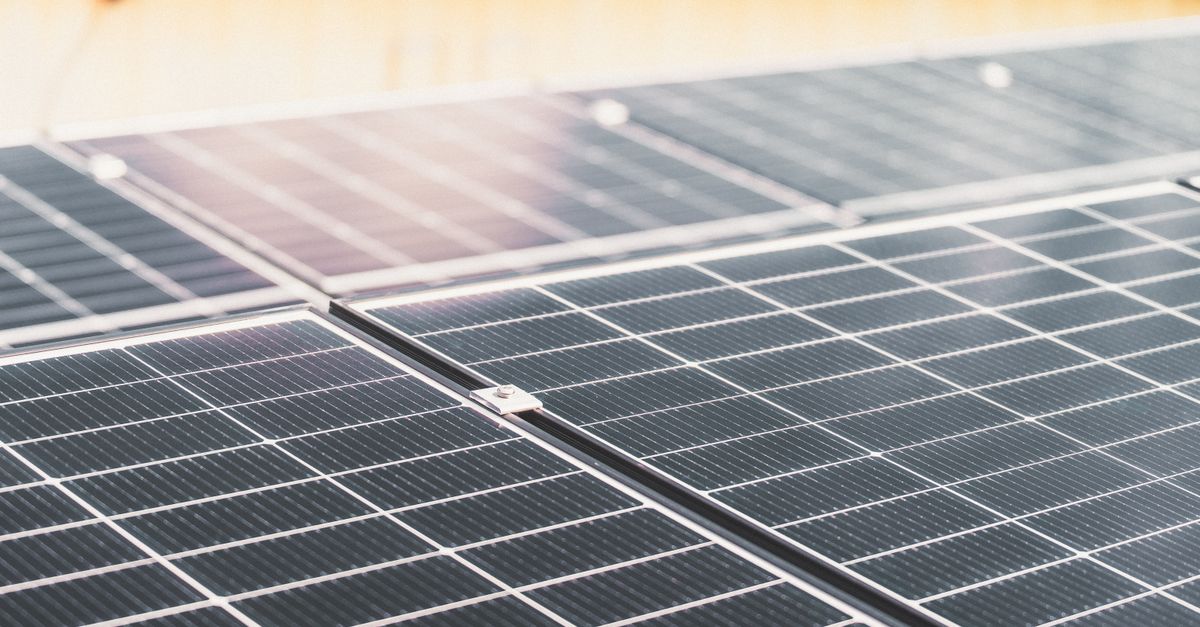
Photo: Elite Power Group on Pexels · Illustrative image.
News analysis · 29 September 2026. Ireland's Clean Export Guarantee remains in place. Electricity suppliers set their own export tariffs, while the regulatory framework is overseen by the Commission for Regulation of Utilities.
Rumours that Irish households could lose payments for surplus solar electricity have been rejected by ESB.
The Clean Export Guarantee (CEG) — the system under which eligible microgenerators receive payment for renewable electricity exported to the grid — is continuing under the existing arrangements.
That clarification matters for anyone who already has rooftop solar, and for households trying to work out whether a new solar installation or home battery will pay for itself.
For the full buying and installation picture — grants, 0% VAT, sizing, batteries, planning and payback — see our Solar Panels in Ireland 2026 guide.
The most important point is simple:
There has been no announced abolition of Ireland’s solar export payment system.
According to the Irish Farmers Journal, ESB design manager Colin Feely said during a renewable-energy session at the National Ploughing Championships that, as things currently stand, the existing arrangements will continue.
He also pointed to the Commission for Regulation of Utilities (CRU) as the body that would have to make changes to the regulatory arrangements.
What is the Clean Export Guarantee?
Solar panels often generate more electricity than a household is using at that moment.
When that happens, the surplus can be exported through the electricity meter to the national grid.
The Clean Export Guarantee gives eligible micro- and small-scale generators the right to receive payment from their electricity supplier for surplus renewable electricity exported to the grid.
If you are looking at a larger farm, business or land-based project, the key distinction is whether the installation is a self-consumer exporting surplus under CEG or an export-only project using SRESS. See our evergreen guide: CEG vs SRESS in Ireland: which solar export route fits your project?
The CRU’s current microgeneration guidance says its regulatory arrangements are designed to ensure customers are paid for electricity they generate beyond their own use and export to the network.
The enduring CEG arrangements were published by the CRU in June 2024.
For a homeowner, the practical chain is:
- your solar system generates electricity;
- your home uses what it needs;
- surplus electricity is exported;
- ESB Networks records or calculates the export quantity;
- your electricity supplier pays you under its Clean Export Guarantee tariff.
ESB Networks does not set your export price
There is an important distinction between ESB Networks, the CRU and your electricity supplier.
ESB Networks operates the electricity distribution network and handles connection and metering data.
It does not buy your exported electricity.
ESB Networks states that the purchase or sale of exported electricity is a matter between the customer and their electricity supplier.
The CRU sets the regulatory framework and eligibility arrangements.
Your electricity supplier sets the tariff it pays you.
That means two households with otherwise identical solar systems can receive different amounts for the same number of exported kilowatt-hours if they are on different supplier export tariffs.
For the other side of the calculation — what imported electricity costs at different times of day — see Electricity Tariffs in Ireland. Solar economics are strongest when import and export prices are modelled separately.
SEAI describes the CEG as effectively a feed-in tariff paid at a competitive market rate and notes that each supplier sets its own rate.
Do you need a smart meter to get paid?
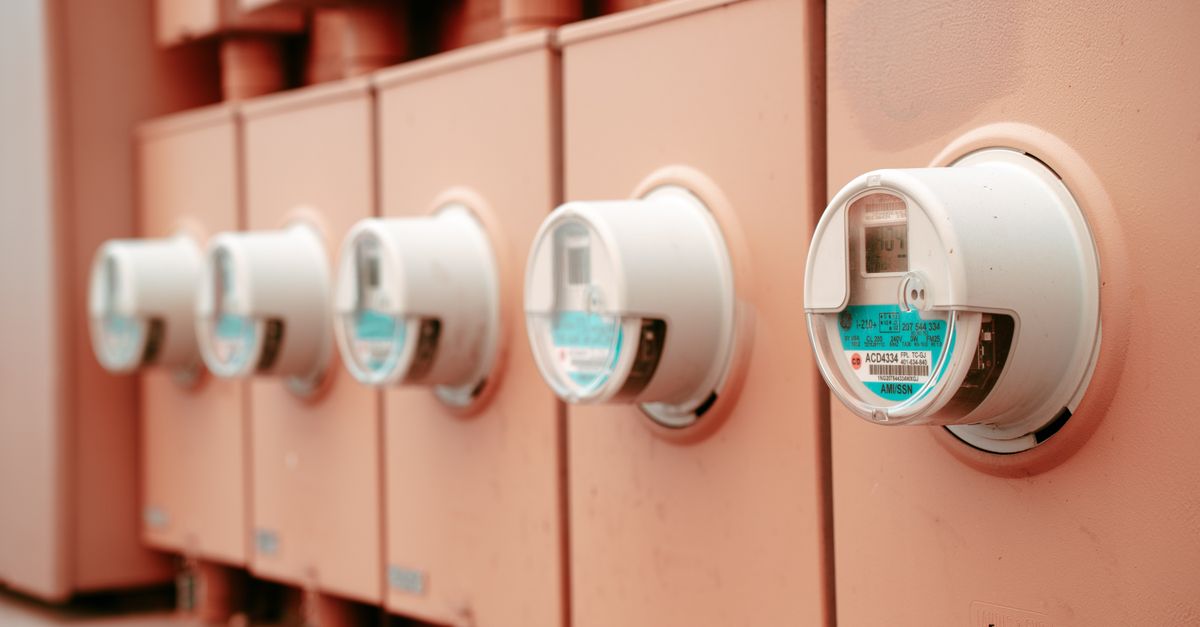
A smart meter is the most accurate way of measuring what a household actually exports.
With an appropriate smart meter, exported electricity can be measured rather than estimated.
However, some customers who are not yet eligible for a smart meter can receive payments based on a deemed export quantity.
The CRU determines the rules for deemed export.
ESB Networks says that customers who are eligible for a smart meter but choose not to have one installed are not eligible for deemed export payments.
It also says a microgenerator must have its export capacity registered with ESB Networks for export quantities to be provided to the supplier.
For standard domestic microgeneration, that normally means the appropriate connection process has to be completed, including the required NC6 notification.
If you are installing solar, your installer should be able to explain the connection paperwork and confirm that the system is properly registered.
How much do you get paid for exporting solar electricity?
There is no single Irish national export rate.
Your supplier decides its own Clean Export Guarantee tariff.
That makes the export rate an important input when comparing electricity suppliers — particularly for a home that exports a large share of its solar generation.
For example, imagine a household exports 2,000 kWh in a year.
At an illustrative export rate of:
| Export tariff | Annual value of 2,000 kWh exported |
|---|---|
| 10c/kWh | €200 |
| 15c/kWh | €300 |
| 20c/kWh | €400 |
| 25c/kWh | €500 |
These are examples rather than current supplier quotes.
The point is that a relatively small difference in the export tariff can materially change the annual return from a solar installation.
Compound’s Solar Payback Calculator lets you model this using your own installation cost, annual generation, self-consumption level, electricity price and export rate.
Calculate your solar payback →
For a closer look at supplier offers, use the Compound Solar Export Rate Comparator, or browse the Solar Hub for the complete solar buying journey.
Why export payments matter when deciding whether to buy a battery
A battery lets a household store some excess daytime solar generation and use it later.
That can reduce the amount of electricity exported.
But exported solar is not worthless.
Every kilowatt-hour diverted into a battery may mean giving up the export payment that would otherwise have been earned.
Consider a simplified example:
- import electricity price: 30c/kWh;
- export tariff: 18c/kWh;
- battery round-trip efficiency: 90%.
If 1 kWh is exported directly, it earns:
18c
If that 1 kWh goes into the battery and 90% is recovered later, it can avoid buying:
0.9 kWh × 30c = 27c
So the extra value created by storing rather than exporting that unit is roughly:
27c - 18c = 9c
before allowing for battery degradation, financing cost or other losses.
That is why a battery can increase solar self-consumption without automatically producing the fastest financial payback.
We break this down in more detail in Do you actually need a battery with solar panels in Ireland?.
You can also model your own tariff, battery cost and EV charging pattern with Compound’s Solar + EV Battery Optimiser.
The first €400 of qualifying microgeneration profits can be exempt from tax
There is also a tax exemption for qualifying individuals.
Revenue’s current guidance says that profits of up to €400 per year arising to an individual from the microgeneration of electricity are exempt from:
- Income Tax;
- USC;
- PRSI.
The €400 exemption applies for the tax years 2024 to 2028.
Revenue states that exempt profits do not need to be included on an income tax return.
Where annual microgeneration profits exceed the exempt amount, the excess must be declared and is subject to normal Income Tax, USC and PRSI rules.
The exemption is for individuals and does not apply to companies or corporate entities.
For most households, using your own solar can still be more valuable than exporting it
Export payments are useful.
But they do not necessarily mean a household should try to maximise exports.
If your electricity supplier charges you more to import a kilowatt-hour than it pays you to export one, using your own solar electricity can be more valuable.
Suppose:
- buying electricity costs 30c/kWh;
- exporting electricity earns 18c/kWh.
Using 1 kWh of solar directly inside the home avoids a 30c purchase.
Exporting that same 1 kWh earns 18c.
The direct self-consumption is therefore worth 12c more per kWh in that simplified example.
That is why it can make financial sense to run flexible loads during sunny periods, including:
- washing machines;
- dishwashers;
- immersion heaters;
- EV charging;
- heat pumps where practical.
The right balance depends on your tariff structure and your household’s demand profile.
If you are not sure how much electricity your household actually uses, start with How much electricity does an Irish home use? and compare the benchmark with your own smart-meter data.
What about larger farm and business solar installations?
The Clean Export Guarantee is not the only route to receiving money for renewable electricity.
Ireland also has the Small-Scale Renewable Electricity Support Scheme (SRESS) for larger renewable projects.
The Department of Climate, Energy and the Environment says SRESS covers renewable projects above 50 kW, including farm, SME and community projects.
The scheme includes an export-tariff route for qualifying export-only projects.
An important distinction is that SRESS export projects cannot also receive the Clean Export Guarantee for the same electricity.
The Department’s current guidance says the SRESS export tariff is aimed at projects exporting all of their generated electricity to the grid, while renewable self-consumers can use electricity on-site and may receive CEG payments for eligible surplus exports.
For farms or businesses considering a larger system, the economics therefore depend on much more than the domestic CEG rate.
System size, grid connection, on-site consumption, planning, financing and the applicable support scheme all matter.
Could the Clean Export Guarantee change in future?
Yes.
The clarification from ESB does not mean today’s exact arrangements or supplier tariffs are guaranteed forever.
The CRU can change the regulatory framework, and suppliers can change the commercial tariff they offer subject to the rules that apply.
That is different from saying the system is currently being abolished.
As of 29 September 2026, the official CRU guidance still describes the Clean Export Guarantee as the mechanism through which eligible customers are paid for exported microgeneration, and ESB has rejected the recent speculation that the arrangements are about to stop.
For anyone assessing a 20- or 25-year solar investment, it is therefore sensible to test the numbers under more than one export-rate assumption.
Do not build the entire investment case around today’s tariff remaining unchanged for decades.
The bottom line
Ireland’s solar export payments have not been scrapped.
The existing Clean Export Guarantee arrangements continue, and eligible solar owners can still receive payment from their electricity supplier for surplus electricity exported to the grid.
The key points are:
- the CRU sets the regulatory framework;
- ESB Networks handles connection and export data but does not buy the electricity;
- your electricity supplier sets the export tariff it pays;
- smart-meter and connection eligibility rules matter;
- qualifying individuals can benefit from the current €400 microgeneration profit exemption;
- and export rates can materially affect the payback of both solar panels and batteries.
For prospective solar buyers, the most useful calculation is not simply how much electricity the panels will generate.
It is how much you will use yourself, how much you will export, what each exported unit is worth and whether adding a battery improves or weakens the overall return.
Model your own system with Compound’s Solar Payback Calculator →