Solar Panels for New Builds in Ireland: Costs, Timing, Sizing and Grants
Building a home? Plan solar before roofing and electrical first fix, size it for your heat pump and EV, and compare costs without assuming a retrofit grant.
 Wealth / The Compound journal
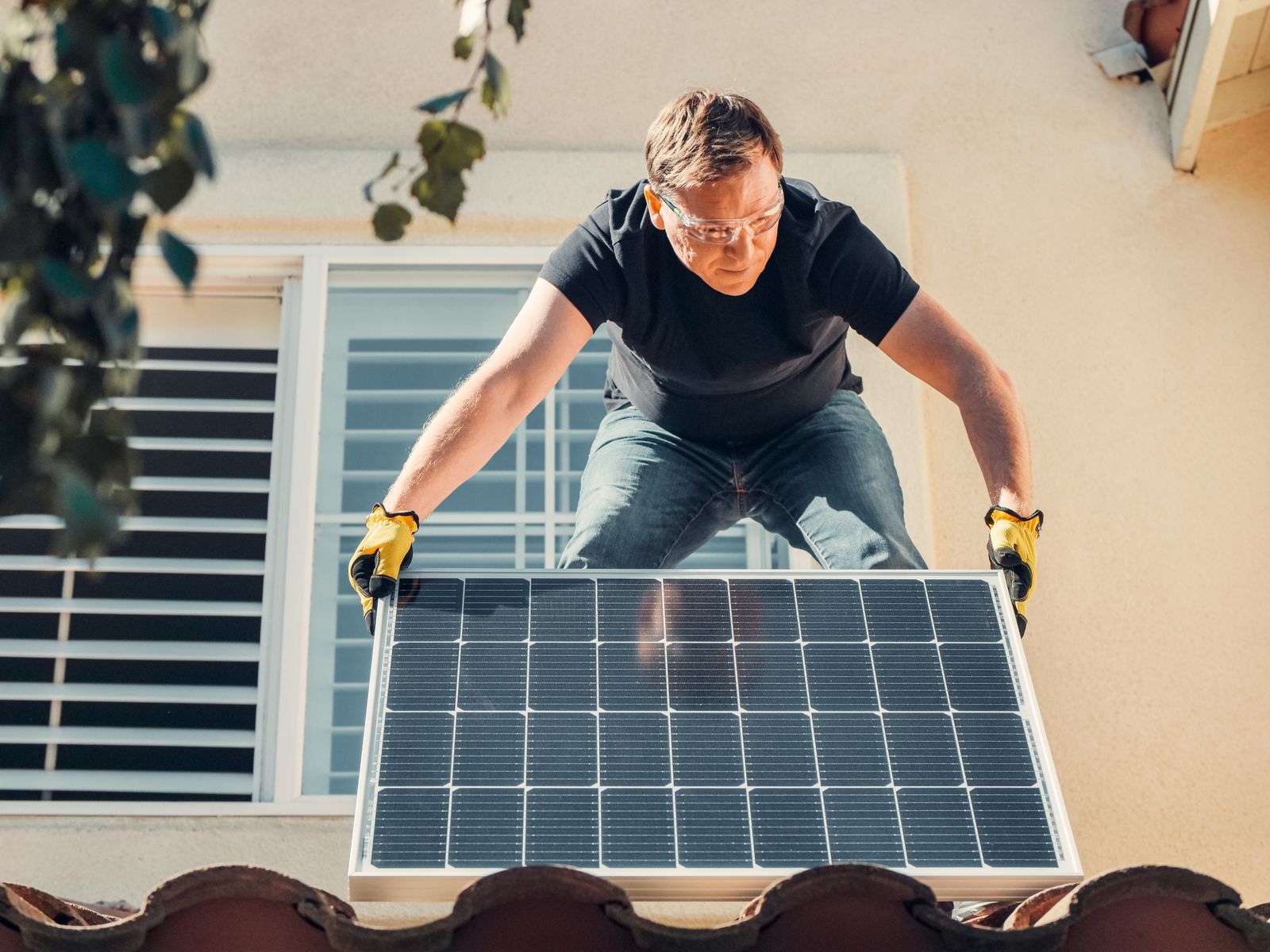
Photo: Kindel Media / Pexels — used under the Pexels License; illustrative stock photograph · Illustrative image.
The best time to plan solar for a new home is before the roof layout and electrical first fix are settled. You can then coordinate panel space, cable routes, equipment locations and the building’s energy design while changes are still straightforward.
Budget for the full installed price. A home being built now does not meet the current SEAI domestic Solar PV Grant age condition: the property must have been built and occupied before 2025. That rule was checked on 20 October 2026. Having an MPRN alone does not make a new build eligible.
This guide is for self-builders and buyers choosing a developer’s solar specification. For an existing home, start with our broader solar panels in Ireland guide.
The decisions to make at each building stage
| Stage | Agree before moving on | Why it matters |
|---|---|---|
| Design and energy assessment | Proposed array, roof orientation, shading and the compliance strategy | Solar should fit the whole building design |
| Before roofing | Mounting method, roof penetrations, weatherproofing responsibilities and safe access | Avoid disputes between roofer and solar contractor |
| Before electrical first fix | Cable routes, inverter location, board provision, monitoring and future equipment plans | Avoid reopening finished walls or compromising airtightness |
| Before ordering | Exact equipment, connection route, installation scope and exclusions | A panel count alone is not a complete specification |
| Commissioning and handover | Electrical certification, network paperwork, monitoring access, manuals and warranties | The homeowner needs a working, documented system |
Ask your designer to check the proposed array against the house’s planning permission and conditions. Do not assume a general rooftop exemption automatically resolves a change to the approved new-build design.
Are solar panels compulsory on every new house?
Treat this as a whole-house compliance question. SEAI describes domestic nearly zero energy building requirements through energy performance, carbon performance and a renewable energy ratio. That does not establish one universal panel count for every dwelling.
Ask the designer or BER assessor to explain the proposed Part L compliance calculation, including what the heat pump and solar contribute. If PV is part of the design used to demonstrate compliance, removing it or postponing installation needs a reassessment before you commit.
A minimum compliance specification and the best long-term household specification may differ. Request two clearly priced designs: the proposed compliant baseline and an optional larger array. Compare the extra cost with the extra useful generation, rather than assuming a larger system is always better.
Can a new build get the SEAI solar grant?
Under the SEAI rules checked on 20 October 2026, the home must have an MPRN, have been built and occupied before 2025, and not have received previous solar PV funding at that MPRN.
A house completed and first occupied in 2026 therefore fails the current age test. A recently purchased house is a different case: eligibility depends on the property’s history, not simply when you bought it. For a conversion or unusual occupancy history, ask SEAI to confirm eligibility before relying on a deduction.
Do not accept a quote whose headline price subtracts a grant you cannot receive. Do not postpone a required installation in the hope that a future scheme will reimburse it. Grant conditions can change, and approval must precede eligible works.
What should solar cost during a new build?
There is no reliable single price without a roof design and equipment specification. Shared site access and coordinated electrical work may reduce duplication, but the saving needs to appear in the written quote. A builder’s package is not automatically cheaper than a separately appointed installer.
Ask for the total payable price without a grant, showing these items:
- Panels, mounting system and roof work.
- Inverter, monitoring, cabling and electrical installation.
- Scaffolding or other access, including who supplies it and for how long.
- Network paperwork, testing and commissioning.
- Battery, EV charger, backup capability and hot-water controls as separate options.
- Applicable VAT, exclusions, payment stages and responsibility for remedial work.
Revenue’s VAT guidance distinguishes panel supply from supply-and-install contracts. Ask the contractor to state the VAT treatment for your actual contract, especially where solar is bundled into a wider construction agreement.
Compare the incremental cost
Suppose, purely as an illustration, a builder includes a smaller system and quotes €2,000 extra for a larger one. If the extra panels produce 1,500 kWh a year, of which 600 kWh replace imports at 30c and 900 kWh earn exports at 15c, their modelled annual value is:
(600 × €0.30) + (900 × €0.15) = €315.
The simple payback on that upgrade is about 6.3 years, before maintenance, degradation, financing, replacement costs and tariff changes. These are assumed figures, not a market quote or promised return. If most extra generation is exported at a lower rate, the upgrade is worth less.
Use the solar payback calculator with your own full price and zero grant where ineligible. Compare the upgrade against the baseline already included in the house price; do not count baseline generation as a benefit of the upgrade.
Sizing solar when you have no electricity bills yet
Build a demand estimate from the household you expect to have. Keep ordinary appliance use, heat-pump electricity and EV charging separate so you can test each assumption.
For example, a planning scenario might use 3,000 kWh for household appliances, 2,500 kWh for heating and hot water, and 2,000 kWh for an EV: 7,500 kWh a year. These are illustrative inputs, not typical consumption figures or a forecast for your house. Ask the heating designer for an estimate appropriate to the building, occupancy and controls.
Then ask the solar installer for monthly output and self-consumption estimates. Matching annual generation to annual demand does not mean your electricity bill disappears. A car away during daylight cannot directly absorb midday generation, and winter heating demand does not coincide with the strongest solar season.
Our 4kWp vs 6kWp vs 8kWp guide covers array comparisons. The solar, EV and battery optimiser lets you explore different usage patterns. For roof layouts, compare east- and west-facing panels rather than ruling out every roof that does not face south.
Plan the heat pump and EV together
A heat pump adds electrical demand, but it does not make every extra panel economical. Much of its space-heating demand arrives in winter. Read our winter solar guide alongside the heat-pump guide.
Ask how heating, hot water and charging will be controlled. Compare the value of exporting spare solar with using it in the house. Do not count the same unit of electricity as an export payment, battery saving and hot-water saving simultaneously.
For an EV, distinguish annual mileage from daytime availability. If charging mostly happens overnight, compare actual night tariffs with the cost and losses of storing solar. A charger that can follow surplus generation may be useful when the car is regularly at home during daylight.
Install now or make the house solar-ready?
Installing during construction can avoid a second mobilisation and reopening completed work. Preparing for later can preserve budget flexibility where the house’s compliance design allows it. Compare both in writing.
If deferring, ask the electrician and designer to document routes, roof access, equipment space, board provision and how penetrations will preserve airtightness and weatherproofing. Photograph concealed routes before finishes go on and keep the drawings in the house file. The specification should be designed by the relevant professionals; an empty conduit is not a complete installation plan.
For a developer-built home, ask whether changes are permitted before handover and how they affect warranties. Establish who fixes a roof leak, a monitoring fault or an underperforming system. Avoid a situation where the developer and installer each assume the other owns the problem.
Should you buy a battery immediately?
Request separate prices for solar only and solar with a battery. A new build’s unknown usage pattern makes the battery case less certain until you have real data. Check usable capacity, power limits, warranty terms, siting requirements and the expected amount of energy that will actually cycle through it.
If choosing a battery-ready inverter, get the compatible battery models and any additional future installation costs in writing. Compatibility is a product-specific promise, not a guarantee that any future battery will work.
A battery does not automatically provide backup during a power cut. ESB Networks says standby operation requires appropriate design, installation and testing by a Registered Electrical Contractor, including separation from the network. Specify which circuits must work and what equipment is included. See our solar battery guide for the financial comparison.
Grid connection and handover
Coordinate the new home’s electricity connection with the solar installation. The installer should confirm the appropriate ESB Networks process and equipment before ordering. ESB’s microgeneration route uses an NC6 notification and has limits based on inverter output and rated current; roof-panel kWp is not the same measurement.
For a system outside that route, obtain the applicable connection assessment and costs before treating it as a straightforward upgrade. Ask who submits the paperwork and retain confirmation in your handover file.
Before final payment, request the agreed commissioning evidence, electrical certificates, network documentation, equipment serial numbers, warranties, operating instructions and monitoring account access. Ask the installer to demonstrate normal operation and explain how you will recognise a fault. Confirm export-payment arrangements with your electricity supplier separately.
A brief you can send to installers
Include your county, build stage, planned completion date, roof drawings, orientation and shading, proposed heat pump, EV plans and estimated annual electricity use. Ask every installer to price the same baseline and optional upgrades.
Use our solar quote comparison guide to compare equipment and exclusions. You can also prepare and submit your new-build solar project to Compound. Homeowner submissions are open; installer matching is not yet active and quotes cannot be guaranteed. Any future introduction requires your separate permission.
Frequently asked questions
Can I add panels after moving into a new build?
Yes, subject to a suitable design and the relevant planning, electrical and network requirements. Check the developer’s warranties and the existing inverter before altering a supplied system. Later installation does not automatically create grant eligibility.
Will solar run my heat pump all winter?
Do not budget on that basis. Solar output and heating demand vary by season and hour. Use monthly generation and heating estimates and allow for continuing grid imports.
Should I fill every available roof space?
Compare the additional installed cost with the value of additional generation. Space, shading, network constraints and when you use electricity all matter. A larger annual yield can still mean a high proportion of low-value surplus exports.
What is the first decision to make?
Agree the whole-house energy design and a proposed panel layout before roofing and electrical first fix. Then obtain comparable, grant-free prices and make future battery or EV provision explicit in the specification.