How to Compare Solar Panel Quotes in Ireland (2026): Are You Paying Too Much?
Three solar quotes can describe different jobs. This 2026 Irish buyer's guide shows how to compare all-in prices, panels, inverters, batteries, grants, annual output and warranties before paying a deposit.
 Wealth / The Compound journal
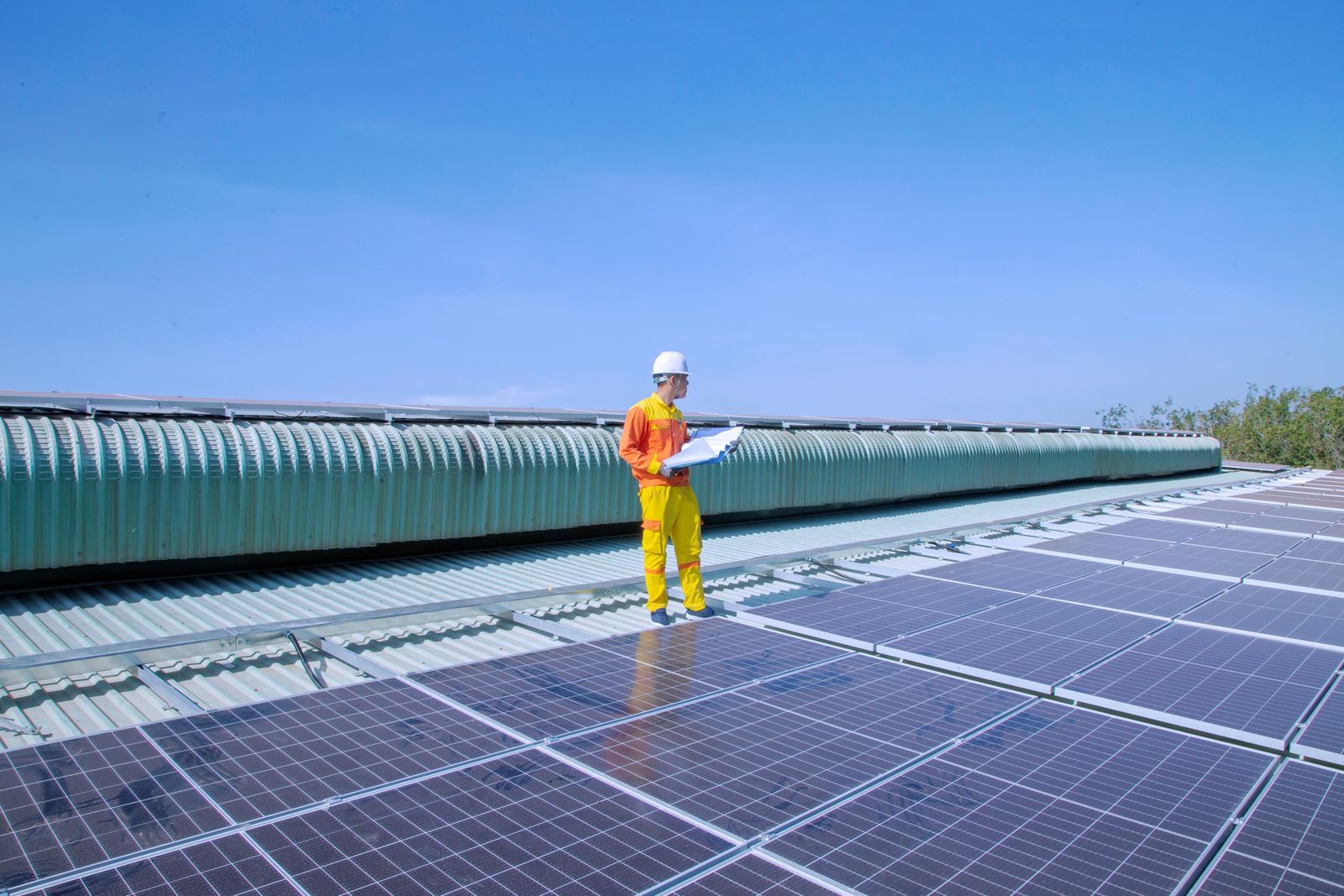
Photo: Hoan Ngọc / Pexels · Illustrative image.
Buyer’s guide · Ireland · Updated 15 October 2026
The cheapest solar quote is not necessarily the cheapest installation. A €8,200 offer that excludes scaffolding and electrical work could cost more than an all-inclusive €9,000 quote. And two systems described as “6kW” may have different panels, inverters, generation forecasts, warranties and batteries.
Compare the final installed price, specification and estimated annual value—not the headline figure. SEAI recommends obtaining at least four quotes from different companies.
A solar installation is a major home purchase. In Ireland, the panels might last for decades, but the quote can hide short-term risks: a vague installer specification, assumptions about the grant, unpriced roof work or a battery that adds little financial value.
This guide is deliberately about buying, not a general introduction to solar. If you are still deciding whether to install panels at all, start with our complete solar panels in Ireland guide. If you already have an offer, use the steps below.
Solar panel prices in Ireland in 2026: a sensible starting point
There is no official, audited national price list for an Irish household solar installation. Public installer and quote-comparison sites publish different figures, often based on different roof, equipment and battery assumptions.
The bands below are illustrative planning ranges drawn from publicly published 2026 Irish industry price guides, not transaction-level averages or guaranteed offers. They assume a reasonably straightforward domestic roof, panels, inverter, standard installation and no battery. Your written quotation is the only reliable price for your own house.
| PV system size | Illustrative all-in cost before grant | After maximum €1,800 PV grant* |
|---|---|---|
| 4kWp | €7,000–€10,500 | €5,200–€8,700 |
| 6kWp | €9,000–€12,500 | €7,200–€10,700 |
| 8kWp | €11,500–€16,000 | €9,700–€14,200 |
*Grant treatment assumes the home and installation qualify for the full standard solar PV grant and the system has at least 4kWp of panels. Ranges are broad editorial planning estimates assembled from independently published 2026 installer guidance and Irish quote-comparison estimates; they are not SEAI statistics. Some advertised prices are already shown after grant. Never deduct it twice. Figures assume the usual 0% VAT treatment for qualifying domestic supply-and-install work.
An unusual roof, slate repairs, difficult access, a three-phase conversion, substantial electrical upgrades or premium equipment can all move the real price outside these bands. Rather than treating a low price as a bargain—or a high price as a rip-off—ask what is included.
Worked example: three quotes for the same 6kWp system
Imagine an eligible Irish homeowner requesting a 6kWp solar-only installation, without battery storage. Three firms respond. These are invented, educational quotations, not offers obtained from any installer.
| What the homeowner compares | Quote A | Quote B | Quote C |
|---|---|---|---|
| Advertised price | €8,200 | €9,000 | €10,200 |
| Scaffolding / access | +€700 | Included | Included |
| Additional electrical work | +€400 | Included | Included |
| Final installed price before grant | €9,300 | €9,000 | €10,200 |
| Assumed eligible PV grant | −€1,800 | −€1,800 | −€1,800 |
| Homeowner's net cost* | €7,500 | €7,200 | €8,400 |
| Net cost per kWp | €1,250 | €1,200 | €1,400 |
Quote B wins on net price, although it is €800 dearer than A’s advertised headline. But that conclusion is valid only if all three offer comparable system design, hardware, quality of installation and contractual protection.
If C includes meaningfully better hardware or a stronger workmanship warranty, it may still deserve consideration. If B’s quoted generation is inflated, its lower price could be misleading.
*This is an after-grant economic cost, not necessarily the amount you pay at the point of installation. Under an ordinary self-managed SEAI application, the eligible applicant receives the grant after completion and submission of the required documentation. Confirm the actual payment schedule and who receives the grant before signing.
Quote comparison
Already received two or more offers?
Line up the same equipment, grant treatment, battery capacity and total cost before deciding. Start with the Compound Solar Quote Comparator, then model the winning quote in the Solar PV Payback Calculator.
How to compare like with like: the 10-line checklist
Ask every company to provide the same information in writing. A good quotation makes it possible to work through the following without guessing.
| # | Question | What to look for |
|---|---|---|
| 1 | How big is the array? | Installed panel capacity in kWp, panel count, wattage and manufacturer/model. |
| 2 | Which inverter? | Brand, model, AC rating and whether hybrid/battery-ready. A 6kWp panel array is not necessarily a 6kW AC inverter. |
| 3 | What will it generate? | Roof-specific annual kWh, shading, orientation, pitch, loss assumptions and an estimated seasonal profile. |
| 4 | Is there a battery? | Nominal versus usable kWh, brand, warranty, round-trip losses and any backup-power capability. |
| 5 | What is included? | Roof survey, mounts, scaffolding, cabling, monitoring, switchboard upgrades, commissioning and handover. |
| 6 | Who handles the grid? | Relevant ESB Networks application/notification, inverter limits and export setup. |
| 7 | How does the grant work? | Gross and net prices clearly labelled, applicant eligibility, required approval before work and who receives the payment. |
| 8 | What warranties apply? | Separate panel product/performance, inverter, battery and installation workmanship terms, including who pays call-out labour. |
| 9 | What do payments cover? | Deposit, staged payments, possible extras, installation date, cancellation terms and written scope. |
| 10 | Who stands behind it? | Exact legal trading name, SEAI company registration where grant-funded, references, insurance and after-sales contact. |
A particularly important distinction: SEAI registration is not an SEAI guarantee of a company’s work. SEAI explicitly says it does not approve, guarantee or warranty an installer. It also recommends at least four quotes, checking previous projects and using a written contract. See SEAI’s registered solar PV companies guidance.
2026 SEAI grants: do not compare the wrong prices
For qualifying homes, the standard Solar Electricity Grant currently provides €700 per kWp for the first 2kWp, then €200 per additional kWp up to 4kWp, capped at €1,800. A 3kWp system may receive €1,600; a qualifying 4kWp or larger installation can receive the maximum €1,800. The grant is not unlimited simply because you install more panels.
SEAI also now offers a separate €600 battery grant for qualifying battery systems of 5kWh or larger. A qualifying household installing both can apply for both grants. That can bring standard combined support to €2,400, subject to eligibility.
The property needs an MPRN, must have been built and occupied before 2025, and cannot already have received the corresponding grant at that MPRN. Apply and receive approval before installation starts. Check the full and latest SEAI solar PV rules and battery rules.
For eligible domestic supply-and-install work, the Revenue rules generally allow 0% VAT. A stand-alone retail purchase of panels does not necessarily have the same VAT treatment. Ask the installer to confirm exactly which items and services are covered.
Payback: the quote with the best financial return is not always the cheapest
Let us use the same theoretical 6kWp system for all three offers. Assume its roof-specific generation estimate is 5,100kWh a year, 40% of that electricity is used directly in the home, imported electricity costs 30c/kWh and exported electricity earns 15c/kWh.
| Value calculation | Worked example |
|---|---|
| Solar used directly | 5,100 × 40% = 2,040kWh |
| Avoided grid purchases | 2,040 × €0.30 = €612 |
| Solar exported | 5,100 − 2,040 = 3,060kWh |
| Export payments | 3,060 × €0.15 = €459 |
| Total illustrative annual value | €1,071 |
Using this deliberately simple scenario:
- Quote A: €7,500 ÷ €1,071 ≈ 7.0 years;
- Quote B: €7,200 ÷ €1,071 ≈ 6.7 years;
- Quote C: €8,400 ÷ €1,071 ≈ 7.8 years.
These are simple paybacks, not financial forecasts. The model leaves out equipment deterioration, inverter replacement, maintenance, financing, changes in consumption, electricity and export rates, tax effects, and the time value of money. The generation, tariffs and self-consumption rates are illustrative assumptions—not claims about current offers from suppliers.
Crucially, exported electricity is not equivalent to avoided imported electricity. That is why a salesperson’s “your panels will produce enough units to cover the annual bill” statement does not, by itself, demonstrate that your bills will disappear.
Put your own quoted cost, generation and electricity rates into the payback calculator →
Do you need the battery in the quote?
A battery can be useful, especially if your electricity demand is high after sunset or your tariff rewards carefully timed charging. But it does not create additional solar generation, and there are energy losses in storage.
Ask for two separate written figures: solar-only and the same solar array plus battery, with the battery’s usable capacity and grant shown separately. If the battery adds €3,000 net and is expected to create €180 of extra annual value, its illustrative incremental simple payback is 16.7 years—regardless of how attractive the overall panels-plus-battery payback may look.
A battery may still be chosen for resilience or convenience; just do not mistake those benefits for financial savings. Read Solar Panels vs Battery Storage in Ireland and compare configurations using the Solar + EV + Battery Optimiser.
The hidden costs and small print worth questioning
Common quote differences include:
- Scaffolding and roof repairs. A quote can be cheap because safe access or remedial work has not been priced.
- Electrical work. An older consumer unit, long cable run or necessary upgrade can change the total.
- Panel and inverter mismatch. Ask about DC panel capacity, inverter AC rating, clipping and potential connection requirements—not simply the number of panels.
- Paperwork. Confirm who handles the relevant ESB Networks process and whether export metering arrangements are included. Standard microgeneration generally covers inverter/export ratings up to approximately 6kVA single-phase or 11kVA three-phase.
- Backup power claims. A battery does not automatically keep sockets powered during a grid outage. Ask which circuits, changeover equipment and installed features provide backup.
- Warranty costs. A “25-year warranty” may apply to panel output while an inverter and workmanship carry shorter or different cover.
- Price exclusions. Clarify who pays for extras found after surveying, whether the deposit is refundable and exactly what qualifies as a scope change.
Any installer can offer an attractive-looking generation chart. What matters is whether it reflects the actual roof, shading and electrical design. See East- and West-Facing Solar Panels in Ireland and How Many Solar Panels Do You Need? before upsizing solely on a sales projection.
Choosing the installer: five red flags
1. Pressure to pay a deposit today. A genuine offer should survive a reasonable period to read the contract and compare like-for-like specifications.
2. No itemised equipment list. “Premium solar system” is not a panel brand, inverter model or warranty.
3. Grant presented as automatic. Ask for the official SEAI criteria and the payment route. A grant cannot be assumed for every property.
4. Guaranteed payback without assumptions. A payback claim requires annual generation, direct usage, import price, export rate and net cost.
5. No clear legal counterparty or after-sales arrangements. Know who installs, who warrants, and who fixes faults if a subcontractor or manufacturer is unavailable.
None of these alone proves a business is dishonest. They are reasons to request a clearer written answer before proceeding.
Before signing: a four-quote process that takes the guesswork out
Step 1 — Create one brief. Use your annual kWh consumption, roof orientation, shading, target system size and battery preference. Send the same facts to all companies.
Step 2 — Obtain at least four offers. That follows SEAI’s own recommendation. Look at independent reviews, previous local projects and relevant registration, not only the price.
Step 3 — Standardise the figures. For each quote, record the total pre-grant cost, all excluded work, grant assumptions, final economic cost and equipment list.
Step 4 — Run comparable payback scenarios. Keep import and export rates, self-consumption and household electricity demand the same. Vary the installer’s site-specific production figure only when there is a reason.
Step 5 — Verify the contract and grant approval. Check payment milestones, workmanship and product warranties, completion documentation and the process if unforeseen roof or electrical work is needed.
Next step · Compound Solar Hub
Compare your solar quote before committing
Already have offers? Use the free quote comparison and payback tools. Still collecting prices? Prepare a more consistent project brief so installers can assess the same job rather than send incompatible estimates.
Compare existing quotes → Prepare your installer enquiry →
Compound may earn fees from participating installers or commercial partners. Editorial figures and educational comparisons are not provider rankings or endorsements. Installer availability and the handling of enquiries vary by location.
Solar quote questions: quick answers
How many solar installation quotes should I get in Ireland?
At least four, according to SEAI’s homeowner guidance. More may be useful where roof access, battery design or equipment differs substantially.
Is €10,000 too expensive for a 6kWp solar system?
Not necessarily. A €10,000 all-in solar-only quote can be within broadly advertised 2026 planning ranges, but its value depends on roof access, panels, inverter, included electrical work, warranty and whether €10,000 is before or after the grant. Compare full specifications.
Does the €1,800 SEAI grant apply to all solar quotes?
No. The maximum standard grant applies only when the applicant, property and installation qualify and the panel capacity reaches the cap. The home must meet SEAI conditions, and approval must precede installation.
Is a 6kWp solar system the same as a 6kW inverter?
No. kWp is the sum of the panels’ nominal rated DC output. An inverter’s kW/kVA rating is a separate AC-side specification. The connection process is also relevant to export capability.
Can I compare a solar quote with and without a battery?
Yes—and you should. Hold panel capacity and the other assumptions constant, compare the incremental battery cost with the additional expected savings, and separately consider backup or convenience benefits.
Can I compare quotes from different counties?
Yes, but make every company price the same site and scope. Travel, scaffolding, roof type, site access and service support may legitimately affect the final price.
Editorial method (15 October 2026): Grant, VAT and installer-selection guidance was checked against SEAI, Revenue and ESB Networks. Published industry pricing was used only to construct broad, explicitly non-official planning ranges. The three competing quotations and payback illustration are Compound-created examples, not sampled installer offers or guaranteed savings. Always obtain site-specific written quotes before purchasing.