Tesla’s $3.1 Billion Texas Polysilicon Plan: Can Solar Manufacturing Pay Off?
Tesla is seeking incentives for a proposed $3.1bn Texas polysilicon factory. Here is what it would make, its timetable, the tax-break dependence and why investors should watch the returns.
 News / Wealth
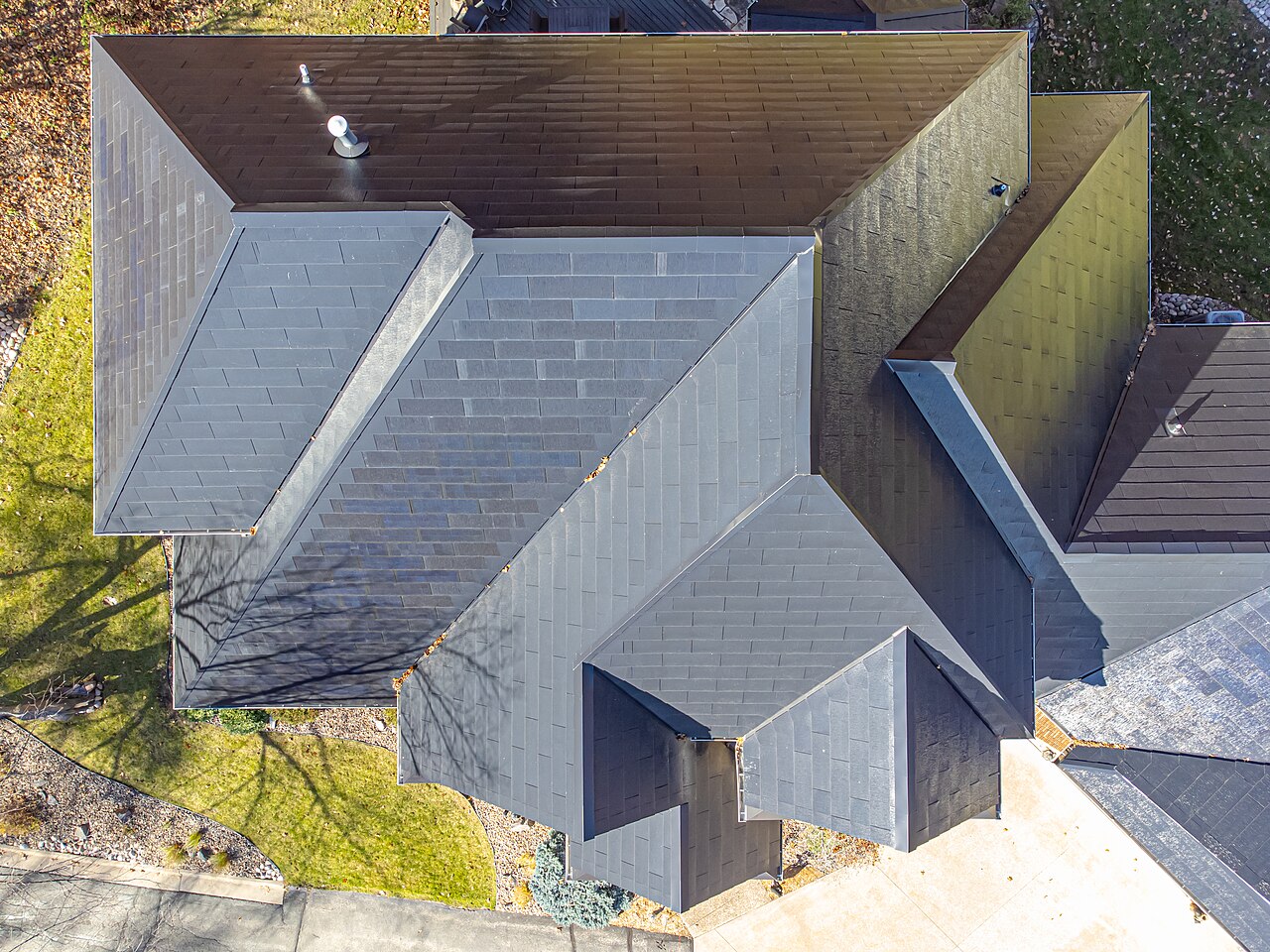
Photo: Wikideas1 / Wikimedia Commons · CC0 1.0 · 6 November 2023 · Illustrative image.
Tesla has proposed investing more than $3.1 billion in a solar-grade polysilicon factory in Nueces County, Texas. But this is still a proposed project—not an operating plant, not an approved tax-incentive agreement and not evidence of future earnings. The financial question is whether bringing an upstream part of solar production into the United States can produce a competitive return after construction, energy costs and incentives.
The proposed factory emerged in Tesla’s application under Texas’s Jobs, Energy, Technology and Innovation (JETI) programme. Reuters reported the proposal on 20 November 2026. Tesla describes the plant as a component of a vertically integrated domestic solar supply chain. It would produce polysilicon, a purified raw material used to make photovoltaic cells—not finished rooftop panels.
The numbers in Tesla’s Texas proposal
| Item | Reported proposal | Why it matters |
|---|---|---|
| Total capital investment | More than $3.1 billion | Large up-front commitment before meaningful sales |
| Location | Nueces County, Tuloso-Midway Independent School District, Texas | Local property-tax incentives affect site economics |
| Construction | Targeted across 2027–2030 | Multi-year capital deployment and execution exposure |
| Operations | Expected to start 2030 | Revenue, if realised, would be years away |
| Employment | 515 permanent workers by 2032 | A local benefit, not a profitability forecast |
| Tax treatment | Requested under JETI | Approval is still required |
These are application estimates, not achieved construction milestones. Local reporting says the school board has not approved an agreement. The application also leaves important operating questions, such as annual polysilicon capacity and water requirements, unresolved in public reporting.
Why polysilicon, rather than another solar panel assembly line?
A conventional crystalline-silicon solar supply chain runs from polysilicon through ingots, wafers and cells to finished modules. Producing more modules in the United States is not the same as sourcing all their upstream inputs domestically.
The proposed Nueces County plant would address an earlier stage of that chain. That matters because global polysilicon supply is heavily concentrated in China. A US producer might gain supply-security advantages and access to customers that value domestic sourcing, but it would also have to compete against established low-cost suppliers.
Tesla has separately discussed a $10.1 billion solar manufacturing project near Houston involving downstream products including ingots, wafers and cells. The two figures describe different proposed facilities. They should not be added together as a committed, fully financed investment programme.
The tax incentive may determine whether Tesla proceeds
The headline $3.1 billion is a proposed capital outlay, not an amount Texas has agreed to subsidise. The company is applying for a property-tax value limitation under the JETI programme.
KRIS 6 News reported that the proposal would exempt eligible project property from certain school operating taxes during the 2028–2030 construction period, then tax half its assessed value for those purposes from 2031 through 2040, with full assessment from 2041. These terms remain requested, not granted.
Tesla’s application stresses that the incentive would matter to its site-selection decision. That makes this more than a routine subsidy footnote: the proposed factory’s location and ultimate go-ahead are conditional.
There is a public-policy trade-off. The project could generate construction work, manufacturing jobs and a new local tax base, but foregone school operating-tax revenue is also a cost. The claimed economic benefits and potential tax receipts depend on the plant actually being built and performing as projected.
A return-on-capital test for investors
The investment case cannot be assessed from the capital budget alone. To earn an acceptable return, the factory would need a combination of competitive manufacturing costs, sustainable utilisation, sufficiently strong polysilicon prices and manageable ongoing expenditure.
Here is a deliberately simplified illustration, not a Tesla forecast:
| Illustrative annual operating cash return on $3.1bn | Annual amount |
|---|---|
| 5% | $155 million |
| 10% | $310 million |
| 15% | $465 million |
Those percentages merely multiply the proposed initial capital cost. They are not internal rates of return, earnings forecasts or free cash flow, and they ignore ramp-up time, taxes, financing costs, maintenance capital and the time value of money. They show the scale of recurring cash generation that investors might ask the project to justify.
A full model needs expected tonnes of output, realised price per kilogram, electricity consumption and cost, raw materials, maintenance, depreciation, tax treatment and construction milestones. Until Tesla discloses those inputs, assigning the project a precise valuation would be premature.
What does this mean for Tesla stock?
Tesla already reports automotive and energy generation/storage as distinct business segments. A proposed upstream materials factory could strengthen a longer-term energy strategy, but its economics would not automatically resemble vehicle margins or battery-storage margins.
It also creates potential capital-allocation tension: a dollar spent on polysilicon cannot simultaneously fund vehicle production, battery plants, autonomy development or shareholder returns. Investors should compare the prospective returns with those alternatives.
For context, our Tesla stock guide explains the different economic engines, while our analysis of Tesla’s energy-storage margins shows why growth in energy activity does not guarantee higher profit. Track disclosed financials and the share-price chart on Tesla’s TSLA profile.
Five milestones to watch
- Incentive approval: Does the school district and Texas approve an agreement, and on what final terms?
- Final investment decision: Does Tesla formally commit to building this particular site?
- Construction spending: Are the 2027–2030 milestones and costs achieved?
- Capacity and costs: How many tonnes of polysilicon will it produce, and at what unit cost?
- Commercial demand: Is output used within Tesla’s own solar chain, sold externally, or both—and at what economic return?
Bottom line: The $3.1 billion proposal is a noteworthy signal that Tesla is exploring upstream US solar manufacturing. It is not yet $3.1 billion of realised spending or evidence of future profit. The decisive information will be incentives, project approval, capacity, costs and eventual cash returns.
Research checked: 21 November 2026. Figures in this article describe plans and applications unless otherwise stated. It is general business analysis, not investment advice.