Starlink Mini 2: Price, Battery and What It Means for SpaceX and Tesla
SpaceX's new Starlink Mini 2 adds a 71 Wh quick-swap battery and a $999 US launch offer. We examine the hardware, subscription economics, SpaceX stock and Tesla's financial exposure.
 News / Wealth
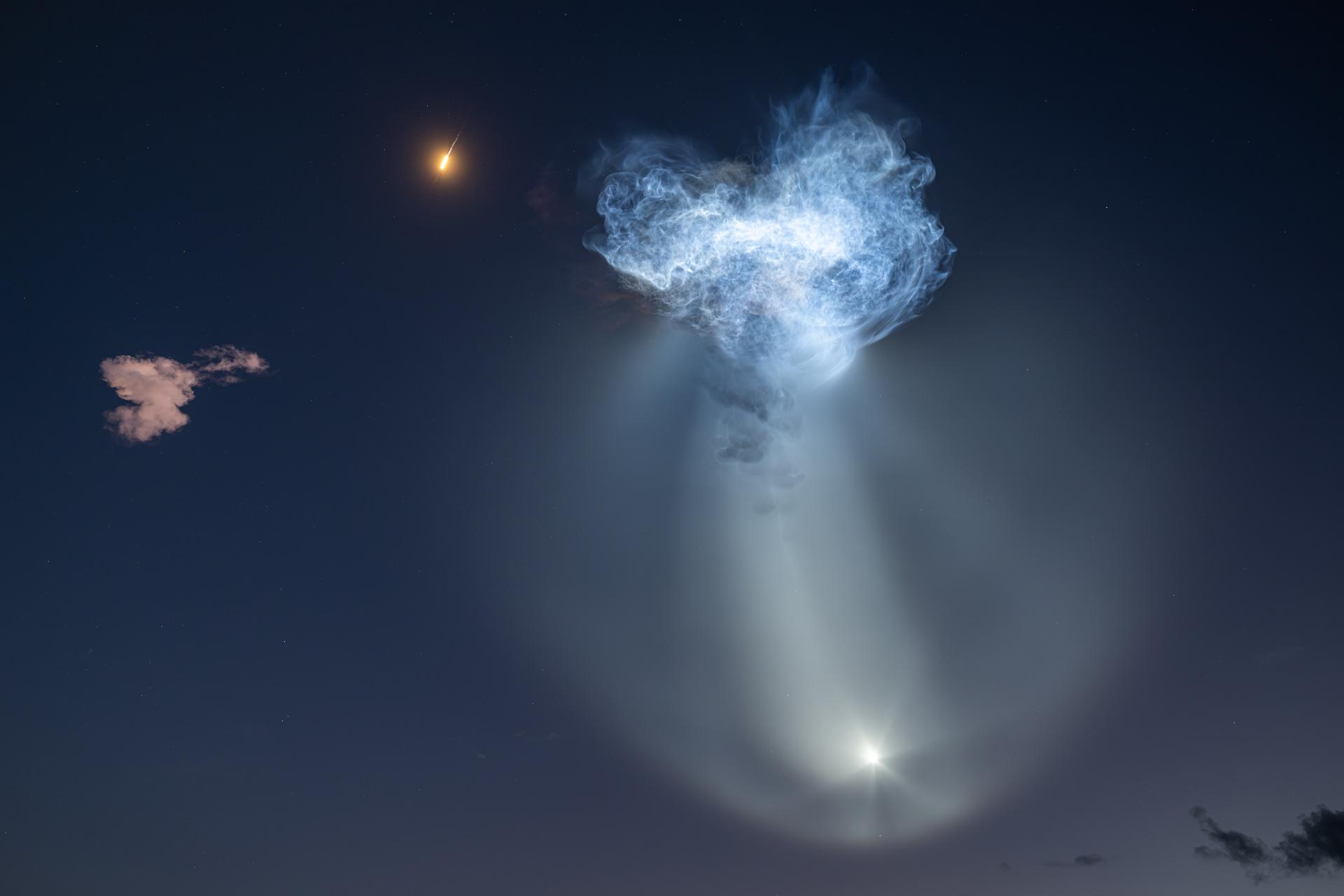
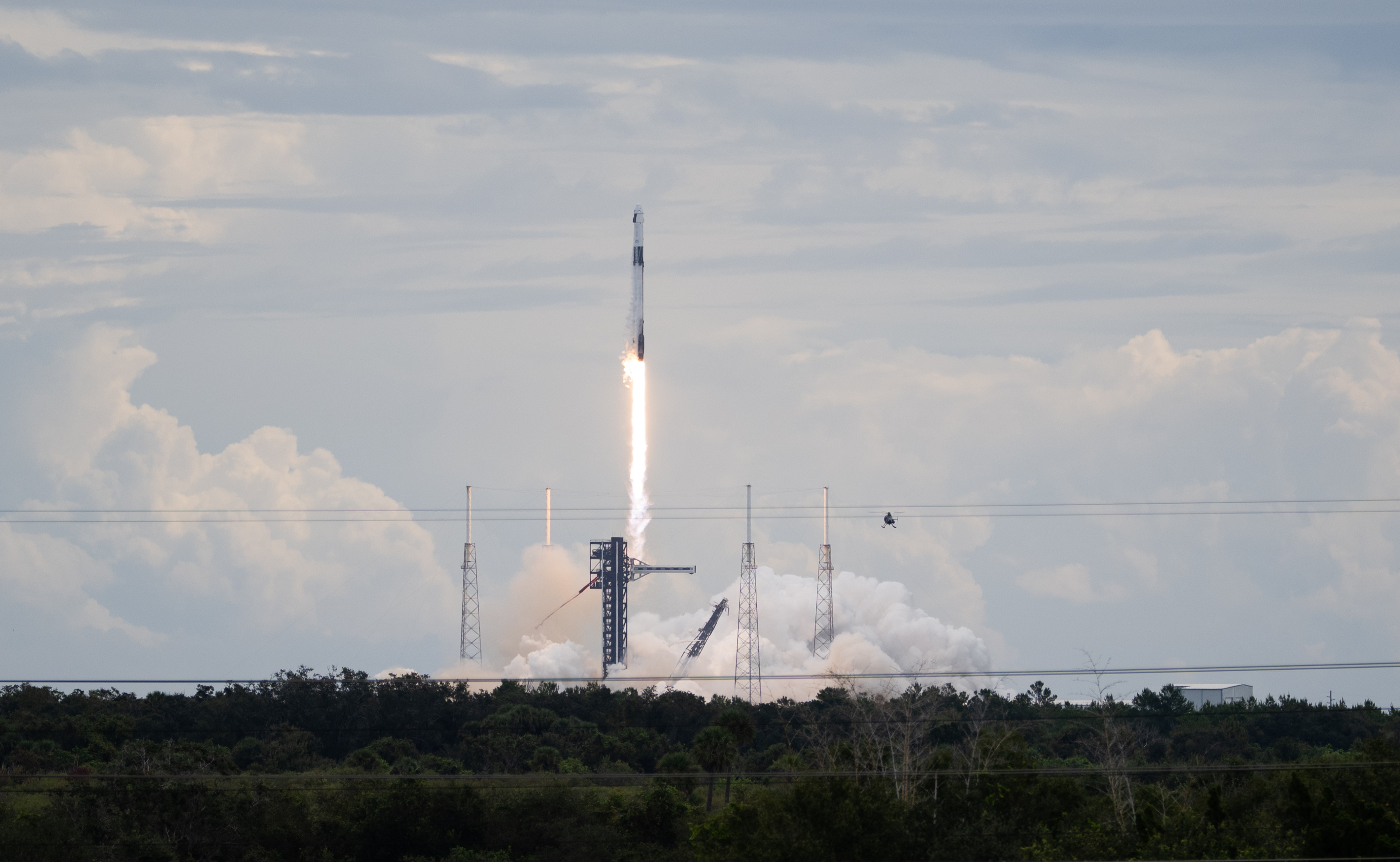
Photo: Starlink / SpaceX launch imagery, reproduced in ITavisen (10 November 2026) · Illustrative image.
Technology and financial analysis | 17 November 2026. Lead image: Starlink Mini 2 launch imagery via ITavisen, not a photo of the original Starlink Mini.
The Starlink Mini 2 is now official. SpaceX unveiled its second-generation portable satellite-internet terminal on 10 November 2026, adding something the original Mini lacked: a removable 71-watt-hour battery rated for up to 4.5 hours of connectivity without an external power supply. It also introduces USB-C power and Wi-Fi 6 in a thinner enclosure. But the bigger story is financial: SpaceX is turning a satellite receiver into a more convenient, recurring-revenue product, while Tesla shareholders already have documented exposure to SpaceX through an equity investment and energy-storage sales.
The launch is also a useful test of how consumers should think about a new gadget. The widely reported $999 US preorder price includes a year of Roam Unlimited service. It is not an established, globally available, hardware-only price. Neither an Irish launch date nor an Irish Mini 2 price has been announced.
Starlink Mini 2 specifications: what has changed?
Starlink’s official Mini 2 product page confirms the following:
| Feature | Starlink Mini 2 |
|---|---|
| Launch announced | 10 November 2026 |
| Battery | Removable 71 Wh quick-swap pack |
| Claimed runtime | Up to 4.5 hours per charge |
| Charging and external power | USB-C, 60 W |
| Wi-Fi | Wi-Fi 6; claimed coverage up to 167 m² (1,800 sq ft) |
| Dimensions | 263 × 314 × 23.1 mm |
| Weight | 1.6 kg including battery and kickstand |
| Ruggedness | IP67 rating |
| Mounting | Kickstand and standard 1/4-20 tripod fitting |
| Initial preorders | Invitation-only for selected US customers |
| Ireland availability | No confirmed launch date or price as of 17 November |
The original Starlink Mini needed an external power source. Mini 2 can run directly from its removable battery, operate while charging and use a separately purchased spare battery. SpaceX says an unobstructed view of the sky can bring the device online in about 60 seconds, although real-world performance will depend on coverage, obstructions, the selected plan and local conditions.
At 23.1 mm, the new body is considerably slimmer than the first-generation Mini’s reported 38.5 mm thickness, though its integrated battery makes the total kit somewhat heavier. The crucial change is less about headline satellite speed and more about making setup easier for people who cannot assume access to a socket.
Starlink Mini 2 price: what does $999 actually buy?
Reports of the initial US invitations put the preorder package at $999 before applicable taxes, including the device and 12 months of Roam Unlimited. The Verge reports that SpaceX assigns a value of $2,100 to that year’s service. That is the company’s stated package valuation, not proof every buyer would otherwise pay that amount or that the bundle offers an equivalent cash saving.
| Price question | What is known |
|---|---|
| Launch offer for invited US customers | $999, including 12 months of Roam Unlimited |
| Average initial outlay across 12 months | $83.25 per month, purely as an arithmetic comparison |
| Confirmed standalone device price | Not announced |
| Confirmed spare-battery retail price | Not announced |
| Irish retail price, VAT or local service bundle | Not announced |
| Subscription cost after prepaid year | Depends on the applicable plan and future terms |
Reports of $249 for a Mini 2 beta kit and $50 for a beta battery trace back to website-code findings, not a confirmed general retail price. The Next Web identifies the distinction. Comparing that speculative hardware figure directly with the $999 one-year bundle would therefore be misleading.
The practical calculation for a purchaser is total cost of ownership, not dish price alone: hardware or introductory bundle + later subscription fees + spare batteries or mounts + any applicable taxes. A buyer who only needs occasional connectivity may value the hardware differently from somebody who needs a service line all year.
Why this matters for SpaceX stock (NASDAQ: SPCX)
Starlink Mini 2 is a hardware story, but for SpaceX investors the recurring service relationship is likely more important. A dish can be sold once. A satellite-internet subscription can generate monthly or prepaid service revenue for as long as the customer keeps using it.
SpaceX’s third-quarter 2026 earnings release provides a scale check:
| SpaceX connectivity metric | Q3 2026 |
|---|---|
| Connectivity segment revenue | $5.248 billion |
| Year-on-year connectivity revenue growth | 69% |
| Connectivity segment operating income | $2.367 billion |
| Starlink consumer subscribers at 30 September | 13.6 million |
| Reported Starlink consumer monthly ARPU | $69 |
These are Connectivity segment numbers, not sales of Mini 2, which was unveiled after the quarter closed. They also include other connectivity services, not just consumer Roam subscriptions. SpaceX has not disclosed Mini 2 sales forecasts, a manufacturing-cost breakdown or a separate margin target.
A portable device with an integrated battery may expand the market among campers, remote workers, boat users, emergency responders and households wanting resilience during outages. It may also encourage existing Mini users to replace older hardware. But new terminal sales do not necessarily equal new subscribers: some buyers will upgrade or move an existing service line.
A simple illustration of potential subscription economics
Suppose, hypothetically, Mini 2 and similar products eventually produced 100,000 genuinely additional paying consumer connections at the company’s Q3 reported blended consumer ARPU of $69 a month. The run-rate arithmetic would be:
100,000 × $69 × 12 = $82.8 million in annualised gross service revenue.
This is not a SpaceX forecast, a Mini 2 sales projection or incremental profit. Roam customers may pay different rates, prepaid launch bundles change the timing of revenue recognition, and additional subscribers create network, support and operating costs. The model illustrates why recurring connectivity revenue can matter more over time than one-off terminal economics.
The key investor questions are whether Mini 2 recruits people who would not otherwise subscribe, what those customers pay after an introductory year, how often they pause service, and whether capacity can keep up without degrading performance. SpaceX’s expanding constellation and the spending needed to support it also remain central.
Read our wider SpaceX business and capital-spending analysis for the context behind its connectivity and infrastructure operations.
What does Starlink Mini 2 have to do with Tesla (TSLA)?
The connection is real, but it needs to be stated precisely. Starlink is a SpaceX product, not a Tesla product. Tesla does not manufacture or sell the Mini 2 as an automotive accessory, and the launch does not establish a new Tesla vehicle connectivity feature.
There are, however, two important financial links between the companies.
First, Tesla owns an investment in SpaceX. In its Q3 2026 Form 10-Q, Tesla reported a $2.00 billion investment in SpaceX common stock, representing less than 1% ownership. That creates indirect financial exposure to SpaceX as a whole, but not a special claim on Starlink Mini 2 sales. Even a successful device rollout would not necessarily have a measurable effect on Tesla’s share price.
Second, Tesla supplies SpaceX with Megapack energy-storage products. Tesla’s filing reports $626 million in revenue and $478 million in corresponding cost of revenue from SpaceX Megapack purchases in the nine months ended 30 September 2026. The difference is $148 million of gross profit before any allocation of operating expenses, not net income attributable to the relationship. Within Q3 alone, Tesla recorded $221 million revenue and $171 million cost of revenue for those sales.
Those figures establish a substantial commercial relationship, but Tesla Megapacks are large-scale stationary batteries. There is no evidence that the Starlink Mini 2’s removable 71 Wh battery is manufactured by Tesla or uses Megapack technology. Treating those as equivalent products would be incorrect.
For investors researching Tesla, our Tesla stock and earnings profile and analysis of Tesla–SpaceX merger speculation provide additional context. A shared chief executive, an investment and commercial dealings do not make a merger an agreed transaction.
Will Starlink Mini 2 work with a Tesla vehicle?
It can potentially serve as a separate portable internet source near a parked vehicle or campsite, subject to the Starlink service plan, country rules and a sufficiently clear view of the sky. That could be useful to a Tesla owner on a remote trip. It is not the same thing as Tesla integrating Starlink connectivity into the car’s own systems.
Mini 2 has its own antenna, Wi-Fi router and removable battery. A device joining its Wi-Fi network uses Starlink’s subscription and satellite connection. Customers should not assume that Tesla Premium Connectivity, Supercharging membership or ownership of a Tesla automatically includes or discounts a Starlink subscription.
Is the Starlink Mini 2 worth buying in Ireland?
The first question is availability. Starlink says preorders are currently open only by invitation for selected US customers, with more countries to follow. No official Irish launch price or date was published on the product page as of 17 November 2026.
For Irish customers, the case depends on how they use the device:
- Occasional outdoor users: The integrated battery and quick-swap design reduce the amount of equipment to carry, but subscription flexibility may matter more than the new hardware.
- Existing Starlink Mini owners: If a power bank or vehicle setup already works reliably, the battery upgrade may not justify replacing a functional terminal.
- Remote-working or emergency-backup users: The simpler self-contained package is attractive, but 4.5 hours is a manufacturer maximum, not a full-day guarantee. Plan for additional charging or spare batteries.
- Drivers and campers: Check the current service terms, permitted regions and any in-motion use rules before assuming the dish can operate on every journey.
Cellular broadband can be substantially cheaper where reception is dependable. Starlink’s advantage is extending connectivity to places where terrestrial networks struggle; whether that advantage is worth its ongoing cost varies by user.
What to watch next
The four announcements that would change this analysis are an official standalone hardware price, Irish and European availability, confirmed spare-battery pricing, and SpaceX disclosures on terminal costs, subscriber additions and service retention. Until then, the $999 launch bundle is a useful starting point, but a poor substitute for a local total-cost calculation.
Bottom line: Starlink Mini 2 removes an important practical obstacle to portable satellite internet by putting the battery into the product. For SpaceX (SPCX), the commercial opportunity is additional subscribers and recurring connectivity revenue, not just another dish sale. For Tesla (TSLA), the connection is its disclosed SpaceX investment and Megapack business — not a Tesla-branded Mini 2 or a confirmed vehicle integration.
Sources include Starlink’s official product specifications, contemporaneous launch reporting, SpaceX’s third-quarter 2026 results and Tesla’s September 2026 Form 10-Q. Figures and availability are correct to 17 November 2026; future prices, product availability and investment outcomes may change.