Palo Alto Networks Grew 39%, but Gross Margin Fell 6.2 Points. What Changed?
Palo Alto Networks’ revenue and recurring metrics accelerated after major acquisitions, while reported margins compressed and the diluted share count rose. The question is how much value the combined platform can create per share.
 Wealth / The Compound journal
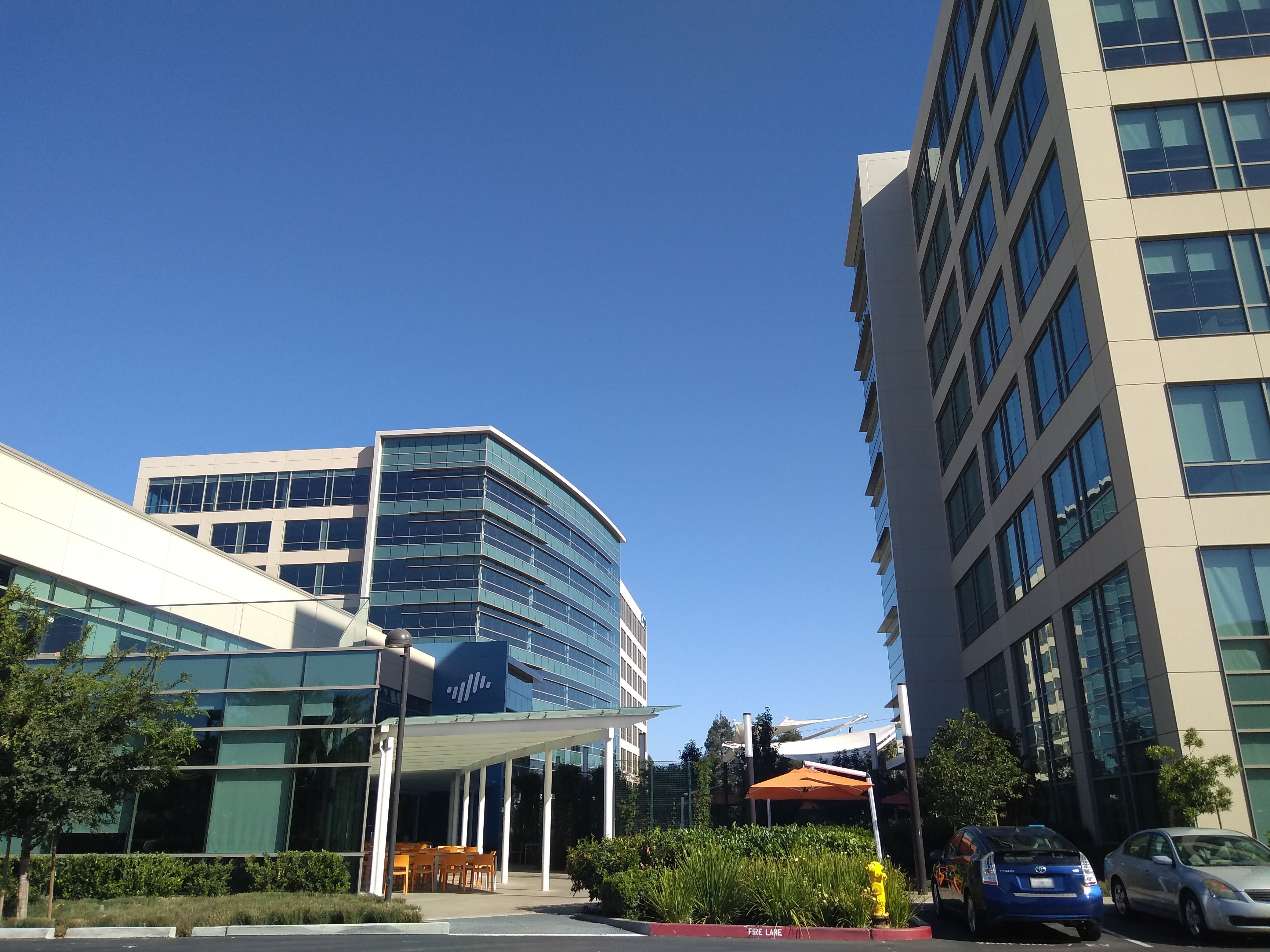
Photo: Namaste jinx / Wikimedia Commons, CC BY-SA 4.0. Archival photograph captured 1 October 2018; cropped and resized under the same licence. · Illustrative image.
Palo Alto Networks reported the kind of growth normally associated with a much smaller security company. Understanding the result requires separating customer demand from the acquisitions now inside the numbers.
Revenue increased 39% to $3.45 billion in the quarter ended 31 October 2026. Next-Generation Security annual recurring revenue, an operating metric rather than GAAP revenue, increased 66% to $9.73 billion. Remaining performance obligations rose 35% year on year to $21.0 billion.
At the same time, GAAP gross margin fell to 68.0% from 74.2%, and GAAP operating income declined to $96 million from $309 million. The investment question is whether a broader platform can turn acquired and internally developed growth into durable profit per share.
For the maintained quarterly record, see Palo Alto Networks’ stock profile. This article examines what is—and is not—organic in the headline growth.
$353 million came from a new segment
The company now reports four segments. Network & AI Security revenue increased 20% to $2.28 billion. Cortex increased 53% to $647 million, primarily driven by observability revenue from the Chronosphere acquisition. Idira contributed $353 million, all identified in the filing as identity-security revenue from the CyberArk acquisition. Corporate & Other increased 10% to $163 million.
Idira alone represented roughly 10% of total quarterly revenue. If it were removed mechanically, revenue would still be about 25% above the prior-year total. That is not an organic-growth calculation: Cortex contains acquired Chronosphere revenue, and the mix of other acquisitions and existing products is not separately disclosed.
This distinction does not make the growth less real. Customers are paying the combined company. It does change the shareholder test. Acquisition-funded revenue must be weighed against the shares issued, cash spent, debt assumed and integration costs required to obtain it.
The margin decline is part mix, part accounting cost
Product gross margin decreased to 65.4% from 79.5%. Subscription and support gross margin fell to 68.5% from 73.1%.
The 10-Q attributes those declines to factors including supply-chain costs, revenue mix, cloud-hosting costs and amortisation of acquired intangible assets. Total gross profit still rose 28% to $2.34 billion, but it grew more slowly than revenue.
Palo Alto Networks highlights non-GAAP operating income of approximately $1.1 billion. The reconciliation adds back $622 million of share-based compensation-related charges, $55 million of acquisition-related costs and $282 million of acquired-intangible amortisation, among other items.
Those adjustments help compare operations, but they cannot all be treated as irrelevant. Shares compensate employees, acquired technology must be replaced or renewed, and integration consumes resources. GAAP and non-GAAP results answer different questions; neither should be used alone.
Recurring metrics need careful definitions
Remaining performance obligations were $21.0 billion, with about $9.4 billion expected to become revenue over the following 12 months. Yet the balance was $21.2 billion at 31 July, so it declined slightly during the quarter even while rising sharply from a year earlier.
That is not a contradiction. Contract timing, acquisitions, renewals and the amount already recognised can move the balance. It does show why a large backlog should not be read as a guaranteed straight line of growth.
The filing also warns that NGS ARR is independent of GAAP revenue, deferred revenue and remaining performance obligations. It annualises contract values and can be affected by start dates, end dates and renewals. It is useful evidence of platform adoption, not a substitute for cash collections or reported revenue.
Cash flow is strong, but owners should track the share count
Operating cash flow was $1.93 billion, up from $1.77 billion. Share-based compensation for equity awards added back $596 million in the cash-flow reconciliation—about 31% of operating cash flow.
That does not mean the cash is fictional. Stock compensation is non-cash in the current period. It does mean the per-share outcome depends on dilution and repurchases.
Diluted weighted-average shares increased to 838 million from 709 million, about 18%. The CyberArk transaction and employee awards affect this comparison, while warrants and convertible notes also influence diluted-share arithmetic. Palo Alto Networks made no share repurchases during the quarter, although $1.0 billion remained authorised.
For fiscal 2027, management guides to revenue growth of 26% to 27%, a 29.5% non-GAAP operating margin and a 38% adjusted free-cash-flow margin. The quality of that outlook will be demonstrated by reported margin stabilisation and growth on a per-share basis, not by adjusted totals alone.
What would confirm the platform thesis?
The strongest evidence would be Network & AI Security sustaining healthy growth, acquired segments renewing and cross-selling into the installed base, and gross margin recovering as integration and amortisation pressure normalise. Operating cash flow per diluted share should grow even after the larger share base.
The thesis would weaken if recurring metrics remain strong while RPO stagnates, if cloud and integration costs keep gross margin below its earlier level, or if acquisitions continue to add revenue faster than value per share. A broad platform can simplify security purchasing for customers; it can also become an expensive collection of products if integration disappoints.
Palo Alto Networks has created a larger and faster-growing security business. The next test is whether the combined platform produces more durable profit and cash for each share, not just more revenue in aggregate. A view on the shares also requires a current valuation and explicit assumptions; this analysis makes no price target.
Explore Compound’s earnings hub and our guide to investment diversification.
Reported figures are in US dollars and relate to Palo Alto Networks’ fiscal 2027 first quarter unless stated otherwise. NGS ARR, non-GAAP operating income and adjusted free cash flow are non-GAAP or operating measures. Facts come from the results release and 10-Q; interpretation and rounded calculations are Compound’s. General information, not personal investment advice.
Cover: Namaste jinx, Wikimedia Commons, under CC BY-SA 4.0. Captured 1 October 2018. Cropped and resized for publication under the same licence; archival image.