D.R. Horton Returned $4.1 Billion as Home Demand Softened. Can It Continue?
D.R. Horton returned more cash through buybacks and dividends than it generated from operations while orders and margins weakened. Its option-heavy land strategy provides flexibility, but the capital-return plan leaves little room for error.
 Wealth / The Compound journal
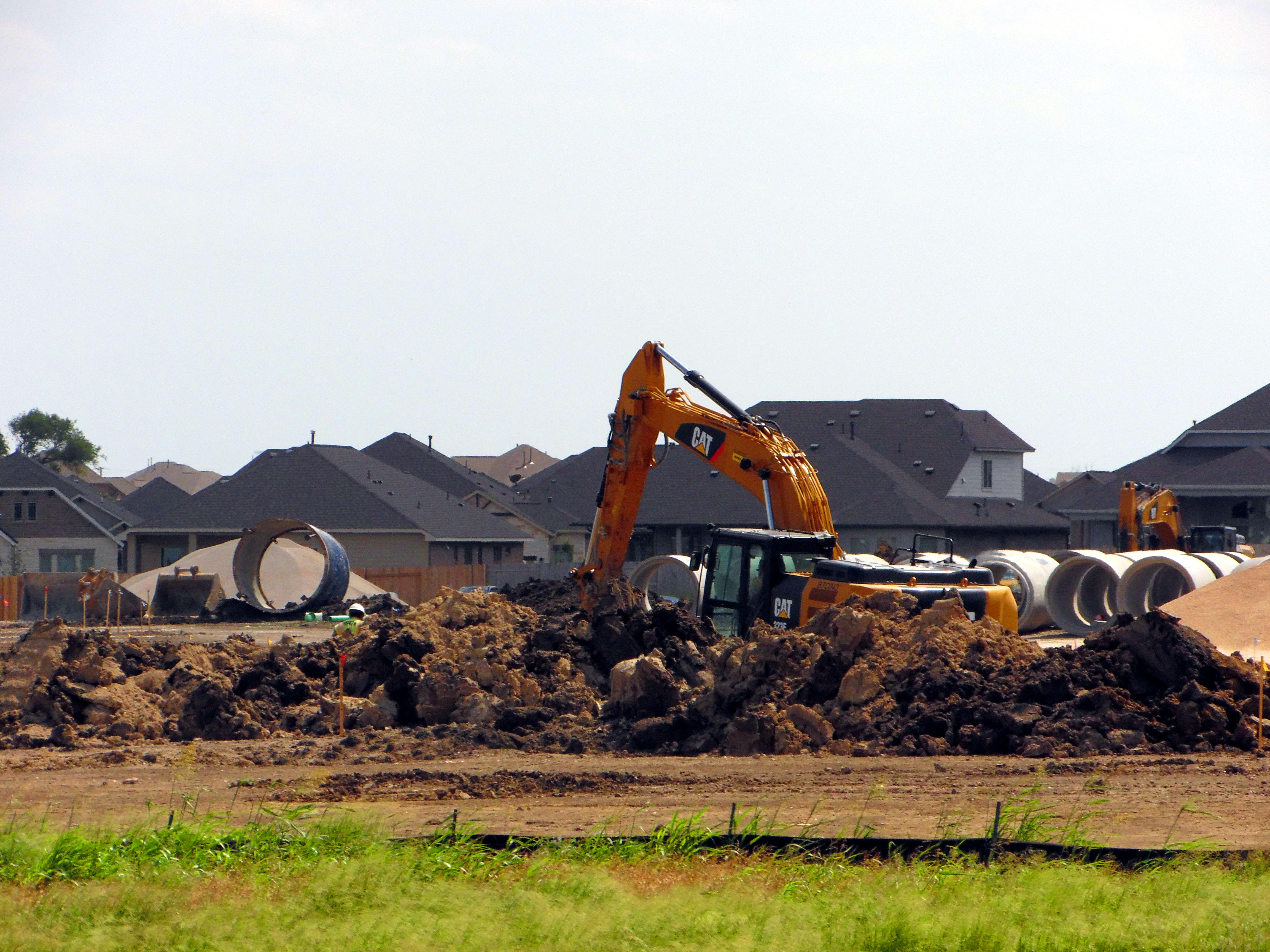
Photo: KevinMoralesRealtor / Wikimedia Commons, CC0 1.0. Archival photograph captured 11 June 2018; not identified as a D.R. Horton development. · Illustrative image.
D.R. Horton produced more operating cash in fiscal 2026 even as earnings fell. It then returned more cash to shareholders than the business generated. That combination makes capital allocation—not just home deliveries—the central question.
For the year ended 30 September 2026, operating cash flow was $3.51 billion. D.R. Horton repurchased $3.55 billion of shares and paid $513 million of dividends, returning a combined $4.06 billion.
The company could afford that gap because it entered the downturn with liquidity and relatively low leverage. The investment question is whether its land-light operating model can keep generating enough cash to support large buybacks if orders, prices and margins weaken further.
For the maintained financial record, see D.R. Horton’s stock profile. This article examines the link between land control, cash conversion and capital returns.
Cash conversion improved while profit declined
Net income decreased 19% to $2.94 billion, while operating cash flow increased 3% to $3.51 billion. Cash from operations therefore equalled about 119% of net income.
That conversion did not come from a large liquidation of total homebuilding inventory. Inventory ended the year at $20.33 billion, almost unchanged from $20.32 billion. Construction in progress and finished homes fell by $125 million, while residential land and lots increased by $114 million.
The cash-flow statement shows only $167 million of combined cash released from construction, finished homes and residential land categories. Higher non-cash charges and changes in payables and other working-capital items also contributed.
This matters because homebuilders can temporarily generate cash by slowing land purchases and reducing inventory. D.R. Horton’s result appears broader than a simple inventory run-down, but working capital remains a major source of year-to-year volatility.
Land contracts provide flexibility—with commitments attached
D.R. Horton owned 130,500 lots and controlled another 440,100 through purchase contracts. Contracted lots therefore represented 77% of its total land position.
Controlling rather than owning land can protect returns. The builder places a deposit and generally retains the right, rather than the obligation, to buy lots later. That limits the amount of capital tied up before homes are sold and can reduce downside if a local market deteriorates.
The flexibility is not free. Deposits totalled $2.6 billion, supporting contracts with $28.7 billion of remaining purchase price. Most deposits are not refundable if D.R. Horton walks away. A small subset of contracts also contains specific-performance provisions.
The model therefore shifts some risk to land developers but does not eliminate it. The useful test is whether option deposits remain a small and manageable cost relative to the capital saved by not owning every lot.
Demand signals weakened at year end
Fourth-quarter home sales orders decreased 7% to 18,619, and order value fell 9%. The cancellation rate increased to 23% from 20%. Homebuilding pre-tax margin declined to 10.6%, while homebuilding revenue fell 2%.
At year end, the company had 28,200 homes in inventory, including 17,700 unsold homes. Of those unsold homes, 8,800 were completed and 600 had been completed for more than six months.
Completed unsold homes are the most immediate pressure point. Incentives or price reductions may be needed to move aged inventory, while interest, taxes and maintenance continue. The 10-K also records $105.8 million of fourth-quarter inventory impairment charges, mostly in the rental segment.
None of those figures establishes a broad housing collapse. They do show that cash returns are being made while affordability and buyer confidence remain uncertain.
The fiscal 2027 plan uses nearly all expected operating cash
Management guides to approximately $3.5 billion of operating cash flow, about $3.0 billion of repurchases and roughly $500 million of dividends in fiscal 2027. In other words, planned buybacks and dividends together match the operating-cash-flow target.
Property-and-equipment spending was only $160 million in fiscal 2026 because land and home construction largely pass through operating cash flow rather than conventional capital expenditure. Even so, acquisitions, debt repayment, changes in inventory and other needs still compete for cash.
D.R. Horton had $7.2 billion of liquidity and a debt-to-total-capital ratio of 20.8% at year end. That cushion makes the plan plausible. It does not make capital returns automatic. Management can reduce repurchases if conditions change, and shareholders should not treat an authorisation as a guaranteed payment.
The 24.0 million shares repurchased in fiscal 2026 reduced shares outstanding by 8%. That can increase each remaining share’s claim on future profit. The benefit depends on the price paid and on whether buybacks leave enough capital to protect the business through a weaker cycle.
What would confirm the strategy?
The strongest evidence would be orders stabilising, cancellation rates easing and homebuilding margin holding while operating cash flow remains close to guidance. The controlled-lot share should continue to protect the balance sheet without a sharp rise in forfeited deposits or impairment charges.
The thesis would weaken if completed unsold inventory rises, incentives compress margins further, or operating cash falls while repurchases continue at the planned pace. In that case, capital returns could consume liquidity that would be more valuable during a housing downturn.
D.R. Horton’s land-control model has created real financial flexibility. The next test is whether management uses that flexibility to balance shareholder returns with the cash needs of a cyclical business. A view on the shares also requires a current valuation and explicit assumptions; this analysis makes no price target.
Explore Compound’s earnings hub and our guide to investment diversification.
Reported figures are in US dollars and relate to D.R. Horton’s fiscal 2026 unless stated otherwise. Facts come from the results release and 10-K; interpretation and rounded calculations are Compound’s. General information, not personal investment advice.
Cover: KevinMoralesRealtor, Wikimedia Commons, under CC0 1.0. Captured 11 June 2018 in Pflugerville, Texas. Cropped and resized for publication; archival image not identified as a D.R. Horton development.