Moog Set Records, but Its Financial Controls Failed. How Much Should Investors Discount?
Moog delivered record sales, backlog and free cash flow, but management and KPMG found a pervasive material weakness in financial controls. The investment question is how quickly confidence can be rebuilt.
 Wealth / The Compound journal
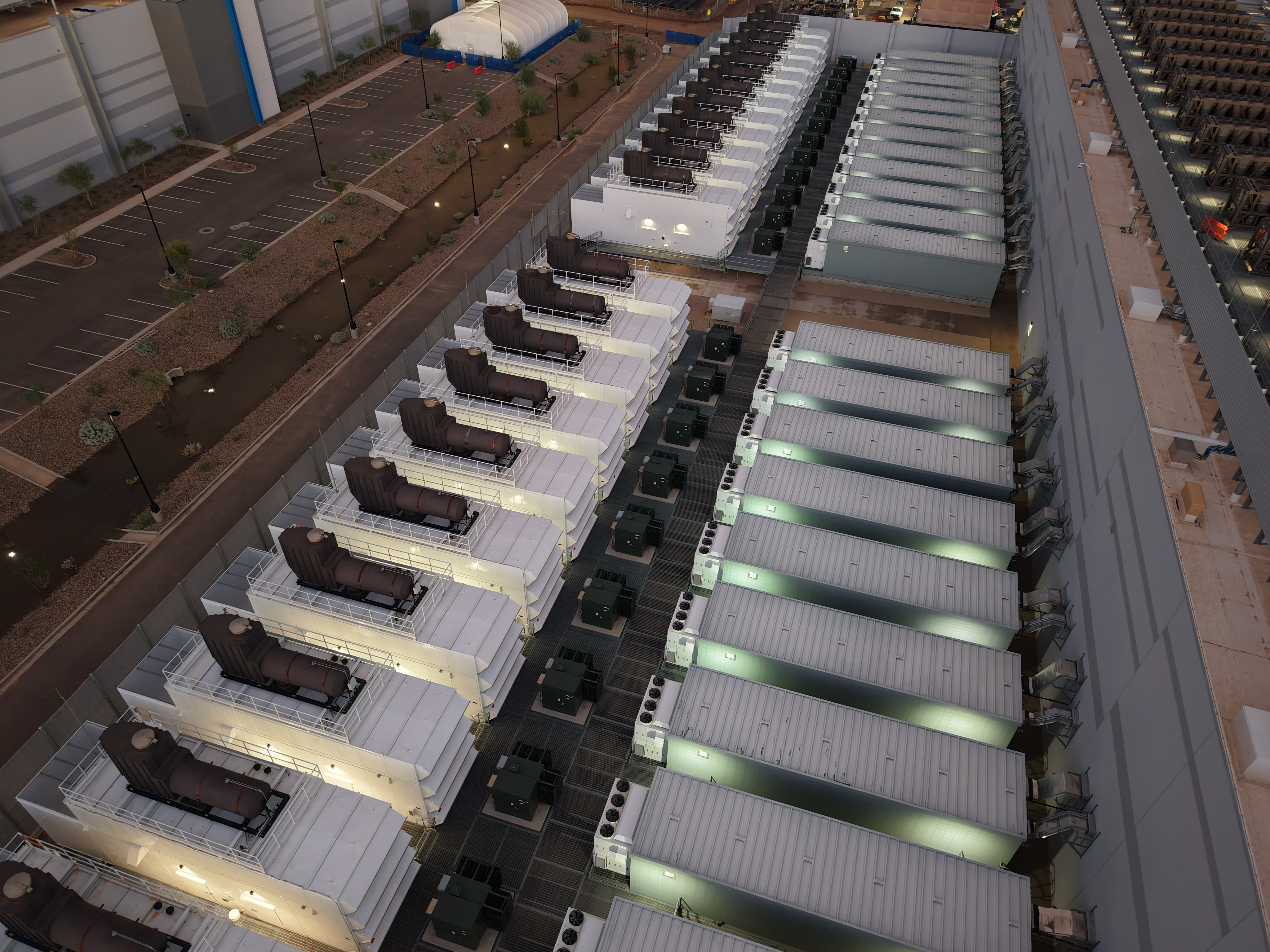
Photo: Harrison Keely / Wikimedia Commons, CC BY 4.0. Archival photograph captured 8 April 2025; cropped and resized for publication. · Illustrative image.
Moog finished fiscal 2026 with record sales, higher margins, stronger cash generation and a larger backlog. Its annual report also says the company’s financial-reporting controls were ineffective. Both facts belong in the investment case.
For the year ended 3 October 2026, the aerospace and industrial-controls manufacturer reported $4.52 billion of sales, up 17%, and $419.9 million of GAAP net earnings, up 79%. Operating cash flow rose to $443.0 million and company-defined free cash flow reached $307 million.
The investment question is not whether the year was strong. It is how much confidence investors should place in the reported trajectory while a broad material weakness remains unresolved.
Compound does not currently maintain a dedicated Moog stock profile, so this article focuses on cash quality, backlog and the control issue rather than reproducing the annual table.
The operating improvement was real, but not all comparable
Sales increased across all four segments. Reported segment operating margin rose to 13.9% from 11.6%. On an adjusted basis, which removes specified items, the increase was narrower: 14.2% from 13.0%.
That distinction matters. Fiscal 2026 included $30 million of tariff-refund claims, lower simplification charges and tax benefits. Moog’s adjusted measures still showed growth—adjusted net earnings rose 42% to $396 million—so the result was not solely an accounting windfall. The gap between GAAP and adjusted growth is nevertheless a reason to avoid extrapolating the 79% headline.
The business mix is supportive. Space and Defense sales increased 22% to $1.36 billion, while demand for data-centre cooling pumps contributed to Industrial backlog. Commercial and military aircraft programmes offer long production lives, but they also create execution and supply-chain risk.
Backlog offers visibility, not certainty
Total backlog increased 29% to $7.73 billion. Moog’s more conservative 12-month backlog—confirmed orders it expects to recognise as revenue within the following year—rose 14% to $3.42 billion.
The distinction prevents a common mistake. Total backlog may cover work scheduled well beyond a year and can change as programmes are delayed, repriced or cancelled. The 12-month measure is closer to near-term demand, though it is still not cash in the bank.
Growth was broad in Space and Defense, and Commercial Aircraft benefited from contract timing. Military Aircraft’s 12-month backlog declined as funded development programmes were worked down. Investors therefore need segment conversion, not just a consolidated backlog record.
Cash conversion improved—with help from customer advances
Operating cash flow increased 62% to $443 million. Capital expenditure was $135.8 million, producing roughly the company’s reported $307 million of free cash flow.
Management said higher earnings and customer advances on aircraft and space programmes helped operating cash, partly offset by accounts receivable related to shipment timing. Advances are economically useful financing, but they can make one year’s cash conversion look stronger before the associated work is delivered.
Moog used $50 million for share repurchases, $38 million for dividends and $114 million of net revolver repayments. It also refinanced $500 million of notes, replacing 4.25% debt due 2027 with 5.50% notes due 2034. The refinancing extends maturity but raises the coupon on that principal.
The best cash evidence would be continued free-cash-flow growth after customer advances and receivables normalise, with backlog converting without a large working-capital reversal.
The control weakness is broad
Management concluded that disclosure controls and internal control over financial reporting were ineffective at year-end. KPMG issued an adverse opinion on internal control, while still issuing an unqualified opinion on the 2026 financial statements.
Those are not contradictory. The audit opinion says the statements, after audit procedures, were fairly presented in all material respects. The control opinion says there was a reasonable possibility that a material misstatement would not be prevented or detected on time.
Moog described weaknesses across the control environment, risk assessment, information and communication, monitoring, and process-level controls throughout financial reporting. Management performed extra procedures and said the statements were fairly presented. No restatement was announced in the filing.
This is broader than a single spreadsheet error. It also follows remediation of a separate fiscal 2025 weakness involving long-term aftermarket service-contract calculations. Investors should therefore look for evidence that accountability, documentation and monitoring improve across the organisation—not merely that one calculation is fixed.
What would rebuild confidence?
The constructive case needs backlog to convert into sales and cash, adjusted margin to keep improving without unusual benefits, and the new controls to operate effectively for long enough to be tested. A future clean controls opinion would be more meaningful than a promise that remediation is under way.
The case would weaken if programme delays increase working-capital needs, if the 12-month backlog stops growing, or if another reporting problem appears before the broad weakness is remediated. A restatement is not inevitable, but the filing itself says the current deficiencies create that risk.
Moog’s operational momentum is credible; the control environment is not yet. Investors should treat remediation as a separate execution target alongside margin and cash conversion. A view on either share class also requires a current valuation and explicit assumptions; this analysis makes no price target.
Explore Compound’s earnings hub and our guide to investment diversification.
Reported figures are in US dollars and relate to fiscal 2026 ended 3 October 2026. Free cash flow, adjusted earnings and adjusted segment margin are company-defined non-GAAP measures. Facts come from Moog’s Form 10-K and results release; interpretation and rounded calculations are Compound’s. General information, not personal investment advice.
Cover: Harrison Keely, Wikimedia Commons, under CC BY 4.0. Captured 8 April 2025 in Peachtree, North Carolina. Cropped and resized for publication; archival image.