Cisco’s AI Growth Comes With a $21.9 Billion Supply Commitment. Is the Risk Worth It?
Cisco’s networking revenue has accelerated with AI demand, but commitments to suppliers have risen sharply. The investment question is whether that capacity converts into profitable sales.
 Wealth / The Compound journal
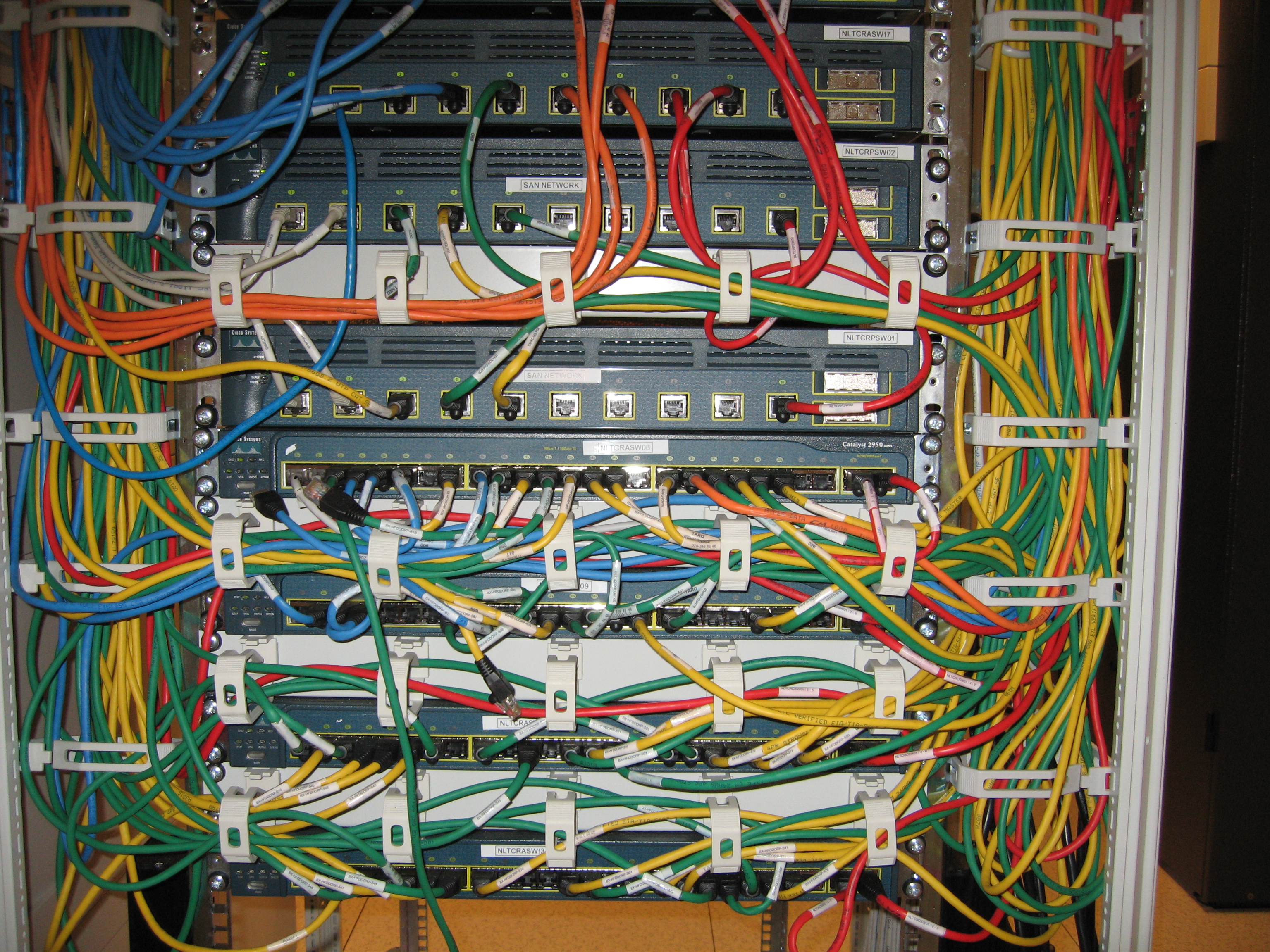
Photo: Jemimus / Wikimedia Commons, CC BY 2.0. Archival photograph captured 22 February 2006; not a depiction of Cisco’s current AI systems. · Illustrative image.
Cisco’s AI networking opportunity is becoming visible in revenue. It is also becoming visible in the commitments the company is making before all of that revenue arrives.
For the quarter ended 24 October 2026, Cisco reported $18.5 billion of revenue, up 24% from a year earlier. Product revenue rose 32%, led by a 43% increase in networking. Management also raised its expectation for fiscal 2027 AI infrastructure revenue to $9 billion, more than double the prior year.
That is the attractive part of the story: AI data centres need fast, reliable connections as well as computing chips. Cisco has a chance to sell more of the network around those chips.
The harder investment question sits in the 10-Q. Cisco’s purchase commitments reached $21.9 billion at the quarter end, up from $17.2 billion three months earlier. Can those commitments turn into profitable revenue without leaving Cisco holding costly components if demand changes?
For the maintained quarterly record, see Cisco’s stock profile. This article focuses on the risk-reward in the AI supply build.
The growth is real, but it is not all AI
Cisco’s reported networking growth includes routing, switching, wireless and other infrastructure. The company’s $9 billion AI figure is management’s full-year expectation for a narrower category: AI infrastructure revenue from webscale customers.
Those measures should not be treated as interchangeable. Still, they point in the same direction. Large cloud and technology customers are building specialised networks to move data between accelerators, and Cisco is winning enough business to make AI material to the company’s outlook.
Fiscal 2027 revenue guidance is $74.8 billion to $75.8 billion. At the midpoint, the $9 billion AI expectation would equal about 12% of annual revenue. That is large enough to matter, but not large enough to make Cisco a pure AI company. Services, security, observability and the traditional installed base remain important to the economics.
The distinction matters because a broad business can soften a slowdown in one product cycle. It can also hide whether the newest growth is earning an attractive return.
A $4.7 billion increase in one quarter
Purchase commitments rose by $4.72 billion, or approximately 27.5%, between the July and October quarter ends. The total covers more than AI and extends across multiple periods; $16.5 billion was due within one year.
Cisco says a large portion supports expected demand from hyperscalers and other large customers. The filing also says some customer orders can be cancelled or rescheduled, while certain committed components have limited alternative uses.
This is the central asymmetry. Reserving components can protect delivery times and help Cisco win orders when supply is tight. But suppliers still expect to be paid if customers delay projects or a technical standard changes. Cisco had recorded a $351 million liability for excess and obsolete commitments, up from $294 million at the July quarter end.
That liability is not evidence that the whole supply build is impaired. It is evidence that the risk is tangible enough to recognise on the balance sheet.
Margins show the cost of the mix
Growth has not translated into higher gross margin. GAAP product gross margin fell to 61.8% from 64.5%, a decline of 2.7 percentage points. Total gross margin fell to 63.7% from 65.5%.
Cisco nevertheless increased GAAP operating income 66% to $5.6 billion and lifted operating margin to 30.2%. Operating expenses fell 3%, helped by acquisition-related and restructuring effects. In other words, strong operating leverage below gross profit more than offset a less favourable product margin.
Investors should not assume that every dollar of AI networking revenue carries Cisco’s historic product economics. Large customers can negotiate aggressively, new systems may have different component costs, and early supply commitments can reduce flexibility. Management’s non-GAAP gross-margin guidance of 65% to 66% for the next quarter is useful, but reported product margin remains the cleaner test of mix and procurement discipline.
Cash flow is strong, with working-capital signals to watch
Operating cash flow rose to $4.36 billion from $3.21 billion. That provides substantial room to fund inventory and return capital. Cisco returned $3.7 billion through dividends and buybacks during the quarter, equal to roughly 84% of operating cash flow using the rounded reported figures.
Yet the cash-flow statement also shows the cost of preparing for demand. Inventory used $686 million of cash, compared with $234 million a year earlier, while purchases of property and equipment increased to $502 million from $323 million.
Neither move is automatically negative. Building inventory ahead of committed deployments can be rational. The warning sign would be inventory and supplier obligations continuing to rise while customer revenue, gross margin or cash collections weaken.
What would confirm the thesis?
The strongest evidence would be AI infrastructure revenue reaching management’s target while product gross margin stabilises and the commitment balance converts into shipments rather than write-offs. Continued operating cash growth would show that sales are not being bought through an increasingly heavy working-capital burden.
The thesis would weaken if hyperscaler orders are delayed, if excess-commitment liabilities climb materially, or if product margins keep falling despite the higher volume. A technology transition can create genuine demand and still produce disappointing shareholder economics if suppliers and large customers capture most of the value.
Cisco has earned a credible place in the AI infrastructure build. The next test is not simply how much networking revenue it can book, but how efficiently it converts $21.9 billion of commitments into margin and cash. A view on the shares also requires a current valuation and explicit assumptions; this analysis makes no price target.
Explore Compound’s earnings hub and our guide to investment diversification.
Reported figures are in US dollars and relate to Cisco’s fiscal 2027 first quarter unless stated otherwise. Facts come from Cisco’s results release and 10-Q; interpretation and rounded calculations are Compound’s. General information, not personal investment advice.
Cover: Jemimus, Wikimedia Commons, under CC BY 2.0. Captured 22 February 2006. Resized for publication; archival image of Cisco Catalyst equipment, not current AI infrastructure.