Bloom Energy Earnings: Sales Surge, but Cash Flow Tells a Different Story
Bloom Energy reported $1.236bn in revenue and $250.3m in profit, but cash flow turned negative. We examine the SEC results and the next test for its AI power story.
 Wealth / The Compound journal
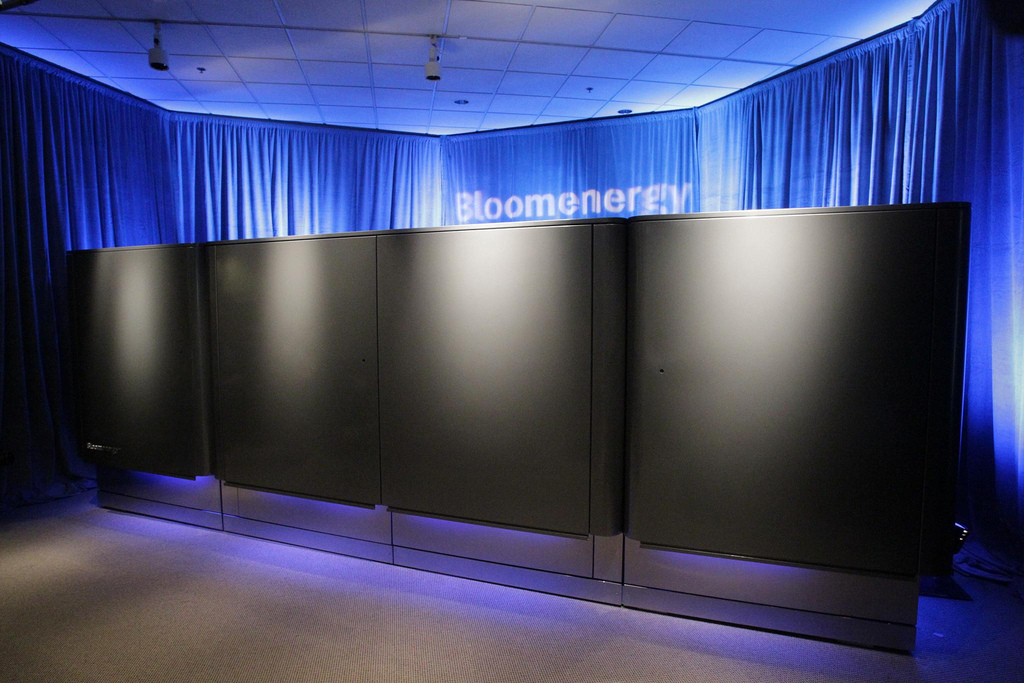
Photo: Jakub Mosur / Bloom Energy, via Wikimedia Commons — 24 February 2010; CC BY 2.0; archival photograph · Illustrative image.
Bloom Energy’s latest results strengthen its case as a supplier to the AI power build-out. They also expose the question that matters after a spectacular growth quarter: how much of that accounting profit will become cash shareholders can eventually claim?
The company reported $1.236 billion of Q3 revenue, up 138.1% year on year and 16.0% from Q2. GAAP operating profit reached $225.4 million, with an 18.2% operating margin. Yet operating cash flow was negative $27.1 million. Both sides belong in the investment story.
These figures come from Bloom’s SEC-furnished Q3 earnings release, Exhibit 99.1. They cover the three months ended 30 September, rather than the nine-month year-to-date period. The release describes the results as preliminary; it is not a substitute for the full quarterly financial statements.
A stronger business, quarter by quarter
| Reported measure | Q1 2026 | Q2 2026 | Q3 2026 |
|---|---|---|---|
| Quarter ended | 31 March | 30 June | 30 September |
| Revenue | $751.1m | $1,065.4m | $1,235.8m |
| GAAP operating profit | $72.2m | $182.2m | $225.4m |
| Net income attributable to common stockholders | $70.7m | $196.3m | $250.3m |
| GAAP diluted EPS | $0.23 | $0.62 | $0.78 |
Sources: Q1 SEC 10-Q and the Q2 comparative figures in the Q3 SEC release. Dollar figures are rounded; quarterly EPS should not be added to calculate year-to-date EPS.
Our reading is that the operating improvement is meaningful. Revenue growth is valuable when the additional sales leave more profit after expenses. Q3 operating profit rose approximately 23.7% sequentially, faster than sales. That supports the argument that greater scale is improving the economics, although it does not establish what margins will look like through a full business cycle.
The cash-flow gap deserves equal billing
Q3 capital expenditure was $153.5 million. Subtracting purchases of property, plant and equipment from operating cash flow gives negative $180.6 million. This is Compound’s simple free-cash-flow calculation, not a separately reported company performance measure.
The cash-flow statement shows substantial cash absorption in receivables, contract assets and inventory. Customer deposits and other working-capital movements partly offset it. That is consistent with a business funding rapid expansion, but it leaves a test for subsequent quarters: do deliveries and recognised revenue turn into collections?
A contract asset is not cash in the bank. Nor does a negative quarter, by itself, prove weak demand or poor accounting. Investors should follow the conversion over several periods, alongside the financing needed to support growth. Celebrating profit while ignoring the money tied up in delivering it would give an incomplete picture.
Higher guidance creates another execution hurdle
Bloom now forecasts $4.4–$4.6 billion of 2026 revenue and $3.10–$3.40 of adjusted EPS. Those are management forecasts, not achieved results. Adjusted EPS also differs from GAAP earnings: Q3 adjusted diluted EPS was $0.94 against $0.78 under GAAP.
The first three quarters generated approximately $3.052 billion of revenue. Meeting the annual range therefore implies about $1.348–$1.548 billion in Q4, or roughly 9%–25% more than Q3. This is our arithmetic using the reported quarterly figures and management’s annual range, not additional company guidance.
That is a useful hurdle to monitor. A higher annual target is encouraging, but the remaining delivery requirement matters more than the headline word “raised”.
What would strengthen the investment case?
For us, the next evidence should be sustained margins, improving cash collection and growth that does not depend on continually stretching the balance sheet. The opposite combination—rising reported sales alongside persistent cash absorption—would demand closer scrutiny even if headline earnings continued to impress.
There is also a distinction between an attractive business and an attractive share price. A valuation can already assume years of successful execution. These results alone cannot establish that Bloom shares are cheap, and this analysis does not claim an earnings “beat” against an independently verified analyst consensus.
Bloom’s quarter makes the operating case stronger. The next task is proving that the expansion can finance itself. Can the company turn its rapid growth into cash as convincingly as it has turned it into reported profit?
Track the figures on Bloom Energy’s stock and earnings page. For more comparisons, visit Compound’s company earnings hub and stock directory.
Sources were checked against the SEC documents linked above. Analysis and derived calculations are Compound’s. General information, not a personal investment recommendation.
The wider AI-power story
Our Microsoft power-grid analysis examines the other side of this constraint: data-centre plans depend on securing usable electricity on time. Read it alongside Microsoft’s AI spending and cash-flow analysis to compare the infrastructure supplier’s economics with those of the customer. Follow the company figures on Bloom Energy and Microsoft.
Cover photograph: Jakub Mosur / Bloom Energy, 24 February 2010. Original image, licensed under CC BY 2.0. Archival photograph; not a current installation or current-generation product. Image unchanged; display cropping may apply.