Nokia’s AI Sales Jump 123%—But Turning Growth Into Cash Is the Next Test
Nokia’s SEC filing shows surging AI and cloud demand, but negative free cash flow and higher restructuring costs complicate the investment story.
 Wealth / The Compound journal
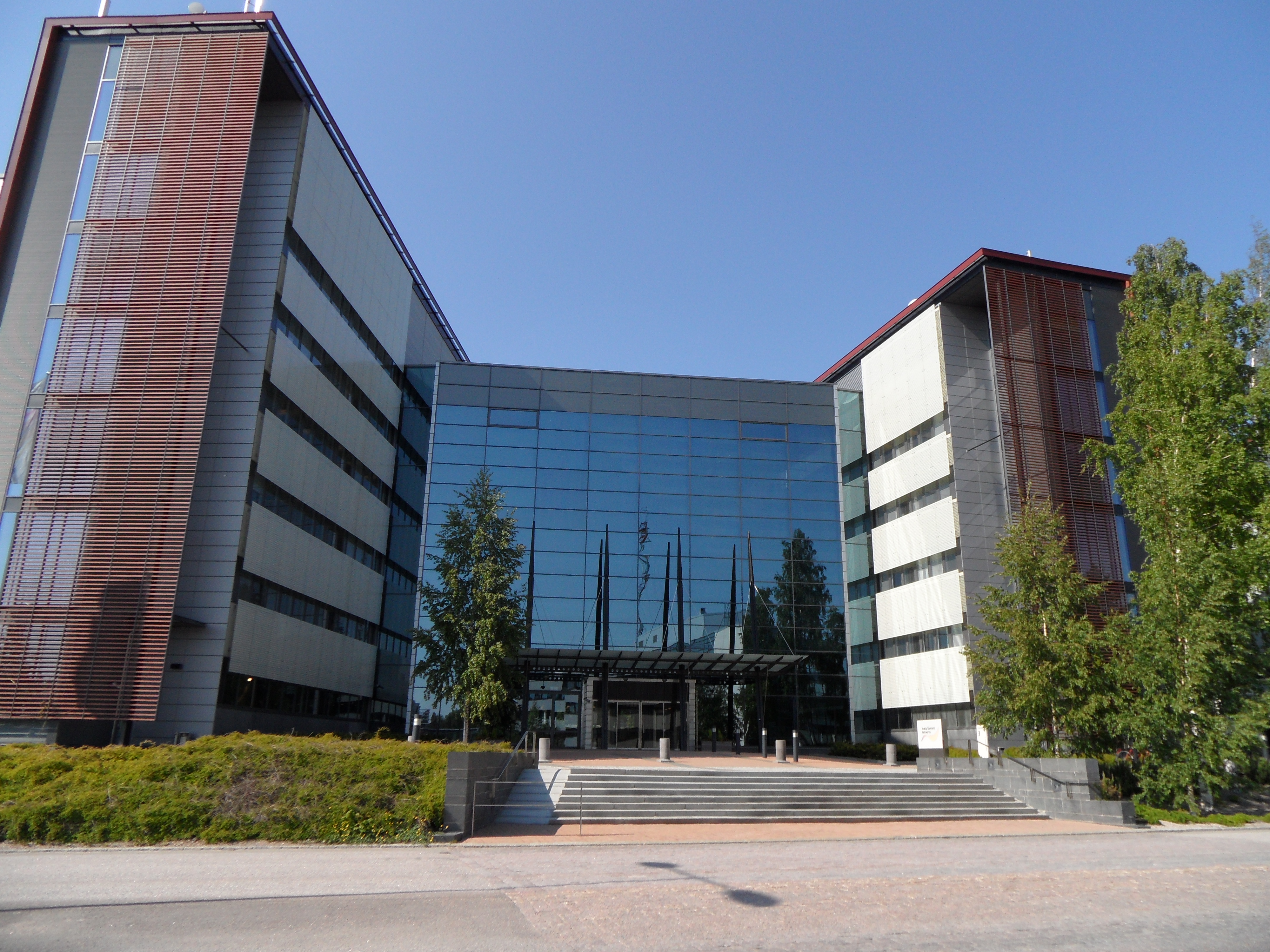
Photo: Villeke / Wikimedia Commons — 31 May 2011, archival; CC BY-SA 3.0 · Illustrative image.
Nokia has a compelling AI growth story. Its latest results also show why investors should follow the money beyond the sales headline.
Sales to AI and cloud customers increased 123% at constant currency in the third quarter of 2026, while the company secured €1.5 billion in new orders from those customers. Yet quarterly free cash flow was negative €99 million, and Nokia lowered its full-year cash-conversion assumption.
Both developments appear in the same SEC Form 6-K furnished on 22 October. The central investment question is whether today’s spending creates a larger, more cash-generative business—or leaves shareholders waiting longer for the rewards of the AI build-out.
What Nokia actually reported
The filing covers the quarter ended 30 September 2026. All amounts below are in euros; comparable measures are Nokia’s alternative performance measures, distinct from reported IFRS results.
| Measure | Q3 2026 | Q3 2025 | Change |
|---|---|---|---|
| Reported net sales | €5.154bn | €4.700bn | +10% |
| AI and cloud customer sales | €631m | €279m | +126% reported; +123% constant currency |
| Reported operating profit | €196m | €252m | −22% |
| Comparable operating profit | €605m | €448m | +35% |
| Reported operating margin | 3.8% | 5.4% | −1.6 percentage points |
| Comparable operating margin | 11.7% | 9.5% | +2.2 percentage points |
| Reported diluted EPS, continuing operations | €0.03 | €0.01 | +200% |
| Comparable diluted EPS, continuing operations | €0.09 | €0.06 | +50% |
Source: SEC 6-K, attached interim report, financial results and net sales by customer type. Growth percentages follow Nokia’s rounded disclosures.
The distinction in the headline matters: 123% describes sales to AI and cloud customers at constant currency, not growth across the whole company. That customer category represented approximately 12.2% of quarterly group sales, calculated as €631 million divided by €5.154 billion.
Telecommunications providers remained the much larger customer group, generating €3.640 billion of sales. Their revenue was flat at constant currency. Nokia’s emerging growth engine is therefore accelerating inside a business still heavily dependent on traditional network customers.
The AI opportunity reaches beyond chips
Nokia supplies the networking infrastructure that moves data. Its Network Infrastructure segment grew 15% at constant currency, with IP Networks growing 43% and Optical Networks 18%.
That matters because investment in AI computing also requires connections between systems and locations. Nokia offers a different perspective on the spending cycle from the processors discussed on our Nvidia company page or the infrastructure buyers covered on our Alphabet page.
Management expects its combined Optical and IP Networks businesses to grow 25%–30% in 2027. That is a forward-looking company expectation, not booked revenue. Similarly, the €1.5 billion of new AI and cloud orders should not be added to this quarter’s €631 million of recognised sales: orders and revenue measure different stages of the commercial process.
The editorial case for optimism is that networking demand can broaden the beneficiaries of AI investment. The risk is that suppliers must commit resources before the resulting cash receipts arrive.
Why comparable profit rose while reported profit fell
Nokia’s operating-profit reconciliation is essential reading. Restructuring and associated charges were €357 million, compared with €44 million a year earlier. The reconciliation also included €46 million of amortisation and depreciation of acquired assets and €8 million of transaction and related costs, alongside smaller adjustments.
Comparable operating profit helps readers assess the business excluding those items. Reported operating profit captures the costs recognised in the accounts. Investors need both views: the underlying operation improved, but the cost of reshaping it increased substantially.
It would also be wrong to treat every adjustment as an immediate cash payment. Charges, asset amortisation and actual restructuring payments have different timing and economic effects. That is why the cash-flow disclosure deserves separate attention.
The cash-flow test
Nokia reported negative €99 million of quarterly free cash flow. Its cash-flow discussion, which includes continuing and discontinued operations, identifies roughly €560 million of cash outflow related to net working capital, including approximately €290 million of restructuring payments. Those two figures should not be added together.
The remaining approximately €270 million reflected higher receivables and inventories, partly offset by higher liabilities. In plain English, money was tied up in customer payments still to be collected and stock held for the business.
Nokia now assumes 35%–55% free-cash-flow conversion from comparable operating profit for 2026. It says the reduction reflects working-capital investment to secure supply and support 2027 growth, alongside accelerated restructuring. The company plans an additional €400 million of working-capital investment this year.
This can be rational preparation for demand. It still creates an execution test: inventory must become sales, and sales must become collected cash. Strong demand alone does not establish the return shareholders will earn on that investment.
What investors should watch next
Nokia retained its full-year comparable operating-profit outlook of €2.1 billion–€2.6 billion, while expecting to finish above the midpoint. It also assumes fourth-quarter sales will rise 20%–24% sequentially. These remain management forecasts.
Three developments will help distinguish productive investment from a persistent cash drain:
- Order conversion: whether the AI and cloud pipeline translates into recognised sales without weakening pricing or margins.
- Cash collection: whether receivables and inventory investment begin to unwind as deliveries scale.
- Restructuring delivery: whether the cash costs produce the operating improvements management anticipates.
There is a further timing wrinkle: Nokia says some Mobile Infrastructure revenue moved forward from Q4 into Q3. Investors should therefore avoid projecting the latest quarter’s growth mechanically into the next one.
Our reading is that Nokia has supplied stronger evidence of participation in the AI infrastructure cycle. It has also made the next hurdle clearer. The more persuasive investment story will be growth that funds itself and leaves cash for shareholders.
Analysis based on Nokia’s SEC Form 6-K dated 22 October 2026, accession 0001104659-26-117972, including the attached full interim report. Calculations are identified above. This article does not make a valuation claim or price target.
Photograph: Villeke, Nokia Siemens Networks campus, Espoo, 31 May 2011. Archival image, not a photograph of the current results announcement. Original source, used under CC BY-SA 3.0; image unchanged, with display cropping possible.