The rise of GLP-1 medicines in Ireland: what the evidence says
Use has risen sharply, but the Irish story is bigger than weight-loss headlines. The data, the benefits, the risks and the question of who can afford treatment.
 Health / The Compound journal
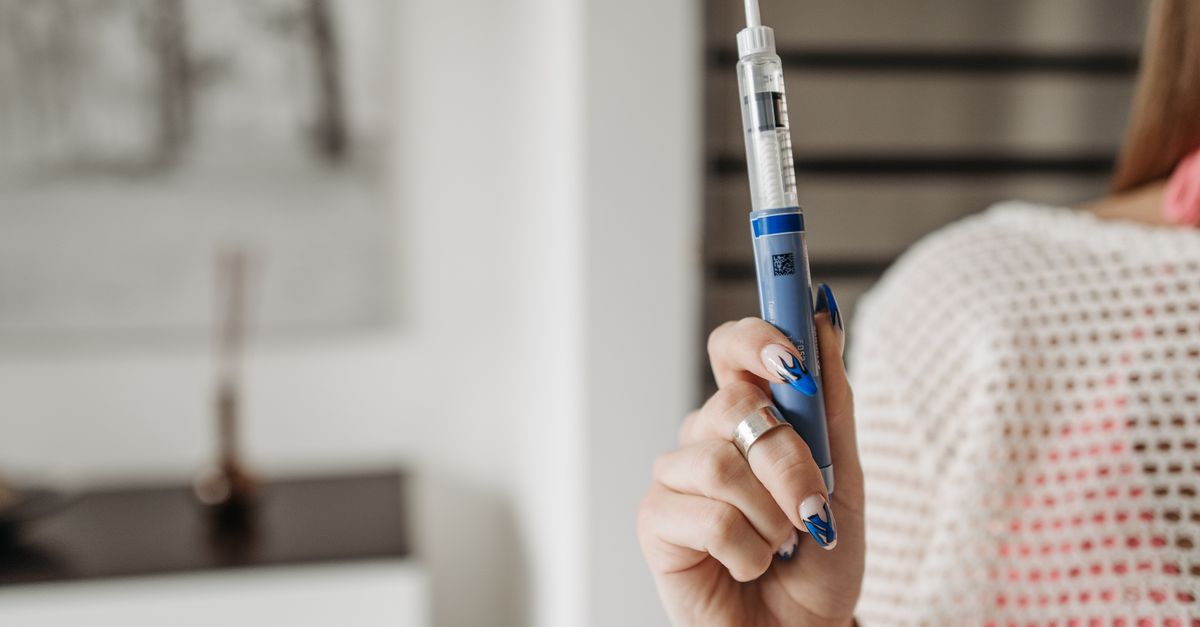
Photo: Pavel Danilyuk on Pexels · Illustrative image.
Evidence checked 14 September 2026. This article concerns adults and the Republic of Ireland. It is general information, not a recommendation to start, stop or choose a medicine.
For someone considering treatment, the questions are fairly immediate. Will it help? What are the side effects? Is it covered? And what happens if paying for it becomes difficult?
The public conversation about Ozempic, Wegovy and Mounjaro can move quickly past those questions. A striking weight-loss photograph tells one kind of story. An Irish reimbursement record or a clinical trial tells another, usually with more qualifications.
There is a substantial medical development here. There is also a growing gap between recognising that a treatment can work and knowing who will be able to use it over time.
Start here: GLP-1 medicines in Ireland
This page is the central guide to the Compound GLP-1 cluster. Use the route that matches the question you actually have.
- Considering treatment: how regulated Ozempic access works in Ireland and what Wegovy, Mounjaro and Ozempic cost.
- Paying for treatment: GLP-1 medicines, the HSE and Medical Card.
- Already taking one: side effects and warning signs and what happens after stopping treatment.
- Pregnant or planning pregnancy: GLP-1s and pregnancy.
- What comes next: Retatrutide in Ireland, including the latest Phase 2/3 results and availability status.
How much has use grown in Ireland?
An analysis by HSE and Medicines Management Programme researchers found that the number of people receiving a GLP-1 receptor agonist through the schemes studied rose from approximately 21,400 in January 2022 to 51,800 in December 2024—an increase of about 142%. Ozempic accounted for most use and expenditure. Irish utilisation study.
Annual public expenditure on the GLP-1 medicines studied
€ million
These are public pharmacy-claims figures across the medical-card, Drugs Payment and Long-Term Illness schemes, covering liraglutide, semaglutide, dulaglutide and exenatide. They are not a count of everyone taking weight-loss medicines. Diabetes treatment is included; private prescriptions and subsequent growth are not captured. The findings were presented as a 2025 conference abstract, rather than a full research paper.
These figures establish growth in public treatment, not a complete national headcount for 2026.
The names are not interchangeable
GLP-1 is short for glucagon-like peptide-1, a hormone involved in the body’s response to food. Medicines acting on its receptor can influence appetite and blood-glucose regulation. Tirzepatide works on both GLP-1 and a second hormone receptor, GIP, so it is more precisely described as a dual GIP/GLP-1 receptor agonist. EMA: Mounjaro.
| Medicine | What to understand |
|---|---|
| Ozempic Semaglutide | Licensed to treat insufficiently controlled type 2 diabetes in adults. Its name is often used loosely in weight-loss discussions. |
| Wegovy Semaglutide | A semaglutide brand authorised for weight management in people meeting the relevant criteria. |
| Saxenda Liraglutide | A GLP-1 medicine used for weight management, given as a daily injection. |
| Mounjaro Tirzepatide | A dual GIP/GLP-1 medicine authorised in the EU for type 2 diabetes and adult weight management under specified conditions. |
Sources: EMA: Ozempic, EMA: Mounjaro and HSE: obesity medicines. These are prescription medicines, not interchangeable products or dosing instructions.
Retatrutide is the next major molecule to watch, but it is not an approved Irish medicine. Our dedicated guide explains what retatrutide is, whether it can be obtained in Ireland and how its Phase 2/3 results compare with Mounjaro, Wegovy and Ozempic.
For adult weight management, Wegovy and Mounjaro generally require a BMI of at least 30, or at least 27 with a weight-related condition. Meeting that threshold starts a clinical assessment; it does not establish that treatment is suitable or publicly funded. HSE guidance.
Why the results attracted so much attention
One useful comparison is SURMOUNT-5, a randomised, open-label trial involving 751 adults with obesity but without type 2 diabetes. It directly compared maximum tolerated weekly tirzepatide doses of 10 or 15 mg with semaglutide doses of 1.7 or 2.4 mg over 72 weeks. Published trial.
Average weight reduction in SURMOUNT-5
% of starting body weight at 72 weeks
95% confidence interval: 19.1–21.4%
95% confidence interval: 12.6–14.9%
This was a comparison of specified treatments under trial conditions, not a promise about an individual’s outcome or every available formulation. It was funded by Eli Lilly, which makes tirzepatide. Open-label means participants and researchers knew which treatment was given. Those details belong alongside the headline results.
Weight is not the only outcome of interest. In SELECT, 17,604 people with established cardiovascular disease and a BMI of at least 27, but without diabetes, received semaglutide 2.4 mg or placebo alongside usual care. A first major cardiovascular event occurred in 6.5% versus 8.0%, an absolute difference of 1.5 percentage points; median time in the trial was 41.8 months. This supports benefit in that higher-risk population, not an identical benefit for every person seeking weight loss. EMA product information, SELECT results.
The Irish access question: who pays?
The HSE patient guidance accessed for this article lists Wegovy and Mounjaro as not covered by the medical card, Long-Term Illness or Drugs Payment schemes. It lists Ozempic cover for type 2 diabetes and restricted Saxenda cover for weight management. Coverage must be checked for the particular medicine and indication. HSE.
There is an important difference between a European authorisation, an Irish value-for-money assessment and a decision to fund treatment.
The NCPE record for Wegovy states that the applicant withdrew the pricing and reimbursement application for the specified pre-filled-pen presentation in March 2025, so cost-effectiveness could not be established through that process. It would be misleading to describe that particular application simply as “still awaiting assessment”. NCPE: Wegovy.
For Mounjaro in weight management, the NCPE’s December 2025 recommendation was to consider reimbursement if cost-effectiveness could be improved relative to existing treatments. That conditional recommendation is not a promise of funded access or a confirmed start date. NCPE: Mounjaro.
If paying privately, ask for a written breakdown covering the prescribed dose, the quantity supplied, consultations, follow-up and any tests. Check whether a quoted “month” means four weeks or a calendar month. A lower starting-dose price may not describe the eventual cost of continuing treatment.
This article does not give a single national retail price: that would imply more consistency than a patient should assume. The useful figure is the full cost of your proposed care, explained before you commit.
For the practical details, see our guide to medical-card and HSE funding and our Irish pharmacy price comparison.
Stopping is part of the conversation from the beginning
The first prescription should come with a discussion about what happens later, including if treatment becomes unaffordable or difficult to tolerate.
In the STEP 1 extension, which followed 327 participants, people previously receiving semaglutide regained, on average, about two-thirds of their earlier weight loss during the year after withdrawal. Both the medicine and the structured lifestyle intervention were stopped. Participants still averaged a net weight loss compared with their original baseline, and individual outcomes varied. Wilding and colleagues, 2022.
That finding does not mean everybody must take the same medicine forever. It does mean that presenting treatment as a short course with permanent results leaves out something important. Follow-up, tolerability, nutrition and a plan for maintaining progress deserve attention alongside the first few months of weight change.
Our stopping-treatment guide examines the withdrawal trials in more detail and sets out questions for follow-up care.
What needs to be taken seriously about safety?
Nausea, vomiting, diarrhoea and constipation are recognised effects of these treatments. For tirzepatide, gastrointestinal effects can lead to dehydration and kidney problems; risk of low blood glucose is greater when combined with insulin or certain other diabetes medicines. EMA: Mounjaro product information.
Severe, persistent abdominal pain needs urgent medical assessment, particularly if it reaches the back, because it can signal pancreatitis. Do not dismiss it as an expected part of losing weight. Mounjaro patient information.
Semaglutide’s EU information also lists the eye condition NAION as very rare—up to 1 in 10,000 people. Sudden loss of vision or rapidly worsening eyesight requires immediate medical attention. Wegovy patient information.
Pregnancy plans matter. Semaglutide should be stopped at least two months before a planned pregnancy, and tirzepatide at least one month beforehand, with the prescriber arranging appropriate care. Neither should be used during pregnancy. Discuss contraception, breastfeeding, other medicines and any planned procedure with your clinical team. Semaglutide information; tirzepatide information.
These are selected issues, not a complete safety checklist. The leaflet for the exact medicine and formulation, together with a clinician who knows your history, is the right basis for personal decisions.
For help distinguishing common complaints from urgent warning signs, read our GLP-1 side-effects guide.
Popularity has also created an illegal market
The HPRA detained 48,752 units of illegal GLP-1-type products in 2025, compared with 1,582 in 2024. Many were marketed as drops or microneedle patches. Tested samples of detained patches did not contain the semaglutide claimed on their packaging. HPRA enforcement report.
Those are enforcement figures, not estimates of users or legitimate prescriptions. They show why a persuasive advert and a familiar medicine name are insufficient reassurance. Use a legitimate prescriber and pharmacy; social-media sellers and unapproved “GLP-1” products are not substitutes for regulated care.
What to watch next
For Ireland, the useful developments to follow are concrete: a published reimbursement decision, the eligibility rules attached to it, reliable supply and a workable follow-up service. A new trial result or European approval does not, by itself, answer those questions.
For an individual, a useful appointment starts with five questions: What health outcome are we treating? Why this medicine? How will we monitor benefits and side effects? What is the full ongoing cost? What is the plan if it does not suit me or I need to stop?
The rise of these medicines deserves serious attention because the evidence shows meaningful treatment effects. Making those benefits accessible, sustainable and safe is the harder part of the Irish story.
How this article was checked: Irish utilisation figures come from a defined public-claims analysis; clinical results come from a published randomised trial, a trial extension and EU product information; funding statements come from HSE and NCPE records. Charts are Compound redraws of reported numbers. We have not inferred a 2026 national user total or a confirmed future reimbursement date.
More on GLP-1 medicines in Ireland
- How to get Ozempic in Ireland — prescription access, eligibility and alternatives.
- Wegovy, Mounjaro and Ozempic costs in Ireland — current private prices and funding context.
- GLP-1 side effects and when to seek help — common adverse effects and urgent warning signs.
- GLP-1 medicines and the HSE / Medical Card — public funding and reimbursement.
- Retatrutide in Ireland — the investigational triple agonist and what to watch next.