GLP-1s and pregnancy: Ozempic, Wegovy, Mounjaro and what the evidence says
GLP-1 medicines are not recommended during pregnancy, but accidental early exposure is increasingly common. This Irish guide separates the official advice from the emerging human evidence on semaglutide, tirzepatide and liraglutide.
 Health / The Compound journal
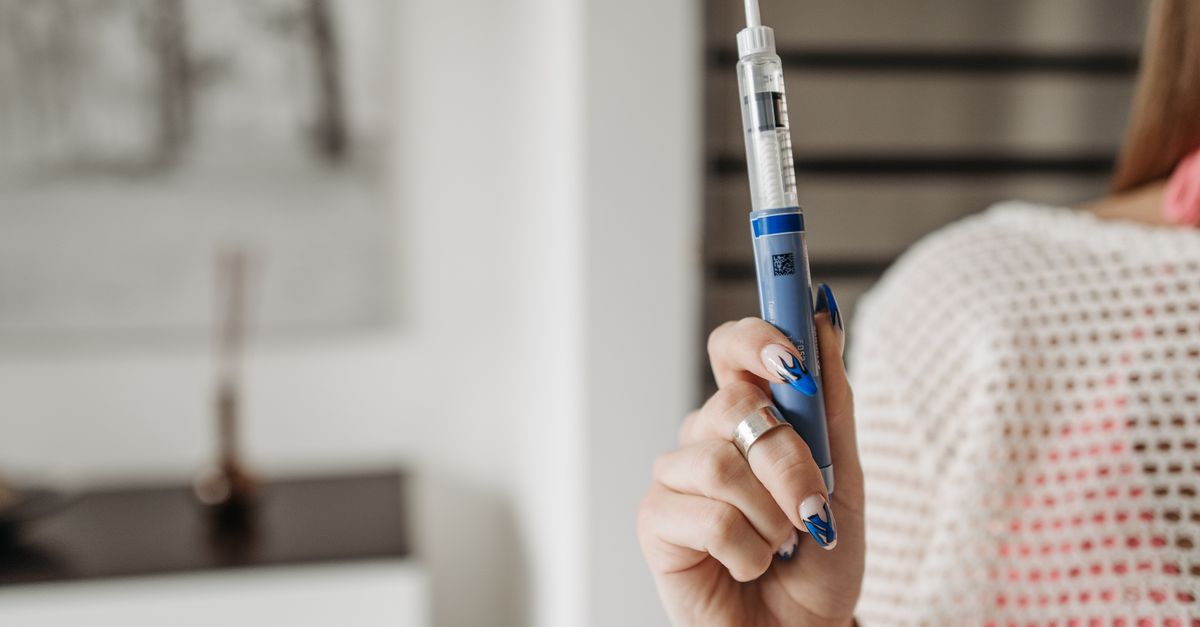
Photo: MART PRODUCTION on Pexels · Illustrative image.
Irish reader guide · Sources checked 24 September 2026 · This page is educational and does not replace advice from your GP, diabetes team, obstetrician or prescriber.
If you are pregnant, trying to conceive, or have just discovered a pregnancy while taking Ozempic, Wegovy, Mounjaro or Saxenda, the question is usually simple:
Is this medicine safe to keep taking?
The answer from current European product information is also simple:
GLP-1-based weight-loss medicines are not recommended for use during pregnancy.
That does not mean that an accidental dose in early pregnancy has been shown to harm a baby.
Those are two different questions, and mixing them together causes unnecessary panic.
The official advice is cautious because pregnancy trial data are limited and animal studies raised reproductive-toxicity concerns. At the same time, the human observational evidence available by 2026 is becoming more reassuring about inadvertent exposure around conception or in the first trimester.
The important distinction is:
- planned continued use during pregnancy: not recommended;
- accidental early exposure before you knew you were pregnant: current human studies have not shown a clear increase in major birth defects, but the evidence is still not strong enough to call these medicines proven safe.
This article explains where that conclusion comes from.
The answer at a glance
| Medicine | Active drug | Pregnancy | Before planned pregnancy | Breastfeeding |
|---|---|---|---|---|
| Wegovy | Semaglutide | Should not be used | Stop at least 2 months before | EU label says do not use |
| Ozempic | Semaglutide | Should not be used | Stop at least 2 months before | EU label says do not use |
| Mounjaro | Tirzepatide | Not recommended | Stop at least 1 month before | EU label says it could be considered |
| Saxenda | Liraglutide | Should not be used | Discontinue if planning pregnancy | Should not be used |
Sources: current EMA product information for Wegovy, Ozempic, Mounjaro and Saxenda. Tirzepatide is a dual GIP/GLP-1 receptor agonist but is commonly discussed alongside GLP-1 medicines.
If you have just found out you are pregnant while taking a GLP-1
Start with the most practical point.
Do not assume that accidental exposure means something is wrong with the pregnancy.
Current human evidence is reassuring enough that the UK Teratology Information Service says inadvertent exposure to a GLP-1 receptor agonist would not usually, by itself, be considered medical grounds for ending an otherwise wanted pregnancy or for automatically adding extra fetal monitoring.
But the medicine still needs to be reviewed.
European product information for semaglutide, tirzepatide and liraglutide says treatment should be discontinued if pregnancy occurs.
If the medicine was prescribed for type 2 diabetes, do not allow the pregnancy to become a period of untreated high blood glucose. Contact the prescribing team promptly so an appropriate pregnancy-compatible diabetes plan can be arranged.
The HSE notes that pregnancy often requires diabetes treatment to be changed, with insulin and, in some situations, metformin used instead of other diabetes medicines.
If the medicine was prescribed for weight loss, continuing pharmacological weight loss during pregnancy is not recommended. The HSE specifically advises against dieting to lose weight while pregnant; the aim is healthy nutrition, appropriate activity and appropriate pregnancy weight gain.
Why are GLP-1 medicines not recommended in pregnancy?
There are three main reasons.
1. Pregnant women were not deliberately included in the major weight-loss trials
Randomised trials that established the effectiveness of semaglutide and tirzepatide were not designed to prove safety during pregnancy.
That leaves clinicians relying on:
- accidental exposures;
- pregnancy registries;
- health-record databases;
- teratology services;
- case series;
- animal reproductive studies.
Observational data can be extremely useful, but they are not the same as a large randomised pregnancy-safety trial.
2. Animal studies showed reproductive toxicity
The EMA product information for semaglutide, tirzepatide and liraglutide all refers to reproductive toxicity in animal studies.
Animal findings do not automatically predict what will happen in humans.
They do, however, raise enough uncertainty that regulators do not recommend routine exposure during pregnancy without strong human evidence to show safety.
3. Intentional weight loss is not the goal during pregnancy
Even if a medicine eventually proved to have little direct fetal toxicity, a weight-loss treatment would still create a separate clinical question.
Pregnancy requires adequate nutrition and expected physiological weight gain.
The HSE advises people who enter pregnancy with overweight or obesity to focus on healthy eating and moderate physical activity, not dieting to lose weight.
That is why the question is not simply whether the molecule crosses the placenta.
What do the human studies actually show?
This is where the picture has changed substantially over the past few years.
The evidence is still limited, but it is no longer limited to isolated case reports.
Study 1: 938 GLP-1-exposed pregnancies in women with type 2 diabetes
A multinational study published in JAMA Internal Medicine examined pregnancies in Nordic countries, the United States and Israel.
Among women with type 2 diabetes, there were 938 infants with periconceptional GLP-1 receptor agonist exposure.
Major congenital malformations occurred in:
- 8.2% of the GLP-1-exposed group;
- 7.8% of the insulin group.
After adjustment, the relative risk compared with insulin was:
0.95 (95% CI 0.72–1.26).
In other words, the study did not identify an increased risk of major congenital malformations compared with insulin treatment.
That is reassuring.
It is not proof of safety.
This study involved women with pre-existing type 2 diabetes, which itself increases pregnancy risks. It also focused on live-born infants, and exposure was defined from 90 days before pregnancy through the first trimester rather than proving continuous drug exposure throughout pregnancy.
Study 2: prospective teratology cohort — 168 first-trimester exposures
A 2024 BMJ Open study used data from six Teratology Information Services.
It included 168 pregnancies exposed to GLP-1 receptor agonists in the first trimester.
Major birth defects occurred in:
- 2.6% of GLP-1-exposed pregnancies;
- 2.3% of a comparison group with diabetes;
- 3.9% of an overweight/obesity comparison group.
The study did not identify an increased risk of major birth defects or pregnancy loss.
The confidence intervals were wide because the sample was relatively small.
The study therefore offers reassurance about accidental early exposure, but it cannot exclude smaller increases in risk.
Study 3: 2026 meta-analysis — more than 40,000 exposed pregnancies
A 2026 systematic review and meta-analysis in Scientific Reports combined seven cohort studies involving more than 40,000 GLP-1-exposed pregnancies.
It found no statistically significant increase in:
- congenital malformations overall;
- major congenital malformations after first-trimester exposure;
- spontaneous abortion;
- stillbirth;
- small-for-gestational-age birth;
- preterm birth.
For major congenital malformations after first-trimester exposure, the pooled estimate was:
OR 1.39 (95% CI 0.73–2.65).
Because that confidence interval is wide, it does not prove there is no risk.
The review also reported an association with urinary malformations in unadjusted data, but the authors considered this vulnerable to residual confounding.
Their overall conclusion was cautiously reassuring, with low certainty of evidence.
That phrase matters.
“Cautiously reassuring” is not the same as “safe to use.”
Study 4: 2026 systematic review of 36 studies
Another 2026 systematic review in Diabetes, Obesity and Metabolism included 36 studies covering preconception, pregnancy and lactation.
Across the larger observational cohorts, early exposure was not consistently associated with higher rates of:
- major congenital malformations;
- fetal growth restriction;
- stillbirth;
- neonatal death.
Maternal outcomes were more heterogeneous.
The authors again emphasised that evidence on continued use throughout pregnancy remains sparse.
That is the central limitation in the entire evidence base.
Most human data tell us about accidental early exposure, followed by discontinuation.
They do not establish that taking these medicines for months through pregnancy is safe.
What about semaglutide specifically?
Semaglutide is the active ingredient in Wegovy and Ozempic.
The current EMA product information says:
- women who could become pregnant should use contraception while taking semaglutide;
- semaglutide should not be used during pregnancy;
- treatment should be stopped if pregnancy occurs;
- semaglutide should be stopped at least two months before a planned pregnancy because of its long half-life.
That two-month interval is important.
A weekly injection does not disappear from the body after seven days.
Semaglutide has a long elimination time, which is why the product information builds in a longer preconception washout.
Does accidental semaglutide exposure cause birth defects?
Current data do not show a clear birth-defect signal.
A 2025 systematic review identified five studies involving 1,128 semaglutide-exposed pregnancies. It found mixed findings for pregnancy and neonatal outcomes but no consistent association with congenital malformations.
A smaller 2025 hospital series of 13 first-trimester semaglutide exposures also did not identify a pattern suggesting a major teratogenic effect, although the numbers were far too small for firm reassurance.
The evidence is therefore moving in a reassuring direction, but it remains weaker than the evidence available for medicines routinely prescribed in pregnancy.
What about Mounjaro and tirzepatide?
Mounjaro contains tirzepatide.
It activates both GIP and GLP-1 receptors, so technically it is not a pure GLP-1 receptor agonist, although it is usually grouped with these medicines in discussions about weight loss.
The current European product information says:
- contraception is recommended while taking tirzepatide;
- tirzepatide is not recommended during pregnancy;
- if pregnancy occurs, it should be discontinued;
- it should be discontinued at least one month before a planned pregnancy.
Human pregnancy data for tirzepatide are still less mature than the overall GLP-1 class data.
That means the reassuring results from large class-wide studies should not be interpreted as proving that tirzepatide specifically is safe throughout pregnancy.
Does Mounjaro make the contraceptive pill less effective?
This is an area where online advice can become confusing because recommendations differ between jurisdictions.
The current European Mounjaro product information reports a pharmacokinetic study in which a single 5 mg dose reduced peak concentrations and overall exposure of components of a combined oral contraceptive.
However, the EMA-approved information states that the reduction was not considered clinically relevant and that no dose adjustment of oral contraceptives is required.
The same product information nevertheless recommends contraception for women of childbearing potential taking tirzepatide.
That is the relevant European position for readers in Ireland.
If vomiting or severe diarrhoea occurs, the usual missed-pill and gastrointestinal-illness instructions for the specific contraceptive still matter. Check the contraceptive leaflet or ask a pharmacist.
What about Saxenda and liraglutide?
Saxenda contains liraglutide.
Its European product information says:
- liraglutide should not be used during pregnancy;
- treatment should be discontinued if pregnancy is planned;
- treatment should be discontinued if pregnancy occurs.
Unlike semaglutide and tirzepatide, the product information does not specify a fixed one- or two-month preconception interval.
Liraglutide has a much shorter half-life than weekly semaglutide or tirzepatide, but the correct timing should still be discussed with the prescriber rather than estimated from pharmacology alone.
Is there a “safe” GLP-1 during pregnancy?
At present, no GLP-1-based weight-loss medicine is recommended for routine use during pregnancy.
That includes:
- semaglutide;
- tirzepatide;
- liraglutide;
- dulaglutide;
- exenatide;
- lixisenatide.
The absence of a strong harm signal after accidental early exposure should not be converted into a recommendation to continue treatment.
That would be asking the evidence to answer a question it has not yet adequately studied.
What if you take a GLP-1 for diabetes rather than weight loss?
This is a different clinical problem.
Poorly controlled diabetes itself can increase pregnancy risks.
So a person taking Ozempic, Mounjaro or another GLP-1-based medicine for type 2 diabetes needs a replacement glucose-control plan, not simply the removal of treatment.
The HSE advises that diabetes medicines are reviewed when planning or entering pregnancy.
For people using tablets, treatment often changes; insulin is commonly used, and metformin may be used in some situations.
The exact plan depends on blood glucose control, other medicines, kidney function, pregnancy stage and the diabetes team.
The key point is:
the potential risk from a medicine must be balanced against the known risk of uncontrolled diabetes.
That is why medication changes in diabetic pregnancy belong with a GP, endocrinology/diabetes team and maternity service.
What if I took a dose before I knew I was pregnant?
This is probably the most important practical section of the page.
An accidental dose or several early doses are not equivalent to known fetal harm.
The best available human data have not shown a clear increase in major congenital malformations after early GLP-1 exposure.
UKTIS states that inadvertent exposure would not usually, on its own, be considered grounds for termination of pregnancy.
If this applies to you:
- Contact the prescriber or GP promptly.
- Tell them the exact medicine, dose and date of the last injection/tablet.
- If you have diabetes, make sure a replacement treatment plan is arranged.
- Tell your maternity team about the exposure at booking.
- Follow the normal scan and antenatal schedule unless your clinical team recommends something different.
You can estimate your current gestation using the Pregnancy Due Date & Timeline Calculator and see the Irish care pathway in Pregnancy week by week: GP, hospital and scan schedule.
Does accidental exposure mean I need extra scans?
Not automatically.
UKTIS states that inadvertent GLP-1 exposure would not usually, by itself, require additional fetal monitoring.
That does not mean no individual will need extra scans.
People with:
- diabetes;
- high blood pressure;
- obesity;
- previous pregnancy complications;
- twins;
- fetal growth concerns;
may already have reasons for enhanced monitoring regardless of the GLP-1 exposure.
Your maternity team should decide this based on the entire pregnancy rather than the medicine exposure alone.
What about breastfeeding?
This is one area where the medicines are not all labelled the same way.
Semaglutide: Wegovy and Ozempic
The current European product information says semaglutide should not be used during breastfeeding because a risk to the breastfed child cannot be excluded.
There is emerging human evidence.
A 2024 milk-transfer study collected samples from eight women using subcutaneous semaglutide and did not detect semaglutide in the samples.
That is useful pharmacokinetic information.
It does not yet provide enough infant-outcome evidence to override the current EU product information.
For an Irish reader, the regulatory position remains: do not use semaglutide while breastfeeding unless future product information changes and your clinician advises otherwise.
Tirzepatide: Mounjaro
The current European Mounjaro information is different.
After a single 5 mg dose, tirzepatide concentrations in human breast milk were reported as undetectable to very low relative to plasma.
Because tirzepatide is a peptide, any very small amount present would also be expected to be broken down in the infant’s gastrointestinal tract rather than absorbed intact.
The EMA-approved information now states that tirzepatide could be considered during breastfeeding.
That still does not make postpartum weight-loss treatment automatic.
The product information also notes uncertainty about whether tirzepatide-related reductions in maternal food intake could affect the composition or nutrient content of breast milk.
This is therefore a decision to make with the prescriber, especially in the early postpartum period when nutrition, milk supply, infant growth and maternal recovery all matter.
Liraglutide: Saxenda
The European product information says liraglutide should not be used while breastfeeding because human experience is insufficient.
What about trying to conceive?
If pregnancy is planned, this is easier to manage than an accidental exposure.
Semaglutide
Plan to stop at least 2 months before trying to conceive.
Tirzepatide
Plan to stop at least 1 month before trying to conceive.
Liraglutide
The label says treatment should be discontinued if pregnancy is planned, without specifying a fixed long washout period.
If the medicine is being used for diabetes, the preconception appointment should include a plan for alternative glucose-lowering treatment.
If it is being used for obesity, the preconception period can be used to stabilise weight and nutritional intake before pregnancy.
The HSE notes that reaching a healthier weight before pregnancy can improve fertility and reduce some pregnancy risks.
Can GLP-1 medicines increase fertility?
They are not fertility medicines.
However, weight loss and improved metabolic health can improve ovulation in some people, particularly where obesity or polycystic ovary syndrome is contributing to irregular ovulation.
That means a person who previously found it difficult to conceive may become more fertile after losing weight or improving insulin resistance.
The 2026 systematic review noted emerging research in PCOS, but this is not evidence that GLP-1 medicines should be continued into pregnancy or prescribed as fertility treatment.
If avoiding pregnancy, contraception still matters even if cycles were previously irregular.
Why “no evidence of harm” is not the same as “proven safe”
This distinction is essential.
Suppose a study reports no statistically significant increase in birth defects.
That can mean:
- there truly is no increased risk;
- the study was too small to detect a modest increase;
- exposure was mostly brief and early;
- people stopped the medicine once pregnancy was recognised;
- underlying diabetes or obesity made comparisons difficult;
- outcomes such as miscarriage were incompletely captured.
The 2026 meta-analysis is much larger than earlier studies, but the authors still rated the overall evidence as low certainty.
So the responsible conclusion in 2026 is:
Accidental early exposure is increasingly reassuring. Continued treatment during pregnancy is still not established as safe and is not recommended by current European product information.
Both statements can be true at the same time.
What is safe for weight management during pregnancy?
There is no replacement weight-loss injection recommended for pregnancy.
The HSE approach is to focus on:
- nutritious regular meals;
- appropriate pregnancy weight gain;
- physical activity that is safe for the pregnancy;
- dietitian support when needed;
- management of diabetes, blood pressure and other conditions.
Pregnancy is not the time to chase a pre-pregnancy weight-loss target.
If nausea, vomiting or food aversion is making adequate intake difficult, that is a pregnancy-care issue rather than an opportunity to accelerate weight loss.
A practical checklist
If you are planning pregnancy
- Tell the prescriber before trying to conceive.
- Semaglutide: allow at least 2 months after stopping.
- Tirzepatide: allow at least 1 month after stopping.
- Liraglutide: discontinue before a planned pregnancy as advised by the prescriber.
- If the medicine treats diabetes, arrange the replacement treatment before conception where possible.
If you have just discovered a pregnancy
- Do not assume accidental early exposure has harmed the pregnancy.
- Contact the prescriber or GP promptly.
- Current EU product information says semaglutide, tirzepatide and liraglutide should be discontinued when pregnancy occurs.
- If you have diabetes, make sure glucose treatment is actively replaced rather than simply abandoned.
- Tell your maternity team the medicine, dose and timing of exposure.
More on GLP-1 medicines in Ireland
- GLP-1 medicines in Ireland: evidence, benefits and access — The broader Irish evidence and access overview.
- How to get Ozempic in Ireland — How prescription access works in Ireland.
- GLP-1 side effects and when to seek help — Common adverse effects and urgent warning signs.
- What happens after stopping a GLP-1? — What the discontinuation evidence shows.
- Retatrutide in Ireland — What is known about the investigational triple agonist.
Bottom line
The evidence in 2026 is more reassuring than it was only a few years ago.
Large observational studies and newer systematic reviews have not identified a clear increase in major congenital malformations, miscarriage, stillbirth or preterm birth after accidental early GLP-1 exposure.
But the data are still dominated by exposure around conception or early pregnancy, often followed by discontinuation.
That is why the clinical message has not changed:
Ozempic, Wegovy, Mounjaro and Saxenda are not medicines to continue routinely during pregnancy.
For someone who discovers a pregnancy after taking one, the evidence does not support panic. The next step is a medication review, a diabetes plan if needed, and normal maternity care tailored to the individual’s overall risk.
For the rest of the Irish pregnancy timeline, see Pregnancy week by week: GP, hospital and scan schedule.