Ozempic, Wegovy & Mounjaro: medical card cover in Ireland
A prescription does not automatically mean public funding. Here is how the Irish schemes work, where Saxenda fits, and what to ask before paying privately.
 Health / The Compound journal
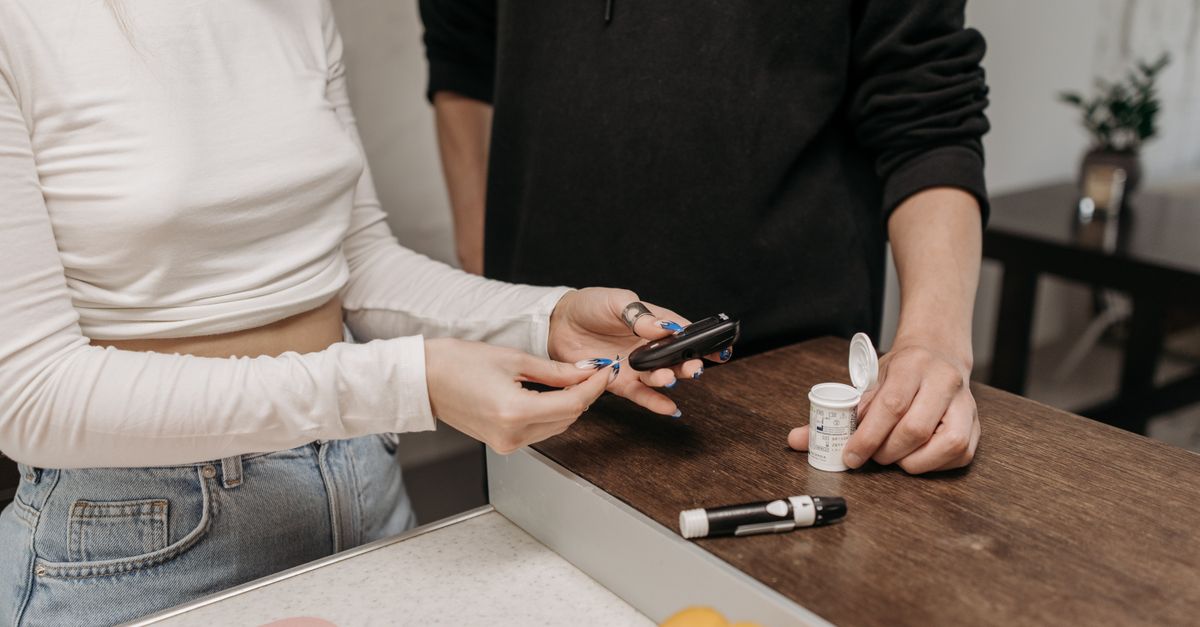
Illustration: Compound.
Republic of Ireland · Adult treatment · Funding information checked 14 September 2026. Individual eligibility must be confirmed by your prescriber and pharmacist.
You can leave a consultation with a prescription and still have no clear answer to the next question: who pays for it?
That uncertainty is particularly common around GLP-1 medicines. Someone you know may receive a diabetes medicine through a State scheme, while another person is quoted a private price for treatment described online as much the same thing. Both accounts can be accurate. The medicine, the condition being treated and the rules of the scheme all matter.
For adults seeking weight-management treatment, the current position is specific: Wegovy and Mounjaro are not covered by the medical card, Long-Term Illness Scheme or Drugs Payment Scheme, according to the HSE. Saxenda has a restricted funding route. A medical card by itself does not remove those restrictions. HSE funding guidance
The position at a glance
| Medicine | What the funding rules mean |
|---|---|
| Wegovy Semaglutide | The HSE lists no coverage through the medical card, Long-Term Illness Scheme or Drugs Payment Scheme. |
| Mounjaro Tirzepatide | The HSE likewise lists no coverage through those three schemes. |
| Ozempic Semaglutide | The HSE describes medical-card and Long-Term Illness Scheme access for type 2 diabetes. This is not a general obesity funding route. |
| Saxenda Liraglutide | Conditional funding through the medical-card/GMS and Drugs Payment schemes requires individual approval under a managed access protocol. |
Sources: HSE medicines guidance and HSE managed access protocols. This table covers these four products, not every diabetes medicine.
Ozempic’s authorised indication is type 2 diabetes. Sharing an active ingredient with Wegovy does not make their prescriptions or funding interchangeable. Ask which diagnosis the prescription is treating and whether that exact use is covered. EMA: Ozempic
Why the €80 Drugs Payment Scheme limit may not help
The Drugs Payment Scheme limits a family’s spending to €80 in a calendar month on approved prescribed medicines and certain other approved items. There is no means test. The decisive word here is approved: the scheme is not a universal ceiling on anything a doctor prescribes. HSE: Drugs Payment Scheme
Consider an illustrative household paying €80 for eligible medicines and €300 for a medicine excluded from the scheme. Its combined bill would be €380, not €80. The €300 is an example to explain the rule, not a price quote for a particular injection.
Before collecting a prescription, ask the pharmacist to separate the bill into eligible scheme items and private items. That is more useful than simply asking whether the pharmacy accepts a DPS card.
The Long-Term Illness Scheme answers a different question. It covers certain medicines and appliances for specified conditions, without a means test. Diabetes mellitus is on the list; gestational diabetes is excluded. Having a qualifying condition does not turn the scheme into blanket cover for unrelated treatment. HSE: Long-Term Illness Scheme
Saxenda: the exception with detailed conditions
The adult Saxenda protocol is narrower than general eligibility for obesity medication. Applications are considered for people aged 18–74, with BMI of at least 35, prediabetes and high cardiovascular risk, alongside participation in dietary and physical-activity interventions. Clinical exclusions also apply.
The protocol requires recent evidence: fasting glucose and HbA1c results for prediabetes, and cardiovascular-risk information. These readings must be within 30 days of application. It also allows consideration of treatment already being used to manage cardiovascular risk. This is therefore not something a reader can reliably settle with a BMI calculator and an old blood-test result.
The initiating clinician applies through the HSE’s reimbursement system; approval should be in place before a scheme-funded prescription is issued. HSE adult Saxenda protocol, sections 2–3
The practical question for a consultation is: “Could you check whether I meet the current managed access criteria, and tell me which measurements or records you need?” Bring existing results if available, but let the clinician decide whether updated testing is necessary.
Initial approval is not the whole funding journey
Saxenda’s first approval covers six months, described by the HSE as 24 weeks. Continuation requires a second application assessing the response after 12 weeks at 3 mg daily, including whether at least 5% of initial body weight has been lost. This is not simply a six-month weight-loss target measured from the first injection.
The combined approval period is two years from the initial application. HSE: adult managed access process
The full protocol says continued treatment beyond that period requires a new application. It does not promise automatic renewal. HSE protocol, section 4
Ask who will organise the continuation review and when it needs to happen. Put the review date beside the prescription-renewal date in your diary. An approval deadline is worth discussing before the last funded pack, especially if you would struggle to pay privately.
There is a separate adolescent Saxenda pathway, introduced in February 2026 and involving approved specialist consultants. The adult criteria above should not be applied to a child. HSE: adolescent managed access
Does a positive assessment mean Mounjaro will be funded soon?
Not necessarily. Ireland’s NCPE assesses clinical and economic evidence to advise the HSE. The HSE makes the reimbursement decision. A regulatory licence, a value-for-money assessment and individual patient approval are different decisions. NCPE: reimbursement process
For tirzepatide’s weight-management application, the NCPE completed its assessment on 3 December 2025. Its recommendation was conditional: consider reimbursement if cost-effectiveness improves relative to existing treatments. That is not an announcement that prescriptions are now covered, nor does it provide a reliable start date. NCPE: tirzepatide assessment
The Wegovy record also needs careful reading. The NCPE records withdrawal in March 2025 of the application for the four-pack pre-filled-pen presentation. That entry should not be stretched into a prediction about every future presentation or funding decision. NCPE: Wegovy
For a household budget, count funding when eligibility and availability are confirmed. A promising headline is not a payment arrangement.
What to establish before you spend money
Try to leave the consultation or pharmacy with answers to four questions:
- What is the exact medicine and treatment indication? Record the product name, rather than just “a GLP-1”.
- Which scheme, if any, applies to me? Ask whether individual approval is required and whether it has been granted.
- What remains payable? Separate medicine costs, consultation charges and follow-up care. For private examples, see our Irish price comparison.
- What happens at review or if funding ends? Agree who to contact before treatment becomes unaffordable. Our guide to stopping treatment explains why a follow-up plan matters.
If access is declined, ask for the precise reason: a medicine outside the scheme, an unmet clinical criterion, missing information or an application still being processed. Those are different problems and need different next steps. A refusal of funding is not, by itself, a verdict on whether someone’s health needs deserve care.
Editorial scope: this guide explains public payment routes. It does not determine clinical suitability or guarantee reimbursement. Funding changes will be checked against HSE decisions rather than inferred from media reports or private advertisements.
More on GLP-1 medicines in Ireland
- GLP-1 medicines in Ireland: evidence, benefits and access — Start with the wider Irish GLP-1 overview.
- Wegovy, Mounjaro and Ozempic costs in Ireland — Compare private prices and funding context.
- How to get Ozempic in Ireland — Understand the regulated prescription route.
- What happens after stopping a GLP-1? — See what the withdrawal studies actually found.
- GLP-1 side effects and when to seek help — Separate common symptoms from warning signs.