Budget 2027 gives health €29.1bn. So why aren’t Mounjaro and Wegovy funded for obesity?
Ireland is spending €29.1bn on health in 2027, while obesity already carries a major healthcare and economic cost. So why are newer weight-loss medicines still largely private? The answer is in the scale of the reimbursement bill.
 News / Health
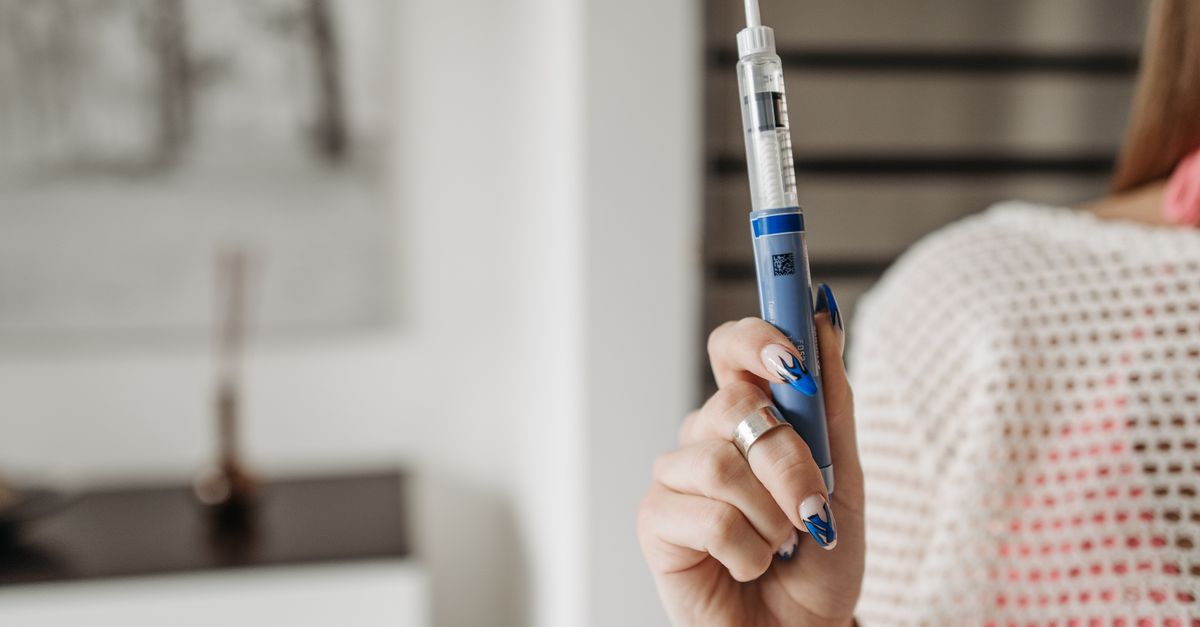
Photo: Pavel Danilyuk on Pexels · Illustrative image.
Updated 6 October 2026 after Budget 2027. This article discusses public funding and health economics, not whether any individual should start, stop or switch a medicine.
Ireland will spend €29.1 billion on health in 2027.
That is an increase of about €1.8 billion on the previous year. Budget 2027 includes measures such as additional home-support hours, expanded GP out-of-hours access and wider free contraception. But one of the fastest-changing areas in modern healthcare was not given a simple Budget-Day answer: public access to the newer medicines being used to treat obesity.
For people paying privately for Wegovy or Mounjaro, Budget 2027 does not itself create a new reimbursement route.
The HSE continues to state that Wegovy and tirzepatide — the active ingredient in Mounjaro — are not covered for obesity under the Medical Card, Long-Term Illness Scheme or Drugs Payment Scheme. Saxenda has a narrower managed-access pathway for qualifying patients.
At first glance, that can look difficult to reconcile with another fact: obesity already costs Ireland a substantial amount of money.
The real policy question is therefore not simply, “Can Ireland afford to treat obesity?”
It is:
Can the State design a GLP-1 reimbursement programme whose upfront drug cost is justified by the health gains and future costs it could avoid?
The figures show why that is a much harder question.
What Budget 2027 actually changed
The Government’s 2027 expenditure data puts health spending at €29.1 billion. Reporting on the Budget says this represents roughly €1.8 billion in additional health funding, including €160 million in additional capital investment.
There was no Budget 2027 announcement that automatically adds Wegovy or Mounjaro for obesity to the Drugs Payment Scheme or Medical Card.
That matters because a Budget allocation and a drug-reimbursement decision are not the same thing.
New medicines in Ireland go through a pricing and reimbursement process involving the HSE and the National Centre for Pharmacoeconomics (NCPE). The NCPE examines clinical benefit, cost effectiveness and the potential impact on the health budget. The HSE then makes the reimbursement decision.
For Mounjaro, that process has already produced some striking numbers.
The Mounjaro problem in one table
| Figure | Estimate | What it means |
|---|---|---|
| 2027 Irish health budget | €29.1bn | Total health expenditure allocation for 2027. |
| Annual cost of adult overweight and obesity | €1.13bn | Safefood estimate using 2009 Republic of Ireland cost data; includes healthcare and wider economic costs. |
| Direct healthcare cost within that estimate | €398.6m | About 35% of the €1.13bn total and 2.7% of healthcare expenditure in the study year. |
| Mounjaro: NCPE-adjusted 5-year net drug-budget impact, full licensed population | €5.23bn | Modelled cost if reimbursement reached the broad eligible population under the NCPE assumptions. |
| Mounjaro: BMI ≥35 plus a weight-related condition | €1.44bn over 5 years | NCPE-adjusted estimate for a narrower population. |
| Mounjaro: BMI ≥40 plus a weight-related condition | €1.25bn over 5 years | Additional NCPE analysis for a still more targeted population. |
Important: the obesity-cost estimate is based on 2009 costs, while the Mounjaro estimates come from a 2025 pharmacoeconomic assessment. The figures answer different questions and cannot simply be subtracted from one another.
That final warning is crucial.
It would be tempting to say obesity costs Ireland €1.13 billion a year, so spending roughly €1 billion a year on treatment should pay for itself.
That is not what the evidence shows.
How much does obesity already cost Ireland?
The most widely cited Irish cost study was commissioned by Safefood and led by researchers at University College Cork.
For the Republic of Ireland, it estimated the combined direct and indirect cost of adult overweight and obesity at €1.1276 billion a year, using 2009 cost data.
Of that:
- €398.6 million was attributed to direct healthcare costs;
- €729.0 million was attributed to indirect costs such as lost productivity, absenteeism and premature mortality;
- direct costs represented 2.7% of total healthcare expenditure in the study year.
The largest direct-cost drivers included cardiovascular disease, type 2 diabetes, colon cancer, stroke and gallbladder disease.
The Department of Health was still citing the same research in a 2025 parliamentary response, describing annual healthcare costs as just under €400 million and total costs as €1.13 billion.
There is an important limitation: these are not 2026 or 2027 euro values. They are based on an older cost base and an older healthcare system. Ireland does not currently have a single, newer official estimate that can simply replace them.
That makes it safer to describe €1.13 billion as the established Irish estimate from that study, rather than claim obesity “currently costs exactly €1.13 billion”.
The scale of the problem has not disappeared. The Department of Health said in 2025 that 56% of people in Ireland live with overweight or obesity, while Healthy Ireland data have continued to show more than half of adults affected.
So why not fund Mounjaro and Wegovy and reduce those costs?
Because the State pays for the medicine now, while many of the savings may occur years later — and not every euro associated with obesity can be removed by prescribing a drug.
The NCPE’s assessment of tirzepatide for weight management illustrates the dilemma.
Its review found meaningful clinical benefit. In the SURMOUNT-1 trial, average weight change at 72 weeks was around -16.0% with 5mg, -21.4% with 10mg and -22.5% with 15mg tirzepatide, compared with -2.4% for placebo, alongside diet and exercise.
The NCPE also noted improvements in several metabolic measures. Over three years, fewer participants receiving tirzepatide progressed to type 2 diabetes than those receiving placebo.
But clinical effectiveness is only one part of a national reimbursement decision.
The NCPE estimated the annual cost to the HSE at approximately €5,526 to €6,214 per patient, depending on dose, at the prices used in its assessment.
When that is multiplied across a very large potentially eligible population, the result becomes a major budget commitment.
The €5.23 billion number needs context
The NCPE’s adjusted model estimated a five-year net drug-budget impact of €5.23 billion if tirzepatide were reimbursed across the full licensed population.
That is not a prediction that the HSE will definitely spend €5.23 billion.
It is a modelling result based on assumptions about how many people would be eligible, uptake, market share, treatment discontinuation and other variables.
The NCPE itself said there was considerable uncertainty around the budget-impact estimates.
It also acknowledged that lower obesity-related healthcare spending could create long-term cost offsets.
But the size of those offsets was uncertain.
That is the central conundrum.
The health service may spend less in future on diabetes, cardiovascular disease, joint problems and other obesity-associated illness if effective treatment reduces risk. But it cannot assume that every person treated will avoid those costs, that benefits will persist indefinitely, or that every theoretical saving will appear as cash that can be removed from the HSE budget.
The cost-effectiveness calculation was also challenging
The NCPE’s adjusted modelling produced cost-effectiveness estimates above the commonly referenced Irish willingness-to-pay thresholds for the broad population.
For the 5mg dose in the full-licence population excluding type 2 diabetes, the NCPE estimated an incremental cost-effectiveness ratio of about €107,350 per quality-adjusted life year (QALY) compared with diet and exercise alone.
Its price analysis suggested the 5mg wholesale price would need to fall by about:
- 67% to reach €45,000 per QALY; and
- 90.5% to reach €20,000 per QALY,
under the assumptions used in the NCPE-adjusted model.
That does not mean those exact discounts will ultimately be required. Confidential commercial negotiations can change the economics, as can eligibility restrictions and future evidence.
But it makes clear why a national reimbursement decision is not simply waiting for the next Budget.
Targeting treatment may be the more realistic route
The difference between the NCPE’s broad and restricted budget-impact estimates is potentially the most important policy clue.
Broad reimbursement produced the €5.23 billion five-year estimate.
Restricting treatment to people with BMI of at least 35 plus a weight-related condition reduced the adjusted estimate to €1.44 billion.
For BMI of at least 40 plus a weight-related condition, the NCPE estimated about €1.25 billion over five years.
That suggests a future State scheme, if one is approved, could be more likely to begin with a narrower high-risk population rather than immediately fund treatment for everyone who meets the medicine’s licensed indication.
Ireland already uses that type of approach with liraglutide, or Saxenda. Its HSE managed-access pathway applies additional clinical criteria rather than reimbursing every person for whom the medicine could legally be prescribed.
That is not a prediction of the eventual Mounjaro or Wegovy rules. It is simply how the economics can change when eligibility is narrowed.
What about Wegovy?
Wegovy is at an earlier stage in the current Irish assessment process.
The NCPE records the full health technology assessment of semaglutide 2.4mg for adult weight management as ongoing, with the assessment having recommenced on 25 September 2026 following the factual-accuracy stage.
So there is currently no final NCPE outcome from that assessment to compare directly with the completed Mounjaro review.
The HSE’s current public guidance continues to say that Wegovy is not covered by the Medical Card, Long-Term Illness Scheme or Drugs Payment Scheme for obesity.
That position can change after a reimbursement decision, but Budget 2027 did not itself make that change.
The uncomfortable comparison: treatment costs versus disease costs
Ireland is effectively looking at two very large numbers.
On one side is the cost of obesity and its associated diseases.
On the other is the cost of treating a large eligible population with medicines that may need to be taken for years.
The older Safefood estimate put direct healthcare costs from overweight and obesity at almost €400 million annually, with a total economic burden of €1.13 billion once wider societal costs were included.
The NCPE, meanwhile, estimated that broad reimbursement of Mounjaro could create a €5.23 billion net drug-budget impact over five years at the assessed prices and assumptions.
Those figures do not cancel each other out.
The €1.13 billion figure includes costs outside the HSE, while the Mounjaro figure is primarily a drug-budget question. Some obesity-related costs will remain even with treatment. Some benefits take years to emerge. Some patients discontinue treatment. And the older obesity estimate itself needs updating.
The economically important question is the incremental one:
How much additional health does the State buy for each additional euro spent, after allowing for the healthcare costs that successful treatment prevents?
That is exactly why the NCPE exists.
Budget 2027 may still matter indirectly
The absence of a specific Mounjaro or Wegovy announcement does not mean Budget 2027 is irrelevant.
A larger health budget gives the system more resources overall, while Ireland’s new multiannual medicines-pricing framework is intended to improve access to new medicines and make the reimbursement process more predictable.
But the numbers involved in population-scale obesity treatment are large enough that a sustainable scheme may require more than a general increase in the health allocation.
Possible levers include:
- negotiating materially lower net drug prices;
- restricting initial eligibility to patients at highest clinical risk;
- requiring treatment-response criteria for continued reimbursement;
- combining medicines with structured obesity services;
- collecting real-world outcome data to test whether expected savings actually occur.
The final design is a policy decision for the HSE and Government after the evidence and negotiations are complete.
What this means for someone currently paying privately
For now, Budget 2027 should not be treated as a signal that your private Wegovy or Mounjaro bill is about to disappear.
The HSE still lists both as unfunded for obesity under the main community reimbursement schemes.
If that changes, the important details will be the eligibility criteria, the start date and whether individual approval is required — not simply the announcement that a medicine has been “approved”.
For current Irish prices, see our Wegovy, Mounjaro and Ozempic cost guide.
For the existing public-funding rules, see our guide to GLP-1 medicines, the Medical Card and the Drugs Payment Scheme.
The bigger question for Ireland
The debate around obesity medicines is sometimes presented as a choice between paying for expensive drugs or telling people to lose weight without them.
The health-economic problem is more complicated.
Ireland is already paying for obesity — through healthcare, chronic disease, disability, lost productivity and premature mortality.
The newer medicines introduce the possibility of reducing part of that burden, but they also introduce a potentially unprecedented recurring pharmaceutical bill if access is broad.
The NCPE’s assessment of Mounjaro makes both sides visible at the same time: substantial clinical benefit, but a very large budget impact at the assessed price.
That is why the next major development to watch is not another general health-budget headline.
It is the reimbursement negotiation: who would qualify, what price the HSE would actually pay, and whether the long-term health gains justify the upfront cost.
Correction and update policy: funding status should be checked against the HSE and NCPE before relying on this article. Budget allocations, reimbursement decisions and medicine prices can change independently.