WeRide Says One Robotaxi Market Has Positive Unit Economics. Can the Whole Business Follow?
WeRide’s overseas revenue and Robotaxi fleet are growing quickly, but quarterly loss barely changed. We examine what local unit economics prove—and what they do not.
 Wealth / The Compound journal
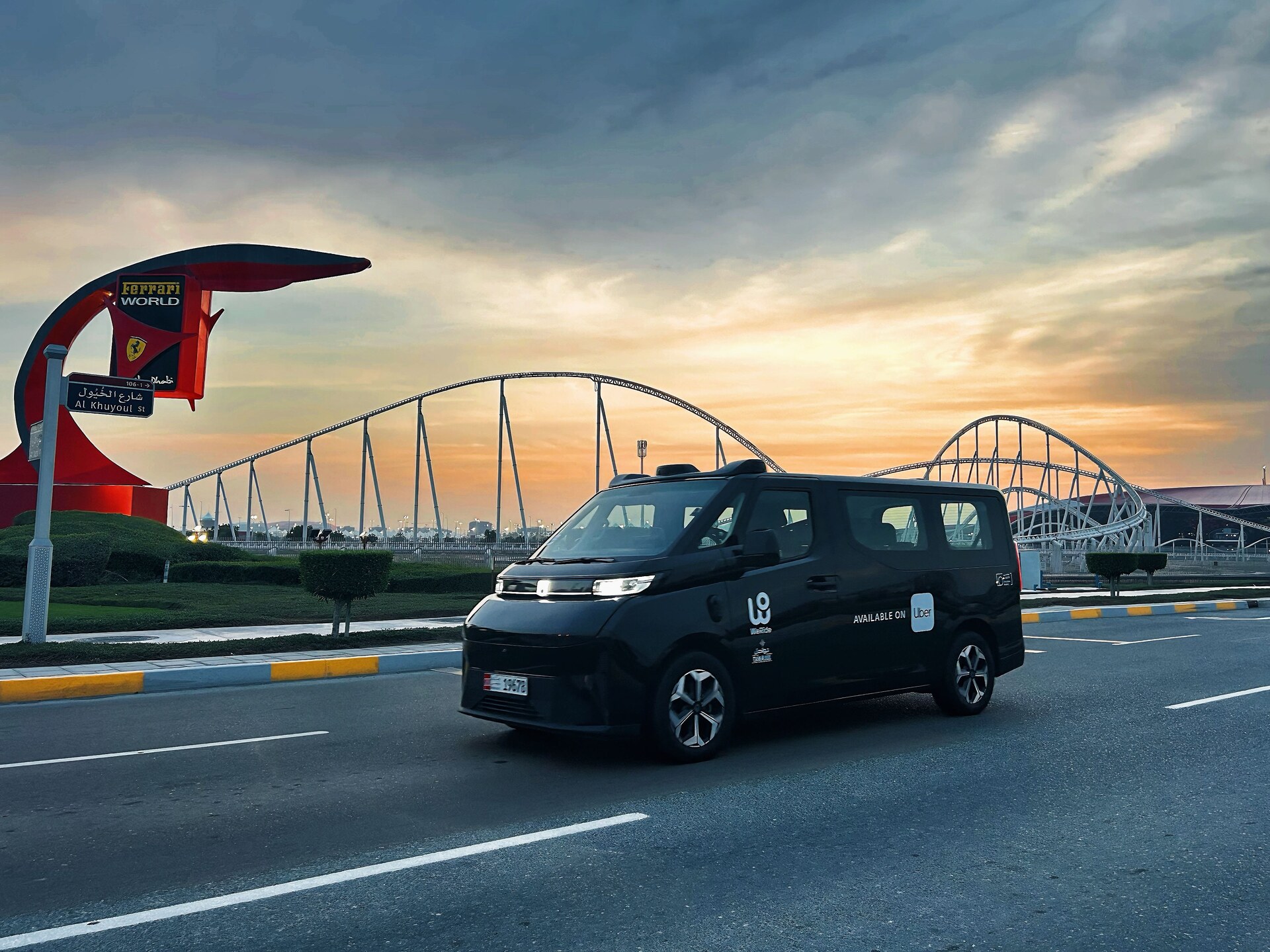
Photo: Kk0521 / Wikimedia Commons, CC BY-SA 4.0. WeRide GXR robotaxi photographed 23 May 2025; cropped and resized for publication. · Illustrative image.
WeRide’s third quarter contains an important milestone and an equally important limitation. The company says its Guangzhou Robotaxi operation achieved positive unit economics, yet the group still lost almost as much money as a year earlier.
For the three months ended 30 September 2026, revenue rose 88% to RMB321.5 million and gross margin expanded to 43.0% from 32.9%. Robotaxi revenue exceeded RMB100 million for the first time, while the global Robotaxi fleet grew 26% from the preceding quarter.
The investment question is whether positive economics in one city can be repeated across a growing fleet while research, remote operations and market-entry costs stop overwhelming gross profit. Compound does not currently maintain a dedicated WeRide stock profile, so this analysis does not invent one.
Overseas growth is changing the mix
Overseas revenue rose 171.5% to RMB146.9 million, or 45.7% of the quarter’s total. More than 90% of Robotaxi revenue came from overseas markets.
WeRide describes an asset-light model outside China: local partners fund vehicles and handle parts of fleet operation, while WeRide provides autonomous-driving technology and remote assistance. If that division holds, overseas expansion can add revenue without WeRide buying every car or employing every local operator.
The mix helps explain the gross-margin improvement. Management attributes it mainly to higher-margin overseas activity and its L2++/L3 driver-assistance business. Gross profit more than doubled to RMB138.1 million.
Robotaxi revenue of more than RMB100 million represented at least 31% of total revenue, using the reported threshold. It cannot be calculated more precisely from the release. The remaining business includes driver-assistance systems and AI infrastructure, so fleet growth should not be treated as the sole driver of company revenue.
Local unit economics are not consolidated profitability
In Guangzhou, WeRide reported an average of 21 daily orders per vehicle, with a one-day peak of 33, and said operations achieved positive unit economics. That is useful evidence that a sufficiently utilised robotaxi can cover the costs included in the company’s local calculation.
The release does not publish a contribution-margin definition, vehicle depreciation per ride, partner revenue share or the boundary between local and central costs. Positive unit economics therefore should not be read as audited profitability for every car, city or corporate function.
At group level, quarterly research and development expense was RMB465.3 million—about 3.4 times gross profit and 145% of revenue. The company’s loss for the period was RMB310.0 million, compared with RMB307.3 million a year earlier. Revenue nearly doubled, but the absolute loss barely moved.
The adjusted picture is not better. WeRide’s non-IFRS adjusted loss increased to RMB336.5 million from RMB275.6 million. Its adjustment removes share-based compensation and fair-value changes in financial assets; in this quarter, the reconciliation makes the adjusted loss larger than the IFRS loss. EBITDA improved 2.9% to negative RMB246.4 million, still well below break-even.
This is the central scaling test. Gross profit must rise faster than the engineering, safety, compliance and operating infrastructure required to enter more jurisdictions. A fleet can grow quickly while corporate losses remain stubborn if each expansion needs substantial central support.
The cash runway is real, but not unlimited
At 30 September, WeRide reported RMB4.66 billion across cash and cash equivalents, time deposits, current wealth-management products and restricted cash. Chief financial officer Jennifer Li said the operating plan provides more than four years of cash runway. That is management’s forecast, not a contractual guarantee.
As a historical stress test, the 2025 annual report shows RMB1.32 billion of operating cash outflow. Dividing the September liquidity bundle by that old annual burn rate gives about 3.5 years. The comparison is deliberately rough: wealth-management products and restricted cash are not identical to unrestricted cash, and future burn can rise or fall. It does show that reaching self-sustaining cash flow requires more than maintaining the current loss indefinitely.
WeRide has also funded growth through public equity. The 2025 annual report records RMB2.11 billion of net proceeds from its global offering. Investors should therefore watch diluted ownership as well as the headline cash balance. A business can have ample runway because shareholders supplied capital, without yet proving that operations replenish it.
Fleet size needs an earnings bridge
By 31 October, WeRide’s global Level 4 fleet was approximately 4,100 vehicles, including more than 2,300 Robotaxis. The Middle East fleet reached about 600 vehicles, and partners provide fleet investment there. In China, a denser self-operated model may carry different capital and cost economics.
This geographic distinction matters. A partner-funded vehicle can produce technology and service revenue with less capital, while an owned or heavily supported fleet can give WeRide more operating data and revenue but consume more cash. Aggregate vehicle count alone cannot reveal which model is creating value.
The thesis would strengthen if WeRide publishes repeatable unit definitions, more cities achieve positive contribution economics, gross profit catches up with R&D and operating cash outflow narrows. Continued overseas growth with stable or rising margin would support the asset-light claim.
It would weaken if fleet expansion requires repeated equity funding, if partner economics reduce WeRide’s share of revenue, or if central safety and engineering costs stay above the gross profit created by new deployments. Regulatory permits establish permission to operate, not customer demand or profitability.
WeRide has produced credible evidence that Robotaxi commercialisation is moving beyond demonstrations. It has not yet shown that one city’s positive unit economics can carry the cost of a global autonomous-driving company. That bridge—from local contribution to consolidated cash—is the next evidence investors need. This analysis makes no price target.
Explore Compound’s earnings hub and our guide to investment diversification.
Reported figures are in Chinese renminbi unless stated otherwise. Adjusted loss and EBITDA are company-defined non-IFRS measures. Local unit economics and cash runway are management statements whose calculation detail is not fully disclosed. Facts come from WeRide’s Q3 release furnished to the SEC, its 2025 Form 20-F and 2026 interim report; ratios and the historical runway stress test are Compound’s. General information, not personal investment advice.
Cover: Kk0521, Wikimedia Commons, under CC BY-SA 4.0. Captured 23 May 2025 in Abu Dhabi. Cropped and resized for publication.