FirstEnergy Lifted Its Capital Plan to $38 Billion. Who Funds the Extra Growth?
FirstEnergy has regulatory approval for new generation and a larger capital plan. We examine how construction recovery, debt and new equity divide the economics.
 Wealth / The Compound journal
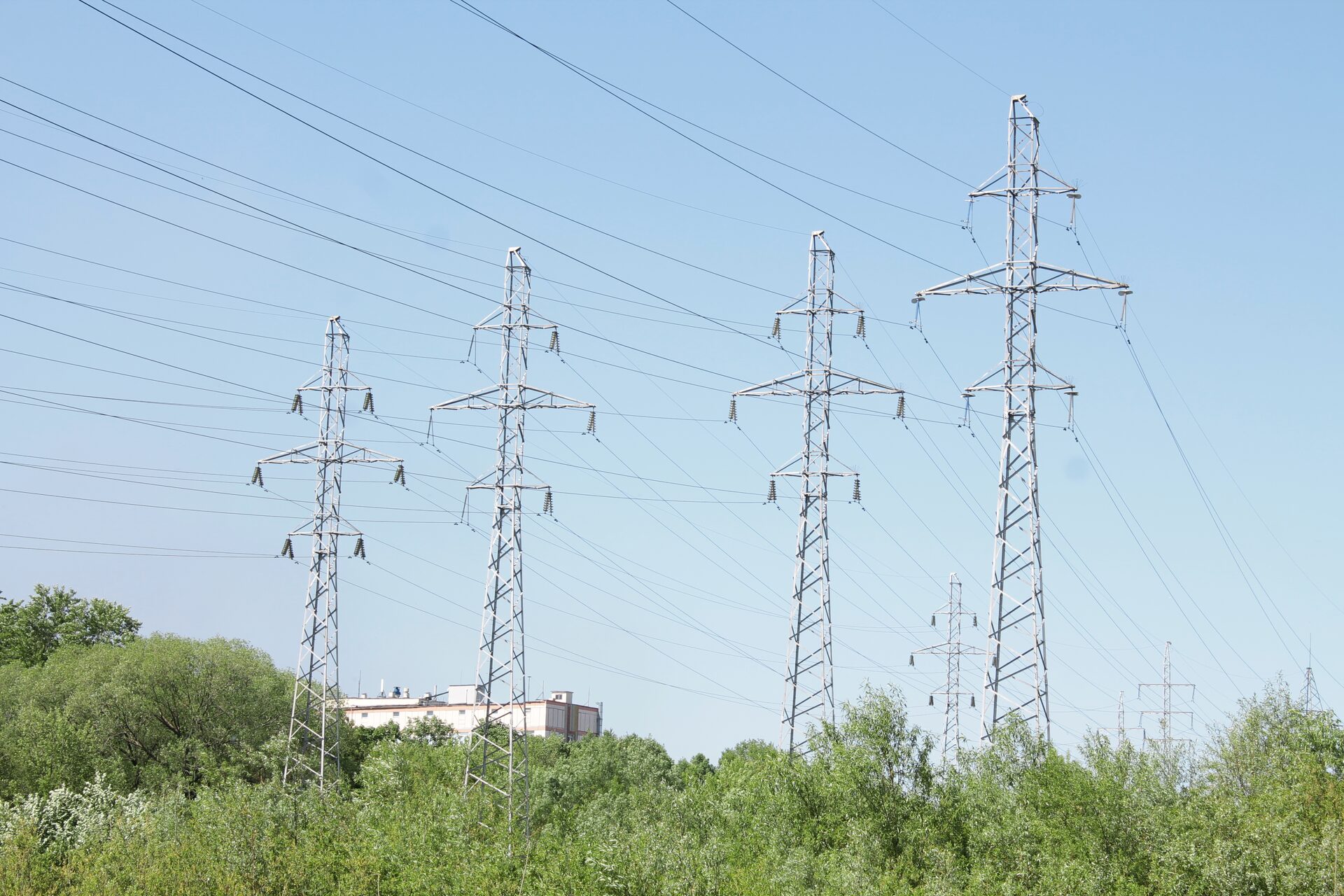
Photo: Foto3821 / Wikimedia Commons, CC0 1.0. Representative electricity-grid photograph captured 16 May 2023; cropped and resized for publication. · Illustrative image.
FirstEnergy has added $2 billion to its five-year capital plan after West Virginia approved new generation. The approval improves the route to recovering construction costs, but it does not make the investment self-funding.
The regulated utility now plans $38 billion of investment from 2026 through 2030, up from $36 billion. It also expects $2.8 billion of equity or equity-like financing, $800 million more than before. The useful investment question is therefore not simply whether a larger rate base can lift earnings. It is whether the return earned on new assets will compensate shareholders for debt, financing risk and a bigger equity requirement.
For the maintained quarterly record, see FirstEnergy’s stock profile. This article focuses on the funding economics behind the new plan.
Regulatory approval changes the cash-flow timing
The immediate catalyst is the West Virginia Public Service Commission’s 17 November order. It approved a 1,200-megawatt combined-cycle gas plant at Maidsville and 70 megawatts of utility-scale solar across three sites.
FirstEnergy’s presentation puts total investment at $2.7 billion: $2.5 billion for the gas plant and $200 million for solar. About $2 billion falls within the 2026–2030 planning window. The gas plant is expected to enter service at the end of 2031, while the solar projects are scheduled across 2027–2030. Those dates are management’s current plan, not completed construction.
The order matters because a new surcharge allows cash recovery of allowance for funds used during construction, or AFUDC, while the projects are being developed. Once operating, approved costs would move into base rates. That should reduce the usual regulatory lag between spending money and earning a return.
It does not remove execution risk. Construction costs can change, the assets still need to enter service, and final base-rate treatment remains part of the regulatory process. FirstEnergy is also seeking US Department of Energy financing; it describes potential savings, but approval has not been secured and should not be treated as a funding source already in hand.
Equity takes a visible share of the incremental plan
FirstEnergy expects to fund approximately 35% of the Maidsville investment with equity or equity-like securities. Across the five-year plan, anticipated equity financing rises from $2.0 billion to $2.8 billion.
The $800 million increase equals 40% of the $2 billion increase in planned capital spending, a Compound calculation using rounded company figures. That is close to, but not identical with, the 35% project-funding statement because timing and the broader financing plan differ.
Across the full $38 billion programme, $2.8 billion represents about 7.4%. The rest must ultimately be supported by operating cash, debt and other sources. Equity can protect credit metrics and lower refinancing pressure, but issuing shares or equity-like instruments can dilute each existing share’s claim on future earnings. The relevant test is growth in earnings and cash flow per share, not only growth in the regulated asset base.
FirstEnergy targets an 11.1% compound annual growth rate in rate base, up from 10.4%, and the upper half of 7%–9% annual growth in Core EPS through 2030. Core EPS is a management-defined non-GAAP measure. The company says it cannot reconcile forward Core EPS to GAAP without unreasonable effort, so the target needs to be assessed alongside reported profit, financing costs and share count.
Current cash generation does not cover the build alone
The September-quarter Form 10-Q shows why financing matters. In the first nine months of 2026, FirstEnergy generated $2.06 billion of operating cash flow and used $4.58 billion for investing activities. The resulting $2.52 billion gap was almost matched by $2.55 billion of financing cash inflow.
Investing cash flow includes more than the new Maidsville project, so that comparison is not a project-level return calculation. It does show that the existing capital programme already requires substantial external finance.
At 30 September, FirstEnergy reported only $48 million of cash and cash equivalents and approximately $7.6 billion of external holding-company debt in Corporate/Other. It also reported a $5.5 billion consolidated working-capital deficit, driven mainly by current debt, payables, short-term borrowing and accrued obligations. Management believes operating cash and available liquidity are sufficient for current needs, but the balance sheet leaves little reason to view a $38 billion plan as funded from cash on hand.
The constructive feature is that more than 75% of projected investment is expected to use formula-rate recovery, according to the presentation. Faster recovery can support cash flow and credit quality. The company still targets funds from operations equal to about 14% of debt and says it is committed to BBB/Baa2 ratings. Those are targets whose delivery depends on regulatory outcomes, operations and financing markets.
What would confirm the thesis?
The strongest evidence would be Maidsville construction staying within approved economics; the surcharge converting spending into timely cash recovery; and Core EPS growth surviving the effect of new shares and interest expense. Securing genuinely cheaper DOE financing would help, but only after approval and final terms are known.
The case would weaken if project costs rise faster than recoverable rate base, if equity issuance outruns per-share earnings growth, or if debt metrics deteriorate despite the surcharge. Customer affordability also matters: a regulatory mechanism can authorise recovery without making every future rate increase politically or economically easy.
FirstEnergy has improved the visibility of its investment pipeline and the timing of construction recovery. It has also made the shareholder funding bill more explicit. The next test is whether regulated returns arrive quickly enough to outweigh dilution and financing costs. This analysis makes no price target.
Explore Compound’s earnings hub and our guide to investment diversification.
Reported figures are in US dollars. Core EPS is a company-defined non-GAAP measure; capital, rate-base and earnings figures for future years are management plans or guidance and may not be achieved. Facts come from FirstEnergy’s 20 November Form 8-K, furnished investor presentation and September Form 10-Q. Ratios and funding comparisons are Compound’s. General information, not personal investment advice.
Cover: Foto3821, Wikimedia Commons, dedicated to the public domain under CC0 1.0. Captured 16 May 2023. Representative grid photograph; not identified as a FirstEnergy asset. Cropped and resized for publication.