What did Lilly gain by accepting a lower Mounjaro price in China?
China’s reimbursement list opened a wider market for Mounjaro. Lilly’s filings show how much revenue grew and where the evidence stops on profitability.
 Wealth / The Compound journal
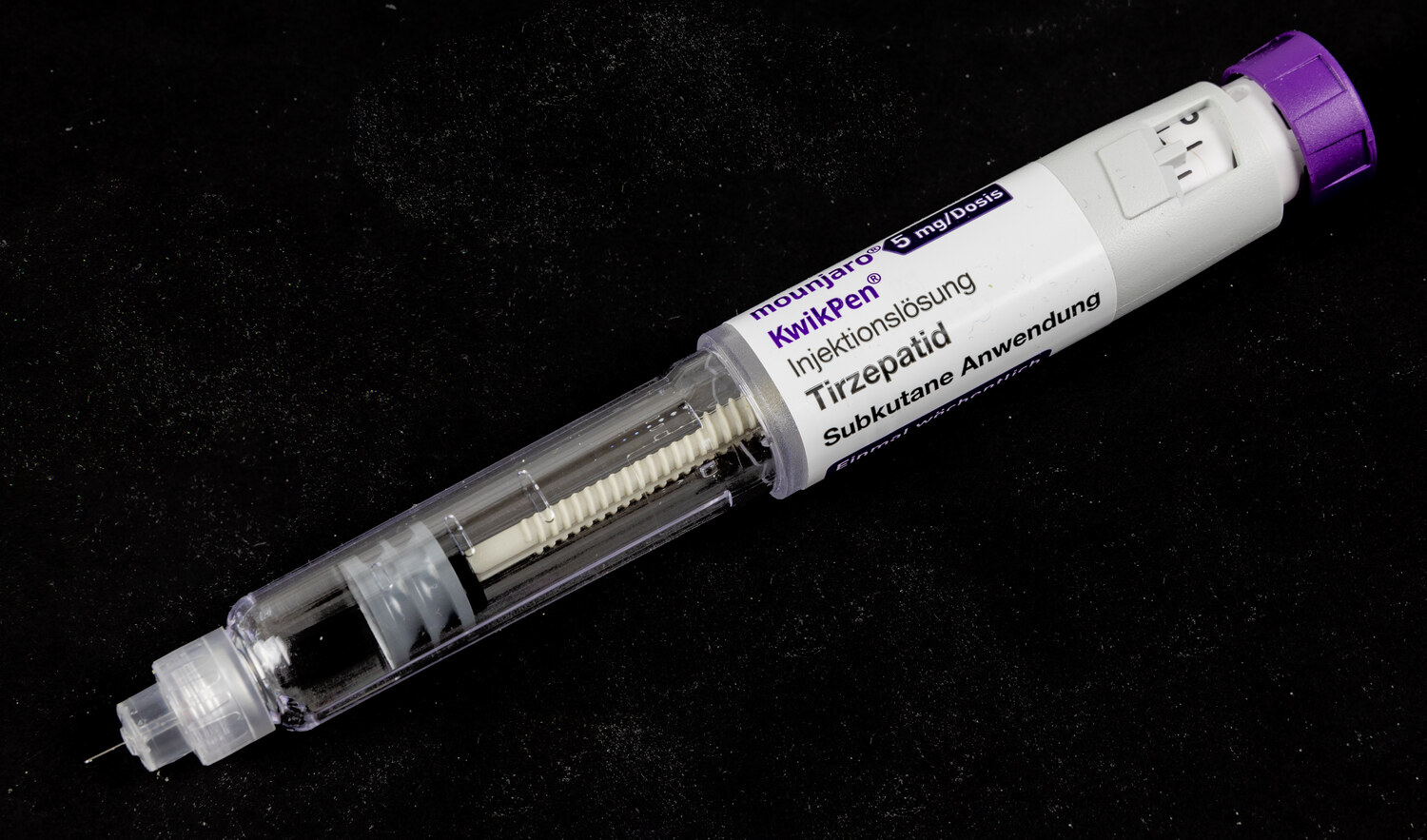
Photo: © Raimond Spekking / CC BY-SA 4.0 (via Wikimedia Commons). Archival photograph, 16 January 2025. Resized and cropped. · Illustrative image.
Eli Lilly accepted a lower price to get Mounjaro onto China’s National Reimbursement Drug List for type 2 diabetes in the first quarter of 2026. By the September quarter, Lilly’s revenue in China reached $947 million, up 69% year on year. That is evidence of a larger market for Lilly. It is also easy to misread: the $947 million includes all its products sold in China. Shareholders still need to know how much profit each additional sale brings.
Read the geography before reading the growth rate
Lilly’s quarterly presentation splits changes in revenue into contributions from volume, realised prices and currency. For China it reports 62% growth at constant exchange rates and a seven-percentage-point currency benefit. It marks the separate price and volume figures as not meaningful, while explaining that reimbursement led to lower prices and higher volume for Mounjaro. There is no China-specific discount or prescription count to extract from that row. Lilly’s Q3 presentation, price/rate/volume table
The distinction matters because a nearby figure looks like an answer. Across all markets outside the US, volume added 76 percentage points to quarterly revenue growth and realised prices subtracted 29 points. Lilly identifies Mounjaro as the driver of the volume increase and its inclusion on China’s list as the main reason for lower realised prices. Applying that 29-point figure to a Chinese Mounjaro pen would confuse the change across an entire international portfolio with the negotiated price of one product. Lilly’s Form 10-Q, revenue by geography
How much of the international business is China?
| Revenue for the three months ended 30 September 2026 | Reported revenue | Year-on-year change |
|---|---|---|
| All Lilly products in China | $947 million | +69% |
| All Lilly products outside the US, including China | $9.26 billion | +47% |
| Mounjaro outside the US, including China | $5.7 billion | +93% |
China accounted for about 10.2% of Lilly’s international revenue ($947 million divided by $9,261 million). The third row cuts the business a different way: it follows one medicine across every international market. The rows overlap. Lilly does not disclose how much of the $5.7 billion came from China in these tables. Lilly’s Q3 earnings release
The test for a shareholder is profit per pen
Consider what happens if a manufacturer cuts its net price from an illustrative $100 to $80 while the variable cost stays at $30 per pen. Selling 25% more pens restores revenue: 125 pens at $80 bring in the same $10,000 as 100 pens at $100. But the contribution per pen falls from $70 to $50. It takes 140 pens, or 40% more volume, to restore the original $7,000 contribution before fixed costs. Those figures are an illustration. Lilly does not disclose the corresponding Chinese unit economics.
There is encouraging evidence at group level. Lilly’s reported gross margin reached 83.9% in Q3, up one percentage point year on year. Management attributed the increase to product mix and lower production costs, which more than offset pressure from realised prices. That tells shareholders that volume expansion and resilient margins can coexist across Lilly’s portfolio. The group margin cannot establish the profitability of the Chinese contract. Lilly’s reported gross-margin discussion
The next useful comparison is what happens once both quarters include reimbursement. A year-on-year growth rate can look exceptional while it compares a newly reimbursed medicine with its earlier, more restricted market. Sustained growth after that anniversary, alongside stable group margins and continued international Mounjaro sales gains, would strengthen the case that Lilly bought durable access. A slowdown would make the size of the initial step-up a poor basis for forecasting several years of growth.
Follow the Lilly stock profile for reported financials and Compound’s Foundayo analysis for the separate question of European access to Lilly’s oral treatment.
Archival product photograph © Raimond Spekking / CC BY-SA 4.0 (via Wikimedia Commons). The same licence covers the resized image and its crops.