Eli Lilly''s Foundayo Wins European Backing: What the Oral GLP-1 Means for LLY Investors
European regulators have backed Eli Lilly's oral GLP-1 Foundayo. We examine Mounjaro and Zepbound sales, pricing pressure, manufacturing and the investment case.
 Wealth / The Compound journal
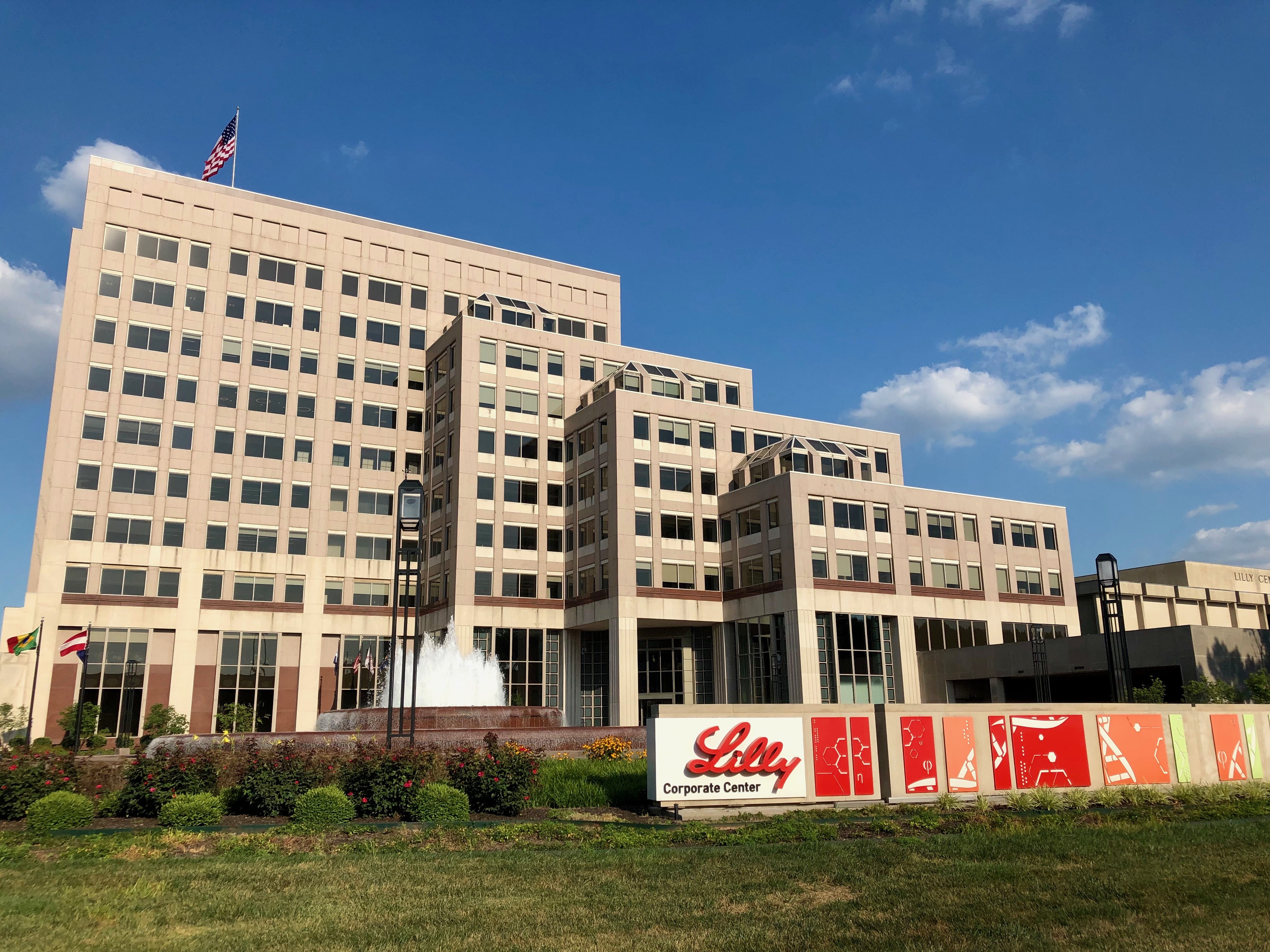
Photo: Paul Sableman / Wikimedia Commons (CC BY 2.0) · Illustrative image.
Eli Lilly has reached another important milestone in the global obesity-drug market. On 15 October 2026, the European Medicines Agency’s Committee for Medicinal Products for Human Use (CHMP) adopted a positive opinion for Foundayo (orforglipron), Lilly’s once-daily oral GLP-1 medicine, for weight management and type 2 diabetes. The opinion was published on 16 October. It is not yet European Commission marketing authorisation, and reimbursement and national launches remain separate questions. Source: EMA.
For investors in Eli Lilly (NYSE: LLY), the event matters because the company is no longer dependent on injectable medicines alone to expand its obesity franchise. But the more interesting question is whether an additional product format will increase overall profitability or simply introduce another price-sensitive channel.
What changed
Foundayo received US FDA approval for weight management in April 2026 and launched in the US that month. The medicine can be taken without food or water restrictions, potentially reducing the inconvenience associated with some oral competitors. That convenience is commercially relevant, although patient preference alone does not establish comparative efficacy or long-term market share. Lilly’s FDA announcement.
The EMA’s October positive opinion moves Foundayo closer to potential EU availability. A final European Commission decision is still required. Even after authorisation, access will depend on country-specific pricing, reimbursement and distribution. Investors should avoid treating the opinion as immediate European sales.
What the numbers say
Lilly’s second-quarter results provide a useful baseline before the next quarterly report.
| Metric | Q2 2026 | Comparison |
|---|---|---|
| Total revenue | $22.974bn | Up 48% year on year |
| Mounjaro revenue | $9.943bn | Up 91% year on year |
| Zepbound revenue | $4.928bn | Up 46% year on year |
| Foundayo revenue | $98m | First reported launch quarter |
| Gross margin | 85.8% | Up 1.5 percentage points |
Source: Lilly’s Q2 2026 earnings release filed with the SEC.
Combined Mounjaro and Zepbound sales reached $14.871bn, approximately 64.7% of Lilly’s Q2 revenue. This calculation shows both the extraordinary scale of the incretin franchise and the concentration risk that comes with it.
Total revenue grew 48% even though realised prices fell 13% overall. Lilly reported a 60% increase in volume. That distinction matters: growth was powered by more product being sold, not stronger pricing. Outside the US, realised prices declined particularly sharply, partly reflecting Mounjaro’s inclusion on China’s reimbursement list.
Foundayo’s $98m debut was modest relative to the injectable franchise. A single launch quarter cannot establish its ultimate sales potential. The crucial metrics will be repeat prescriptions, persistence, net realised pricing and whether oral treatment attracts patients who otherwise would not have used an injectable drug.
The investment case
The bull case is that Lilly can serve different patient groups with different formulations. Mounjaro and Zepbound already have global commercial momentum, while Foundayo offers a potentially more convenient entry point for some patients. The company also has late-stage development work on retatrutide and other metabolic treatments. Lilly’s development pipeline.
A broad portfolio may help Lilly retain patients as treatment preferences evolve. Oral medicines could also create opportunities in markets where injection uptake, supply or distribution is constrained. These benefits are plausible, but their financial size is not yet established.
A useful scenario illustrates the opportunity without pretending it is a forecast. Suppose Foundayo eventually generates $5bn in annual revenue. At an illustrative 30% incremental operating margin, that would represent $1.5bn of incremental operating profit before tax. At a 20% margin it would be $1bn; at 40%, $2bn. The assumptions are hypothetical, not company guidance. They show why margin and cannibalisation matter as much as gross sales.
Manufacturing capacity is another competitive variable. Lilly has announced major expansion investments, including an additional $4.5bn commitment for Indiana facilities in Q2. Capacity supports access but requires capital before the full return is visible. Investors should examine free cash flow alongside accounting earnings.
Risks and counterarguments
Pricing pressure: The Q2 results already demonstrate that realised prices can fall despite substantial volume growth. Wider insurance coverage and government reimbursement may increase patient access while reducing revenue per prescription.
Cannibalisation: If patients switch from a higher-revenue Lilly injection to Foundayo, gross oral sales will overstate the incremental benefit to the group. The key is net new patients and contribution profit, not a headline launch number.
Competition: Novo Nordisk and a growing pipeline of obesity treatments challenge the assumption that today’s market structure is permanent. New medicines may compete on efficacy, tolerability, convenience, dosing, access and price.
Clinical and regulatory risk: A positive CHMP opinion is not the same as final EU authorisation. New indications, long-term evidence and pipeline assets carry separate approval and safety uncertainties.
Concentration: Lilly’s June 2026 Form 10-Q says Mounjaro and Zepbound represented 65% of first-half revenue. That is evidence of a powerful franchise, but it also means competitive or policy changes affecting incretin drugs could have an outsized financial impact.
Valuation: Even a superb business can disappoint shareholders if the share price already discounts years of unusually high growth. This analysis does not assert a current price-to-earnings ratio or price target without a verified market quote.
What to watch
The next meaningful checkpoints are the European Commission decision on Foundayo, launch and reimbursement plans across EU markets, subsequent Foundayo prescription and revenue trends, and the upcoming Lilly quarterly earnings release.
In those results, focus on the balance between incretin volume growth and realised prices; product-level growth versus cannibalisation; gross margin and research spending; manufacturing investment and cash flow; and the clinical and regulatory timetable for retatrutide.
The central investor question is straightforward: can Lilly turn its lead in obesity treatments into durable free cash flow even as competition and payer pressure increase?
For more company coverage, visit the Eli Lilly stock page and Compound’s earnings hub. Readers exploring treatment economics can also review Compound’s GLP-1 cost calculator.
Sources and methodology
This article draws on Lilly’s August 2026 financial results, its June 2026 SEC Form 10-Q, the EMA’s October Foundayo decision record, the US launch approval announcement and Lilly’s published clinical pipeline. Product sales and growth rates are reported historical figures. Calculated revenue shares and hypothetical margin scenarios are identified separately. No Q3 earnings results are assumed.
Published 19 October 2026. General financial information, not personal investment advice.