Eli Lilly's $23 Billion Quarter: Can Foundayo Extend the Obesity Boom?
Eli Lilly's Mounjaro and Zepbound are growing rapidly, but falling realised prices and the early Foundayo launch make the next phase more complicated.
 Wealth / The Compound journal
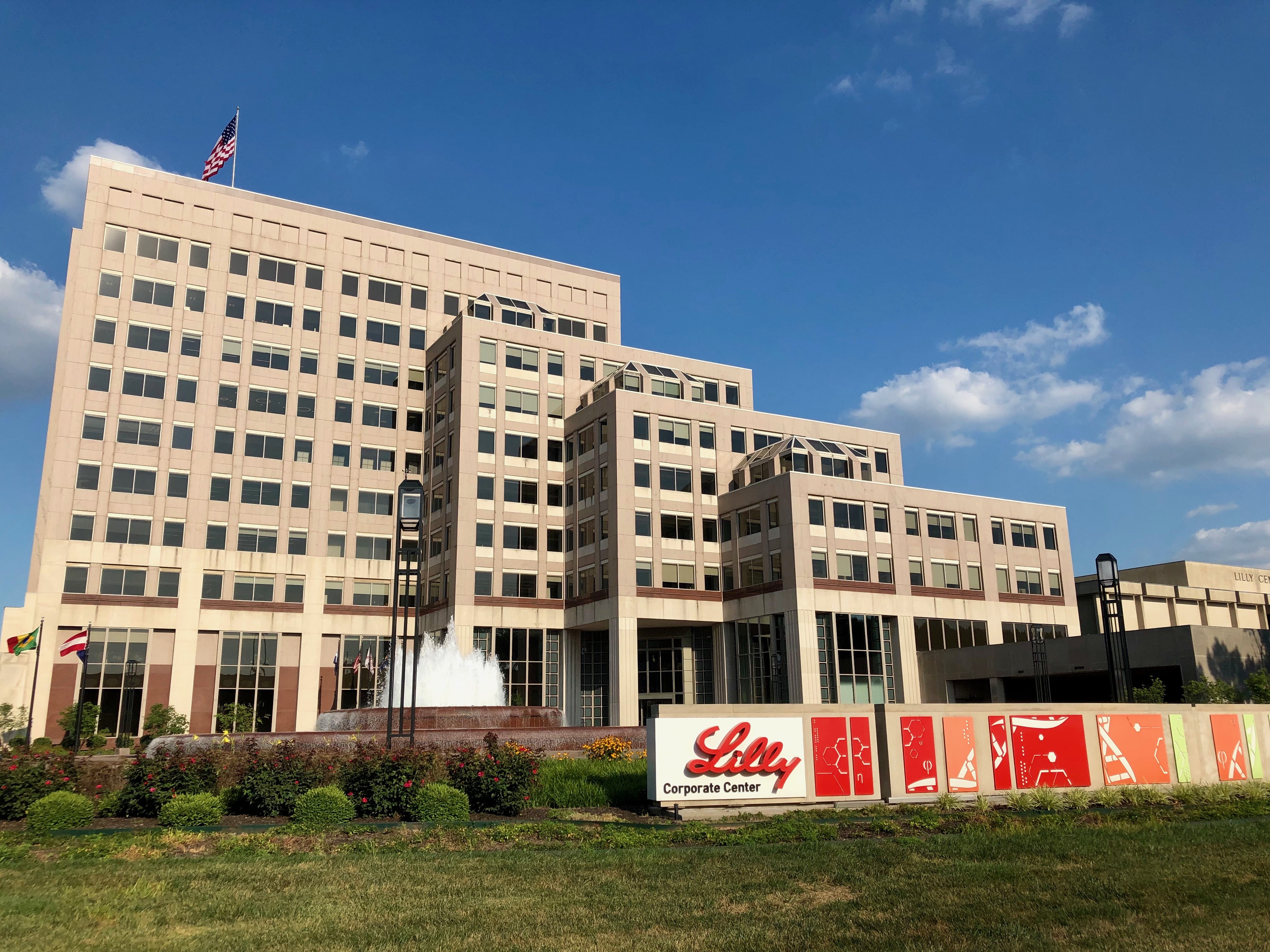
Photo: Momoneymoproblemz / Wikimedia Commons (CC BY-SA 4.0) · Illustrative image.
Eli Lilly’s obesity franchise is no longer a speculative pipeline story. It is an enormous commercial business. In the second quarter of 2026, the company generated $22.97 billion of revenue, up 48% year on year, while Mounjaro and Zepbound together produced approximately $14.87 billion. Yet the most interesting question for investors is not whether obesity treatments are popular. It is whether Lilly can preserve its extraordinary economics as access expands, competition increases and prices come under pressure.
A new catalyst arrived on 16 October: European regulators recommended approval of Lilly’s oral GLP-1 drug, Foundayo (orforglipron). A recommendation is not a final European Commission authorisation, and national reimbursement decisions can still determine commercial access. Nevertheless, it strengthens the argument that Lilly may serve several distinct patient groups through injections and pills.
What changed
Foundayo already received US FDA approval for weight management in April 2026. Lilly launched it in the United States during the second quarter, recording $98 million in quarterly sales. That is small relative to its injectable franchise, but it is a measurable starting point for a product that could appeal to patients who prefer tablets.
The European Medicines Agency’s positive recommendation, reported on 16 October, creates a possible route to further geographic expansion. It should not be treated as guaranteed revenue: the European Commission must still make its decision, and launch timing, prescribing practices, competition and reimbursement vary between countries.
Lilly is simultaneously developing retatrutide, a next-generation investigational treatment. In August, the company said its phase-three clinical data package was complete to support planned global submissions for several indications, with a US obesity filing planned for the first quarter of 2027. A regulatory filing is not an approval, and the commercial outcome remains uncertain.
What the numbers say
| Q2 metric | 2026 | Year-on-year change |
|---|---|---|
| Total revenue | $22.97bn | +48% |
| Mounjaro revenue | $9.94bn | +91% |
| Zepbound revenue | $4.93bn | +46% |
| Foundayo revenue | $98m | Initial launch quarter |
| Reported net income | $7.10bn | +25% |
| Reported diluted EPS | $7.94 | +26% |
Source: Lilly Q2 2026 earnings release. Figures rounded.
Mounjaro and Zepbound represented roughly 64.7% of Lilly’s Q2 revenue (14.871 divided by 22.974). This is evidence of tremendous commercial success and a material concentration risk at the same time. Lilly’s June 2026 Form 10-Q says the two products accounted for 65% of first-half revenue.
One particularly revealing contrast is volume versus price. Lilly reported a 60% increase in overall sales volume, partially offset by a 13% decline in realised prices. Outside the US, revenue grew 80%, despite a 36% decline in realised prices. The volume expansion is real, but investors should not extrapolate revenue growth from prescription growth alone.
Gross margin reached 85.8% in Q2, up 1.5 percentage points. This is a very high product-level margin, but it is not Lilly’s operating or net margin: research, selling expenses, acquired research charges, taxes and other costs still matter. Reported net income was $7.1 billion, implying a quarterly net margin of approximately 30.9%.
Lilly raised its 2026 revenue guidance to $85 billion–$87 billion in August. Guidance is a management forecast rather than a realised result.
The investment case
The strongest bullish argument is that Lilly has built a franchise with several reinforcing advantages: established demand, manufacturing investment, prescriber familiarity, commercial distribution and a pipeline spanning injectable and oral treatments. More manufacturing capacity could unlock demand currently constrained by supply, while oral treatment could broaden the addressable population.
A simple illustration shows why mix and price matter. If an illustrative obesity franchise sold 100 units at $100 each, it would generate $10,000. If unit demand rose 50% but the average realised price fell 20%, revenue would be $12,000, up only 20%. The numbers are hypothetical, not a Lilly forecast. They demonstrate why investors should monitor prescriptions, net pricing and product mix together.
Foundayo offers another potential route to expansion. Lilly says the tablet can be taken without food or water timing restrictions, a convenience distinction that may matter in everyday treatment. Yet convenience alone cannot establish its long-term market share: comparative efficacy, tolerability, coverage and patient persistence also count.
Retatrutide could extend the franchise further, but its value must be probability-weighted. Clinical success, approval, production scale and reimbursement are separate hurdles. It would be a mistake to treat every potential indication as certain future sales.
Risks and counterarguments
Pricing is the central near-term economic risk. Lilly’s own Q2 figures demonstrate that sales volume can rise sharply while realised prices fall. Wider access through government programmes and national health systems may increase patient numbers while lowering revenue per prescription. Investors need to understand the trade-off rather than treating either development as automatically positive or negative.
Competition is broadening. Novo Nordisk is already active in oral obesity treatments, and Roche, Zealand Pharma and other developers are investing in alternatives. New mechanisms and delivery methods could change the market over time. Strong demand for the category does not guarantee Lilly a fixed share of its future profits.
Product concentration is substantial. A safety signal, manufacturing interruption, reimbursement change or competitive shift affecting tirzepatide could have an outsized impact on group results. Diversification across oncology, immunology and neuroscience provides some offset, but does not erase this exposure.
Reported earnings require careful interpretation. Q2 included approximately $2.8 billion of acquired in-process research and development charges. These are genuine accounting expenses associated with investment and acquisitions, even if investors may separate them when assessing recurring operating performance. An adjusted earnings figure should not simply be substituted for cash generation.
Finally, valuation matters. Even a successful company can be a poor investment if its share price already assumes near-perfect execution. This analysis does not use a live share price or claim a current price-to-earnings multiple. Those should be checked at the time of any investment decision.
What to watch next
The next results should answer five questions. First, is Mounjaro and Zepbound volume growth still outpacing price erosion? Second, does Foundayo accelerate meaningfully beyond its initial $98 million quarter? Third, does management maintain or revise its $85 billion–$87 billion annual revenue outlook? Fourth, is manufacturing expansion translating into product availability and cash returns? Fifth, what does the next retatrutide regulatory update imply for timing and investment requirements?
There is a useful distinction between a great pharmaceutical business and a great stock at today’s valuation. Lilly’s latest reported growth is exceptional, but investors ultimately own future cash flows after spending, taxes and competition—not prescriptions or headlines.
For continuing company coverage, visit the Eli Lilly stock page and Compound’s earnings research hub. Readers interested in treatment costs can also explore Compound’s GLP-1 coverage.
Sources and methodology
This article uses Lilly’s 5 August 2026 earnings release, its June 2026 Form 10-Q, the company’s Foundayo approval announcement, and Reuters reporting on the European regulatory recommendation. Historical figures are separated from company guidance, hypothetical illustrations and forward-looking analysis. This article is informational, not personal investment advice.