New €14,500 Heat-Pump Grant: Is Switching From Oil Worth It?
SEAI's heat-pump grant can now reach €14,500 for eligible houses. Here are the rules, the real net-cost questions and a worked oil-versus-heat-pump running-cost comparison.
 News / Wealth
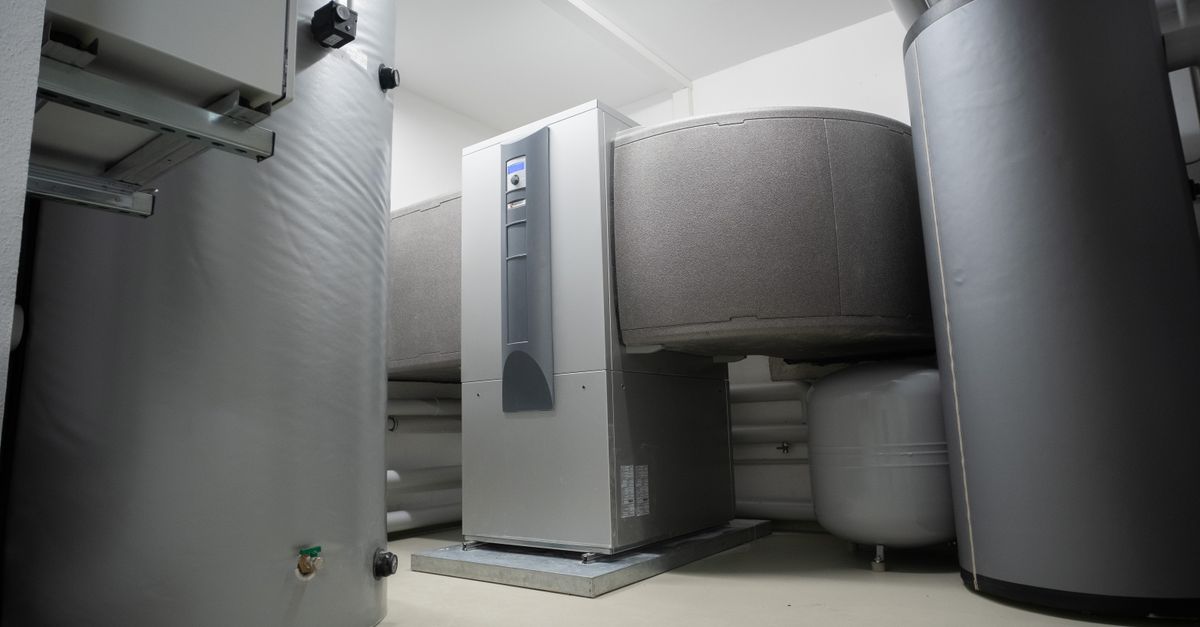
Photo: Nothing Ahead on Pexels · Illustrative image.
Ireland’s heat-pump grant can now reach €14,500 for an eligible house. The extra support is real, but the maximum payment is not automatic — and it does not prove that switching from oil will save money in every home.
SEAI’s revised scheme opened from 6 October 2026, following the 29 September announcement. It includes a €2,000 boiler-scrappage element and new maximum amounts for the heat-pump unit. Here is the financial test homeowners should run before signing a contract.
AT A GLANCE · 12 OCTOBER 2026
Up to €14,500 for eligible houses with a qualifying water-based heat pump: €10,500 heat-pump system + up to €2,000 central-heating works where needed + €2,000 boiler scrappage where eligible.
That is a maximum grant bundle, not money paid to every applicant. It cannot exceed eligible project cost. Check the full Heat Pumps in Ireland guide →
How the new €14,500 grant works
| Grant component | Maximum for eligible houses | Key condition |
|---|---|---|
| Heat-pump system | €10,500 | Qualifying heat-pump installation |
| Central-heating upgrade | €2,000 | Required radiator/underfloor-heating changes |
| Boiler scrappage | €2,000 | Eligible removal of existing oil, gas, solid-fuel or storage-heating system; see SEAI rules for homes without central heating |
| Possible combined total | €14,500 | Subject to eligibility and qualifying costs |
Under SEAI’s current published grant table, the equivalent water-based grant maximum for an apartment is €11,500. Air-to-air systems have a separate €9,500 maximum. A grant-aided replacement of an existing heat pump is treated differently and is not entitled to the scrappage or central-heating extras.
The earlier €12,500 maximum and €4,000 Renewable Heat Bonus are superseded by SEAI’s current published three-part breakdown for this scheme. Our original boiler-scrappage coverage has been updated to explain the change from proposal to live grant.
Who qualifies?
The individual Better Energy Homes heat-pump route generally requires a property built and occupied before 2021, an MPRN, an SEAI-registered contractor and grant approval before work starts. Owner-occupiers are not the only eligible applicants: SEAI also lists landlords and certain other property owners.
For a home built before 2007, a technical assessment is generally required unless a valid BER already confirms the relevant heat-loss threshold (HLI 2.3 W/(K·m²) or lower). SEAI provides up to €200 for a qualifying technical assessment. Homes built from 2007 onwards generally follow a self-declaration route.
A grant does not make a poorly insulated house suitable for low-temperature heating. If the property needs major fabric upgrades, include those costs separately using our insulation grant guide and Whole-House Retrofit Planner.
Oil versus heat pump: what could you save?
The interesting calculation is cost per useful unit of heat, not the headline grant or the heat-pump brochure efficiency.
Let’s compare two systems delivering the same 15,000 kWh of useful space/heating energy per year. These are selected assumptions, not verified current oil or electricity quotations:
| Assumption | Illustrative value |
|---|---|
| Annual useful heat needed | 15,000 kWh |
| Oil energy content | 10 kWh per litre (rounded) |
| Existing oil boiler seasonal efficiency | 80% |
| Heating oil price | €1.10/litre |
| Heat-pump seasonal efficiency (SCOP) | 3.5 |
| Electricity unit rate | €0.25/kWh |
Oil: 15,000 ÷ (10 × 0.80) = 1,875 litres, costing €2,063/year at the assumed oil price.
Heat pump: 15,000 ÷ 3.5 = 4,286 kWh of electricity, costing €1,071/year at 25c/kWh.
That is an illustrative €991/year running-cost difference in favour of the heat pump. It is not a guaranteed saving and excludes servicing, standing charges, other fuel price changes, installation costs and any separate hot-water performance assumptions.
The efficiency of the installation changes everything
At a weaker SCOP of 2.5, the same home would spend around €1,500/year on heat-pump electricity rather than €1,071. It would still beat the illustrative oil cost, but the advantage would be much smaller. Actual savings also depend on tariff, boiler condition, insulation, emitter sizing and heating schedules.
Running-cost break-even: under the exact example above, the heat pump at SCOP 3.5 becomes as expensive as oil at an electricity rate of roughly 48c/kWh: €2,062.50 ÷ 4,285.7 kWh. This is not a prediction that electricity prices will reach that rate.
What does the new grant do to upfront cost?
Take a purely hypothetical €18,000 eligible installation. After different possible grant amounts, the net project cost changes materially.
Even the €3,500 net-cost example assumes every component qualifies. A homeowner who needs no central-heating upgrades may receive less than the maximum. Another household may need insulation, bigger radiators or electrical work that changes the total project budget.
Simple payback needs care. Dividing the entire net heat-pump bill by annual fuel savings ignores the money you would otherwise spend replacing or maintaining an ageing boiler. Conversely, it can overstate the benefit if fabric retrofit and financing costs are left out. Compare incremental investment and whole-life costs before deciding.
Can solar panels make a heat pump cheaper to run?
Possibly. A heat pump adds electricity demand; solar PV may offset some imports during daylight and in milder months. But Irish solar generation peaks in spring and summer, whereas space-heating demand peaks in winter. Do not assume solar runs your heating free of charge.
The sensible order is to establish the house’s heat demand, estimate heat-pump electricity use, then test a separate solar scenario. Our Solar Payback Calculator lets you model self-consumption, import rates and export income. The Compound Solar Hub explains the technology, grants and installer-quote process; its quote comparator is for solar installation quotes, not heat-pump quotes.
CHECK YOUR NUMBERS
From energy research to an informed decision
01. Plan heat-pump and insulation costs — model grants and whole-home work first.
02. Understand electricity tariffs — match your heat-pump load to the rate you actually pay.
03. Calculate solar payback — only if you're also considering PV.
04. Prepare a solar installer quote brief — after the solar economics make sense.
Five checks before applying
- Heat loss: Is the property efficient enough? Get the BER/HLI and technical assessment where required.
- Design: Ask for room-by-room heat loss, proposed flow temperatures and radiator sizing, not just a heat-pump brand.
- Grant eligibility: Confirm each component with your contractor and SEAI — especially scrappage and central-heating works.
- Comparable quotes: Check whether the hot-water cylinder, controls, electrical work and removal of existing heating equipment are included.
- Approval first: SEAI says the grant offer must be in place before grant-supported work begins.
The bottom line
The €14,500 maximum makes switching away from oil more affordable for some households. A correctly sized, efficient heat pump can also lower running costs, but neither figure should be treated as a universal outcome.
Run two calculations: what the entire eligible project costs you after your actual grant approval, and what each useful kWh of heat costs under realistic boiler, SCOP and energy-price assumptions. Start with the full heat-pump guide and retrofit planner. If you are also evaluating rooftop PV, use the solar calculator before contacting installers.