Frontline’s Tanker Rates Surged, but How Much of the Windfall Is Durable?
Frontline’s contracted tanker rates have reached exceptional levels and its dividend matched adjusted profit. We examine ballast days, fleet spending, debt and cyclicality.
 Wealth / The Compound journal
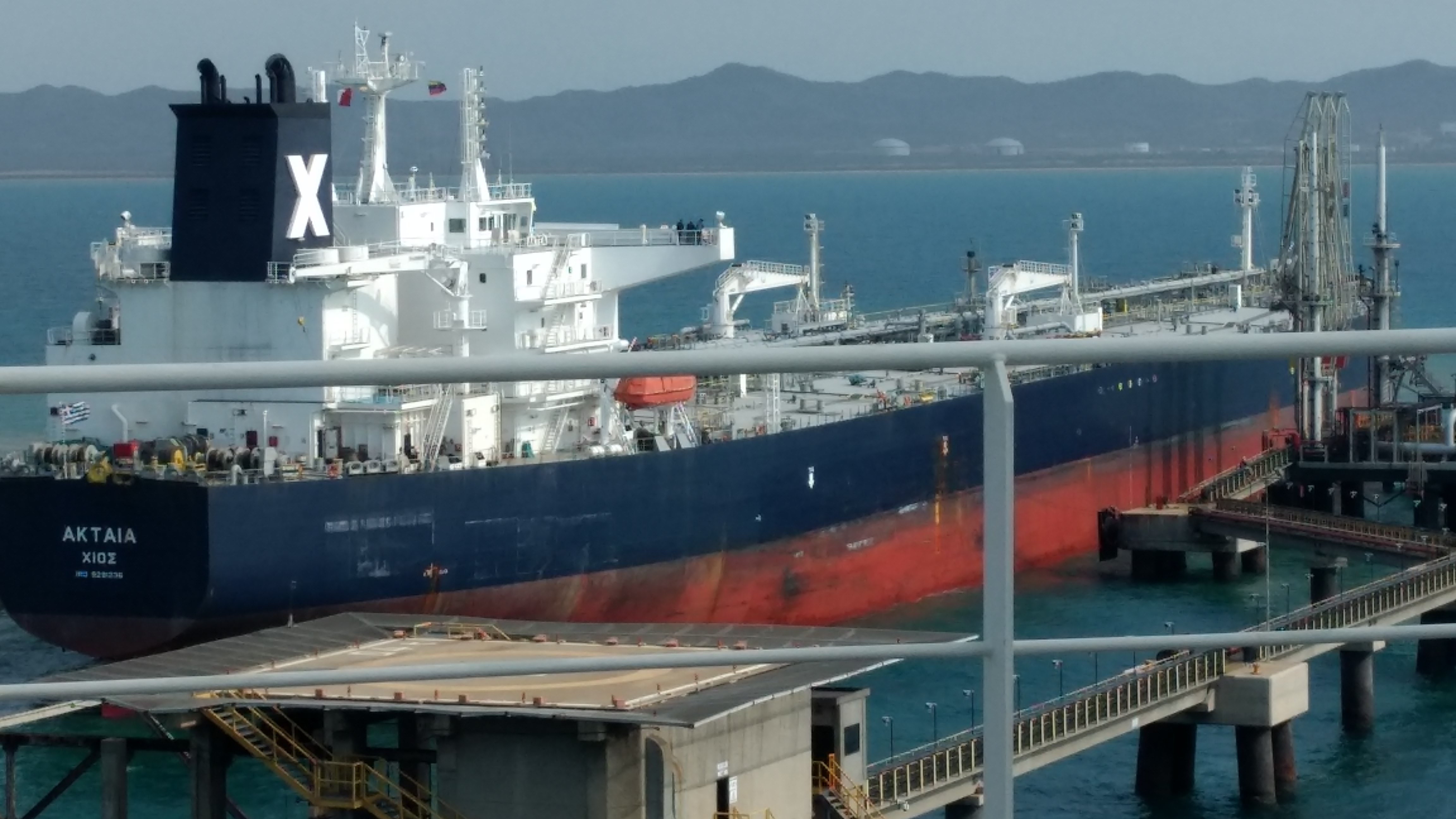
Photo: Martian-2008 / Wikimedia Commons, CC BY-SA 4.0. Aktaia VLCC photographed 7 May 2017; representative image, cropped and resized for publication. · Illustrative image.
Frontline’s latest tanker rates look extraordinary. The harder question is what shareholders can reasonably treat as recurring after empty sailing days, fleet investment and a historically violent shipping cycle.
The crude-oil tanker owner reported third-quarter 2026 profit of $641.4 million, or $2.88 per share. Adjusted profit was $530.9 million, or $2.38 per share, after excluding items including a large vessel-sale gain. The board declared a matching $2.38 quarterly dividend.
Average spot time-charter-equivalent earnings reached $148,500 per day for VLCCs, $102,500 for Suezmax tankers and $67,800 for LR2/Aframax tankers. Contracted rates for part of the fourth quarter were dramatically higher.
That creates the investment question: is Frontline’s payout supported by a durable improvement in tanker economics, or is the company distributing a cyclical windfall while still funding an expensive fleet renewal?
Compound does not currently maintain a dedicated Frontline stock profile, so none is invented here.
The fourth-quarter rate headline needs a ballast adjustment
At the reporting date, Frontline had contracted fourth-quarter spot TCE rates of $562,600 per day for VLCCs, $324,300 for Suezmaxes and $190,800 for LR2/Aframaxes. Coverage was 68%–69% of available spot days for the three classes.
Those numbers are economically significant, but they are not full-quarter guidance. Frontline recognises voyage revenue from cargo loading to discharge. It cannot recognise revenue during ballast days, when a ship sails empty to its next loading point.
The company explicitly expects full-quarter spot TCEs to be lower than the currently contracted figures because of ballast days. At quarter-end, contracted ballast days totalled 667 for VLCCs, 324 for Suezmaxes and 274 for LR2/Aframaxes.
This distinction prevents a common analytical error: multiplying the highest contracted rate by every calendar day. The uncontracted days, voyage timing and empty repositioning all influence realised revenue.
The dividend followed adjusted profit
Frontline’s third-quarter revenue was $921.3 million and operating cash flow was $566.3 million. The $2.38 dividend per share exactly matched adjusted profit per share for the quarter. That alignment suggests the board distributed nearly all adjusted earnings rather than retaining a large portion of the windfall.
GAAP profit was higher because Frontline recorded a $111.2 million gain on selling two 2017-built VLCCs. The ships produced $270 million of gross sale proceeds and $179 million of net cash after commission and debt repayment. Frontline returned that net amount through a separate $0.80 special dividend paid in September.
The treatment is transparent: the gain was excluded from adjusted profit, while the sale cash was separately returned. Investors should still avoid annualising either the sale gain or the current quarterly dividend. Frontline’s 2025 Form 20-F says dividend timing and amount are at the board’s discretion and cannot be guaranteed.
Cash generation is sharing the deck with fleet spending
For the first nine months of 2026, operating cash flow was $1.53 billion. Additions to newbuildings, vessels and equipment were $989.8 million. Subtracting the latter from the former leaves approximately $538.6 million before vessel-sale proceeds, financing and dividends—a simple Compound calculation, not a company-defined free-cash-flow measure.
Dividends paid over the same period were $1.33 billion. That was possible because Frontline also received $1.23 billion from vessel sales and moved large amounts through debt issuance and repayment. The payout therefore reflects asset recycling and exceptional market conditions as well as ordinary operating cash.
The fleet plan remains substantial. Frontline agreed to acquire nine new-generation VLCC newbuildings for $1.224 billion. At 30 September, $288.7 million remained committed; $187.3 million was paid in October and November, with $11.6 million due later in the fourth quarter and $89.8 million in the first quarter of 2027. Financing of up to $737 million covers part of the programme.
At quarter-end, cash was $279.7 million. Short-term debt and the current portion of long-term debt were $216.9 million, while long-term debt was $2.43 billion. Newer, efficient ships can lower fuel consumption and cash breakeven rates, but they also make balance-sheet discipline part of the dividend case.
High rates are real—and cyclical
Management attributes the strong market to disrupted trade routes, longer voyages, recovered crude loadings and supply growth in the Americas travelling to Asia. Those are management’s explanations, not guaranteed conditions.
Frontline’s own annual filing describes tanker rates as historically volatile and the industry as cyclical. Demand for tonne-miles can reverse as production, sanctions, routes, inventories and refinery patterns change. Vessel supply also matters: new orders that look sensible at peak rates can pressure the market when delivered.
The constructive case would be confirmed by full-quarter realised TCEs remaining far above cash breakeven rates after ballast days, operating cash continuing to cover fleet commitments, and debt declining after the last newbuilding delivery. Consistent utilisation across all three tanker classes would make the result less dependent on one vessel type.
The case would weaken if contracted rate headlines translate poorly into recognised revenue, if voyage distances normalise abruptly, or if dividends require repeated vessel sales and additional borrowing. Falling second-hand vessel values would reduce the flexibility of asset recycling.
Frontline is earning and returning exceptional cash, but the ballast-day disclosure is a reminder that even the current quarter’s headline cannot be taken at face value. A durable case needs strong realised rates, disciplined fleet financing and lower leverage after the newbuildings arrive. This analysis makes no price target.
Explore Compound’s earnings hub and our guide to investment diversification.
Frontline reports in US dollars under IFRS. TCE and adjusted profit are company-defined non-GAAP measures. Fourth-quarter contracted rates cover only part of available days and are not full-quarter forecasts. Facts come from Frontline’s SEC-furnished release, Form 6-K and 2025 Form 20-F; calculations and interpretation are Compound’s. General information, not personal investment advice.
Cover: Martian-2008, Wikimedia Commons, under CC BY-SA 4.0. Aktaia photographed 7 May 2017. Representative VLCC image; the vessel is not identified as part of Frontline’s fleet. Cropped and resized for publication.