Blue Origin Has Qualified a New Glenn Valve Fix. The Hard Part Is Returning to Flight.
Blue Origin says its modified BE-4 valve passed qualification tests on 10 November. Returning New Glenn to flight, not announcing more performance, is now the critical commercial milestone.
 Wealth / The Compound journal
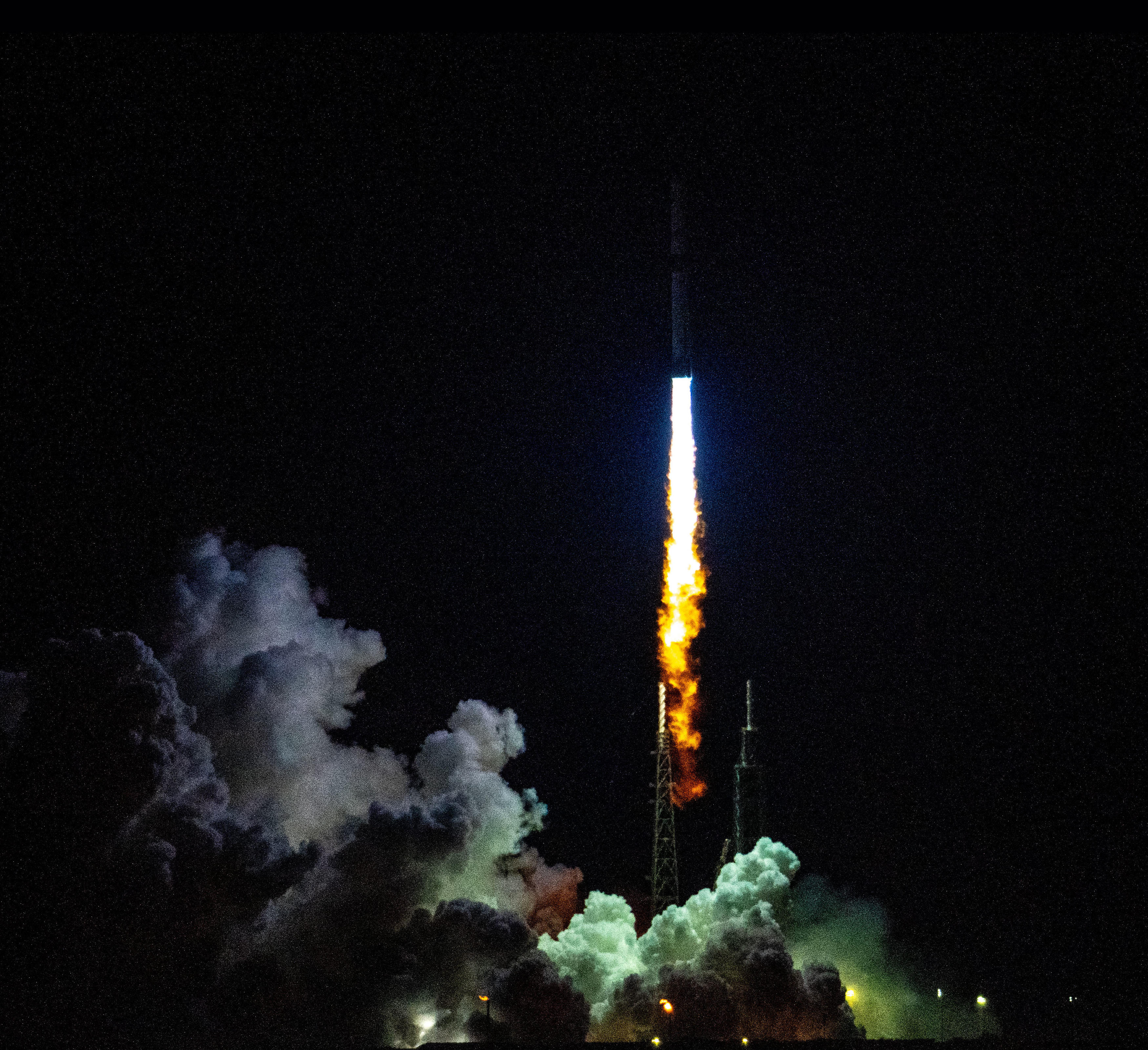
Photo: Senior Airman Samuel Becker / U.S. Space Force / Wikimedia Commons, US federal public domain; 16 January 2025 archival launch, cropped · Illustrative image.
Blue Origin has reached a meaningful engineering milestone, but it has not yet reached the commercial milestone that matters most: proving New Glenn can fly again on a dependable schedule. A repaired engine component is progress. Customers, however, buy delivered launches, not test qualifications.
On 10 November 2026, Blue Origin said a modified BE-4 main oxygen valve had passed qualification testing. It said the updated valve retains the established architecture, incorporates targeted improvements, has already been fitted to engines assigned to upcoming flights and is being rolled out across the remainder of the fleet. The company expected its anomaly investigation to finish later in November.
That is a specific development in the investigation of a May 28 hotfire anomaly and the disruption that followed. It is not confirmation of a new launch date, completed ground-system restoration or regulatory clearance. The distinction is crucial when assessing a private rocket company’s future revenue capacity.
How an engine valve becomes a business bottleneck
New Glenn’s commercial proposition depends on delivering heavy payloads to orbit repeatedly. Launch providers incur engineering, workforce, production, customer integration and facilities costs even while a vehicle is grounded. Without revenue-generating missions, much of that spending continues ahead of the cash it is supposed to support.
Blue Origin’s own chronology of the incident says the anomaly originated at a main oxygen valve on a BE-4 engine, supported by recovered hardware and inspections. The company outlined modifications and a changed launch-pad operating approach. Its November note represents progress on one part of that work, not proof that the entire return-to-flight sequence has finished.
A fault can require component qualification, engine-level tests, fleet retrofits, root-cause closure, ground infrastructure readiness and the scheduling of a customer payload. Completing the valve qualification removes one uncertainty, but several others remain.
For potential investors or counterparties, the sensible question is whether each milestone reduces the risk of additional delays, not whether a single announcement warrants a precise private-company valuation.
The launch cadence is the unit-economics variable
A reusable launch vehicle’s financial case is sensitive to flight frequency. Rocket manufacturing costs, ground facilities, engineering headcount and fleet overhead must ultimately be spread over completed missions. Recovering and reusing hardware helps only if refurbishment cost and turnaround time support the target cadence.
Consider a deliberately simple illustration, not a Blue Origin forecast. If annual fixed launch-programme costs were $900 million, then six completed flights would imply $150 million in fixed costs allocated per flight. Twelve flights would imply $75 million. Neither figure includes propellants, vehicle production, insurance, refurbishment, customer-specific engineering or capital expenditure.
The arithmetic demonstrates the value of cadence but says nothing about Blue Origin’s actual fixed costs, its realised launch prices or how many flights it will complete. None of those financial inputs has been disclosed in the 10 November update.
A one-off successful mission proves much less about recurring economics than a sequence of reliably delivered missions. Customers also need confidence in launch windows, mission assurance and replacement capacity when a campaign slips.
New engines are promising, but they do not erase schedule risk
On 5 November, Blue Origin separately announced Northstar, a liquid-oxygen/liquefied-natural-gas booster engine with a stated 715,000 pounds-force of thrust, compared with 640,000 pounds-force for BE-4.
That is a roughly 11.7% increase in stated thrust: 75,000 divided by 640,000. Blue Origin also claims Northstar has 30% less mass, 50% fewer parts and more than 65% additive-manufactured content, with assembly taking less than a day. These are company-reported design and production claims, not independently audited manufacturing costs.
Reducing parts can plausibly simplify assembly and supply chains; it does not establish reliability, flight-proven lifetime or overall lower cost per delivered kilogram. A new engine must also undergo the costly journey from promising tests to qualified operations. The currently announced BE-4 repair and the longer-term Northstar programme should not be conflated.
A third stage expands addressable missions, not current launch revenue
Also on 5 November, Blue Origin introduced GS3, an optional high-energy third stage for New Glenn. It describes direct deployment capabilities to geostationary orbit and beyond, with a government-contracted cislunar mission planned for 2028.
The published capability figures include up to 14 metric tonnes to geostationary orbit and 20 metric tonnes to trans-lunar injection for the stated 9x4 vehicle configuration; the smaller 7x2 configuration has lower limits. Those figures are configuration-specific company claims. They should not be applied to every New Glenn variant or interpreted as completed customer deliveries.
In commercial terms, GS3 could enlarge the set of missions Blue Origin can bid for, including government and technically demanding payloads. Yet additional capability also creates development and certification work. An addressable market is not the same as a contracted order book, and a contract for one future mission is not recurring revenue.
Blue Origin has not provided a full New Glenn programme income statement, fleet margin, independent launch manifest valuation or audited per-mission economics in these announcements.
Why the road to returning matters more than a feature checklist
The November disclosures present an interesting contrast. Blue Origin can articulate a more capable future launch system through Northstar and GS3, while its near-term operating question remains the BE-4 hotfire investigation and ground infrastructure recovery.
A sensible commercial scorecard would distinguish four steps: investigation closure with a documented fix, flight and pad readiness, a completed return mission, and repeat launches meeting customer windows. Each is stronger evidence than a product specification alone.
There is also a customer concentration issue. Space launch contracts can be high value, technically demanding and vulnerable to schedule changes. A provider can win impressive future work without earning the expected cash until milestones are met. That risk is especially important when private-company financial reporting is limited.
The conclusion: watch the manifest, not only the engine brochure
Blue Origin’s valve qualification is progress that can make a return to flight more credible. Northstar and GS3 also suggest an ambitious roadmap with potentially useful performance options. Neither automatically establishes launch reliability, commercial utilisation, positive margins or a specific return date.
The measurable inflection point is a verified return to flight followed by regular completed missions. Until then, the most defensible analysis is about what operational risks remain, rather than assigning an unobserved valuation to a better engine.
Follow the Blue Origin private-company profile for subsequent engineering milestones and related research on the privately held business. No public Blue Origin ticker, auditable launch-programme profit or guaranteed November-to-January schedule is claimed here.
Research checked 13 November 2026. The valve-qualification announcement is dated 10 November; Northstar and GS3 announcements are dated 5 November. Engineering specifications are company claims, and the fixed-cost example is hypothetical Compound analysis. Cover shows the actual New Glenn launch on 16 January 2025, credited to Senior Airman Samuel Becker/U.S. Space Force (public domain); it does not depict 2026 repair work.