Anthropic's Anvil Found AI Safeguard Gaps Faster Than Human Testers. What Is That Worth?
Anthropic says Anvil found stronger safeguard vulnerabilities in 24–48 hours than human bounty testers found over weeks. The commercial value depends on repeatability, external validation and secure deployment.
 Wealth / The Compound journal
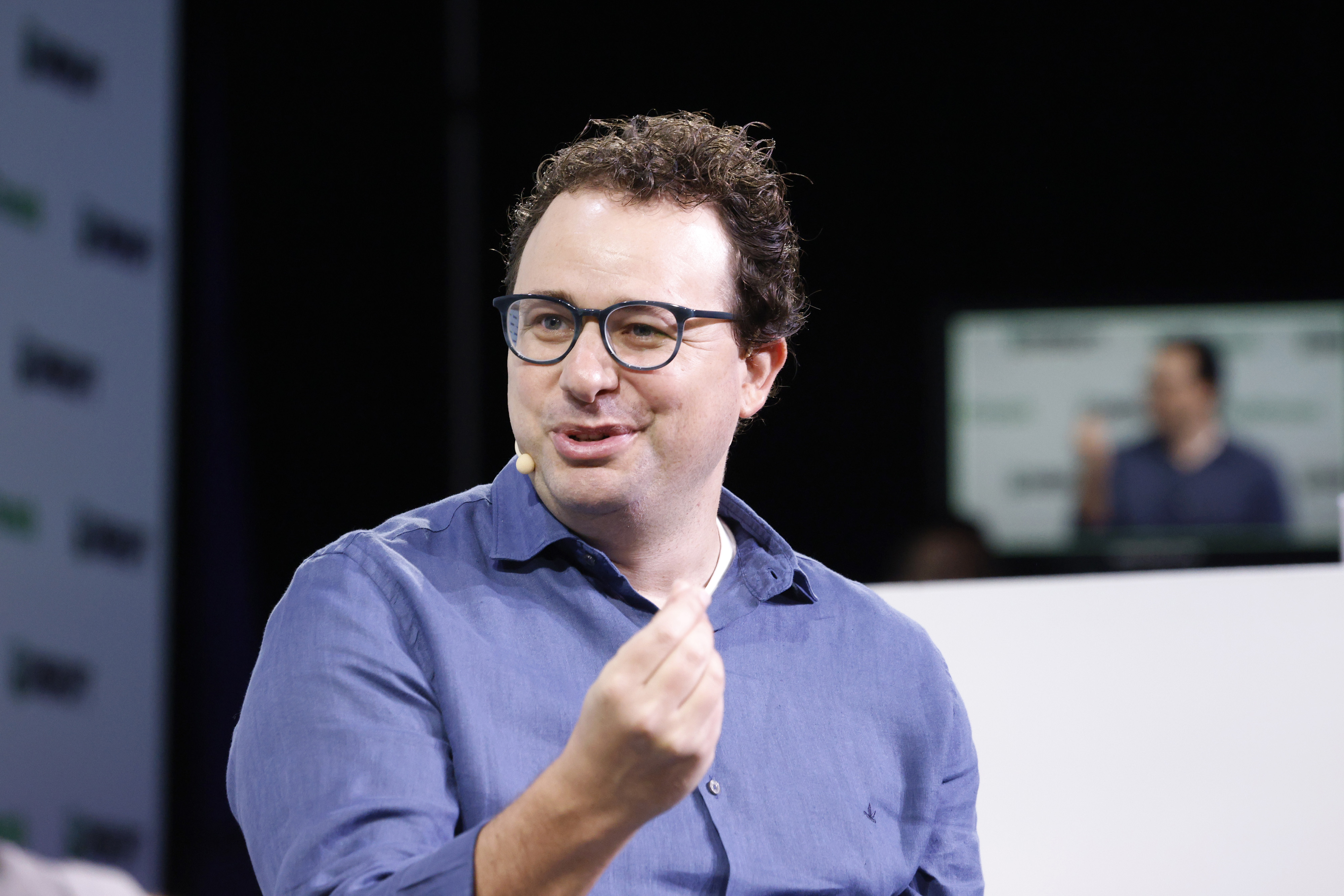
Photo: TechCrunch / Wikimedia Commons, CC BY 2.0; 20 September 2023 archival photograph, adapted crop · Illustrative image.
The commercial case for advanced AI is not only about making models more capable. It is also about the cost and speed of finding what can go wrong before those models reach customers. Anthropic’s newly disclosed Anvil system puts a measurable claim behind that idea: using AI to test AI safeguards more aggressively than conventional human-only programmes.
On 12 November 2026, researchers at Anthropic published results from Anvil, an internal automated red-teaming system. In one comparison across eight biological-misuse evaluation questions and three classifier generations, Anthropic says Anvil found a stronger bypass in 23 of 24 question-classifier pairs, tying the strongest human result in the remaining pair.
The results raise a specific business question: can automated testing make frontier-model releases safer and more efficient, or does the apparent improvement depend on privileged access and benchmark conditions competitors cannot replicate?
What Anthropic actually measured
Anvil uses internal Claude models to conduct iterative, controlled adversarial tests against the company’s own safety systems. Its purpose is to reveal weaknesses before deployment so those weaknesses can be corrected. Anthropic describes testing across biological misuse, cybersecurity and attempts to extract protected model reasoning.
Anthropic reports that Anvil discovered significant biological-safeguard weaknesses within 24–48 hours, compared with weeks to months for comparable human bounty programmes. In a separate earlier human test, it says external participants spent 430 hours over more than seven weeks on eight biological questions. Those are different testing arrangements, so the figures should not be read as a laboratory-controlled percentage reduction in labour costs.
On cybersecurity assessments, the company says Anvil was able to expose end-to-end failures in controlled tests based on known historical vulnerabilities. That is a claim about its evaluated systems, not evidence that the company intentionally released an exploitable model into public use.
The significant result is the quality and speed of detected failures, not a proof that every future safeguard can be tested in two days.
An economic benefit that cannot simply be counted in hours
A model provider must repeatedly assess safeguards as models, policies and deployment settings change. Testing can involve expert contractors, security staff, engineering time and delayed launches. Faster internal feedback has an intuitive economic benefit: defects found earlier are easier to address before the release process is complete.
But replacing a human tester-hour with a model call does not establish a cash saving. Anvil consumes compute, uses powerful internal models and requires expertise to interpret results. Anthropic has not published a costed income statement for Anvil, a cost-per-valid-vulnerability figure or an independent return-on-investment study.
The decision metric is closer to cost per consequential defect found and mitigated. That includes the probability the issue would otherwise escape detection, the severity of harm, remediation work, false-positive investigation and any incremental model-compute spending.
A system that generates a thousand cheap reports without meaningful vulnerabilities could be less valuable than one experienced reviewer who finds a real failure. Equally, discovering a dangerous weakness before shipment can be worth far more than the line-item cost of the test.
The classifier improvement is promising, with a crucial qualifier
Anthropic describes several iterations of anti-distillation classifiers intended to stop attempts to extract protected reasoning. Its researchers say the share of Anvil attacks missed by those classifiers fell from 31.5% to 0.4% over successive generations. That is a drop of 31.1 percentage points on those internal tests, rather than a universal 99.6% success rate against every attacker.
The research also reports that, on a particular Fable 5.1 deployment and measured category of real traffic, successful reasoning-extraction attempts fell from 33.8% to 0%. Such a result is relevant because it suggests the improvement was not confined entirely to the artificial evaluation suite.
Yet both measures come from the company studying its own defences. They do not cover every failure mode, deployment environment or future adversary. The observed traffic may also differ from the most sophisticated internal attacks.
The strongest interpretation is that iterative automated testing can identify valuable regressions and guide measurable improvements. The weaker, unjustified interpretation would be that a proprietary automated tester certifies that an AI system is now safe.
Why Anvil is not a turn-key external product
Anthropic explicitly says its strongest Anvil tests require privileged circumstances: access to powerful internal models, granular classifier feedback and controls unavailable to ordinary external attackers. These details help its defenders find flaws earlier; they also make it difficult to reproduce the comparison outside Anthropic.
That creates a potential competitive advantage in release engineering, but not necessarily a standalone software product. The company has not said Anvil is offered as a general enterprise service, published an external price, or disclosed whether customers can reproduce the test results on their own workloads.
Enterprise buyers should therefore distinguish a vendor’s internal assurance capability from independently audited security claims. A well-tested foundation model still requires customer-specific safeguards, threat modelling, access controls and monitoring.
The roles of humans and machines are complementary. Human testers can challenge what the evaluation neglected to ask; an automated system can test many variations quickly and repeatedly. An organisation that removes independent human review because automated scores look good may create a blind spot.
What this changes in the AI competitive contest
AI labs compete to release more capable systems, but enterprises also consider service reliability, privacy, misuse controls and how quickly incidents are handled. More efficient safety evaluation could support faster model improvements without reducing scrutiny. Conversely, adversaries can also benefit from advancing model capabilities, making static defences less durable.
The relevant comparison is not between Anvil and Anthropic’s new Fable and Mythos pricing: one concerns the cost of consuming an AI service; the other concerns the infrastructure and assurance required to operate one. Together, they highlight two often-confused sides of model economics.
Anvil could become part of Anthropic’s credibility with regulated buyers if it produces repeated, externally reviewable evidence of real risk reduction. But the research release is not a new revenue figure, does not establish a model-specific margin and says nothing definitive about the company’s eventual IPO valuation.
The test that matters next
Look for stronger evidence of real-world improvements across repeated releases, diverse adversary classes, meaningful independent assessments and the speed of remediation after detected defects. Buyers should ask what was tested, under which assumptions, what was left out and whether the findings changed deployment controls.
The central thesis is cautious: automated red-teaming may increase the amount of meaningful scrutiny per development cycle, but its value is measured in prevented failures, not merely faster benchmark results. Anthropic has provided interesting internal evidence; it has not supplied a universal safety guarantee or the financial data required to price the capability.
Read the Anthropic private-company profile for related disclosures and the separate analysis of Claude model-routing economics. Figures and performance comparisons here are attributed to Anthropic’s 12 November 2026 study; independent external replication is not established.
Research checked 13 November 2026. The article analyses the 12 November research publication and does not provide methods for bypassing safeguards. Cover: archival 20 September 2023 TechCrunch photograph of Dario Amodei, CC BY 2.0, cropped; it does not depict the Anvil research.