Anthropic's Fable and Mythos 5.2: The Expensive Model Is Not Always the Best Deal
Anthropic's new Fable 5.2 and Mythos 5.2 make difficult AI work faster at a premium token price. The commercial test is cost per successful task, not benchmark rank alone.
 Wealth / The Compound journal
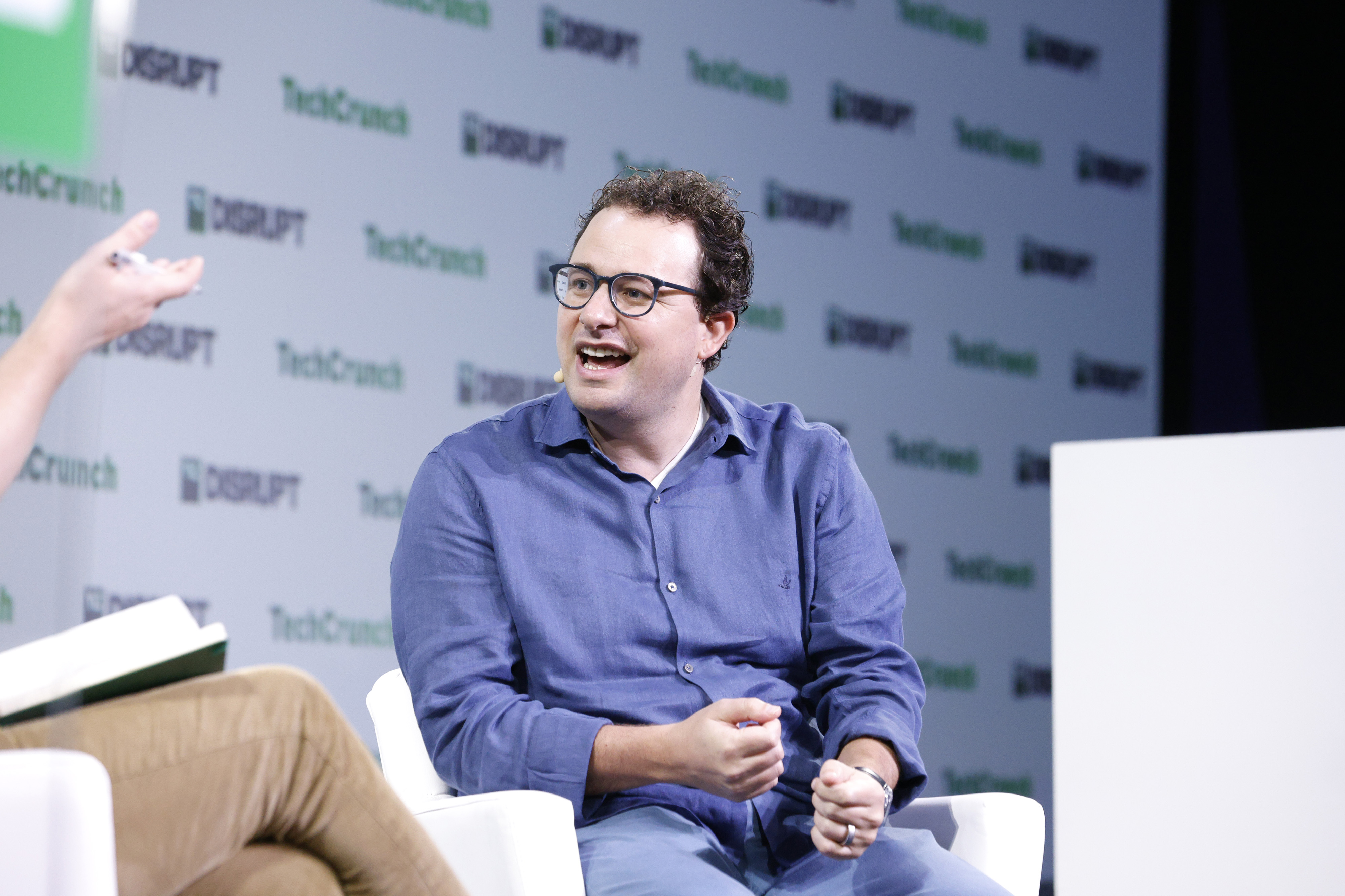
Photo: TechCrunch / Wikimedia Commons / CC BY 2.0; archival photograph dated 20 September 2023; adapted crop · Illustrative image.
The most capable AI model is not automatically the most profitable product to use or sell. Anthropic’s 9 November 2026 release of Claude Fable 5.2 and Claude Mythos 5.2 creates a useful case study: it raises the ceiling on difficult technical tasks while directing most everyday users toward a cheaper general-purpose model.
That distinction matters for Anthropic’s commercial economics. If an expensive model saves a customer hours of engineering time, its price can be rational. If the same task can be completed reliably by a smaller model, paying for the premium one merely increases inference spend.
What did Anthropic actually announce?
Anthropic describes Fable 5.2 and Mythos 5.2 as the same underlying model packaged with different safety and access controls. Fable carries general-user cybersecurity and biology safeguards. Mythos is available through verification programmes for eligible beneficial cybersecurity and life-sciences work, where different controls apply.
The company says output generation is up to 30% faster than the 5.1 versions, and quotes a standard API rate of $8 per million input tokens and $40 per million output tokens. An optional fast mode costs $16 per million input and $80 per million output tokens, with generation up to 2.5 times faster.
These percentages are Anthropic’s claims under its stated conditions, not guarantees for each user’s workload. Likewise, the reported benchmark scores belong to a vendor disclosure; task-specific testing is still necessary.
Unusually for a flagship launch, Anthropic explicitly recommends starting most coding and knowledge tasks with Opus 5.5 and moving to Fable or Mythos for particularly demanding problems. That advice is economically significant: the vendor is promoting model choice rather than maximum model size for every request.
The arithmetic: premium tokens are easy to price
Consider a hypothetical technical task with 100,000 input tokens and 20,000 output tokens. At the published rates:
| Mode | Input cost | Output cost | Total |
|---|---|---|---|
| Fable/Mythos 5.2 standard | $0.80 | $0.80 | $1.60 |
| Fable/Mythos 5.2 fast | $1.60 | $1.60 | $3.20 |
Those are illustrative API charges in US dollars, excluding any other services, caching adjustments or platform fees. For fast mode, the same example costs twice as much before considering whether it finishes sooner or succeeds more often.
The input-versus-output mix also matters. Here, 20,000 generated tokens contribute as much to the standard bill as five times more input tokens. A workflow that produces long reports, software patches or iterative agent messages may therefore cost more than the input length alone suggests.
There is no honest universal “most economical model” without measuring completion rate and the human cost of review.
Cost per solved task is the better metric
Suppose one system needs two attempts at $1.60 each to solve a task, while another succeeds on the first $3.20 fast-mode attempt. Their token charges are equal. But if the fast model reliably finishes an hour sooner, it could be superior for a time-sensitive engineering workflow. If the faster path frequently makes an expensive mistake, the apparent benefit may disappear.
A practical evaluation should therefore track:
- End-to-end task success, tested on the organisation’s real work rather than only a public leaderboard.
- Total tokens and retries, including agent planning, tool calls and failed steps.
- Elapsed time, not only the model’s output-token speed.
- Human review and rework, which can dwarf the API invoice.
- Security, audit and access conditions, especially in sensitive professional applications.
An accuracy percentage is not itself a profit margin. Nor does a benchmark show the value of the work achieved.
Why routing is important for Anthropic itself
The release describes two uses for Fable: as an Advisor, consulted by smaller models for hard subproblems, and as an Orchestrator, delegating easier work to less expensive models. Both approaches imply a tiered compute business rather than every request going through the premium endpoint.
For customers, this may improve the cost-to-outcome ratio. For Anthropic, it is a delicate balance. Better routing can encourage more production workloads and strengthen retention, but it can also move volume away from higher-priced tokens. Whether the resulting revenue, inference costs and margins improve is not ascertainable from the model announcement.
A vendor may prefer a smaller margin on a reliable, widely used workflow to a larger price per token on a model that customers reserve for demonstrations. Conversely, if the newest model is expensive to serve, apparently strong API sales may contribute less cash than the sticker price suggests.
Anthropic has not disclosed model-specific gross margins or the underlying cost of serving Fable and Mythos 5.2. None should be inferred from the token prices.
Safety controls are part of product segmentation
Fable and Mythos are separated primarily by access and safeguards, not by being different core models. This means buyers in cybersecurity and biological research need to assess eligibility, responsible deployment and workflow restrictions, not only capability.
Some users will be ineligible for Mythos. Some use cases may be better served by simpler tools or more restrictive data controls. Enterprise procurement teams should consider the model’s system card, permitted use, data-handling arrangements and their own legal duties before deploying it.
The strongest benchmark result is worth little if the corresponding service cannot be used safely or legally for the job in question.
The investment takeaway is about demand quality
Anthropic’s new release supports a plausible business thesis: AI customers will pay for unusually difficult work when the result is worth more than the computational bill. It does not establish that all users need premium models, that benchmark gains translate directly into sales, or that the new model is profitable to operate.
The more useful future measures are repeat production usage, customer-reported success rates, capacity efficiency, enterprise retention and any verified disclosure of model-serving economics. The headline release supplies product specifications and company evaluations, not a complete financial statement.
For context, see the Anthropic private-company hub and our separate analysis of headline accounting losses and prospective IPO valuation. That older article concerns capital structure; this one concerns the unit economics of the product itself. Readers can also compare OpenAI’s merchant-platform opportunity without assuming the two businesses disclose equivalent financial data.
Research checked 12 November 2026. Prices, performance claims and availability are attributed to Anthropic’s 9 November announcement. Calculations are transparent illustrative arithmetic, not a price quote for a custom enterprise contract or a recommendation to invest.
Cover: Dario Amodei photographed at TechCrunch Disrupt on 20 September 2023; archival, not a photograph of the November 2026 model launch. TechCrunch via Wikimedia Commons, CC BY 2.0; resized and cropped.
Separate market context: On 10 November Anthropic announced an IPO roadshow with a proposed $70–$78 offer price and a Nasdaq application, but the shares were not yet trading at the date of this analysis. That is an announced proposal, not a private-company share price available to readers. Our separate IPO accounting and valuation analysis addresses a different question from model routing. Source: Anthropic’s 10 November announcement.