Amazon’s $578 Billion Backlog Leaves a Customer-Funding Question
Amazon’s long-term customer commitments increased $82 billion in a quarter. Comparing them with unearned revenue shows why contracted demand cannot settle the funding question.
 Wealth / The Compound journal
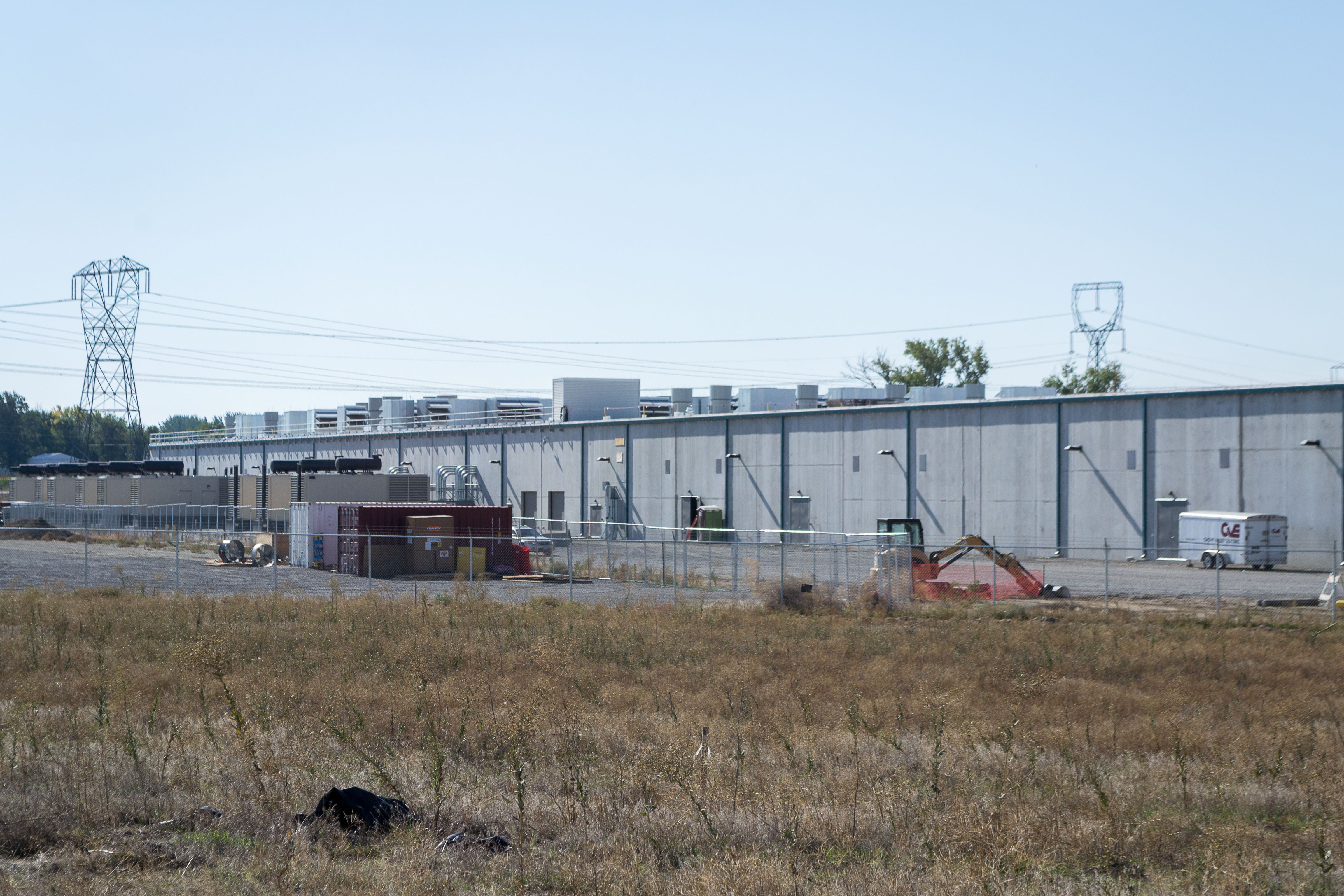
Photo: Visitor7 / Wikimedia Commons, CC BY-SA 3.0. Archival photograph, 10 October 2013. Resized and cropped under the same licence. · Illustrative image.
Amazon’s long-term customer commitments offer evidence of future demand. They answer a different question from the one shareholders must ask about financing infrastructure: when does customer money arrive relative to the spending needed to serve it?
Comparing the latest two filings reveals a growing order commitment alongside a much smaller increase in unearned revenue. The distinction matters for an investor deciding how much confidence contracted demand should add to a cash-flow valuation. This is a balance-sheet reading of existing disclosures, not a newly announced contract.
Two measures that should stay separate
The September 2026 Form 10-Q estimates $578 billion of unrecognised commitments under customer contracts originally lasting more than a year, primarily associated with AWS. The June filing reported $496 billion.
| Reported measure | 30 June 2026 | 30 September 2026 |
|---|---|---|
| Long-term customer commitments, primarily AWS | $496bn | $578bn |
| Weighted-average remaining contract life | 6.4 years | 6.1 years |
| Group current unearned revenue | $20.428bn | $21.708bn |
| Group long-term unearned revenue | $4.5bn | $6.5bn |
Compound calculates an $82 billion, or 16.5%, increase in commitments. Adding current and long-term unearned revenue gives approximately $24.9 billion in June and $28.2 billion in September, an increase of about $3.3 billion, or 13.2%. These totals are approximate because the long-term components are rounded in the filings.
The comparison does not show the percentage of AWS backlog already funded. Both filings say unearned revenue includes payments received or due before services are performed and primarily combines AWS prepayments with Prime memberships. It is a group accounting liability, not an AWS-only bank balance. Dividing it by the commitments figure would mix populations and mistake billing for collection.
Nor is the $82 billion increase a measure of gross contract signings: it is a change between two outstanding balances.
Follow the working-capital contribution
There is a narrower cash-flow cross-check. The unearned-revenue adjustment in Amazon’s operating cash-flow statement was positive $74 million for the first six months and positive $3.355 billion for nine months. Subtraction gives $3.281 billion for Q3, matching the separately reported quarter.
That is a net working-capital contribution, not gross AWS customer deposits. Investors should not subtract it again from reported operating cash flow when constructing a valuation: it is already included. Its usefulness is diagnostic—tracking whether this source of operating funding persists across periods.
A positive contribution can help bridge spending and later service delivery. But treating one quarter’s contribution as permanent funding would assume replenishment that the balance alone cannot establish. Conversely, a future decline could reflect delivery of previously prepaid services; it would not by itself establish weaker demand.
What would improve the investment case?
The remaining contract life shortened while commitments grew. That does not justify dividing $578 billion by 6.1 to forecast annual sales. Amazon says recognition depends on usage and performance, potentially beyond original contractual duration. An average remaining life is not a revenue schedule or cash-collection timetable.
For shareholders, the useful next test is whether stronger commitments translate into service delivery, collections and attractive returns on the capacity installed. More disclosure separating AWS advances from subscriptions, and billing from cash received, would make the funding assessment firmer. Until then, a valuation should keep demand visibility and financing assumptions separate.
A favourable scenario is that contracted customers use capacity promptly and collections arrive early enough to reduce financing pressure. A less favourable scenario is that Amazon pays for capacity well before cash arrives. These are analytical scenarios, not reported outcomes or management guidance. The same headline backlog could coexist with either timing pattern.
Our Amazon earnings analysis covers operating performance and the wider investment bill; the Amazon stock profile brings together company data and related research. This narrower filing comparison supplies a check on the assumption connecting demand to funding.
Research checked 21 November 2026. Analysis and calculations by Compound Research; not personalised investment advice.
Cover: archival Amazon data-centre photograph, Boardman, Oregon, 10 October 2013, by Visitor7 via Wikimedia Commons. Resized/cropped versions remain under CC BY-SA 3.0. The image does not identify capacity tied to the commitments discussed.