Solar panel 'dawn raids' in Ireland: what the CCPC investigation means for homeowners
Ireland's competition watchdog has reportedly carried out unannounced searches as part of a probe into possible bid-rigging in the solar panel sector. Here is what a dawn raid means, what has and has not been established, and what homeowners comparing solar quotes should do.
 News / Wealth
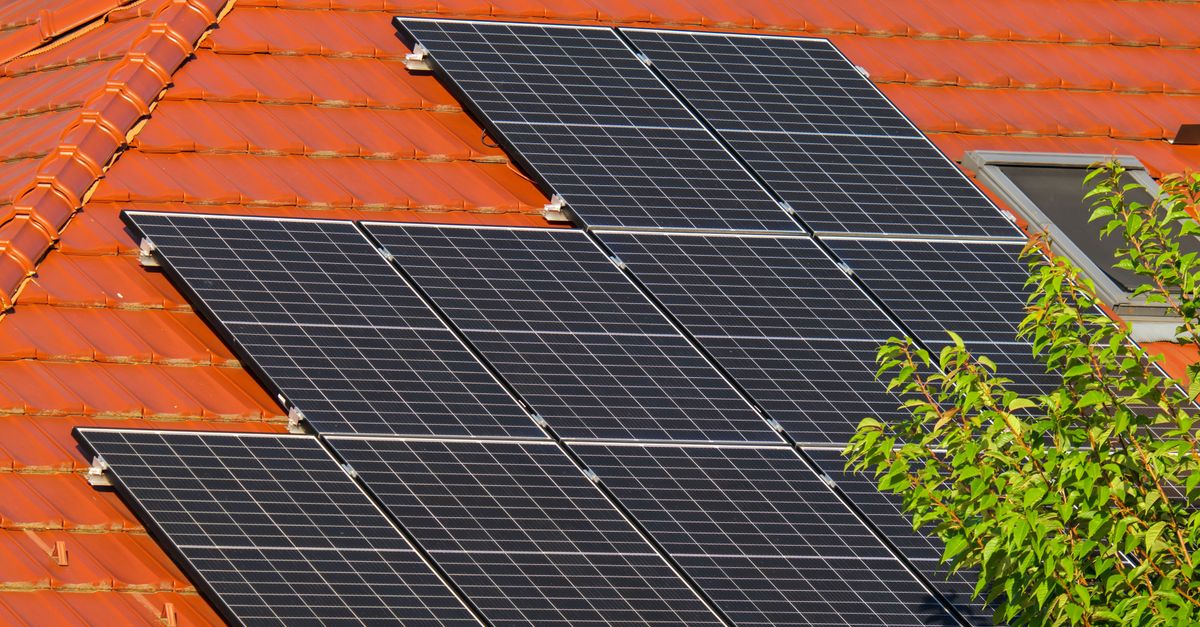
Photo: Vladimir Srajber on Pexels · Illustrative image.
News analysis · 25 September 2026. An investigation or search does not establish that any company has broken competition law.
Ireland’s competition watchdog is reported to have carried out unannounced searches — commonly called “dawn raids” — as part of an investigation into possible bid-rigging in the solar panel sector.
For anyone currently pricing solar PV for an Irish home, the headline is eye-catching. But there is an important distinction to make immediately:
A dawn raid is an investigative step. It is not a finding of wrongdoing.
No homeowner should assume that a particular installer, supplier or the wider Irish solar industry has been found guilty of collusion simply because an investigation is under way.
The more useful question is what the investigation means for consumers — and how to make sure the quotes you receive are genuinely comparable.
What is a CCPC “dawn raid”?
The Competition and Consumer Protection Commission can carry out unannounced searches when investigating potential breaches of competition law.
The CCPC says these searches may involve business premises and, where authorised by a District Court warrant, private homes. Investigators can search for information and evidence relevant to a suspected competition-law breach.
The phrase “dawn raid” does not necessarily mean officers literally arrive at dawn. It is the term commonly used for an unannounced competition-law search.
The CCPC has used this power in other sectors. Its 2025 Annual Report recorded 10 unannounced searches as part of ongoing cartel investigations.
What is bid-rigging?
The CCPC defines bid-rigging as a situation where competing suppliers secretly and unlawfully agree who should win a tender.
That can take several forms. For example, businesses could agree that:
- one supplier will submit the winning bid;
- another will deliberately submit an uncompetitive bid;
- a competitor will choose not to bid;
- or suppliers will coordinate bids instead of competing independently.
The problem is straightforward: a customer believes several businesses are competing for the work when, in reality, the competitive process may have been distorted.
Bid-rigging is prohibited under Irish competition law.
Has bid-rigging in Irish solar been proven?
No — not on the basis of an investigation or dawn raid.
That distinction matters.
A search means investigators are gathering evidence in relation to suspected conduct. It does not establish that the suspicion is correct, that every business searched did anything wrong, or that solar panel prices in Ireland have generally been manipulated.
Any eventual conclusions would depend on the evidence gathered and the subsequent enforcement or court process.
For homeowners, the sensible response is therefore not panic. It is to become a more careful buyer.
Why could bid-rigging matter to customers?
Competition is what forces businesses to sharpen their prices, service and quality.
When suppliers genuinely compete for a job, each has an incentive to put forward its best offer.
When bids are secretly coordinated, that pressure can disappear.
The CCPC cites international research suggesting bid-rigging in public procurement can increase costs by around 20% to 30%.
That figure should not be read as an estimate that Irish residential solar installations are currently 20% to 30% overpriced. It is broader international evidence used by the CCPC to explain why bid-rigging is taken seriously.
If you are getting solar quotes now, should you wait?
There is currently no basis for saying that Irish homeowners should stop installing solar because of the reported investigation.
Instead, make the quote process more rigorous.
A headline price is only useful if each installer is actually quoting for the same thing.
When comparing solar quotes, ask each supplier to specify:
- total installed system size in kWp;
- number, make and model of panels;
- panel wattage;
- inverter make, model and capacity;
- battery capacity in kWh, if included;
- whether backup power is included;
- expected annual generation in kWh;
- assumptions behind that generation estimate;
- workmanship warranty;
- equipment warranties;
- monitoring equipment and app access;
- scaffolding and electrical work included;
- grant assumptions;
- VAT treatment;
- and the final price you actually pay.
Two quotes described as a “6 kW solar system” can still be materially different.
Before comparing quotes, our Solar Panels in Ireland 2026 guide sets out the current grant, 0% VAT treatment, system sizing, expected generation, batteries, CEG export payments and the questions to ask an installer.
Get at least three genuinely independent quotes
The traditional advice to obtain several quotes becomes particularly relevant when there is concern about competition.
But simply collecting three numbers is not enough.
Try to make each company quote against the same specification. That makes differences easier to spot.
For example, if one company includes a 10 kWh battery and another includes 5 kWh, comparing the headline totals tells you very little.
Similarly, one installer may quote premium equipment, longer warranties or substantial electrical upgrades that another has excluded.
The objective is not automatically to choose the cheapest installer.
It is to establish what you are receiving for the money.
Work backwards from the economics
Solar sales conversations can quickly become dominated by system size, batteries and projected savings.
A better starting point is your own household.
Look at:
- your annual electricity consumption;
- when during the day you use electricity;
- whether you have or expect to buy an EV;
- your day, night and peak electricity prices;
- how much solar electricity you are likely to use yourself;
- what you receive for exported electricity;
- and the total installed cost after any grant.
From there you can estimate the annual financial benefit and compare it with the upfront cost.
Compound’s Solar Payback Calculator is designed for exactly this comparison.
Calculate your estimated solar payback →
If you are deciding whether a battery should be included, our guide to solar panels versus batteries in Ireland explains why a battery can increase self-consumption without necessarily improving the financial payback.
You can also use the Solar + EV + Battery Optimiser to test different household setups.
Watch for pressure-selling
A competition investigation does not mean ordinary sales tactics are evidence of bid-rigging.
But homeowners should still be cautious about any quote that makes it unnecessarily difficult to compare options.
Useful warning signs during any major home-energy purchase include:
- large discounts that expire immediately;
- refusal to provide an itemised quote;
- vague equipment specifications;
- savings projections with no assumptions;
- unusually high deposits without a clear reason;
- or claims that you must sign immediately to secure a grant.
Take the written quote away and compare it calmly.
What happens next?
Competition investigations can take time.
The existence of an investigation does not tell us whether enforcement action will ultimately follow.
The key facts to keep separate are:
- reported unannounced searches have taken place;
- the investigation concerns possible bid-rigging;
- bid-rigging is a serious breach of competition law;
- but possible wrongdoing is not proven wrongdoing.
For Irish homeowners, the practical lesson is simpler: get multiple itemised quotes, compare equivalent systems and judge the investment using your own electricity usage rather than a sales pitch.
That was good advice before this investigation. It is even more relevant now.