Nvidia Creates National Security Committee: What It Means for NVDA Stock
Nvidia has formed a permanent board committee for national security, export controls and trade risk. Here is what changed and what NVDA shareholders should watch.
 News / Wealth
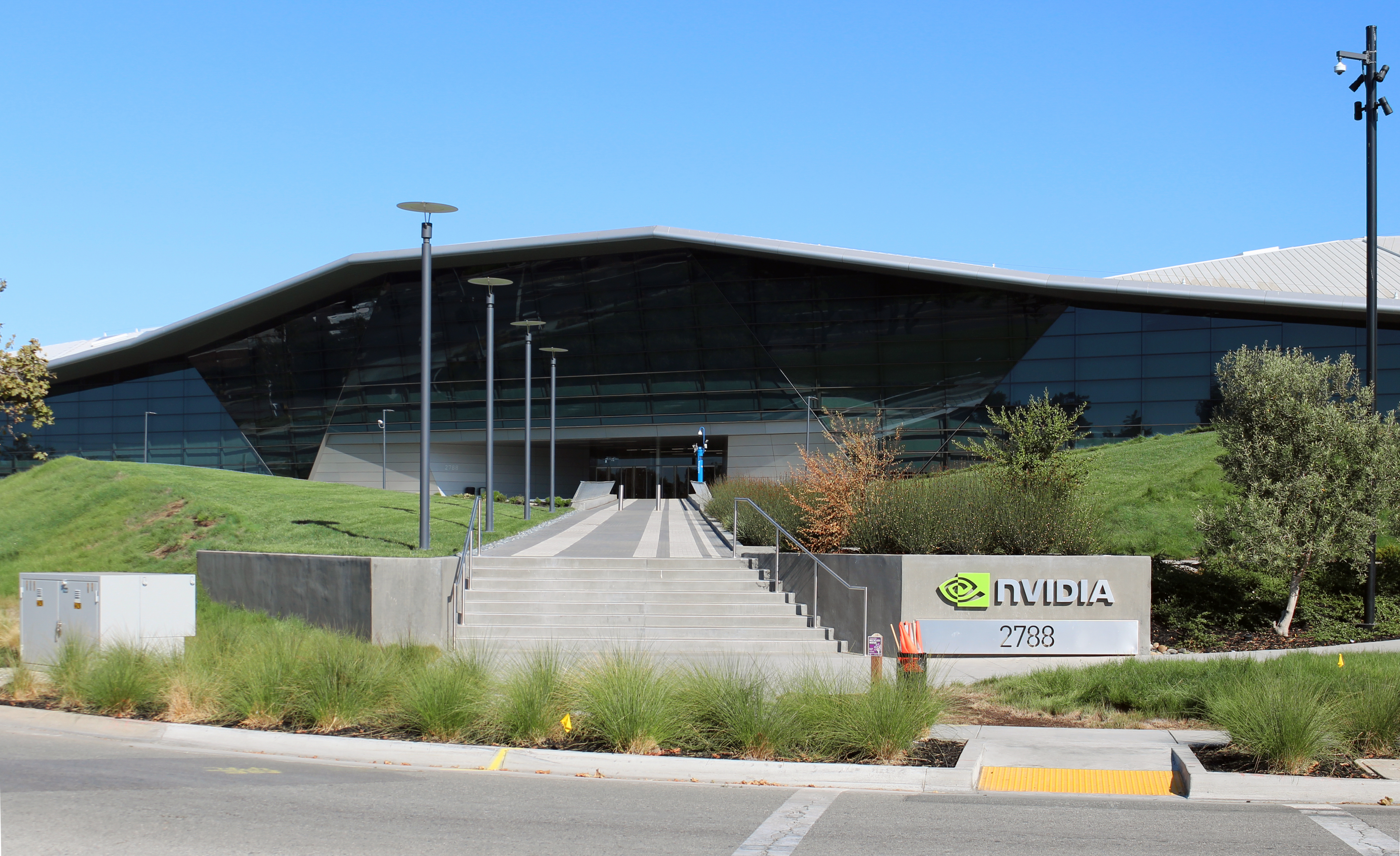
Photo: Coolcaesar / Wikimedia Commons, CC BY-SA 4.0. Original photograph taken 4 August 2018; perspective corrected by Jacek Halicki. · Illustrative image.
Nvidia has created a permanent board-level committee to oversee national security, US export controls and global trade risk. The announcement on 17 November 2026 is a governance change at the world’s best-known AI-chip supplier, but it is not itself a change to export law, a licence to sell restricted chips or evidence that compliance failures have occurred.
For Nvidia (NASDAQ: NVDA) shareholders, the immediate question is whether tighter oversight can reduce uncertainty around international sales without slowing the operations that underpin the company’s valuation. The answer will depend on enforcement, disclosure and commercial results — not on the committee’s name.
The new body is officially called the National Security and Export Control Oversight Committee. Nvidia announced it in a company statement on 17 November.
What has Nvidia actually announced?
Nvidia’s board has made national-security and trade compliance a standing, specifically assigned area of director oversight. The announcement identifies five concrete measures:
- A standing board committee, rather than an ad hoc response to a single issue.
- Suzanne Nora Johnson as chair, joined by directors Stephen C. Neal and John O. Dabiri.
- Meetings at least quarterly, including sessions with management and executive sessions.
- Independent external expertise in national security, law and trade compliance to support the committee.
- Direct reporting by the company’s existing National Security Team and Global Trade Compliance Team to the committee. For day-to-day operations those teams will also report to interim chief executive Colette Kress.
That last point is important. The board is not replacing the people responsible for following the rules at operational level. It is creating a direct route from those teams to directors who can challenge management, request information and oversee improvements.
Nvidia board chair Harvey Jones described the objective as protecting national security while supporting continued technological innovation. That is the company’s stated ambition. The announcement does not provide an implementation budget, a measurable risk-reduction target or evidence of a new licence approval.
Why export controls are a financial issue for Nvidia
Advanced AI chips are not merely another category of consumer electronics. Government rules can determine which processors can be shipped, to which customers, in which countries and under what conditions.
That creates several financial transmission channels:
| Exposure | Why it matters to investors |
|---|---|
| Direct export restrictions | Can limit sales of affected products or customers, independent of underlying demand. |
| Licensing and compliance | Can increase legal, screening, audit and operational costs, or delay orders. |
| Customer and supply-chain diligence | May affect the speed or terms of international contracts. |
| Changing rules | Creates uncertainty around the addressable market and future product design. |
| Board credibility | Can influence how investors price regulatory, leadership and reputational risk. |
A strong order book does not make a legally prohibited sale possible. Equally, tighter oversight does not automatically mean lower revenue: better systems may reduce the chance of inadvertent breaches, even as compliance becomes more expensive.
For background on the underlying business, see Compound’s Nvidia stock guide on AI chips, margins and valuation and the NVDA stock profile.
The financial calculation: how much could a restricted market matter?
The committee announcement does not disclose an amount of revenue protected by the new framework. The useful approach is therefore to stress-test exposure, not present invented estimates.
Consider a purely illustrative semiconductor business with $10 billion in annual sales, a 60% gross margin and 10% of sales exposed to a regulatory restriction:
| Hypothetical scenario | Illustration |
|---|---|
| Annual revenue | $10.0bn |
| Sales exposed to the restriction | $1.0bn |
| Gross profit represented by those sales, at 60% margin | $600m |
| Gross profit if half of those sales could not be replaced | $300m at risk |
These are not Nvidia’s revenue, exposure or margin forecasts. They show why investors need to separate the size of an affected market from the impact on gross profit, and then consider whether sales can be redirected or products redesigned. The actual earnings effect would also depend on product mix, operating costs, customer behaviour and mitigation.
The calculation also works in reverse: a costly compliance programme can still be economically rational if it materially reduces the chance of losing a large, profitable market or facing enforcement penalties. Nvidia has not quantified that potential benefit.
Why is the new committee being formed now?
The announcement comes five days after Nvidia’s 12 November CEO transition, when co-founder Jensen Huang resigned and CFO Colette Kress assumed the interim chief-executive role. Compound covered the confirmed transition in Jensen Huang resigns as Nvidia CEO: the NVDA investment implications.
News organisations have also reported intensified scrutiny of Nvidia’s leadership and its exposure to China-related security concerns. Reuters’ 17 November account places the committee in that context.
There is an important factual distinction: Nvidia has confirmed the committee and the earlier leadership change; it has not said in the committee announcement that an allegation has been proven or that investigators have reached a final conclusion. Investors should not treat an oversight response as proof of the concerns it is intended to address.
The committee may make the board more capable of evaluating trade risk during a period of leadership change. Whether that improves outcomes will become clearer only as the company reports its progress.
Does this make Nvidia stock safer?
It may improve governance, but it does not remove the underlying exposure.
The committee can oversee policies, reporting lines and compliance resources. It cannot independently set US export rules, guarantee government approvals or eliminate geopolitical tensions. Investors still face the ordinary risks of a semiconductor business: shifting demand, customer concentration, competitor products, supply constraints and valuation.
The more useful distinction is between risk management and risk removal. More independent scrutiny is potentially a positive control. The financial return on that control is not yet measurable.
Shareholders should watch for three types of evidence in Nvidia’s future earnings releases and regulatory filings:
- Governance evidence: disclosed committee work, clearer escalation procedures and any concrete recommendations arising from external expert reviews.
- Commercial evidence: changes in geographic revenue mix, product availability, delayed shipments and management’s explanations of export-control effects.
- Financial evidence: compliance costs or charges, revisions to guidance, gross-margin movements and any material legal or regulatory disclosures.
Check the actual figures rather than inferring an earnings impact from a board announcement. The Nvidia margin analysis explains why even a small change in a highly profitable product mix can matter.
Frequently asked questions
Who chairs Nvidia’s national security committee?
Suzanne Nora Johnson is the appointed chair. Stephen C. Neal and John O. Dabiri are the other named members, according to Nvidia’s 17 November statement.
Is it a temporary committee?
No. Nvidia describes it as a standing board committee. It will meet at least quarterly and consult independent outside experts.
Does it mean Nvidia can now export restricted AI chips to China?
No. Forming an oversight committee is not an export licence and does not alter US restrictions. Sales remain subject to the rules and approvals in force.
What does the announcement mean for NVDA shares today?
It adds a potentially useful layer of governance, but the release alone does not establish a specific effect on earnings, share price or customer demand. Those require subsequent company disclosures and market evidence.
The Compound view
The headline is about national security; the investment issue is the interaction between compliance, addressable market and profit. A committee with direct reporting and independent expertise is more substantive than a vague promise to review processes. But investors should withhold judgement on its effectiveness until there are observable changes in governance and financial risk.
Published 17 November 2026. This article distinguishes Nvidia’s confirmed announcement from reported context and illustrative financial scenarios. It is general information, not a recommendation to buy or sell NVDA.