Irish House Prices Rose 4.7%: What the New €400,000 Median Means
Irish residential property prices rose 4.7% in the year to September, the slowest annual increase since December 2023. Here is what the index, €400,000 median and transaction mix actually tell buyers.
 News / Wealth
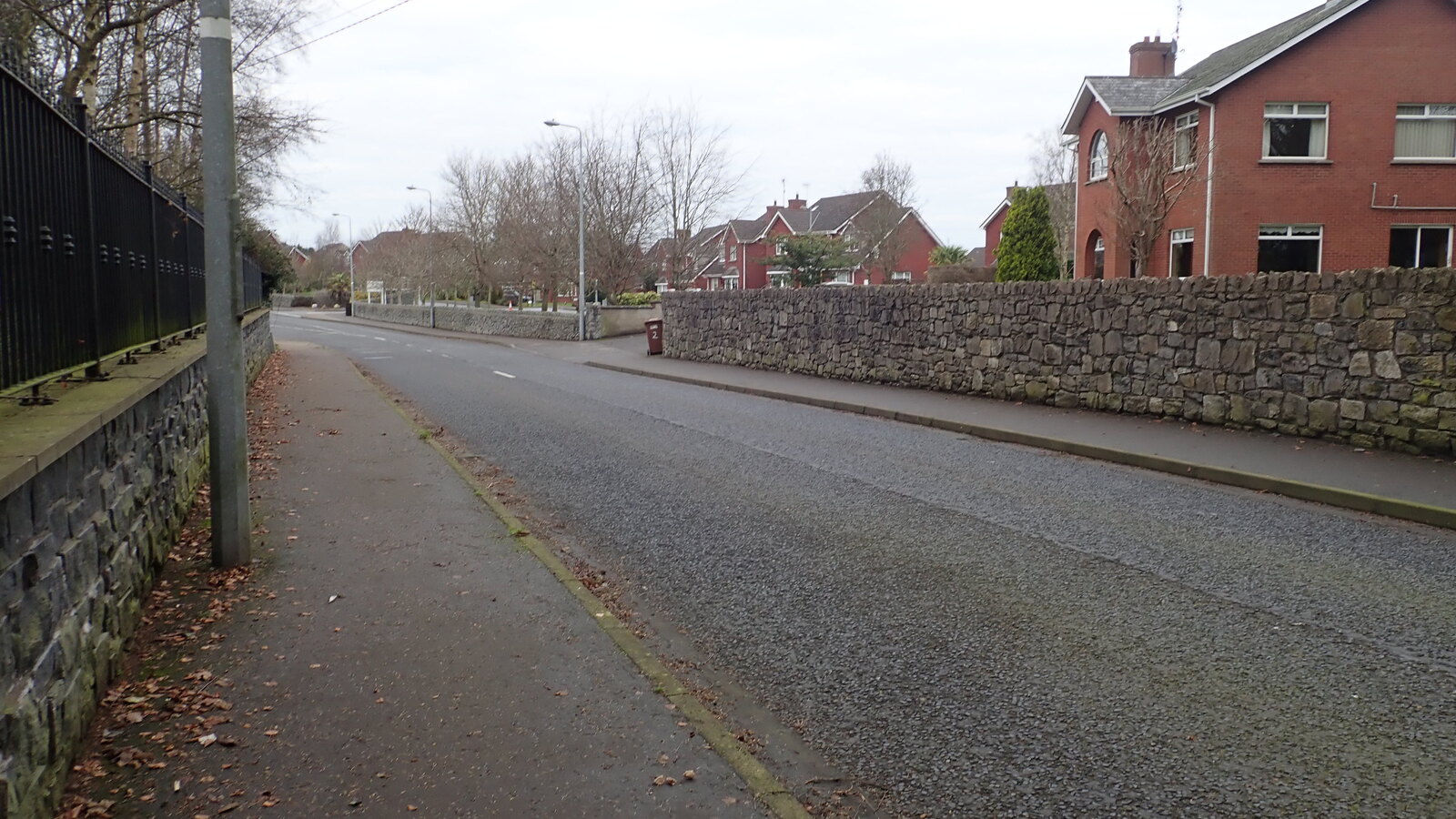
Photo: Eric Jones / Geograph Britain and Ireland / Wikimedia Commons, CC BY-SA 2.0. Photograph taken 10 January 2019; cropped for presentation. · Illustrative image.
Irish residential property prices rose by 4.7% in the year to September 2026, the slowest annual increase recorded since December 2023.
The new CSO Residential Property Price Index does not show prices falling. It shows that prices were still rising, but at a slower annual rate than the 5.1% recorded in August.
For buyers, the most useful evidence sits behind that headline: a €400,000 national median transaction price, slower growth in Dublin than outside it, and a strong increase in newly built homes appearing in September’s filings.
The September housing numbers
| Measure | Latest CSO result | What it means |
|---|---|---|
| National annual price growth | 4.7% | Change in the quality-adjusted index since September 2025 |
| Dublin annual growth | 3.9% | Below the national rate |
| Growth outside Dublin | 5.4% | 1.5 percentage points above Dublin |
| Median dwelling price | €400,000 | Mid-point of household purchases in the 12 months to September |
| September household purchases filed | 4,714 | Revenue filings, not homes advertised for sale |
| First-time-buyer purchases filed | 1,920 | Transactions, not individual buyers or mortgage approvals |
The national annual rate fell by 0.4 percentage points, from 5.1% in August to 4.7% in September. That is a moderation in the rate of increase, not a 0.4% monthly fall in prices.
The index and the €400,000 median answer different questions
The RPPI is designed to track price change while adjusting for the mix and characteristics of properties sold. It is the appropriate measure for asking whether residential prices rose or fell over time.
The €400,000 figure is the median price paid across household transactions in the 12 months to September 2026. It is easier to visualise, but it can move when the mix of homes or locations sold changes.
That distinction matters. A larger share of expensive Dublin homes could lift a national median even if the price of an otherwise identical home did not change. Equally, a median is not a quote for a particular three-bedroom house.
What would a €400,000 purchase require?
For a first-time buyer using the standard Central Bank mortgage limits, a €400,000 purchase provides a useful mechanical illustration:
- a 10% deposit is €40,000;
- the remaining mortgage is €360,000; and
- at the standard four-times-income limit, that mortgage corresponds to €90,000 gross household income.
This does not mean every €90,000 household can borrow €360,000. A lender still assesses repayments, debts, dependants, age and other expenses, and may approve less. A limited share of lending can also exceed the standard income limit.
The illustration excludes stamp duty, legal fees, valuation, survey, insurance, furnishing and moving costs. Buyers can combine Compound’s mortgage affordability calculator, house deposit calculator and house-buying costs calculator to test their own numbers.
Dublin and Longford show why a national median is not a budget
The rolling 12-month median was €500,000 in Dublin, compared with €400,000 nationally. Dún Laoghaire–Rathdown had the highest local-authority median at €680,000, while Longford had the lowest at €200,000.
The Dún Laoghaire–Rathdown figure was therefore 3.4 times the Longford median:
€680,000 ÷ €200,000 = 3.4
This is not a like-for-like comparison between identical homes. Location, property type, size, condition and the mix of transactions all differ.
The Eircode spread was wider again. A41 Ballyboughal had the highest median at €865,000, while F45 Castlerea had the lowest at €169,000. Anyone considering a move for affordability should add commuting, childcare, energy and time costs rather than comparing purchase prices alone.
New-home filings grew while existing-home filings were flat
Of the 4,714 household purchases filed in September:
- 3,568 were existing dwellings, down 0.2% from a year earlier; and
- 1,146 were new dwellings, up 13.7%.
New homes therefore represented about 24.3% of September’s filed household purchases:
1,146 ÷ 4,714 × 100 = 24.3%
That is encouraging evidence of more new-home transactions reaching the data, but it is one month’s filing mix. It does not prove that supply is sufficient, that every filing reflects a sale agreed in September, or that the same growth will continue.
The total value filed was €2.18 billion, up 8.8% year on year, while transaction volume rose 2.9%. The faster rise in value is consistent with higher prices and a changing sales mix; it should not be read as a gain accruing evenly to every homeowner.
First-time buyers accounted for about two in five filings
The CSO reported 1,920 first-time-buyer purchases in September. Relative to 4,714 household purchases, that is about 40.7%.
The comparison is useful as a share of the same month’s recorded household purchases, but it should not be combined casually with the separate CSO first-time-buyer study published this week. That study covered buyer cohorts from 2022 to 2024, not September 2026.
Our analysis of the separate release explains the income, age and Help to Buy profile of Irish first-time buyers.
What buyers should take from the release
- Do not mistake slower growth for cheaper homes. Prices were still 4.7% higher than a year earlier.
- Use the index for trends and local transactions for budgeting. The €400,000 national median may be far from the market you are entering.
- Calculate the complete cash requirement. Deposit and buying costs are separate constraints.
- Stress-test the repayment. A regulatory borrowing ceiling is not a household comfort test.
- Treat the latest months as provisional. The CSO says recent transaction data can be revised as filings arrive.
The September release points to a market that is still becoming more expensive, just less quickly than earlier in 2026. For households, that modest cooling in the annual growth rate does not remove the core affordability problem: the purchase price still has to fit both the deposit and income available to the buyer.