Ireland's Typical First-Time Buyer Now Has €82,600 Income and Is 36
New CSO data puts the median first-time-buyer income at €82,600 and age at 36. We calculate what that income supports under the standard mortgage rules and examine the Help to Buy divide.
 News / Wealth
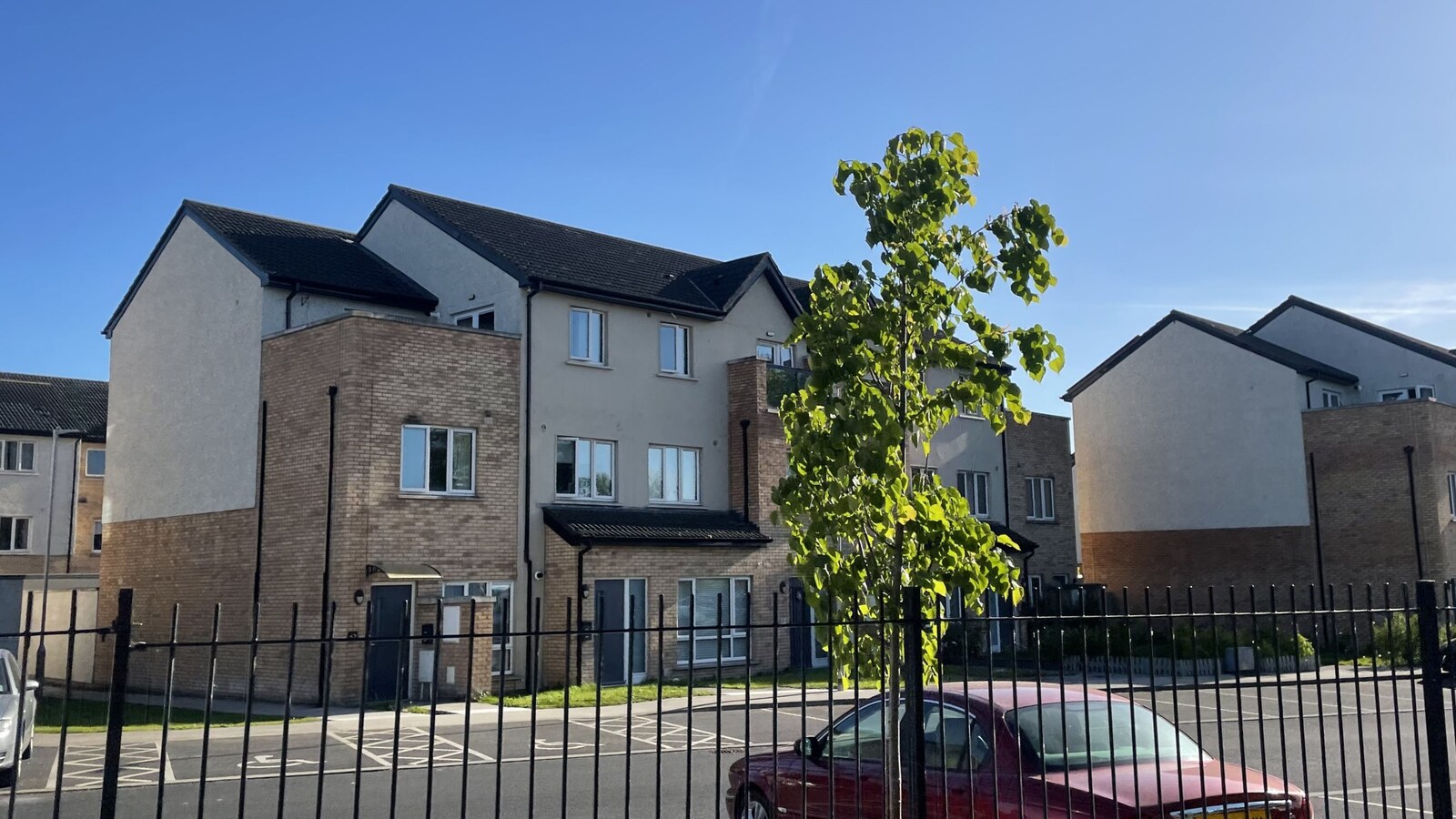
Photo: Eirian Evans / Geograph Britain and Ireland / Wikimedia Commons, CC BY-SA 2.0. Cropped for presentation. · Illustrative image.
The household behind a typical Irish first-time-buyer transaction had a gross income of €82,600 in 2024, while the median buyer age was 36, according to a new Central Statistics Office study published on 17 November 2026.
The headline income is up from €73,600 in 2022. That is a nominal increase of €9,000, or 12.2%, across two different annual groups of buyers.
It is not evidence that an individual buyer received a 12.2% pay rise. It tells us that the income attached to the middle recorded first-time-buyer transaction was higher in 2024 than in 2022.
The more useful household question is what €82,600 can support under Ireland’s standard mortgage rules — and how that compares with what successful buyers actually needed.
The new first-time-buyer numbers at a glance
The CSO’s new Frontier Series release links housing, Stamp Duty, income, mortgage and Help to Buy administrative data.
| Measure | CSO result for 2024 | What it describes |
|---|---|---|
| First-time-buyer property transactions | 30,480 | Properties bought, not the number of individual people |
| Median income per transaction | €82,600 | Single income for a sole buyer or combined income for joint buyers |
| Median age | 36 | The middle recorded buyer age |
| Houses versus apartments | 84% / 16% | Mix of properties bought |
| Help to Buy transactions | 6,020 | CSO reports these as 18% of first-time-buyer purchases |
| Median income of Help to Buy recipients | €97,200 | €14,600 above the all-buyer median |
Transaction volume barely changed: 30,480 properties were bought by first-time buyers in 2024, compared with 30,750 in 2023. That is a reduction of 270 transactions, or 0.9%.
The income profile moved much more. Median income rose from €78,200 in 2023 to €82,600 in 2024, a nominal increase of €4,400, or 5.6%.
What mortgage does an €82,600 income support?
Under the Central Bank’s standard mortgage measures, first-time buyers can generally borrow up to four times gross annual income. Lenders must still assess affordability and can approve less; a limited share of lending can exceed the standard loan-to-income limit.
Using the CSO median income as an illustration:
€82,600 × 4 = €330,400 standard loan-to-income ceiling
If that mortgage represented 90% of the purchase price, the corresponding price would be about:
€330,400 ÷ 0.90 = €367,111
The implied 10% deposit would be about €36,711, before stamp duty, legal fees, valuation, survey, insurance and moving costs.
This is not the price of the median first-time-buyer home and it is not a promise that a lender will advance €330,400. It is a transparent application of the standard four-times rule to the CSO’s median income.
Buyers can run their own figures through Compound’s mortgage borrowing calculator, mortgage affordability calculator and house deposit calculator.
Joint and sole buyers are operating in different markets
The national €82,600 figure combines very different buyer types.
The CSO purchasers analysis reports a median income of:
- €95,800 for joint first-time buyers; and
- €57,800 for sole first-time buyers.
Applying the standard four-times ratio gives an illustrative mortgage ceiling of €383,200 for the joint-buyer median, compared with €231,200 for the sole-buyer median.
That is a €152,000 gap in potential borrowing capacity before either household encounters a lender’s own affordability test.
The deposit patterns also differ. Among the subset of transactions where the CSO could identify and link a mortgage, the median gap between purchase price and mortgage was 12% for joint buyers and 21% for sole buyers. The CSO says this “purchase gap” may approximate the deposit, but it can include other funding and should not be treated as a perfect deposit measure.
Help to Buy is concentrated among higher-income buyers
The CSO recorded 6,020 first-time-buyer purchases involving Help to Buy in 2024 and reports that as 18% of first-time-buyer purchases.
The median income of recipients was €97,200, which was €14,600, or 17.7%, above the €82,600 median for all first-time buyers. The median property price for Help to Buy recipients was €390,000.
That difference does not prove the grant caused buyers to have higher incomes. Help to Buy is restricted to qualifying new homes and self-builds, so recipients are a selected group operating in a part of the market where prices, deposits and supply differ.
The local pattern is striking:
- Meath: 38% of first-time-buyer purchases involved Help to Buy;
- Louth: 36%;
- Laois: 34%; and
- Dublin City: less than 1%.
One likely explanation is property mix: Help to Buy is aimed at qualifying newly built homes, while Dublin City first-time buyers are more exposed to apartments and existing properties. The CSO data show the pattern but do not, by themselves, establish a single cause.
Our first-time-buyer supports guide explains how Help to Buy differs from the First Home Scheme. The Help to Buy calculator can illustrate the tax-refund cap, but Revenue decides actual eligibility and the available refund.
The postcode gap is larger than the national headline suggests
The most expensive local authority for first-time buyers was Dún Laoghaire–Rathdown, where the median property price was €580,000. Donegal and Longford had the lowest median prices at €185,000.
The Dún Laoghaire–Rathdown median was therefore about 3.14 times the Donegal or Longford median.
Income varied too: median first-time-buyer income was €120,100 in Dún Laoghaire–Rathdown, compared with €58,700 in Leitrim. Those figures reflect different buyers and different homes. They should not be read as a like-for-like price premium for an identical property.
The geographic data can still help a buyer ask a more productive question: does changing location reduce the purchase price enough to compensate for commuting, childcare, energy and transport costs?
What prospective buyers should do with the data
- Use your own qualifying gross income. Do not treat €82,600 as a target or lender threshold.
- Calculate both constraints. Compare the income-based mortgage limit with the price supported by your actual deposit.
- Add buying costs separately. A 10% deposit is not the complete cash requirement. Use the house-buying costs calculator.
- Test Help to Buy against the property. The buyer, builder and property must meet Revenue’s conditions; the headline grant is not available for every transaction.
- Keep a rate buffer. Passing the regulatory loan-to-income rule does not establish that repayments will remain comfortable.
The Buying a Home in Ireland guide sets out the full process from budget and approval in principle to bidding, survey, drawdown and closing.
Important limitation: this is experimental CSO output
The CSO labels the publication a Frontier Series Output. That means it may use methods still under development or administrative sources that are incomplete.
The mortgage-gap analysis covers only transactions where a mortgage could be identified and accurately linked. The first-time-buyer classification also has methodological limits described in the background notes. These statistics are valuable evidence about recorded 2022–2024 transactions, not a live quote for November 2026 and not a forecast.
The central conclusion is narrower: successful first-time buyers increasingly appear to need substantial household income, and joint purchasing or State supports can materially change the financing available. Your own ceiling still depends on income, deposit, debts, lender underwriting and the home you are trying to buy.