Gift Voucher Problems: The Rights Irish Shoppers Can Actually Enforce
The CCPC has warned traders after consumer reports identified vouchers that may breach Irish law. Here is what the five-year rule, partial-spend protection and multiple-voucher rule mean in practice.
 News / Wealth
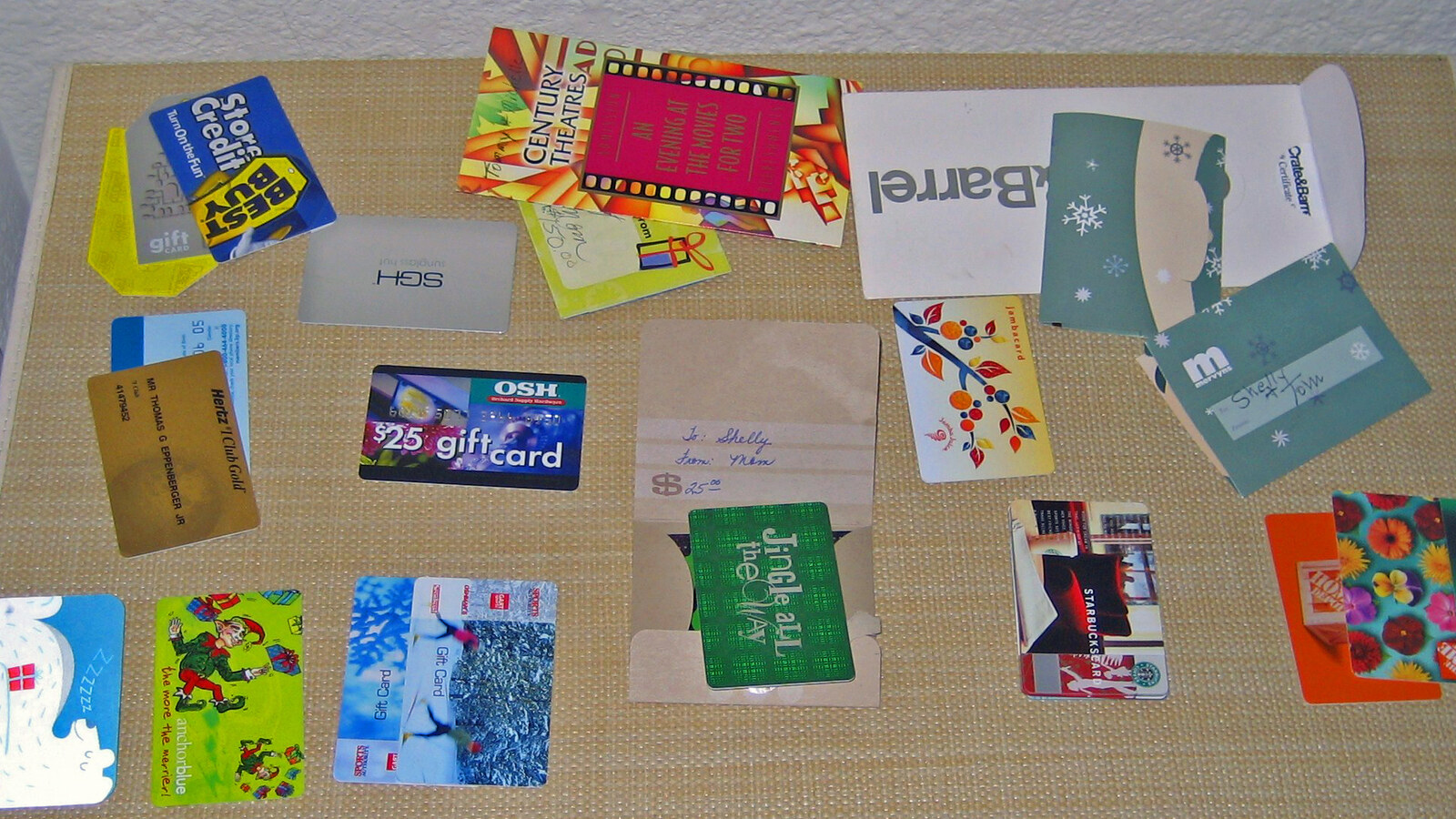
Photo: Tom Eppenberger Jr.; colour-corrected by Daniel Case / Wikimedia Commons, CC BY 2.0. Photograph taken 13 January 2007; cropped for presentation. Brand names shown are illustrative and are not connected with the CCPC action. · Illustrative image.
The Competition and Consumer Protection Commission has written to traders after reports from consumers identified gift vouchers that may not comply with Irish law. The practical message is broader than the expiry date: most covered vouchers must last at least five years, customers can use more than one at a time, and a balance above €1 must be returned in an approved form.
The CCPC announcement, published on 20 November 2026, says the warning went to businesses including hotels, restaurants, takeaways, dentists, sports and clothing retailers, salons and spas. The regulator did not publish the number or names of the traders contacted and said further enforcement action may follow.
This is therefore an enforcement warning, not a finding that every business in those sectors has broken the law.
The core rights in one table
| Situation | General rule for a covered voucher |
|---|---|
| The voucher has an expiry date | It must be valid for at least five years from purchase |
| No expiry date is shown | The trader cannot invent a shorter deadline later |
| You want to use several vouchers together | The trader cannot cap the number used in one transaction |
| You spend only part of the value | You cannot be forced to spend the full amount at once |
| More than €1 remains after the purchase | The balance can be returned in cash, by electronic transfer or on another voucher |
| Your name is slightly different from your ID | A named voucher must be amended and honoured without a fee |
Where an expiry applies, the trader must also give the customer written confirmation on a durable medium, such as paper or email.
A €100 voucher example
Suppose you use a €100 voucher to buy an item costing €63. The remaining value is:
€100 − €63 = €37
Because the balance is more than €1, the trader can return it in cash, by card or electronic transfer, or through another voucher carrying the original expiry date. The shop cannot insist that the entire €100 be spent in that transaction.
If a purchase leaves €1 or less, the statutory balance-refund requirement described by the CCPC does not apply in the same way. That does not allow the trader to shorten the voucher’s valid period or impose another unlawful term.
The five-year rule does not cover every card
The Consumer Protection (Gift Vouchers) Act 2019 applies to vouchers sold from 2 December 2019. The CCPC lists exclusions including:
- vouchers issued as a refund for returned goods;
- loyalty or promotional-scheme vouchers;
- products legally treated as electronic money;
- some discounted vouchers for specified goods or services during a stated period of no more than three months.
A prepaid bank card, loyalty reward, promotional coupon and ordinary shop gift voucher can therefore have different legal treatment. Check what was bought and why it was issued before relying on the five-year rule.
What the new warning changes
The underlying law is not new. The development is that the CCPC used consumer reports to identify possible faults, wrote directly to traders and asked businesses that sold vouchers valid for less than five years to propose remedies.
The regulator pointed to a previous case in July 2026 in which it secured refunds of almost €250,000 for JD Sports customers after vouchers had been issued with a one-year rather than five-year validity period. That earlier outcome does not guarantee the same remedy in every dispute, but it shows that an incorrectly printed expiry is not necessarily the end of the voucher’s value.
What to do if a voucher is refused
- Photograph or copy the voucher, receipt, purchase email and stated terms.
- Ask the trader in writing to explain the refusal or expiry.
- Identify whether it is a purchased gift voucher or one of the exclusions.
- If covered, point to the relevant rule: five-year validity, partial use, multiple vouchers or repayment of a balance above €1.
- Keep the reply and report a potential breach through CCPC.ie/ask.
Do not wait until the final day if the trader is in financial difficulty. Consumer law can correct an unlawful expiry term, but a voucher holder can still become an unsecured creditor if a business closes.
The same principle applies to other forms of borrowing and spending: the product label does not remove statutory protections. Compound’s guide to the new Irish consumer-credit and buy-now-pay-later rules explains the separate protections that began applying on 20 November.