Irish EV Buyers Put Running Costs First — and Home Charging Matters More
New CSO survey data show that lower running costs influenced 72.1% of EV owners when buying, while home charging mattered to more than twice the share recorded in 2021. Here is how to test the saving for your own driving.
 News / Wealth
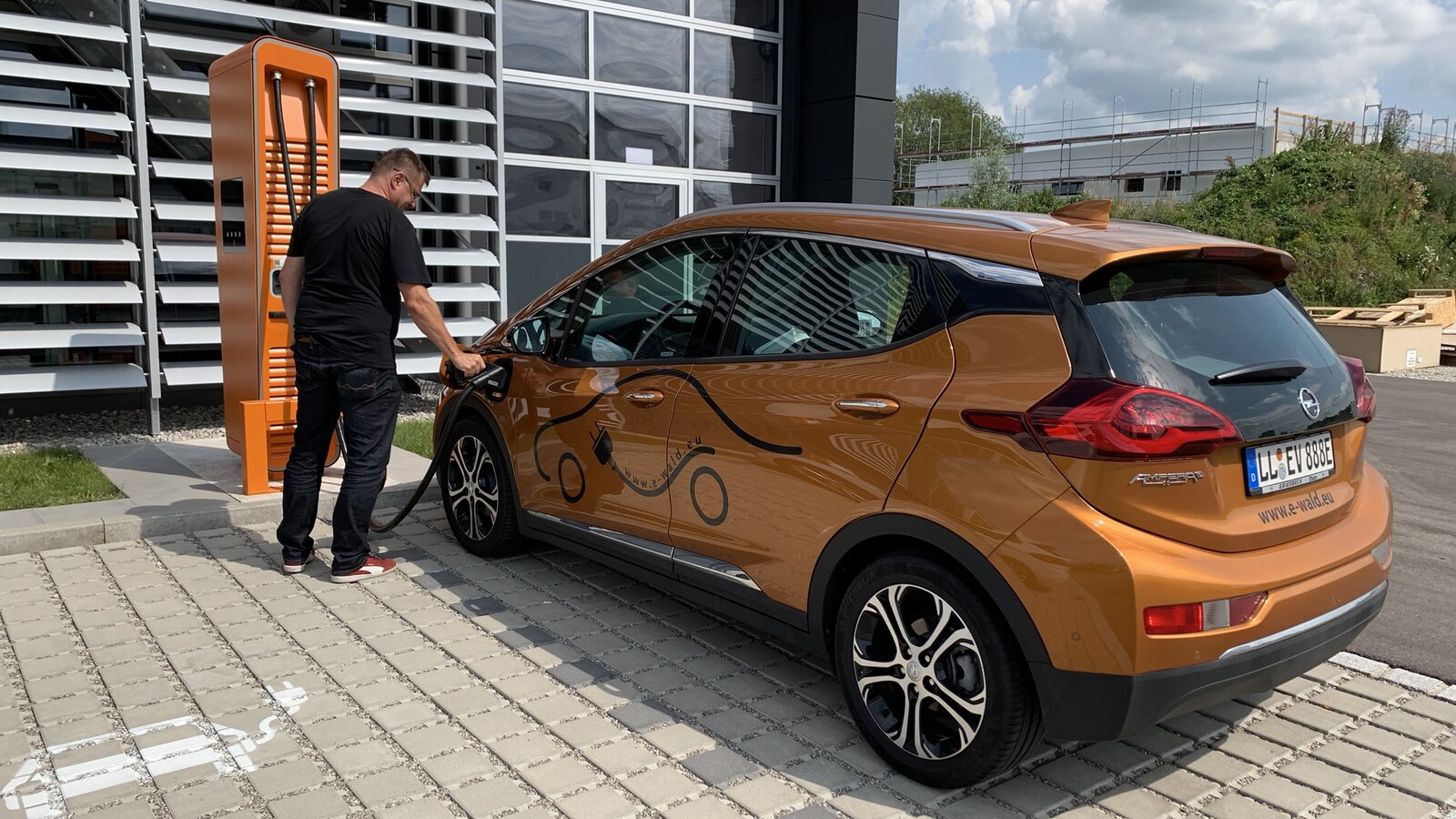
Photo: KEACINADO / Wikimedia Commons, CC BY-SA 4.0. Photograph taken 15 July 2019; cropped for presentation. · Illustrative image.
Lower running costs influenced 72.1% of electric-vehicle owners when they bought their EV, according to new CSO survey results. That was a more common answer than environmental benefit, while the importance attached to home charging more than doubled from 2021.
The Sustainable Mobility and Transport 2024 release, published on 20 November 2026, gives a useful clue about how Irish households actually assess an EV: the day-to-day cost can matter more than the headline grant.
It does not prove that an EV is cheaper for every driver. The result comes from a survey carried out in late 2024, and the economics still depend on purchase price, mileage, efficiency, charging access, electricity tariff, finance and resale value.
What EV owners said influenced their purchase
| Factor | Share of EV owners selecting it |
|---|---|
| Better affordability to run | 72.1% |
| Contribution to a better environment | 59.4% |
| Reduced motor tax | 34.4% |
| Access to home charging | 24.4% |
| Availability of purchase grants | 20.1% |
| Access to public charging | 6.3% |
Respondents could select more than one factor, so the percentages are not meant to add to 100%.
The striking movement was home charging. It influenced 24.4% of EV owners in 2024, compared with 10.4% in the 2021 survey. That is a rise of 14 percentage points, or about 2.35 times the earlier share.
This does not mean only one-quarter of EV owners charge at home. The question asked what influenced the original buying decision, not where every owner now charges.
A worked running-cost test
Consider a driver covering 15,000km a year. The following is an illustration using round assumptions, not a market price quote:
| Assumption | Electric car | Petrol car |
|---|---|---|
| Energy use | 17kWh per 100km | 6 litres per 100km |
| Illustrative energy price | €0.25 per kWh | €1.85 per litre |
| Annual energy required | 2,550kWh | 900 litres |
| Annual charging or fuel cost | €637.50 | €1,665.00 |
On those inputs, the EV’s energy cost is €1,027.50 lower per year:
€1,665.00 − €637.50 = €1,027.50
The result changes quickly. If the driver relies on public rapid charging at €0.60 per kWh, the EV energy cost becomes €1,530 and the modelled gap narrows to €135. If annual mileage is lower, there are fewer kilometres over which to recover a higher purchase price or charger installation cost.
Compound’s EV charging cost calculator lets you replace those assumptions with your own tariff, charging losses and mileage. The fuel cost calculator can test the petrol or diesel side separately.
Why access to home charging can change the decision
Home charging can provide three practical advantages:
- Tariff choice. A household may be able to schedule charging in a cheaper overnight window.
- Convenience. Regular charging can happen while the car is parked rather than during a separate stop.
- Cost visibility. The driver can calculate a repeatable cost per kWh instead of depending on a changing mix of public operators and rates.
But a driveway does not automatically produce a saving. A buyer should include the charger, installation work, possible electrical upgrades, charging losses and any increase in the household’s standing charge or tariff costs. Apartment residents and households without off-street parking face a different calculation.
EV ownership rose both inside and outside Dublin
The CSO reported EV ownership of 6.9% among people living in Dublin in 2024, up from 4.9% in 2021. Outside Dublin it was 6.0%, up from 2.5%.
Those figures are survey estimates about respondents, not a live count of the national vehicle fleet. They should not be substituted for administrative vehicle-registration data.
The wider transport results also explain why the car-cost decision matters. Among people driving to work, 68.3% said no alternative travel mode was available. For rail non-users, 43.1% cited no nearby service and 34.6% no service to the required destination.
For a household without a workable public-transport alternative, the realistic comparison may therefore be EV versus petrol or diesel rather than car versus no car.
A five-step test before buying
- Use your real annual kilometres. Check odometer history rather than relying on a national average.
- Separate home, work and public charging. Apply a realistic share and price to each.
- Compare the same size and use case. A small EV and a large petrol SUV are not like-for-like purchases.
- Include ownership costs. Add finance, depreciation, insurance, tax, servicing, tyres and charger installation.
- Stress-test the inconvenient case. Ask what the cost becomes if a cheap tariff ends or you need more public charging than expected.
For a complete comparison, use Compound’s EV versus petrol versus diesel guide. The new CSO evidence supports a simple conclusion: running costs are central to the EV decision, but the saving belongs to the household whose mileage and charging pattern make the numbers work.
About the survey
The National Travel Survey was carried out from September to December 2024 and received 6,546 completed responses from people aged 18 and over. The CSO weighted the results to represent the population. Comparisons with 2021 are between two survey samples, not the same people followed over time.