One in Four Irish Pupils Used Back-to-School Support: What Families Can Check
New CSO linked data show 25.7% of pupils benefited from the Back to School Clothing and Footwear Allowance in 2022. We explain the evidence and the current supports families can check.
 News / Wealth
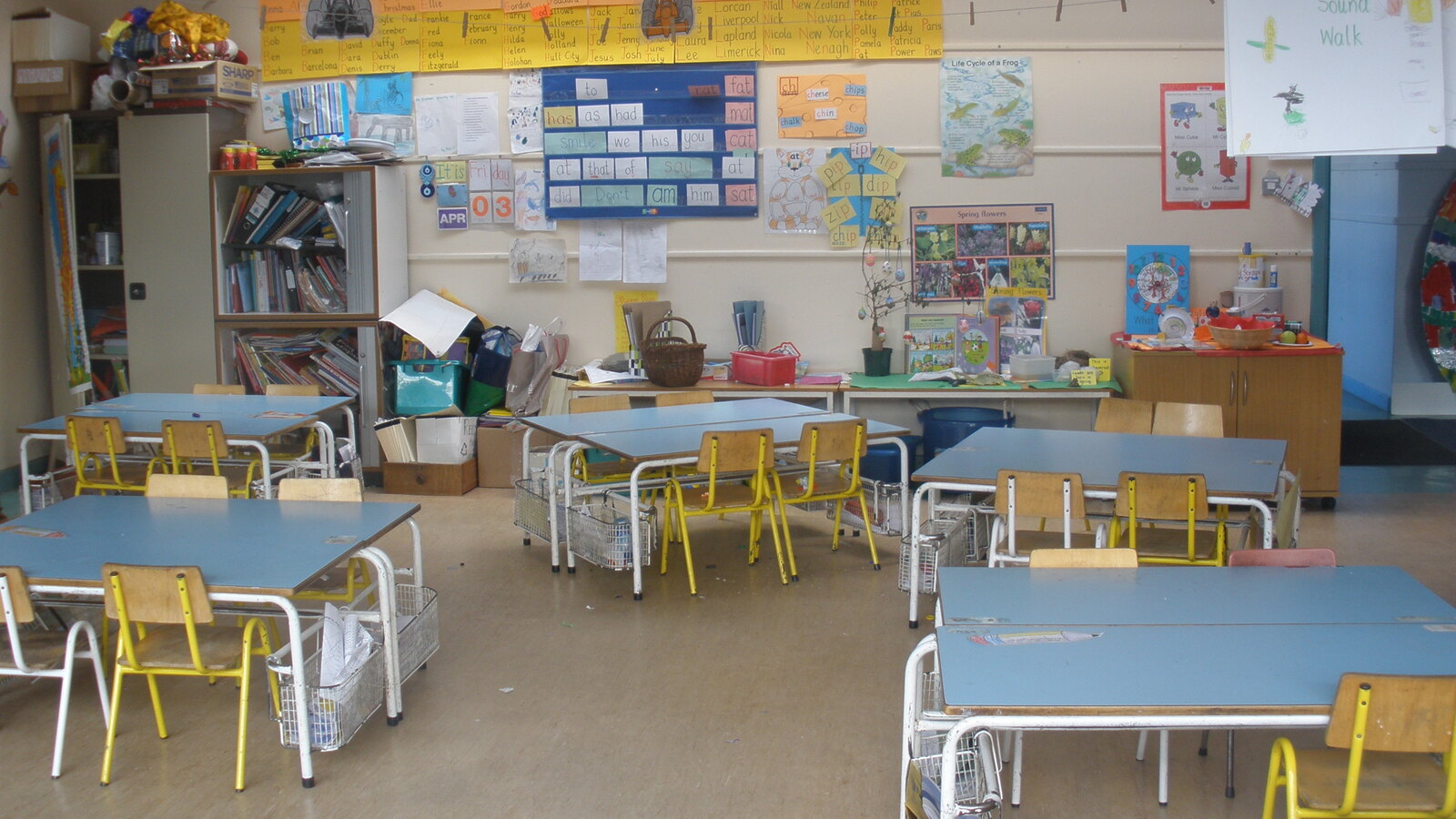
Photo: O'Dea / Wikimedia Commons, CC BY-SA 4.0. Photograph taken 10 April 2009; cropped for presentation. · Illustrative image.
More than one in four Irish school pupils benefited from the Back to School Clothing and Footwear Allowance in 2022, according to a new CSO analysis published on 19 November 2026.
The finding is striking, but it is not a current claim that 25.7% of pupils receive the allowance today. The new CSO Frontier Series release links records for children attending school in 2022–23 with social-protection payments received by their parents during 2022.
Its practical value is showing how deeply income, caring and disability supports intersect with school life—and prompting families to check whether they are missing a payment for which they may qualify now.
What the new pupil data show
| Support recorded in 2022 | Share of pupils or relevant group |
|---|---|
| Back to School Clothing and Footwear Allowance | 25.7% of pupils |
| One-Parent Family Payment | 12.6% of pupils aged under 7 had a recipient parent |
| Domiciliary Care Allowance | 10.2% had a recipient parent |
| Working Family Payment | 9.6% had a recipient parent |
| Carer’s Allowance or Carer’s Benefit | 8.5% had a recipient parent |
| Disability Allowance or Invalidity Pension | 5.4% had a recipient parent |
“Receipt” means at least one payment during 2022, regardless of how long the claim lasted or how many payments were made. The percentages therefore do not measure a single week’s caseload.
The CSO linked pupils to a “main parent” using Child Benefit records and included that parent’s partner where recorded. It did not survey children about their household circumstances.
Back-to-school support was much more common in one-parent families
The sharpest difference concerns the Back to School Clothing and Footwear Allowance, or BSCFA:
- 67.2% of pupils in one-parent families benefited; compared with
- 16.8% of pupils in two-parent families.
That is almost exactly four times as common:
67.2 ÷ 16.8 = 4
The statistic does not mean family structure alone caused eligibility. BSCFA is means-tested, so income, qualifying payments, household size and children’s ages matter.
What BSCFA paid in 2026
For the 2026 scheme, the Department of Social Protection paid:
- €160 for an eligible child aged 2 to 11; and
- €285 for an eligible child aged 12 to 22, where an 18- to 22-year-old was returning to full-time second-level education.
A qualifying household with one child in each age band could therefore receive:
€160 + €285 = €445 once off
Two eligible secondary-school children would produce a combined payment of €570.
These are 2026 rates, not a confirmed promise for 2027. The 2026 application window closed on 30 September. Families cannot make a late 2026 application through this article and should check the official service when the next scheme opens, normally during the summer.
The BSCFA income test is not simply gross salary
The 2026 operational guidelines set weekly household-income limits of:
| Dependent children | 2026 weekly income limit |
|---|---|
| 1 | €726.70 |
| 2 | €804.70 |
| 3 | €882.70 |
| 4 | €960.70 |
The limit rose by €78 for each additional dependent child.
Assessable income included social-protection payments, gross employment income after employee PRSI and a €20 travel allowance, plus other household income. Several payments were excluded, including Child Benefit, Working Family Payment, Domiciliary Care Allowance, Rent Supplement and qualifying education grants.
A family near the threshold should not reject itself based only on annual gross salary. The official assessment rules determine the answer, and the household also needs a qualifying payment or scheme and to meet age, residence and child-support conditions.
Working Family Payment reached almost one in ten pupils’ families
Parents of 9.6% of pupils received Working Family Payment, or WFP, at some point in 2022. The share was 19.5% among pupils in one-parent families.
WFP is for low-income employees with children. Under the current 2026 rules, the household generally needs at least 38 hours of employment per fortnight; spouses, civil partners or cohabitants can combine qualifying employee hours.
The payment is 60% of the difference between assessable average weekly family income and the limit for the household size.
For example, the 2026 limit for a family with two children was €866 a week. If its assessed weekly family income were €700:
(€866 − €700) × 60% = €99.60 per week
The Department rounds the actual payment and applies detailed income rules. Self-employment hours do not count towards the 38-hour condition, although self-employment income can be assessed. A worked illustration is not an eligibility decision.
Disability and caring supports are central to many school households
The linked data show that parents of 10.2% of pupils received Domiciliary Care Allowance, while 8.5% received Carer’s Allowance or Carer’s Benefit.
Domiciliary Care Allowance is based on the child’s care needs arising from a severe disability, not simply a diagnosis, and it is not means-tested. The 2026 monthly rate was €380 at full rate or €190 at half rate, depending on the care arrangement.
The CSO found the Domiciliary Care Allowance share ranged from 20.0% of pupils in areas classed as extremely disadvantaged to 6.5% in very affluent areas. That is an association in the linked records, not proof that area deprivation caused a child’s disability or care needs.
DEIS status and household disadvantage overlap, but not perfectly
DEIS schools were attended by 28.0% of primary pupils and 25.5% of post-primary pupils in the linked data.
Among primary pupils living in areas classed as disadvantaged through extremely disadvantaged, 68.2% attended DEIS schools. At post-primary level, the share was 55.9%.
This means DEIS status captures much, but not all, area disadvantage. A pupil can face household financial pressure while attending a non-DEIS school, and a DEIS pupil is not automatically eligible for every household payment.
What families can do now
- Check the correct year. The CSO statistics concern 2022; use current official rules for an application today.
- Review WFP if employee hours or family income changed. Two adults’ qualifying hours can be combined.
- Prepare for the next back-to-school window. Keep income and child details ready and check whether the Department will pay automatically or requires an application.
- Do not assume payments all count against one another. Some supports are explicitly excluded from another scheme’s means test.
- Budget for costs after support. Compound’s childcare cost calculator and return-to-work childcare calculator can help families compare childcare and employment costs, but they do not determine social-welfare eligibility.
The CSO labels the publication a Frontier Series output because it uses developing methods and administrative sources that may be incomplete. It should not be used to identify individual pupils or to estimate a current 2026 caseload.
Its main financial message is still clear: school costs sit inside a much wider system of income, caring, disability and employment supports. Eligibility rules are complex enough that families should check the live official criteria rather than assuming their salary, school type or family structure rules them out.