Could diesel prices in Ireland fall by 8c a litre? What the G7 oil release means for motorists
The G7 has agreed to release 100 million barrels of crude oil and refined products from emergency stocks over four months, with a substantial diesel release front-loaded into the first 20 days. European diesel prices fell sharply around the announcement. Here is what that could — and could not — mean for Irish pump prices.
 News / Wealth
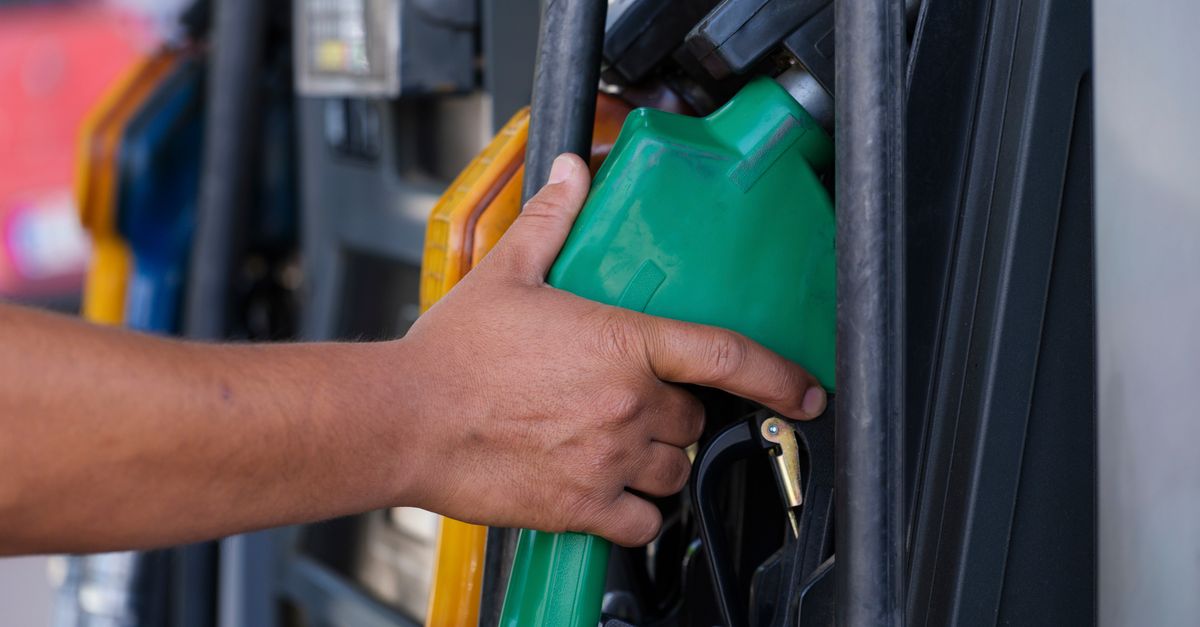
Photo: Engin Akyurt on Pexels · Illustrative image.
News analysis · 3 October 2026. Fuel prices can move quickly. The figures below are illustrations based on published market moves and should not be read as a forecast of a particular forecourt price.
The G7 has agreed to release 100 million barrels of crude oil and refined products from emergency reserves over the next four months, with a substantial amount of diesel due to be released in the first 20 days.
The move is designed to ease unusually tight global fuel markets — particularly diesel.
For Irish motorists, the obvious question is:
Will it actually make diesel cheaper at the pump?
Possibly.
European diesel prices fell sharply as the plan emerged, and The Irish Times estimated that the wholesale move seen on Friday could translate into a reduction of roughly 8 cent per litre if it were fully passed through to consumers.
But that is not the same as saying Irish diesel will definitely fall by 8c.
There are several steps between a futures-market move and the number you see on the forecourt sign.
What exactly has the G7 agreed?
The official G7 statement says members will coordinate a release of 100 million barrels through the International Energy Agency.
The release is due to:
- begin immediately;
- take place over four months;
- include a substantial, front-loaded diesel release in the first 20 days;
- and be reviewed again if further intervention is needed.
The G7 also pledged not to impose new energy-export restrictions between member countries.
That matters because the diesel market has been under pressure from a combination of constrained refinery output, disruptions linked to the Middle East and reduced availability of refined products from other major suppliers.
The IEA said on 2 October that refined-product flows remain severely constrained and that diesel markets in particular are under acute pressure.
Why did diesel fall so quickly?
Markets price expectations before physical barrels necessarily arrive.
Once traders believed a meaningful amount of emergency diesel was likely to be released, the expected balance between supply and demand improved.
The Irish Times reported that Europe’s benchmark diesel futures contract fell by almost 6%, briefly reaching about $1,364 per tonne.
That was the basis for its estimate that, if the move were fully reflected at retail level, Irish pump prices could fall by around 8c per litre.
The key phrase is:
if fully passed through.
Wholesale prices are only one part of the final pump price.
What would an 8c fall actually save?
For an individual fill, the saving is noticeable but not dramatic.
| Diesel bought | Saving at 8c/litre |
|---|---|
| 40 litres | €3.20 |
| 50 litres | €4.00 |
| 60 litres | €4.80 |
| 70 litres | €5.60 |
Over a year, mileage matters much more.
A diesel car travelling 15,000 km per year at 5.5 L/100 km uses about 825 litres of diesel.
An 8c reduction would save roughly:
€66 per year.
At 20,000 km per year and 6.0 L/100 km, annual diesel use is about 1,200 litres.
An 8c reduction would save roughly:
€96 per year.
You can run your own mileage and consumption through Compound’s Fuel Cost Calculator rather than relying on a generic example.
Why Ireland is exposed even if we buy little diesel directly from the US
Ireland does not need to import large quantities of diesel directly from the United States for US or European supply decisions to matter.
RTÉ reported that just 3.3% of Ireland’s diesel imports came directly from the US in 2025.
Most came from the Netherlands and the UK.
But diesel is traded in an international market.
If supply tightens in one major region, buyers compete for barrels elsewhere. That can push up the wholesale price paid by Irish importers even when the physical fuel arriving here came from a different country.
The reverse can also happen.
Adding emergency barrels to the wider market can reduce pressure on prices available to Irish buyers.
That is why the G7 move matters to Ireland even though the barrels released in France, Germany, the US or elsewhere will not necessarily arrive directly at an Irish terminal.
Why the pump price may not fall by the full 8c
There are at least five reasons.
1. Wholesale prices can move again
The 8c figure is based on a sharp market move at a particular point in time.
If diesel futures rebound next week, part of that theoretical saving can disappear before it reaches consumers.
2. Retailers do not buy every litre at today’s spot price
Fuel sold today may have been bought, hedged or contracted at an earlier price.
Changes in wholesale markets therefore tend to feed through with a lag rather than appearing instantly.
3. Refining margins matter
The price of crude oil is not the same as the price of diesel.
Diesel has to be refined, transported and stored. When refining capacity is tight, diesel can remain expensive even if crude itself falls.
That is one reason the G7 statement specifically focuses on increasing refinery utilisation as well as releasing reserves.
4. Exchange rates matter
Oil products are largely traded in US dollars.
A stronger euro against the dollar can make imported fuel cheaper for Irish buyers; a weaker euro can offset part of a fall in the dollar-denominated price.
5. Tax policy still matters
Ireland’s temporary fuel-tax reductions have lowered the price motorists would otherwise be paying.
The Government had been due to begin unwinding those reductions from November, but ministers have indicated that the cuts are likely to be extended through the winter. The final position is expected to be clarified in Budget 2027.
That means the eventual pump price will reflect both international markets and Irish tax policy.
Does releasing emergency reserves actually work?
Emergency stock releases do not create new oil.
They bring forward supply that governments have deliberately stored for disruption scenarios.
Their immediate purpose is therefore not to permanently lower the long-run price of fuel.
It is to bridge a temporary shortage and reassure markets that additional supply is available.
The IEA said that around 325 million barrels of a separate 400 million-barrel collective action announced in March had already been released by the beginning of October.
According to the agency, that release helped plug the supply gap and reassure markets.
The latest 100 million-barrel action is being targeted more heavily at the current bottleneck: refined products, particularly diesel.
Could prices fall by more than 8c?
They could.
But it would probably require more than the reserve release alone.
A larger fall could happen if several things move in the same direction:
- Middle East supply conditions improve;
- more refinery capacity becomes available;
- diesel inventories rebuild;
- crude prices fall further;
- the euro strengthens against the dollar;
- and the Irish Government keeps the existing fuel-tax reductions in place.
Equally, a deterioration in the geopolitical situation or another major refinery disruption could reverse the move.
The 8c figure should therefore be treated as an illustration of the current wholesale-market fall — not a floor, ceiling or guaranteed reduction.
What should motorists watch now?
Three things matter most over the next couple of weeks.
European diesel futures.
If the wholesale fall holds rather than bouncing back, the chances of cheaper pump prices improve.
Irish forecourt prices.
Retail prices should show whether the wholesale move is actually being passed through.
Budget 2027.
Ireland’s treatment of the temporary excise reductions could be as important to motorists as the international market move.
Diesel versus EV costs
A cheaper diesel price narrows the running-cost gap between combustion cars and EVs, but it does not eliminate it automatically.
The correct comparison depends on:
- the diesel car’s real-world L/100 km;
- the EV’s real-world kWh/100 km;
- annual distance;
- home versus public charging;
- and the electricity tariff available.
Compound’s EV Charging Cost Calculator lets you compare annual EV charging cost against a petrol or diesel vehicle using the same annual mileage.
That is more useful than assuming either technology is always cheaper.
The bottom line
The G7 intervention is meaningful.
A 100 million-barrel coordinated release, with diesel front-loaded into the first 20 days, directly targets the part of the oil market currently under the most pressure.
The first market reaction has been substantial enough that an 8c-per-litre Irish pump-price reduction is plausible if the wholesale fall is sustained and passed through.
But motorists should not assume 8c is now guaranteed.
Wholesale markets can reverse quickly, retailers buy fuel on different schedules, exchange rates matter and Irish tax policy remains in play.
The next test is straightforward:
do the lower European diesel prices survive long enough to reach Irish forecourts?