More than 500,000 Irish energy accounts are in arrears — what happens if you can’t pay?
More than 517,000 domestic electricity and gas accounts are now in arrears in Ireland. Here is what happens if you cannot pay, the protections suppliers must follow, and where to get help.
 News / Wealth
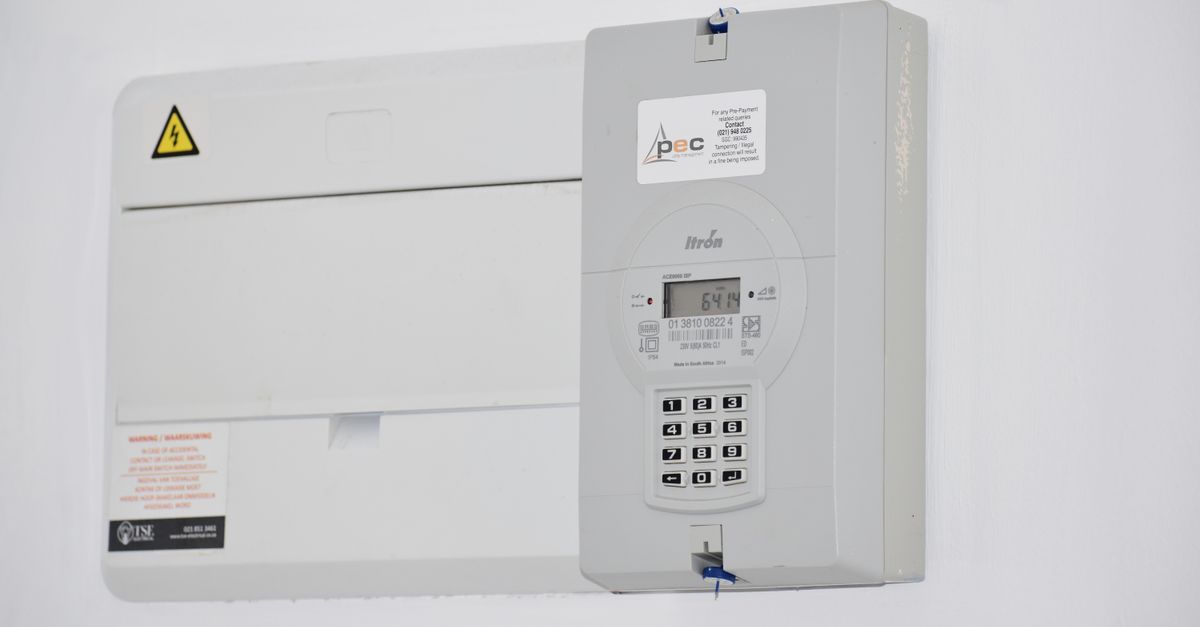
Photo: Akashni Weimers on Pexels · Illustrative image.
News guide · 28 September 2026. Energy-supplier rules and supports can change, so households in difficulty should contact their supplier and check current CRU guidance.
More than 517,000 domestic electricity and gas accounts are now in arrears in Ireland.
The latest figures reported from the Commission for Regulation of Utilities show:
| Domestic accounts in arrears | Number |
|---|---|
| Electricity | 328,273 |
| Gas | 188,941 |
| Combined accounts | 517,214 |
That combined figure does not mean 517,214 separate households are behind on their bills.
A household that owes money on both electricity and gas can appear in both sets of figures.
But the scale is still striking.
Hundreds of thousands of domestic energy accounts are now carrying unpaid balances as Ireland heads towards another winter of high household energy costs.
If you are one of them, the most important thing to know is this:
falling behind on a bill does not normally mean your electricity or gas is simply switched off without warning.
There is a process suppliers must follow, and there are protections designed to keep customers engaged and connected where possible.
What should you do first if you cannot pay an energy bill?
Contact your supplier.
That sounds obvious, but it is the single most important step.
The Commission for Regulation of Utilities says customers who are having difficulty paying an electricity or gas bill should contact their supplier, which should have staff trained to deal with payment difficulties.
Ignoring the bill generally reduces your options.
Engaging early gives you a better chance of arranging a manageable repayment plan before the arrears grow.
The CRU requires suppliers to provide customers in payment difficulty with options intended to avoid disconnection.
Depending on the situation, that can include:
- agreeing a repayment plan;
- dealing with a money adviser such as MABS on your behalf;
- offering a prepayment meter or budget controller where appropriate;
- and assessing what you can realistically afford to repay.
Can your supplier put you on a payment plan?
Yes.
For many households, this is the most practical solution.
A payment plan generally allows you to repay the arrears over time while continuing to pay for ongoing energy use.
The key protection is that the arrangement should take your ability to pay into account.
The CRU says suppliers must make customers entering or already on a payment plan aware that repayment can be extended to 18 months, with suppliers free to offer longer periods.
You can choose to clear it sooner if you can afford to.
That means a household should not automatically assume it has to find hundreds of euro immediately just because an overdue balance has accumulated.
Example
Suppose you owe €900.
Ignoring new energy use for a moment:
| Repayment period | Arrears repayment |
|---|---|
| 6 months | €150/month |
| 12 months | €75/month |
| 18 months | €50/month |
Your normal electricity or gas usage still has to be paid on top of that, but extending the arrears repayment can make the monthly burden more manageable.
The actual plan should be agreed with your supplier based on your circumstances.
Can your electricity or gas be disconnected for non-payment?
It can happen, but suppliers cannot simply disconnect a domestic customer the moment a bill becomes overdue.
The CRU sets out a process.
For disconnection because of non-payment, suppliers must attempt to contact the customer at least four times before progressing to a disconnection request.
A formal disconnection notice must then be issued.
The CRU says this notice must be sent by letter at least 10 working days before the disconnection is due to happen.
Domestic customers therefore have multiple opportunities to engage before reaching that point.
This is one reason opening letters, emails and messages from your supplier matters when you are in arrears.
If you engage with your supplier, can they still disconnect you?
Ireland’s supplier-led Energy Engage Code provides an additional protection.
According to the CRU, participating energy suppliers will not disconnect a domestic electricity or gas customer for non-payment while that customer is engaging with them.
That does not mean the debt disappears.
You still need to work towards an arrangement.
But it reinforces why responding to the supplier is generally far better than ignoring the problem.
What if you cannot afford the repayment plan they suggest?
Say so.
The CRU specifically states that suppliers should consider a customer’s ability to pay when agreeing repayment arrangements.
That also applies to lump-sum payments.
If a supplier proposes an amount that would leave you unable to meet essential household expenses, explain your income, expenditure and other debts.
This is also where independent money advice can become useful.
The Money Advice and Budgeting Service (MABS) is the State’s money-advice service and can help people dealing with problem debt.
The CRU says suppliers can engage with a MABS adviser, recognised charity or another third party acting for the customer.
What is a prepayment meter?
A supplier may sometimes offer a prepayment or pay-as-you-go meter as part of dealing with arrears.
Instead of receiving a normal bill after using energy, you add credit in advance.
In some arrangements, a portion of each top-up can also go towards repaying the existing debt.
This can make spending more visible, but it is not automatically the best option for every household.
Before agreeing to one, ask:
- how much of each top-up goes towards current energy use;
- how much goes towards the arrears;
- what standing charges apply;
- what happens if the meter runs out;
- and what tariff you will be charged.
The right solution is the one that is sustainable, not simply the one that clears the debt fastest.
Once an arrears arrangement is stable, understanding the underlying tariff can help prevent avoidable future costs. Our Electricity Tariffs in Ireland guide explains standing charges, 24-hour rates, smart tariffs, EV plans and dynamic pricing. Tariff comparison is not a substitute for contacting the supplier about existing arrears.
Are vulnerable customers given extra protection?
Yes.
The CRU operates additional protections for customers registered as vulnerable.
You may be eligible to register if you are particularly vulnerable to disconnection because of factors such as:
- advanced age;
- physical, sensory, intellectual or mental-health reasons;
- or critical dependence on electrically powered medical or independent-living equipment.
The CRU says registration must be free and easy to do.
If you or somebody in your household may qualify, contact your electricity or gas supplier and ask about the vulnerable-customer register.
Do not assume the supplier already knows about your circumstances.
Registration is important because additional rules apply to communication and disconnection protections.
What help is available outside your energy supplier?
There are several routes.
MABS
MABS provides free money and debt advice.
It can help you:
- work through household income and expenses;
- prioritise debts;
- deal with creditors;
- negotiate affordable arrangements;
- and understand what you can realistically repay.
The CRU currently lists the MABS helpline as 0818 07 2000, Monday to Friday, 9am to 8pm.
Exceptional Needs Payment
The CRU also points customers towards the Department of Social Protection’s Exceptional Needs Payment.
This is intended to help with essential, once-off or exceptional expenditure that a person could not reasonably be expected to meet from normal weekly income.
Eligibility depends on the person’s circumstances.
Household Benefits Package
Some households may qualify for support with electricity or gas through the Household Benefits Package.
Eligibility rules apply, so it is worth checking rather than assuming you do or do not qualify.
Society of St Vincent de Paul
The Society of St Vincent de Paul provides practical support and advice to people experiencing financial difficulty.
SVP says its local volunteers can help with money issues, information on services and, in some cases, advocating or negotiating with organisations to which a household owes money.
Can you switch energy supplier if you are in arrears?
Heavy arrears can make switching more difficult.
That matters because staying on an expensive tariff can make the underlying problem worse.
If you are only slightly behind, contact the existing supplier and find out exactly what must be cleared or agreed before switching.
If you cannot switch immediately, you can still ask the current provider whether:
- you are on its cheapest available tariff;
- there is a different plan available;
- a smart-meter tariff would suit your usage;
- or there are hardship supports available.
Do not focus only on the unit rate.
Standing charges, peak rates, discounts and contract conditions all affect the total annual bill.
Check whether your bill itself looks right
Before agreeing a repayment plan, check the balance.
Look at:
- whether the bill is based on an actual or estimated meter reading;
- the meter reading dates;
- your current tariff;
- standing charges;
- previous payments;
- any credits;
- and whether unusually high usage coincides with colder weather or a change in the home.
A billing error is not the most common explanation for arrears.
But if you are going to spend months repaying a balance, it is worth understanding exactly how it arose.
How much electricity is your home actually using?
If the arrears problem is partly being driven by high usage, reducing consumption can stop the balance from continuing to grow.
Compound’s Electricity Cost Calculator lets you model an appliance or household load using:
- power in watts or kilowatts;
- hours of use;
- days of use;
- and your electricity unit rate.
Calculate what your electricity use is costing →
For a wider benchmark, see How much electricity does the average Irish home use?.
The objective is not to stop using essential heating, cooking or medical equipment.
It is to identify the expensive loads you can realistically control.
Small reductions can matter when money is already tight
Consider an appliance drawing 2 kW.
At an illustrative electricity price of 35c/kWh:
2 kW × 1 hour × €0.35 = €0.70 per hour
Using it for two hours a day would cost about:
€1.40 per day
or roughly:
€42 over a 30-day month
That does not mean every 2 kW appliance costs exactly that amount in practice: thermostats cycle, tariffs differ and many appliances do not draw their maximum rated power continuously.
But it shows why high-power heating appliances can matter when trying to stabilise a bill.
Use the calculator with your own tariff rather than relying on a generic example.
Should energy debt be prioritised over other debts?
Household budgeting becomes difficult when several bills are overdue at once.
The key distinction is between debts that can have immediate consequences for basic living needs and debts with less immediate effects.
Electricity and gas are essential household services.
If you are choosing which bills to pay because there is simply not enough money to cover everything, this is exactly the situation where independent advice from MABS can be valuable.
A money adviser can look at the whole picture rather than solving one bill while another debt becomes unmanageable.
What not to do
If you are behind on energy bills, four mistakes tend to make the situation harder:
- Ignoring letters or calls from the supplier.
- Agreeing to a repayment amount you already know you cannot maintain.
- Taking expensive short-term credit simply to make the arrears disappear.
- Waiting until a disconnection notice arrives before asking for help.
The earlier the conversation starts, the more room there usually is to build an arrangement.
A practical order of action
If you cannot pay your electricity or gas bill, work through this sequence.
1. Find the exact balance
Log in to your account or contact the supplier.
Separate:
- the current bill;
- the existing arrears;
- and any upcoming direct debit.
2. Check the bill
Confirm the meter readings, tariff and recent payments are correct.
3. Work out what you can actually afford
Do not promise €150 a month if your household budget only has €60 available.
A failed payment plan puts you back in the same position.
4. Contact the supplier
Tell them you are in payment difficulty and want to agree an affordable arrangement.
5. Ask about the 18-month option
If the proposed repayment is too high, ask whether extending the arrears over a longer period makes it manageable.
6. Check vulnerable-customer eligibility
Do this particularly where a household member is older, medically vulnerable or dependent on electrical medical equipment.
7. Contact MABS if the problem is bigger than one bill
If rent, mortgage, loans, credit cards and other bills are also in difficulty, treat it as a household debt problem rather than just an energy problem.
8. Check available supports
Look at the Household Benefits Package, Exceptional Needs Payment and charitable support where relevant.
9. Reduce avoidable energy use
Use your actual meter data and tariff rather than guessing.
Why the arrears figures matter
The latest numbers are more than an energy-market statistic.
They are an indicator of pressure on household finances.
The Irish Times reported on 28 September that 328,273 domestic electricity accounts and 188,941 gas accounts were in arrears.
Earlier in 2026, electricity arrears had already reached record levels.
This is happening even with Ireland close to full employment.
That suggests the issue is not confined to households with no income.
High energy costs can combine with:
- rent or mortgage payments;
- childcare;
- food;
- transport;
- insurance;
- debt repayments;
- and other essential costs.
A household can therefore be working and still fall behind.
Does being in arrears mean you have failed financially?
No.
An arrears balance is simply a debt that needs to be dealt with.
The practical question is whether the household can stabilise the ongoing bill and put the historic balance onto a repayment path that is realistic.
For many people, that starts with one phone call.
The worst outcome is often not admitting that the bill cannot be paid in full.
It is allowing the problem to grow while avoiding the supplier entirely.
Frequently asked questions
Can my electricity be cut off if I owe money in Ireland?
Disconnection for non-payment is possible, but suppliers must follow the CRU process. They must attempt multiple contacts and issue formal notice before a domestic disconnection can proceed.
How much notice do I get before disconnection?
The CRU says the formal notice must be sent at least 10 working days before the disconnection takes place.
How many times must the supplier try to contact me?
For disconnection due to non-payment, the CRU says suppliers must attempt at least four contacts before issuing the request to disconnect.
Can I repay electricity arrears over 18 months?
The CRU says suppliers must make customers on payment plans aware of the option to extend repayment to 18 months. A supplier may choose to allow longer.
Will my supplier deal with MABS?
Yes. CRU guidance specifically says suppliers may engage with a money adviser such as MABS acting on a customer’s behalf.
Can I be disconnected if I am engaging with the supplier?
The Energy Engage Code provides that participating suppliers will not disconnect domestic customers for non-payment while they are engaging with the supplier.
How do I register as a vulnerable energy customer?
Contact your electricity or gas supplier. The CRU says vulnerable-customer registration should be free and easy.
Where can I get immediate help with an energy debt?
Start with your supplier. If the problem is part of wider financial difficulty, contact MABS. You can also check Department of Social Protection supports and contact SVP where appropriate.
The bottom line
Ireland now has more than half a million domestic electricity and gas accounts in arrears.
The most useful message for anyone behind on a bill is not that disconnection is impossible.
It is that there is a regulated process before disconnection and there are options available well before reaching that stage.
Contact the supplier.
Ask for a manageable plan.
Use the protections available to you.
And if the problem extends beyond the energy bill, get independent debt advice before borrowing more money simply to clear the account.
For your ongoing electricity costs, use Compound’s Electricity Cost Calculator to see where the money is going.