Valve's Steam Machine Supply Problem: When Should a Gaming Platform Absorb Rising Hardware Costs?
Valve's November reservation update exposes the tension between rising memory costs, restricted supply and long-term platform economics.
 Wealth / The Compound journal
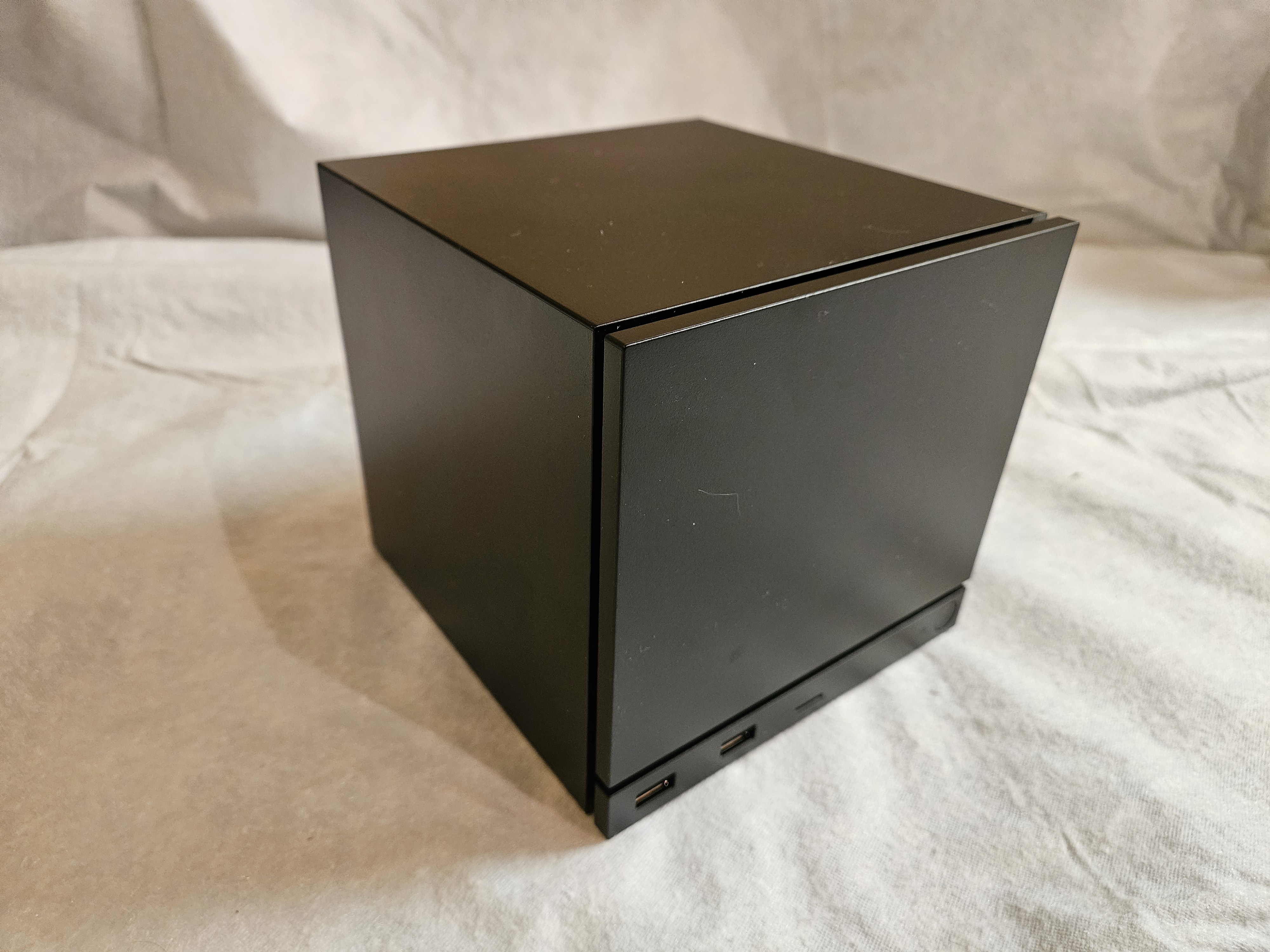
Photo: Masem / Wikimedia Commons, CC BY-SA 4.0 (https://creativecommons.org/licenses/by-sa/4.0/), 7 July 2026; resized and cropped; adapted image licensed CC BY-SA 4.0. · Illustrative image.
Valve’s new Steam Machine illustrates an awkward problem for a company whose main attraction is a digital games platform: hardware becomes more expensive to manufacture at precisely the moment the business wants to expand the number of people using it.
In its 19 November availability update, Valve addressed its reservation queues. The following details are attributed to PC Gamer’s 19 November reporting and Ars Technica’s 20 November account.
Both report that Valve has cleared the existing queue for its 512GB model and is making units available for ordinary purchase where supplies last. The larger 2TB model remains supply-constrained; the reports say future quantities and pricing are uncertain because memory and storage have become more expensive. They describe further information expected in January, not a confirmed price increase or a guaranteed restock.
That is a useful commercial signal, but not a disclosed production forecast. Valve’s reported US launch prices of $1,049 and $1,349 for the 512GB and 2TB models respectively are historical US prices. They should not be treated as an Irish price quote or proof of availability today.
Why a gaming platform might treat hardware differently
A conventional computer manufacturer generally needs to recover the cost of producing, distributing and supporting its hardware. A digital platform has a second potential source of value: hardware that encourages users to buy games and continue participating in its ecosystem.
Valve operates Steam, so an additional Steam Machine owner could potentially be worth more than the device’s immediate hardware contribution. But that reasoning must account for what the user would have done otherwise. If the buyer already purchases all their PC games on Steam, moving from a desktop to a Steam Machine may not generate a meaningful increase in software purchases.
A gaming platform can justify lower hardware margins when the incremental value of users acquired or retained exceeds that margin reduction. It cannot simply count all future spending by a hardware buyer as additional platform revenue.
This is particularly important when component supply is restricted. Selling additional units at a low margin may be attractive when manufacturing volume is abundant, but less attractive when the same limited components could be used in a more profitable configuration.
A worked hardware-margin example
Suppose a hardware business was initially earning an illustrative €100 per device after direct manufacturing and distribution costs, before fixed operating costs. Suppose the cost of memory and storage rises by €60 per device. These are entirely hypothetical figures, not Valve’s disclosed costs or selling prices.
| Illustrative response | Incremental price | Contribution per device |
|---|---|---|
| Absorb the entire cost increase | €0 | €40 |
| Pass half through to the buyer | €30 | €70 |
| Pass the entire increase through | €60 | €100 |
At 10,000 units, the cost increase represents €600,000. If the company absorbs it, hardware contribution would fall from €1 million to €400,000 at that same volume.
To restore the original contribution using only the €40 remaining per unit, the business would need to sell 25,000 devices, two and a half times its initial volume. That is not a realistic assumption when the starting problem is a shortage of components. The example illustrates why hardware cost inflation cannot always be offset simply by selling more.
Alternatively, the business might accept the lower hardware contribution if each additional buyer generated enough genuine incremental platform contribution over time. In this example the margin sacrifice is €60, not the full retail price. Any future benefit should be assessed net of costs and relative to the customer’s likely behaviour without the device.
Why the 512GB and 2TB choices matter
Offering two storage configurations can address different willingness to pay. The lower-capacity model may make the platform accessible to more customers, while the higher-capacity version serves buyers who value convenience and space.
A shortage changes this decision. Larger storage configurations may be more sensitive to rising component costs; changing the mix of production can also disappoint customers who have waited for the higher-capacity version.
A cleared reservation queue does not prove weak demand or strong profitability. It establishes, at most, that the business has progressed through the stated allocation process. Without production volumes, cancellation rates or the cost structure, it is not possible to infer the financial return on the product.
Valve’s next meaningful disclosure would be an updated production and price plan, together with evidence of how reliably buyers can obtain each configuration. For the company, the challenge is to protect platform growth without assuming that hardware losses will automatically be recovered through game purchases.
For consumers, the distinction is equally important. An announced possibility of a future increase is not a reason to make a rushed purchase. Compare actual delivered prices, available capacity, existing PC hardware and the games you want to run.
The broader context is Compound’s Valve company profile. Valve is a private company; the current reporting does not establish Steam Machine margins, unit sales, a new valuation or a future IPO.
Compound Research; research checked 24 November 2026. All worked financial assumptions are illustrative, not disclosed Valve figures. Availability details are attributed to the cited reporting.
Source record
- https://store.steampowered.com/news/group/45479024/view/687522235410285038
- https://arstechnica.com/gaming/2026/11/valve-says-it-might-have-to-raise-the-price-of-supply-limited-steam-machines/
- https://www.pcgamer.com/hardware/steam-machines/valve-may-raise-steam-machine-prices-yet-again-memory-and-storage-costs-continue-to-increase-at-unprecedented-levels/