Tesla Earnings: Cash Flow Recovers, but Profit Remains Under Pressure
Tesla Q3 2026 earnings show positive free cash flow alongside weaker profits. We examine the investment bill, margins and energy revenue.
 Wealth / The Compound journal
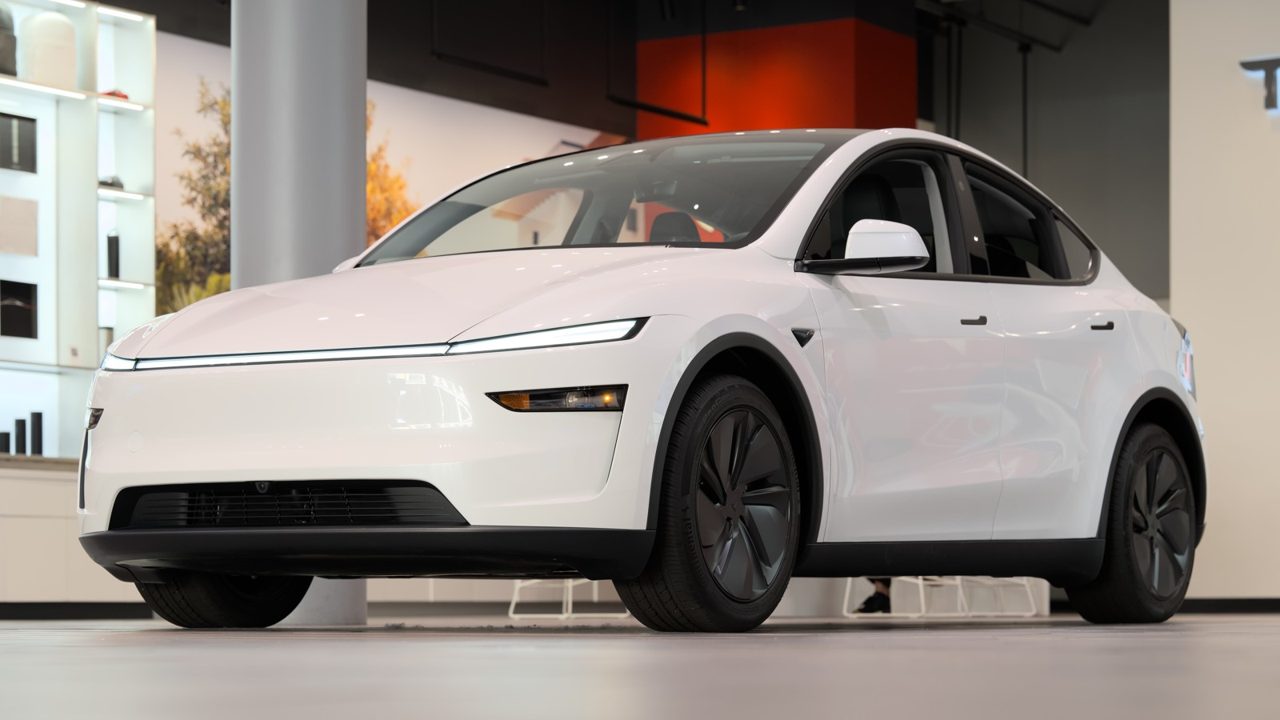
Photo: Dllu / Wikimedia Commons — CC BY-SA 4.0; 3 March 2025 · Illustrative image.
Tesla has bought itself more financial breathing room. It has not yet demonstrated that its expanding ambitions will produce stronger profits for shareholders.
That is the distinction investors should take from its third-quarter results released on 21 October 2026. Positive cash generation matters for a business funding several capital-intensive projects. But cash flow and profitability answer different questions, and this quarter gives investors reasons to examine both.
Tesla earnings at a glance
| Metric | Q3 2026 | Q2 2026 | Q3 2025 |
|---|---|---|---|
| Revenue | $28.046bn | $28.236bn | $28.095bn |
| GAAP operating profit | $718m | $398m | $1,624m |
| GAAP diluted EPS | $0.22 | $0.32 | $0.39 |
| Adjusted diluted EPS, non-GAAP | $0.48 | $0.33 | $0.50 |
| Free cash flow, non-GAAP | $1.531bn | −$1.092bn | $3.990bn |
Source: Tesla’s SEC 8-K, Exhibit 99.1. All quarters end in March, June, September or December; this report covers the quarter ended 30 September 2026. Dollar figures are US dollars.
The cash recovery deserves attention
Operating cash flow of $6.263bn exceeded capital expenditure of $4.732bn. Both stronger operating cash generation and lower investment spending versus Q2 contributed to the recovery.
The useful question is how repeatable that balance is. A quarter with lower capital expenditure can improve free cash flow without reducing the total cost of a multiyear expansion. Investors should distinguish a genuine improvement in cash economics from a change in the timing of payments.
Positive free cash flow provides flexibility: it can support investment without an equivalent immediate call on external finance. It does not establish that every project will earn an adequate return. That assessment requires evidence about future margins and capital requirements, rather than a single cash-flow observation.
Better than Q2 is not the same as better than last year
The table illustrates the danger of choosing whichever comparison produces the most flattering headline. Operating profitability improved sequentially while remaining substantially below the year-earlier level.
An investor judging recovery should examine both views. Sequential improvement can indicate progress; the annual comparison helps test whether the business is rebuilding earnings power or merely recovering from a weak quarter. Neither comparison, by itself, removes seasonality or changes in business mix.
Energy volumes are not energy revenue
Tesla deployed 13.7 GWh of storage, up 10% annually, while energy revenue fell 16% to $2.881bn. Its explanation includes tariff-related customer refunds. Operating expenses rose 39% to $4.776bn.
Those figures reinforce a broader analytical point: physical volumes are not a substitute for financial results. Prices, mix, recognition timing and exceptional commercial adjustments can make revenue move differently from deployments. Our Tesla energy analysis explains why that distinction matters.
What would make the investment case stronger?
The next test is whether cash generation remains resilient as investment proceeds, and whether operating profit can grow without relying on an easier comparison period. Announcements about future products should be evaluated against that financial record.
This release-based analysis does not assume any outcome from a potential corporate transaction or incorporate an unfinished earnings call. The Tesla stock page provides the interactive chart and ongoing financial research; the Tesla investment guide explains the broader valuation framework.
For shareholders, the central question is whether today’s spending will eventually produce enough additional cash to justify the capital committed. A better quarter helps. Sustained returns will decide the argument.
Source: SEC earnings release. Editorial analysis; reported figures and management forecasts are identified separately.
Image: Tesla Model Y at Santana Row, photographed 3 March 2025 (archival). Credit: Dllu / Wikimedia Commons — CC BY-SA 4.0; 3 March 2025. Original; licence. Resized for publication; image adaptations retain the original licence.