What does Nvidia’s $2.94 billion warranty reserve tell investors?
Nvidia used $401 million of its returns and warranty reserve in the July quarter. Its two latest filings show why the balance barely moved and which figures to watch next.
 Wealth / The Compound journal
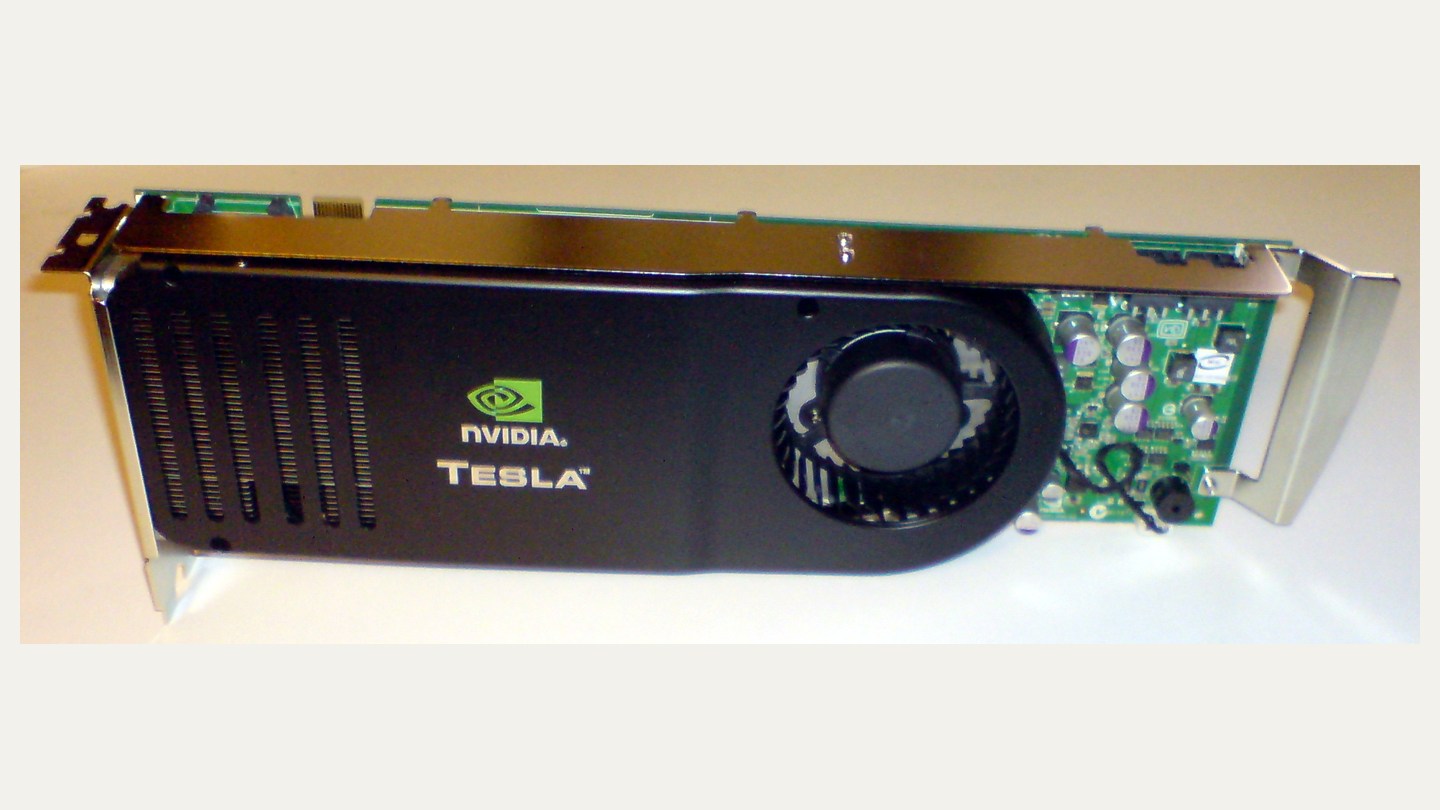
Photo: Mahogny via Wikimedia Commons, public domain. Nvidia Tesla accelerator photographed on 19 February 2008. · Illustrative image.
Nvidia used $401 million of its reserve for product returns and warranties in the quarter ended 26 July 2026, up from $189 million in the previous quarter. Yet the balance fell by just $10 million. The reason is that Nvidia added $391 million of estimated obligations over the same three months. Investors assessing the cost of supporting hardware after a sale need both sides of that calculation. July filing · April filing
How the balance stayed near $3 billion
Think of a system sold in one quarter and returned for service in another. The seller can recognise an estimated obligation when it sells the system, then draw on the reserve when it fulfils that obligation. The closing balance measures the estimated obligations still outstanding. Each quarter’s additions and utilisation show how that estimate changed.
| Product returns and warranty reserve, $ millions | Quarter ended 26 April 2026 | Quarter ended 26 July 2026 |
|---|---|---|
| Opening balance | 2,807 | 2,948 |
| Additions | 330 | 391 |
| Utilisation | (189) | (401) |
| Closing balance | 2,948 | 2,938 |
In April, additions exceeded utilisation by $141 million. In July, utilisation exceeded additions by $10 million. Looking only at the two closing balances would conceal the $212 million increase in utilisation. Treating all $401 million as a fresh July expense would make a different error by counting costs that had already been provided for. The filing combines estimated returns and warranty activity, so the table also cannot tell shareholders how many units needed repairs. First-quarter reserve reconciliation · Second-quarter reconciliation
How much Nvidia set aside for each dollar of sales
Nvidia reported revenue of $81.615 billion in its April quarter and $96.221 billion in July. Reserve additions therefore came to about 40 cents per $100 of company revenue in April and 41 cents in July. In July a year earlier, $220 million of additions on $46.743 billion of sales worked out to about 47 cents per $100. The dollar value of new provisions increased year over year even as the provision per dollar of sales fell. Nvidia’s quarterly revenue comparisons · Prior-year warranty figures
That ratio helps put the provision in proportion to the size of the business. It has a limit. Nvidia says most additions related to its Compute & Networking segment, while the denominator above includes revenue from the whole company. It also gives no product-level breakdown of the age or number of units serviced. A larger installed base, changes in the products sold and the timing of service could each affect utilisation. The figures alone cannot distinguish among them or establish that a particular generation of chips has become less reliable.
What would change the margin outlook?
Consider a sensitivity at July’s sales level. An additional ten cents of warranty provision per $100 of revenue would amount to about $96 million for the quarter, before tax, assuming unchanged sales and everything else held constant. This illustrates the scale of a change in the estimate. Nvidia’s reported July GAAP gross margin was 75.0%. Its August outlook for the following quarter was 74.0%, plus or minus half a percentage point. The company gave an overall margin forecast, without assigning a specific number of basis points to warranties. Nvidia’s results and outlook
In the next filing, start with additions relative to sales, then compare utilisation with the opening reserve. If utilisation stays high while additions hold near their recent share of revenue, Nvidia could be working through obligations it anticipated. If it also begins setting aside more per sales dollar and explains that its expected service costs have risen, shareholders would have stronger evidence of pressure on the economics of new sales. The explanation accompanying the figures matters because claims on older equipment and estimates for newer sales can move on different timetables.
For the rest of the business, see the Nvidia stock profile and Compound’s analysis of Nvidia’s gross margin and AI demand.
Archival photograph of an Nvidia Tesla accelerator by Mahogny, 19 February 2008. The pictured card illustrates the hardware business. Public-domain photograph and provenance