Mattel’s Gross Margin Jumped 4.8 Points. How Much Survives the Tariff Refund?
Mattel’s margin improvement was almost entirely explained by an $88 million tariff refund. Hot Wheels grew, Barbie declined and cash remained seasonally negative.
 Wealth / The Compound journal
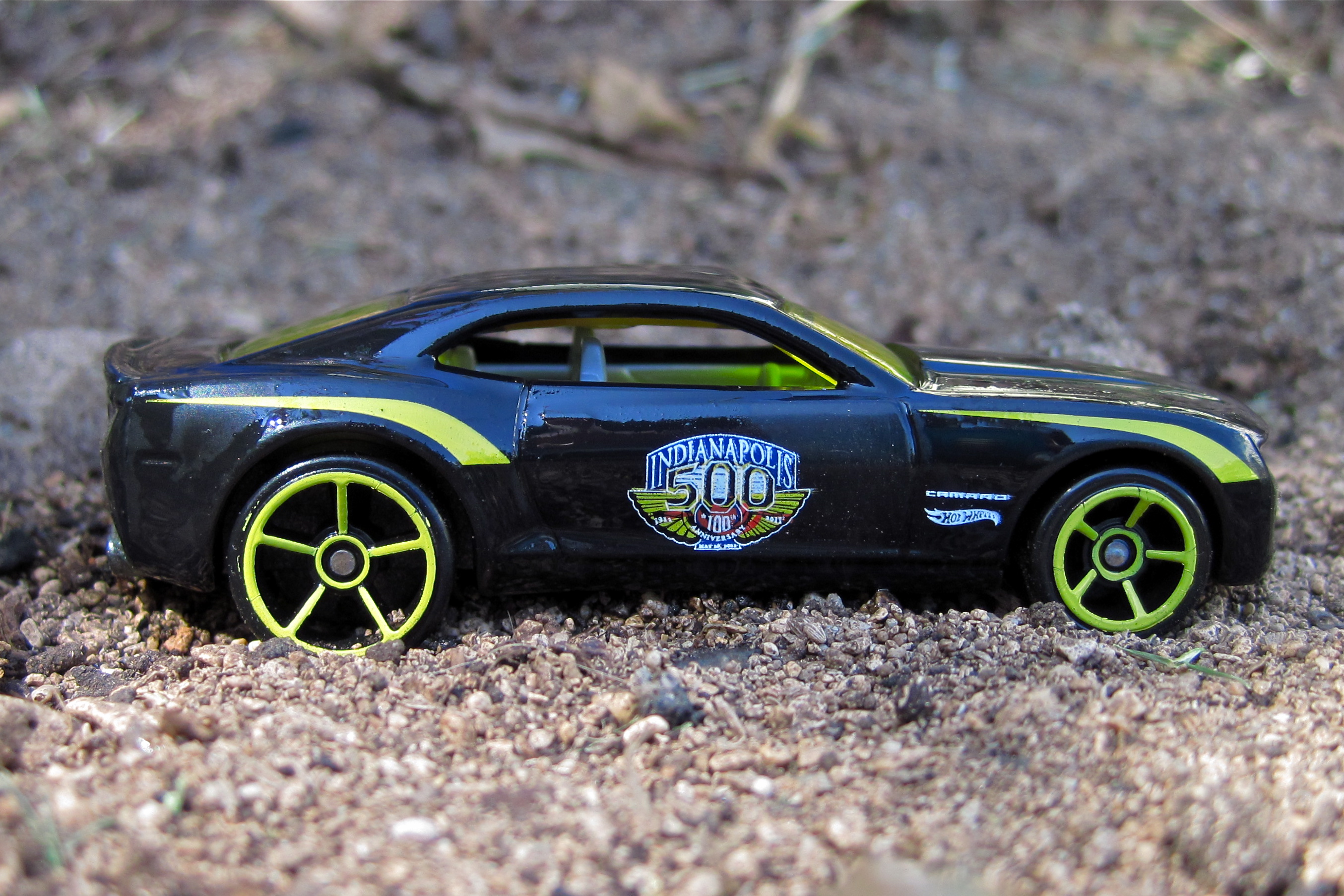
Photo: puuikibeach / Wikimedia Commons, CC BY 2.0. Archival photograph taken 1 April 2012; cropped for publication. · Illustrative image.
Mattel’s headline margin recovery looks dramatic. The accounting bridge says investors should remove the biggest benefit before judging the underlying business.
Third-quarter net sales rose 4% to $1.81 billion, while reported gross margin increased by 480 basis points to 54.8%. Yet Mattel’s filing says an $88.4 million tariff refund contributed 490 basis points to gross margin.
That means the refund was slightly larger than the entire reported improvement. Other positives—including Mattel163, currency and cost savings—were offset by inflation, higher royalties and other pressures. The investment question is therefore not whether the reported quarter was profitable. It is whether brand growth and operating discipline can sustain a better margin after the one-off refund disappears.
For Mattel’s maintained results, see the Mattel stock profile. This article separates the temporary accounting benefit from the business signals underneath it.
A useful margin bridge, not a clean turnaround
Gross profit rose to $989.6 million from $868.3 million. Reported operating income increased to $476.3 million from $379.8 million, even as advertising and promotion expense rose.
The filing’s bridge is more informative than the headline. The tariff refund added 490 basis points, Mattel163 contributed 60 and foreign exchange added 60. Inflation reduced margin by 200 basis points and higher royalty expense by 80, with other factors filling the remainder.
Because the net reported increase was 480 basis points, investors should not simply annualise the 54.8% quarterly margin. Mattel’s own full-year guidance calls for adjusted gross margin of roughly 48%, explicitly excluding the year-to-date tariff refunds and any further refunds.
That does not make the quarter meaningless. It shows that the underlying margin question remains open rather than solved.
Hot Wheels is carrying more of the brand story
Worldwide vehicle gross billings rose 9% to $679.8 million, driven mainly by Hot Wheels. Hot Wheels gross billings increased 7% to $585.5 million.
Dolls gross billings rose 4% to $703.2 million, but the composition was less reassuring. Partner brands—including the addition of KPop Demon Hunters—drove the increase, while Barbie billings fell 6% in the filing’s worldwide comparison.
Gross billings are amounts invoiced before sales adjustments, not GAAP net sales. They are useful for understanding brand and category direction, but they should not be added to revenue or treated as cash received.
The split matters strategically. A broader portfolio can protect Mattel from dependence on one franchise. But growth driven by licensed partner brands may carry royalty costs, and the filing says higher royalties were already a margin headwind. Hot Wheels’ owned-brand strength therefore looks economically different from partner-led dolls growth.
Cash remains seasonal—and buybacks still consume it
For the first nine months, Mattel used $113.5 million of operating cash and spent $186.3 million on capital expenditure. The company also spent $308.4 million repurchasing shares and $74.8 million acquiring the remaining half of Mattel163, net of cash acquired.
Toy cash flow is highly seasonal: inventory and receivables build ahead of holiday collections. Mattel’s cash and equivalents fell to $541.4 million from $1.24 billion at the end of 2025, while inventory was almost unchanged year on year at $828.0 million. The year-on-year inventory comparison is more useful than comparing September with the seasonally low December balance.
The buyback is not automatically imprudent; about $1.2 billion remained authorised. But repurchases compete with brand investment, acquisitions and working-capital needs. A stronger case would show full-year cash generation comfortably funding buybacks after normal investment—not merely a large authorisation.
Guidance sets a lower, more realistic bar
Management now expects constant-currency sales growth of 1%–4%, adjusted operating income of $500 million–$570 million and adjusted EPS of $1.05–$1.20 for 2026. Those are forecasts, and the adjusted outlook excludes the realised tariff-refund benefits.
The operating-income range is striking beside the $502 million of adjusted operating income reported in the third quarter alone. It reflects Mattel’s seasonal business and performance in the rest of the year; the peak quarter should not be multiplied by four.
What would confirm the thesis?
The strongest evidence would be gross margin remaining near the full-year target without further refunds, Hot Wheels continuing to grow, and Barbie stabilising without excessive promotion. Partner-brand growth should add enough gross profit to cover royalties and marketing.
Cash is the second test. Full-year operating cash should rebuild after the seasonal working-capital outflow, while buybacks reduce the diluted share count without weakening liquidity.
The counter-case is that the refund obscured persistent cost pressure, owned brands remain uneven and higher royalty or advertising expense absorbs category growth. In that outcome, the reported margin jump would say more about a tax-policy reversal than Mattel’s competitive economics.
Mattel had a profitable quarter, but the 4.8-point margin increase was not a 4.8-point improvement in the underlying business. Hot Wheels offers a credible growth engine; the next results need to show what that engine earns after the refund is gone.
Explore Compound’s earnings hub and our guide to investment diversification.
Reported figures are in US dollars and relate to Q3 or the first nine months of 2026 as stated. Gross billings and adjusted measures are company-defined non-GAAP or operating measures. Facts come from Mattel’s results release and Form 10-Q; interpretation and the comparison of the margin bridge are Compound’s. General information, not personal investment advice.
Cover: puuikibeach, Wikimedia Commons, under CC BY 2.0. Archival Mattel Hot Wheels product photograph taken 1 April 2012; cropped for publication and not presented as a current product launch.