Why Some of Lilly's 2026 Deals Hit Its Adjusted EPS and Bigger Ones Did Not
Lilly expensed $7.5 billion of pipeline deals in the first nine months of 2026, and its adjusted EPS carries the full cost. Three larger takeovers, worth $11.7 billion of research assets, went onto the balance sheet instead. The split changes how to read Lilly's earnings growth and guidance.
 Wealth / The Compound journal
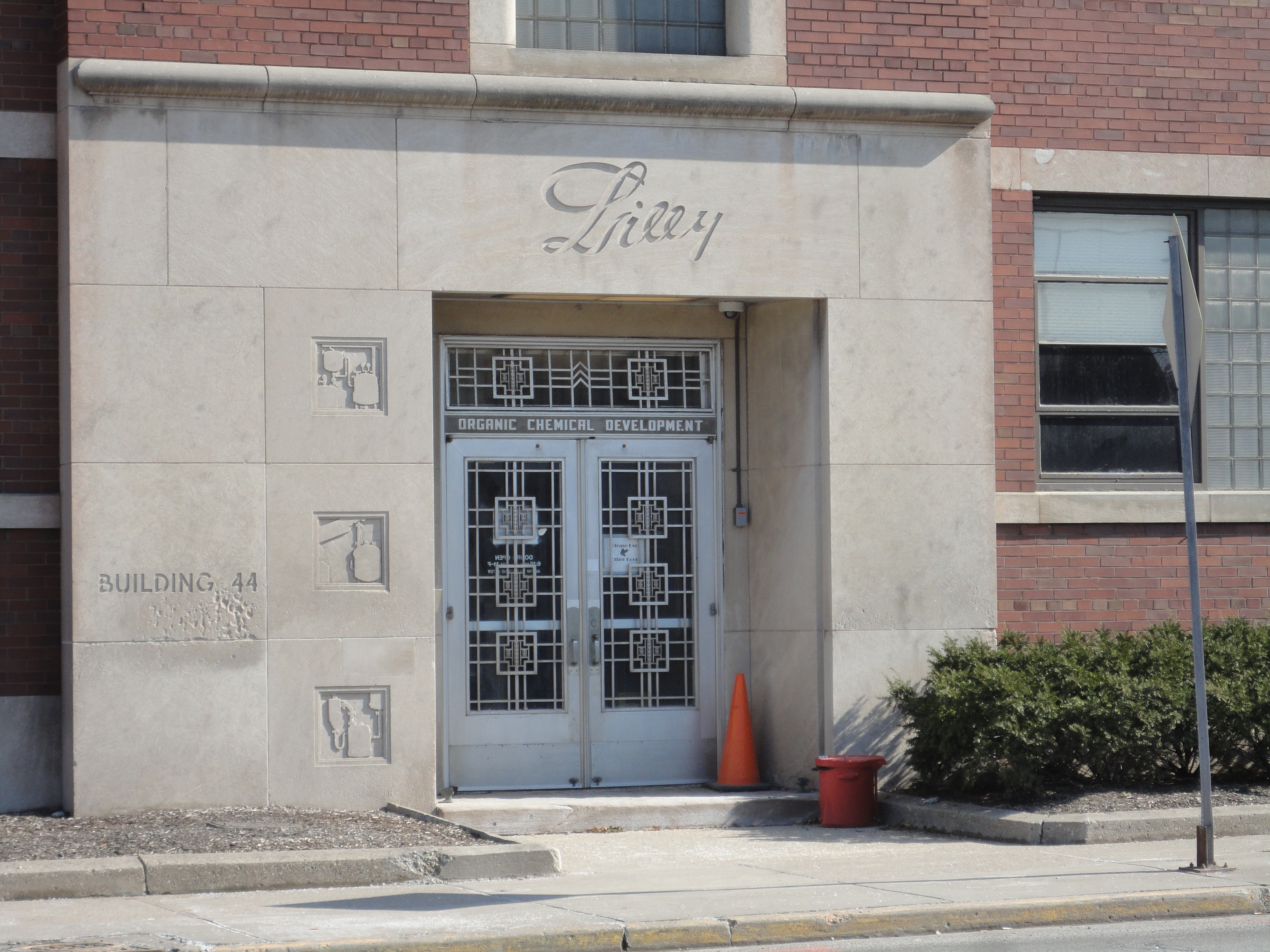
Photo: Paul Sableman via Wikimedia Commons (from Flickr), CC BY 2.0. Archival photograph taken on 16 February 2011. · Illustrative image.
Eli Lilly’s adjusted earnings per share rose only 7% in the third quarter, while revenue grew 39%. The gap has one main cause. Lilly booked $4.57 a share of acquired in-process research and development (IPR&D) charges, compared with $0.71 a year earlier, and Lilly does not strip those charges out of its non-GAAP figures.
That choice makes Lilly’s adjusted numbers more conservative than they first look. But it applies to only some of its 2026 deals. Three larger takeovers this year produced no such charge at all. For anyone comparing Lilly’s earnings growth or guidance with peers, the split matters.
Two routes for the same kind of deal
US accounting rules sort an acquisition into one of two boxes. If what Lilly buys counts as a business, the research assets go onto the balance sheet at fair value, alongside goodwill. If it is treated as an asset acquisition, the cost allocated to an unapproved compound with no other use is expensed straight away as acquired IPR&D.
Lilly’s Q3 10-Q shows both routes in use this year.
| Deal | Month | Accounting | Amount |
|---|---|---|---|
| Centessa (orexin agonists, sleep disorders) | Jun 2026 | Capitalised IPR&D | $6,058m |
| Kelonia (in vivo CAR-T) | Jun 2026 | Capitalised IPR&D | $4,695m |
| Ventyx (oral anti-inflammatories) | Mar 2026 | Capitalised IPR&D | $977m |
| AtaiBeckley (depression, Phase 2) | Sep 2026 | Expensed | $2,610m |
| Orna (in vivo CAR-T, Phase 1) | May 2026 | Expensed | $1,233m |
| Curevo (shingles vaccine, Phase 2) | Jul 2026 | Expensed | $954m |
| Ajax (myelofibrosis, Phase 1) | Jun 2026 | Expensed | $909m |
Source: Lilly Q3 2026 Form 10-Q, Note 4. Dollars in millions. The expensed lines are the deals Lilly lists as significant; total acquired IPR&D charges for the nine months were $7.5bn.
On Compound’s arithmetic, the three takeovers put $11.73bn of research assets on the balance sheet, plus $2.94bn of goodwill. The four listed asset deals were expensed at $5.71bn, part of $7.5bn in total for the nine months.
The Kelonia and Orna rows show why this is about accounting form rather than science. Both companies work on in vivo CAR-T, which engineers immune cells inside the body. Kelonia’s $4.70bn sits on the balance sheet. Orna’s $1.23bn went through the income statement in May and reduced both reported and adjusted EPS.
What reaches adjusted EPS
Lilly’s results release states that third-quarter reported and non-GAAP EPS both “included $4.57 of acquired IPR&D charges”. Its reconciliation removes only amortisation of intangibles, asset impairment, restructuring and other special charges, gains and losses on equity investments, and tax-law items.
That creates an asymmetry. An expensed deal hits adjusted EPS once, in full, in the quarter it closes. A capitalised deal never reaches adjusted EPS directly. If a capitalised asset later disappoints, the impairment falls into a line that Lilly excludes. The third quarter already contained a $303m partial impairment of an intangible asset tied to a molecule in development. It reduced reported earnings and was added back for the non-GAAP figure. Lilly did not name the molecule.
Taxes add a second effect. Lilly said its non-GAAP effective tax rate rose to 24.0% from 17.7%, mainly because acquired IPR&D charges are not tax-deductible.
Reading growth with and without the charges
Non-GAAP EPS was $7.48 against $7.02 a year earlier. Adding back the IPR&D charges in both periods gives $12.05 against $7.73. On that basis, per-share growth was about 56%, ahead of the 39% rise in revenue. This is Compound’s calculation, not a Lilly measure. Lilly’s own results also note that the first three quarters benefited from sales-based milestones and favourable rebate adjustments, so not all of that growth repeats.
Neither reading is “right”. Including the charges reflects real cash spent on pipeline. Excluding them shows the trend in the existing business. Investors who compare Lilly’s adjusted EPS with a peer that excludes deal charges should adjust one side first.
The guidance carries a caveat
Lilly raised its 2026 revenue range to $91bn to $92bn. It cut the non-GAAP EPS range from $35.50–$36.50 to $35.00–$36.00. The release explains the cut: underlying EPS guidance rose by $4.07 at the midpoint, more than offset by the $4.57 of third-quarter IPR&D.
A footnote matters for the fourth quarter. The guidance “does not include acquired in-process research and development (IPR&D) incurred after September 30, 2026”. In October, Lilly bought Merida Biosciences for up to $2.9bn, including milestone payments. The 10-Q says the accounting treatment has not yet been determined. If Merida, or any other fourth-quarter deal, is treated as an asset acquisition, the charge would come on top of the current guidance range.
The cash is real either way
The accounting choice changes the earnings line, not the cash. In the first nine months, Lilly paid $7.55bn for in-process R&D and $10.69bn for acquisitions, net of cash acquired. That is $18.24bn, or about 67% of its $27.42bn operating cash flow. Adding $8.44bn of capital spending takes the total to about 97%.
Dividends of $4.64bn and buybacks of $4.33bn were funded partly by $8.94bn of new long-term debt, less $1.62bn of repayments, and by a fall in cash from $7.27bn to $4.89bn. Long-term debt, including the current portion, rose to $49.5bn from $42.5bn.
The takeovers also left future obligations. Kelonia and Centessa carry up to $5.29bn of contingent milestone payments. Lilly’s balance sheet held contingent consideration liabilities at a fair value of $2.89bn on 30 September, up from $251m at the end of 2025.
What to watch
The fourth-quarter release and 10-K will show whether Merida was expensed or capitalised, and the size of any further charges. They will also give the first impairment review of the $11.7bn of research assets added this year. A write-down would hit reported earnings but not adjusted EPS.
For the wider investment case, see the Eli Lilly stock profile. Our METiS deal analysis looks at how milestone-heavy deal terms work, and our Jardiance milestone article removes one-off payments from Lilly’s revenue growth.
Analysis by Compound Research, checked 28 November 2026. Figures come from Lilly’s SEC filings; Q3 figures are unaudited interim results, and the acquisition fair values are preliminary. Totals, percentages and EPS excluding IPR&D are Compound’s own calculations. Not personalised investment advice.
Archival photograph: Paul Sableman, 16 February 2011, via Wikimedia Commons (originally Flickr), CC BY 2.0. Not a photograph of current activity.