Intuitive Surgical Earnings: Robot Growth Meets a $450m Legal Charge
Intuitive Surgical Q3 2026 earnings: revenue rises 22%, but a $450m antitrust charge hits reported profit. Procedures and recurring sales explain the business.
 Wealth / The Compound journal
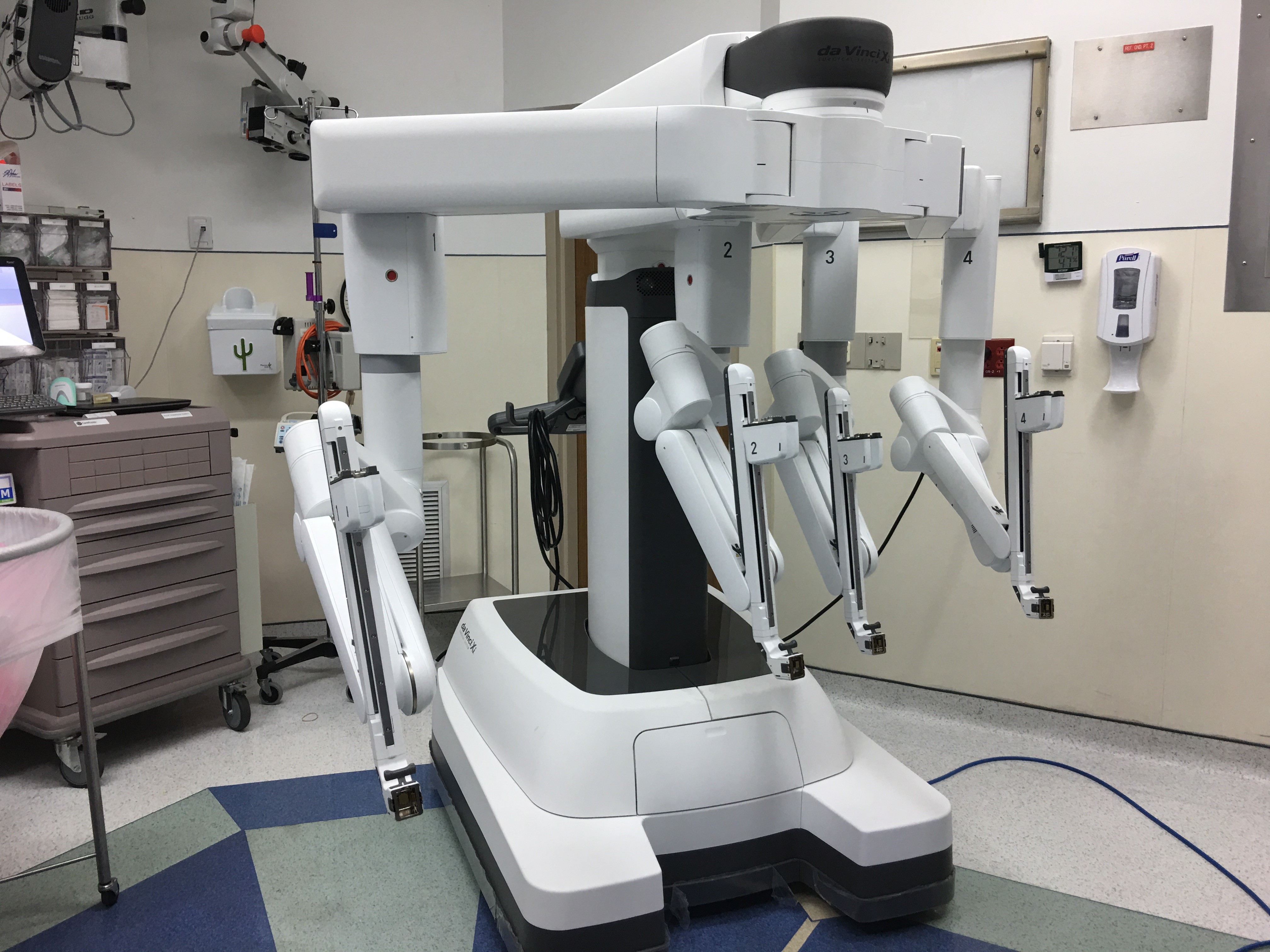
Photo: Alvarogarciamd / Wikimedia Commons — 29 September 2018, archival; CC BY-SA 4.0 · Illustrative image.
Intuitive Surgical’s latest quarter contains two stories: continuing expansion of its robotic-surgery business, and a legal charge large enough to push reported profit in the opposite direction.
The company released the figures on 20 October 2026, for the quarter ended 30 September 2026. Understanding the result requires separating operating demand from the cost recognised in the accounts, without pretending either is irrelevant.
Revenue grows while reported earnings fall
| Measure | Q3 2026 | Q3 2025 |
|---|---|---|
| Revenue | $3.049bn | $2.505bn |
| Instruments and accessories revenue | $1.797bn | $1.519bn |
| Systems revenue | $769m | $590m |
| Service revenue | $482m | $396m |
| GAAP diluted EPS | $1.49 | $1.95 |
| Adjusted diluted EPS | $3.00 | $2.40 |
Sources: SEC earnings release and Form 10-Q. Adjusted EPS is non-GAAP.
Revenue increased 22%. Worldwide da Vinci procedure volume grew approximately 14%, and the company placed 546 da Vinci systems, compared with 427 a year earlier.
The most useful distinction is between installing equipment and using it. A machine placed in a hospital creates an opportunity for future activity; procedures demonstrate that customers are putting the equipment to work. Neither measure alone fully describes the economics.
The business extends beyond robot sales
Instruments and accessories plus services represented approximately 75% of quarterly revenue, calculated from the filing’s category totals. Systems contributed the remaining quarter.
This explains why an equipment headline can miss the larger commercial story. The installed base can support repeat demand for instruments and ongoing service. Those revenues remain dependent on actual usage, pricing and customer relationships; they are not guaranteed merely because a machine has been installed.
For the investment case, the question is whether expansion in the installed base continues to produce attractive utilisation and repeat spending. Rapid placements followed by weak usage would be less persuasive than balanced growth across the model.
What the legal charge does—and does not—explain
The company recognised a $450m pre-tax antitrust settlement charge, equivalent to $347m after tax, or $0.99 per diluted share. The settlement was agreed without an admission of wrongdoing and remained subject to court approval at the release date.
Adding $0.99 back to reported EPS produces $2.48, not the company’s $3.00 adjusted EPS. The difference matters: the settlement is not the only adjustment in the non-GAAP reconciliation.
A legal cost may be unusual enough to separate when assessing operating trends. It is still a cost borne by shareholders. Reading only adjusted earnings would understate that consequence; reading only reported earnings could obscure the growth of the operating business.
Both reported and adjusted EPS also included a $0.06 benefit from tariff refunds. Even an adjusted number can contain a benefit that should not automatically be projected into future quarters.
What deserves attention next?
The 10-Q shows instruments and accessories revenue growing 18%, systems 30%, and services 22% year on year. Our interpretation is that the growth is broad enough to merit attention beyond a single equipment-placement headline.
The next assessment should focus on procedure growth, repeat revenue per installed system, the economics of equipment placements and the full cost of sustaining the business. Investors should also monitor the settlement process rather than assuming that recognising a charge resolves every legal uncertainty.
These are commercial results, not evidence that a particular surgical technique is appropriate for every patient. Clinical decisions and an equity investment case require different evidence.
Intuitive’s quarter supports a growing business with a substantial repeat-revenue component. The investment challenge is to recognise that strength while making room for legal costs, competition and a valuation that may already assume years of successful expansion.
Follow Intuitive Surgical’s stock page and our Thermo Fisher earnings analysis for another perspective on healthcare businesses.
Figures are US dollars. Calculations and editorial interpretation are Compound’s. General information, not personal investment advice.
Photograph: Alvarogarciamd, 29 September 2018. Intuitive Surgical da Vinci Xi surgical robot; an older model, not the da Vinci 5. Original source; CC BY-SA 4.0. Archival photograph, not the earnings announcement. Resized display versions retain the source licence.