Boeing Is Generating Cash Again. Is the Recovery Durable?
Boeing has returned to positive quarterly free cash flow, but Commercial Airplanes is still losing money and inventory is still building.
 Wealth / The Compound journal
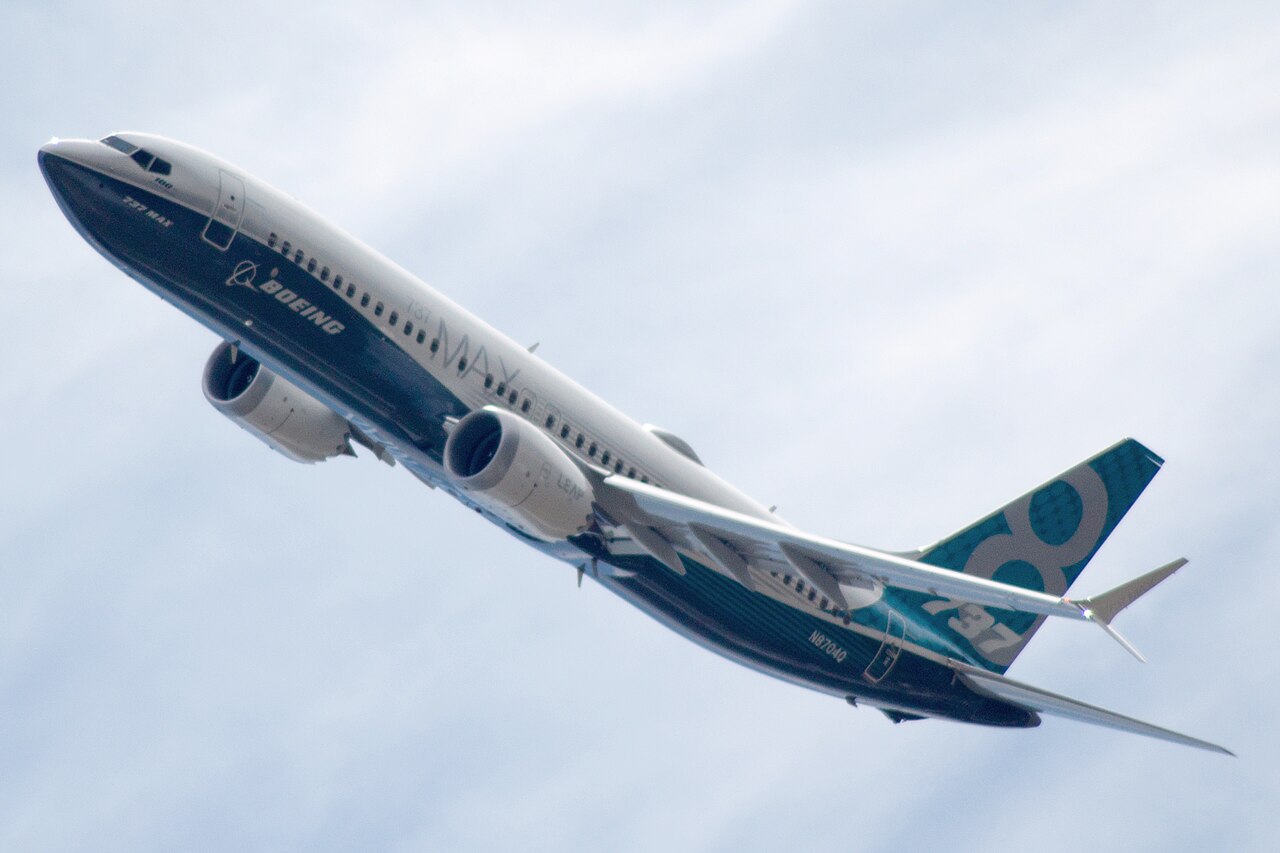
Photo: pjs2005 / Wikimedia Commons, CC BY-SA 2.0. Archival photograph, 7 July 2016; rotated by the Commons uploader and resized for publication. · Illustrative image.
Boeing is producing cash again, but the investment question is whether that cash reflects a durable operating recovery or merely a better moment in a long production cycle.
For the quarter ended 30 September 2026, Boeing reported $1.50 billion of operating cash flow and $464 million of free cash flow. Free cash flow is Boeing’s non-GAAP measure: operating cash flow less $1.03 billion of additions to property, plant and equipment.
That is a meaningful improvement. Yet the Q3 results release also shows Commercial Airplanes losing $697 million on $10.7 billion of revenue. A cash-positive quarter does not by itself prove that Boeing’s largest manufacturing business has sound economics.
For the maintained financial record, see Boeing’s stock profile. This analysis asks what must change for the recovery to become durable.
Cash is improving, but the full-year picture is stricter
Boeing generated $2.68 billion of operating cash flow in the first nine months of 2026, compared with an outflow of $266 million a year earlier. Capital spending increased to $3.04 billion from $1.99 billion, leaving Boeing-defined free cash flow at negative $359 million for the nine-month period. That was still far better than the negative $2.25 billion recorded a year earlier.
The distinction matters because aircraft manufacturing has large timing effects. Customer advances can bring cash in before delivery, while inventory absorbs cash as partly completed aircraft wait for certification, engines or other work. A single quarter can therefore look stronger or weaker than the eventual economics of the aircraft sold.
Boeing’s 10-Q reported $90.9 billion of inventory, up $6.3 billion, or about 7%, from the end of 2025. Part of the investment may support higher future deliveries. It is still capital tied up before it becomes customer cash.
Commercial Airplanes remains the central test
Commercial Airplanes delivered 161 aircraft in Q3, almost unchanged from 160 a year earlier. Its revenue nevertheless fell 3% to $10.7 billion, and the segment’s operating margin was negative 6.5%. Boeing attributed the result to less favourable delivery mix as well as higher production and supply-chain costs.
This is why total company revenue growth can mislead. Boeing’s quarterly revenue increased 4% to $24.2 billion, helped by higher defence and services volume. The consolidated business also recorded $354 million of operating profit. But Commercial Airplanes still consumed profit even as deliveries remained high.
There has been real progress. The segment’s nine-month operating loss narrowed to $1.58 billion from $6.45 billion. The 737-7 received amended type certification during the quarter, and Boeing said the 737-10 achieved it in October. Certification can unlock deliveries, yet it does not remove the cost of completing and handing over aircraft already in inventory.
The most useful signal is therefore not certification alone. It is whether delivery volume and mix allow Commercial Airplanes to cross into sustained positive operating margins without compromising safety or quality.
Backlog creates opportunity, not guaranteed profit
Boeing ended the quarter with a record $745 billion backlog, including more than 6,300 commercial aircraft. The commercial backlog alone was $612 billion.
A large backlog gives production visibility and supports customer advances. It is not the same as revenue or profit. Orders can be delayed or cancelled, and their eventual margins depend on contract pricing, inflation, production efficiency and the work required to make each aircraft deliverable.
This is especially important when a manufacturer is rebuilding output. Higher production can spread fixed costs and improve cash generation. It can also magnify disruption if suppliers, engineering or rework do not keep pace.
Debt reduction would make the cash recovery more convincing
Boeing reported $20.7 billion of cash and marketable securities and $45.9 billion of debt at quarter end. Debt had declined from $54.1 billion at the end of 2025. That is encouraging, but the remaining balance makes cash durability more important.
The strongest version of the recovery would join three developments: Commercial Airplanes becoming profitable, inventory converting into deliveries, and positive free cash flow funding further debt reduction. That would show that operating improvement, rather than financing or working-capital timing, is strengthening the balance sheet.
The weaker version would be continued cash volatility while production costs stay elevated and inventory keeps rising. A record backlog would then represent work to execute rather than evidence of attractive returns.
What would confirm the thesis?
Watch Commercial Airplanes’ operating margin, not just aircraft deliveries. Track inventory alongside customer advances, and compare full-year operating cash flow with capital expenditure. Finally, look for debt to keep falling without Boeing relying on new equity or unusually favourable working-capital movements.
Boeing has moved beyond the worst comparison, but it has not completed the economic recovery. Positive quarterly free cash flow is a start. Sustained commercial-aircraft profitability is the more demanding test. A valuation conclusion additionally requires a current share price and explicit assumptions; this analysis makes no price target.
Explore Compound’s earnings hub and our guide to investment diversification.
Reported figures are in US dollars and relate to Q3 or the first nine months of 2026 unless stated otherwise. Facts come from Boeing’s results release and 10-Q; management explanations are attributed and interpretation is Compound’s. General information, not personal investment advice.
Cover: pjs2005, Wikimedia Commons, under CC BY-SA 2.0. Photographed 7 July 2016 at the Farnborough Airshow; archival, not a 2026 delivery photograph. Rotated by the Commons uploader and resized for publication; display cropping may apply. The adaptation remains under the same licence.